- English
- French
- German
- Portuguese
- Spanish
- Russian
- Japanese
- Korean
- Arabic
- Greek
- German
- Turkish
- Italian
- Danish
- Romanian
- Indonesian
- Czech
- Afrikaans
- Swedish
- Polish
- Basque
- Catalan
- Esperanto
- Hindi
- Lao
- Albanian
- Amharic
- Armenian
- Azerbaijani
- Belarusian
- Bengali
- Bosnian
- Bulgarian
- Cebuano
- Chichewa
- Corsican
- Croatian
- Dutch
- Estonian
- Filipino
- Finnish
- Frisian
- Galician
- Georgian
- Gujarati
- Haitian
- Hausa
- Hawaiian
- Hebrew
- Hmong
- Hungarian
- Icelandic
- Igbo
- Javanese
- Kannada
- Kazakh
- Khmer
- Kurdish
- Kyrgyz
- Latin
- Latvian
- Lithuanian
- Luxembou..
- Macedonian
- Malagasy
- Malay
- Malayalam
- Maltese
- Maori
- Marathi
- Mongolian
- Burmese
- Nepali
- Norwegian
- Pashto
- Persian
- Punjabi
- Serbian
- Sesotho
- Sinhala
- Slovak
- Slovenian
- Somali
- Samoan
- Scots Gaelic
- Shona
- Sindhi
- Sundanese
- Swahili
- Tajik
- Tamil
- Telugu
- Thai
- Ukrainian
- Urdu
- Uzbek
- Vietnamese
- Welsh
- Xhosa
- Yiddish
- Yoruba
- Zulu
What are the main advantages of using titanium for bicycle parts?
Cycling titanium bicycle parts deliver an exceptional combination of strength, corrosion resistance, and longevity that sets them apart in high-performance applications. Unlike aluminum, which suffers from finite fatigue life, or steel, which corrodes under harsh conditions, titanium maintains structural integrity indefinitely under normal loads. The material's natural oxide layer self-heals upon exposure to oxygen, eliminating rust concerns entirely. With a strength-to-weight ratio comparable to high-end steel at nearly half the weight, titanium bicycle components provide durability without penalty, making them the preferred choice for demanding cycling disciplines and long-term investment strategies.
Introduction
The cycling business around the world has been steadily moving toward high-quality materials that improve efficiency and last longer. Titanium is at the front of this change because it gives manufacturers, OEM buyers, and distributors a material that is both technically better and more valuable over time. Cycling titanium bicycle parts have been tested and proven to work well for decades in environments where equipment failure can cost a lot, like on professional racing teams and in endurance bikepacking operations. This guide looks at the technical benefits, sourcing issues, and strategic advantages of titanium that make it a better choice for B2B clients who want to make their products stand out and meet the strict requirements of the high-performance bicycle markets.
Understanding the Unique Benefits of Titanium Bicycle Parts
Exceptional Strength-to-Weight Ratio
Titanium alloys are the best choice for weight-sensitive applications because of their unique mechanical properties. Grade 9 titanium (Ti-3Al-2.5V), which is often used for pipes, has compressive strengths of 600 to 900 MPa and a density of only 4.51 g/cm³. This material has the same performance rating as high-tensile steel, but it weighs about 45% less. The real-world effects on bicycle design are big: frames and parts become more stiff without adding the extra weight that comes with using ferrous metals, which lets bikes go faster, handle better, and keep riders from getting tired after long efforts.
Superior Corrosion Resistance
When titanium is exposed to oxygen in the air, it naturally creates a layer of titanium dioxide (TiO₂). If this inactive film gets scratched or broken, it fixes itself, protecting against oxidation forever. Titanium stays strong in salty coastal areas, winter training conditions with magnesium chloride road treatments, and high-humidity climates where it is constantly exposed to water. This is in contrast to painted steel frames that break down when protective coatings chip or aluminium parts that can rust when mixed with other materials. According to ASTM G48 standards, titanium is resistant to pitting and crevice corrosion. This makes it perfect for fleet operators and institutional buyers who are in charge of managing bikes in many different areas.
Infinite Fatigue Life Under Normal Loads
In the context of cycling titanium bicycle parts, material fatigue is a big problem in bicycle uses because parts are put through millions of stress cycles over the course of their life. Aluminium metals have a clear fatigue limit; based on the stress amplitude, they usually break after 10⁷ to 10⁸ cycles. Titanium metals, especially Ti-3Al-2.5V, which is used in frame tubing, don't show any limits on how much stress they can take.
This means that titanium structures that have been properly welded and heated will not get stress-concentration cracks from being loaded over and over again, so they will last forever. This performance trait is particularly valuable when designing cycling titanium bicycle parts, as it ensures long-term reliability under repeated pedaling and road loads. This performance trait has been proven to work in real-world situations by independent tests that followed ISO 4210 guidelines. These tests included vertical force fatigue tests with over 1,200N of force over 100,000 cycles.
Enhanced Vibration Damping
Titanium metals have a measure of elasticity that is about 100 to 110 GPa, which is much lower than steel (200 GPa) and aluminium (70 GPa). However, titanium's high strength makes up for this lack of flexibility. This makes a material that slightly bends when it's loaded, blocking high-frequency road shocks before they reach the rider. This damping feature keeps the tires in contact with rough surfaces, which keeps the upper body from getting tired during long rides. Carbon fibre tries to copy this flexibility through complicated layup engineering, but it can't match it when it comes to resistance to impact and damage tolerance. Endurance bicycles and gravel riders really value this flexibility.
These technical benefits work together to solve some of the biggest problems in buying cycling titanium bicycle parts, like making sure that the materials are the same from batch to batch, knowing how well the parts will work in the long term, and needing less maintenance. Titanium is traceable thanks to approved mill test records and following ASTM B338 standards for seamless tubing and ASTM B348 standards for bar stock. This helps procurement managers who are in charge of choosing parts for high-value bicycle lines.
Titanium vs. Other Materials—Making the Right Choice for Your Business
Comparative Material Performance
When making bicycles, choosing the right materials means combining a lot of different performance factors with cost structures and the ability to make the bike. Aluminium alloys are great for mass-market uses because they are easy to shape and don't cost much for the raw materials. But aluminium frames only last 5 to 7 years when used for active riding because of how easily they wear down. Steel is easy to weld and can be built with standard methods, but it is 30–40% heavier than titanium versions and needs to be finished to protect it from corrosion. Carbon fibre composites have the lowest total weight, but they need special tools to be made, have a high rate of rejection during quality control, and have a very high risk of catastrophic failure due to impact damage that may not be seen during inspection.
Titanium is in a different place in this list of materials. Some materials are 3–5 times more expensive than aluminium and 8–10 times more expensive than steel. However, the total cost of ownership formula changes when life is taken into account. A titanium frame made according to aerospace welding standards in an argon-purged environment will last longer than many aluminium or carbon frames of the same size. This will save money on replacement costs and protect the brand's reputation through reliable long-term performance. For OEM buyers who put their products in the high-end market, this durability directly means happy customers and less warranty risk.
Strategic Supplier Selection
To find qualified cycling titanium bicycle parts makers, technical skills and quality processes must be carefully evaluated. Leading providers keep certificates like ISO 9001 for quality management, AS9100 for aerospace-grade manufacturing controls, and material tracking paperwork that connects each batch to certifications from the source mill. The most important thing to look for in an inspection is the quality of the weld, especially given that cycling titanium bicycle parts demand flawless fusion to preserve their infinite fatigue life. Visual oxidation checks must show silver to light-straw colouration, which means that the argon was properly shielded during the welding process. Blue, purple, or white powder deposits, on the other hand, mean that oxygen got into the joint and weakens it by making it more fragile.
We at Baoji Chuanglian New Metal Material Co., Ltd. have more than ten years of experience processing titanium, which helps us make parts that meet the strict needs of bicycle markets around the world. Our location in Baoji City, which is known around the world as the "City of Titanium," gives us direct access to raw materials and a lot of technical knowledge about titanium metallurgy. We can use CNC machines to make complicated shapes out of Grade 5 titanium (Ti-6Al-4V), like dropouts, headtubes, and bottom bracket shells. Our approved welding methods make sure that the frames we make out of Grade 9 titanium tubing are always of high quality.
Maintenance and Long-Term Value of Titanium Bicycle Parts
Recommended Care Protocols
Titanium is naturally resistant to corrosion, which makes upkeep easier than with other materials. However, proper care is still needed to get the most out of its efficiency over time. Standard procedures include cleaning the surface every so often with water and a mild detergent to get rid of road grime and salt deposits. Abrasive cleaners that could damage the finish should not be used. Scratches and abrasions don't expose the underlying material to faster corrosion because of the self-healing oxide layer.
Scotch-Brite pads can be used to fix surface flaws and recover the look of the brushed finish without changing its structural integrity. It's important to pay attention to thread surfaces to avoid galling, which happens when titanium fasteners bond to titanium threads under pressure. Using an anti-seize compound made of copper or nickel on all threaded connections during assembly will completely stop this problem.
Total Cost of Ownership Analysis
When procurement leaders look at titanium parts, they need to look at more than just the original buy price. They also need to look at the components' lifecycle economics. A comparison shows the value proposition: an aluminium frame that costs $800 and lasts for 6 years costs $133 a year, plus the costs of removal and repair. A carbon frame that costs $2,000 and lasts 8 years (assuming no damage from impacts) costs $250 a year. At $3,200, a titanium frame with normal use has an almost infinite useful life that amortises to less than $100 a year over a conservative 30-year period. This doesn't include the value that the frame retains in secondary markets where it sells for more than it cost to buy.
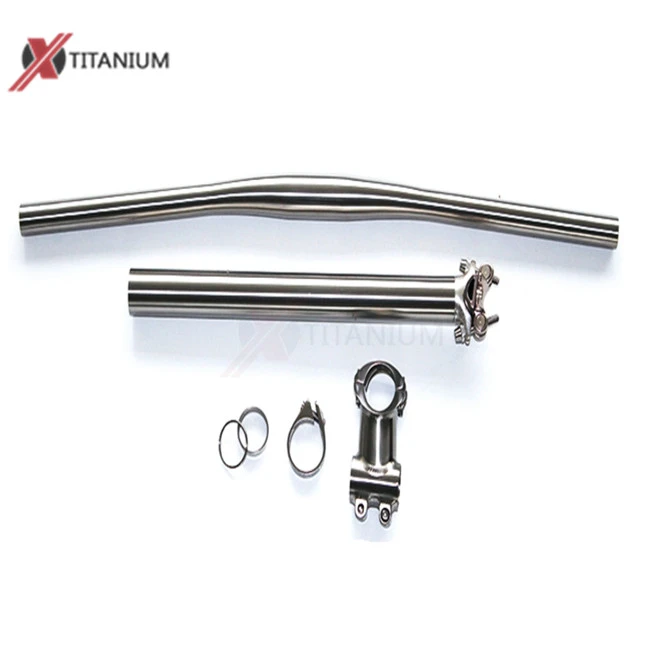
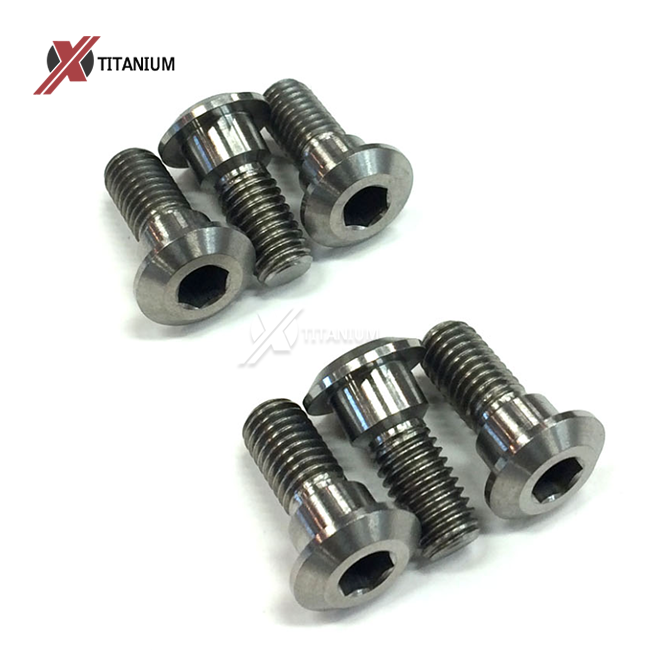
This way of looking at the economy helps big buyers who run bike fleets for delivery services, police units, or rental businesses the most. Less frequent replacement lowers management costs, and titanium's resistance to abuse and damage from the environment lowers upkeep costs that come up out of the blue. Cycling titanium bicycle parts exemplify this advantage at the component level: component-level research shows similar benefits—titanium bolts, seatposts, and handlebar parts don't need to be replaced as often as aluminium and steel parts do because they don't rust or stress fatigue.
Navigating the Procurement Process for Titanium Bicycle Parts
Supplier Verification and Quality Assurance
Finding genuine cycling titanium bicycle parts that meet specifications takes a lot of research. Reputable manufacturers provide material certifications that can be tracked back to the original producers. These include chemical composition analyses that confirm the alloy grade (usually Grade 5 or Grade 9 for cycling applications) and mechanical properties checks. For machined parts, the paperwork from non-destructive testing should include dye penetrant inspection (DPI) reports that show any surface-breaking flaws in heat-affected areas around welds. Dimensional inspection reports that confirm tolerances to ISO standards keep assembly problems with threaded joints and bearing surfaces from happening.
The ability to check a company physically separates qualified suppliers from middle-men. Direct makers run CNC machining centers that are specially designed to cut titanium. They also keep welding facilities with purge gas systems to keep the atmosphere under control and hire techs who know how to heat treat titanium in a way that is best for it. Along with a wide range of other processing tools, Baoji Chuanglian runs a dozen CNC machines. This allows them to integrate all of their processes, from raw materials to finished parts. At every step of production, our quality control system sets up inspection checkpoints. Before the parts are shipped, they are checked one last time to make sure they meet the agreed-upon standards.
Pricing Structures and Cost Optimization
The price of a titanium component depends on more than just the cost of the raw materials. Titanium's work-hardening properties and high tool wear rates make it more expensive to machine than aluminium versions. When argon protection and possible post-weld heat treatment are needed, the cost of welding goes up. Custom surface treatments like nitriding, polishing, and anodising in colours (gold, blue, green, purple, black, and rainbow) cost more but make the surface look better and be harder.
Volume-based price systems encourage smart planning for purchases. Manufacturers can make the most of their production runs by setting up annual purchase deals with phased delivery plans. This lowers setup costs that are then passed on to buyers. OEM assemblers can save time and money by managing their inventory more efficiently when they buy frames with matching seatposts, stems, and handlebar parts. This is possible because the guaranteed order values allow for better pricing. Payment terms can be extended to net-60 or net-90 for qualified buyers when dealing with established suppliers. This makes it easier for businesses that keep a lot of inventory to manage their cash flow.
Future Trends and Innovation in Titanium Bicycle Components
Advanced Alloy Development
Metallurgical study is still improving the formulations of titanium alloys that work best for certain bicycle uses. Beta-titanium alloys are stronger and easier to shape when cold compared to traditional alpha-beta alloys. This makes it possible to build tubes with thinner walls that are lighter while still meeting stiffness goals. These materials need to be heated in different ways, but they give designers more options for frame shape and improving aerodynamics. Purchasing managers who keep an eye on these changes can get suppliers involved early in the commercialisation process, getting access to next-generation materials that set a business apart from competitors.
Additive Manufacturing Integration
Metal 3D printing technologies have grown up enough that they can be used to make cycling titanium bicycle parts, especially ones with complicated shapes that are hard to make with traditional subtractive methods. Selective laser melting (SLM) and electron beam melting (EBM) are two methods used to build parts from titanium powder one layer at a time. These methods allow for the optimisation of organic shapes through computer design. Dropouts that have built-in wire routing, stems with internal support structures, and handlebar connectors that are custom-fit are all examples of near-term uses. The cost per unit is higher than CNC cutting for simple shapes right now, but additive manufacturing doesn't need expensive tools for small-scale custom jobs and lets you make prototypes quickly, which shortens the time it takes to develop a new product.
Market Expansion and Demand Growth
An analysis of the industry shows that the demand for cycling titanium bicycle parts is continuing to grow in both North America and Europe. Some of the things that are contributing are older cyclists looking for comfortable endurance bikes where titanium's vibration damping is a measurable benefit, more people getting into gravel cycling, which values titanium's durability off-road, and more people becoming environmentally conscious, which makes them want long-lifecycle products that use less material because they last longer. Companies that can meet this demand by having reliable supply chains and technical support will be able to get a bigger share of the premium market, where brand reputation and product performance are enough to justify higher prices.
Conclusion
Cycling titanium bicycle parts have unbeatable durability, resistance to corrosion, and consistent performance, which is why they are priced so high in competitive riding markets and high-value OEM uses. The material's high strength-to-weight ratio, long fatigue life under standard loads, and maintenance-free operation all make it a great choice for procurement workers who want to keep total cost of ownership low while making their products stand out. As manufacturing technologies improve and market demand rises, it becomes strategically important to build relationships with qualified titanium providers in performance-driven cycling areas in order to stay ahead of the competition.
FAQ
Why choose titanium over carbon fiber for bicycle frames?
Carbon fiber has a lower overall weight, but it can be damaged by impacts, which could weaken the structure without showing any obvious signs. Titanium is better at resisting impacts, can be fixed by welding, and has an infinite service life without the risks of delamination that come with hybrid materials. Titanium's ability to reduce vibrations makes long rides more comfortable, and the fact that it stays the same from batch to batch makes quality control easier for OEM makers than with carbon, whose features depend on how it was laid up.
How can buyers be sure that the Grade 5 or Grade 9 titanium they buy is real?
Reliable providers give mill test results that show the chemical makeup and mechanical properties of each production batch. X-ray fluorescence (XRF) analysis, which is an independent test, confirms the elemental composition, and hardness testing proves that the heat treatment worked. Visual weld checking is still very important. If you use the right amount of argon during welding, the weld will turn a silvery to light straw colour. On the other hand, blue or purple rust means there is contamination and the part needs to be thrown away.
What maintenance practices extend titanium component lifespan?
Corrosive contaminants can be removed by regularly cleaning with a mild detergent. To stop galling, anti-seize compound should be applied to threaded interfaces. Scotch-Brite pads can be used to buff away surface scratches and recover the finish without changing the resistance to corrosion. Dye penetrant testing is used to check the weld zones on a regular basis for cracks. However, properly made cycling titanium bicycle parts rarely have wear problems when they are used normally.
Partner with Chuanglian for Premium Cycling Titanium Bicycle Parts
Baoji Chuanglian New Metal Material Co., Ltd. is a well-known company that supplies cycling titanium bicycle parts. They have strict quality controls and can do all kinds of CNC machining, so they can make solutions that are exactly what you need. Our Grade 5 (Ti-6Al-4V) machined parts and Grade 9 (Ti-3Al-2.5V) tubing manufacturing services have been used successfully in triathlons, road riding, mountain biking, and track racing. Get in touch with our technical team at info@cltifastener.com or djy6580@aliyun.com to talk about your buying needs and get detailed specs for the titanium bike parts we sell that come with full material certifications and quality paperwork.
References
1. American Society for Testing and Materials. (2021). ASTM B338-21: Standard Specification for Seamless and Welded Titanium and Titanium Alloy Tubes for Condensers and Heat Exchangers. West Conshohocken: ASTM International.
2. Donachie, M.J. (2000). Titanium: A Technical Guide, 2nd Edition. Materials Park: ASM International.
3. International Organization for Standardization. (2014). ISO 4210-6:2014: Cycles — Safety requirements for bicycles — Part 6: Frame and fork test methods. Geneva: ISO.
4. Lütjering, G., & Williams, J.C. (2007). Titanium, 2nd Edition. Berlin: Springer-Verlag.
5. Schutz, R.W., & Watkins, H.B. (1998). Recent developments in titanium alloy application in the energy industry. Materials Science and Engineering: A, 243(1-2), 305-315.
6. Titanium Information Group. (2019). Guidelines for the Welding of Titanium: Metallurgical Considerations and Practical Techniques. London: International Titanium Association.
Learn about our latest products and discounts through SMS or email