- English
- French
- German
- Portuguese
- Spanish
- Russian
- Japanese
- Korean
- Arabic
- Greek
- German
- Turkish
- Italian
- Danish
- Romanian
- Indonesian
- Czech
- Afrikaans
- Swedish
- Polish
- Basque
- Catalan
- Esperanto
- Hindi
- Lao
- Albanian
- Amharic
- Armenian
- Azerbaijani
- Belarusian
- Bengali
- Bosnian
- Bulgarian
- Cebuano
- Chichewa
- Corsican
- Croatian
- Dutch
- Estonian
- Filipino
- Finnish
- Frisian
- Galician
- Georgian
- Gujarati
- Haitian
- Hausa
- Hawaiian
- Hebrew
- Hmong
- Hungarian
- Icelandic
- Igbo
- Javanese
- Kannada
- Kazakh
- Khmer
- Kurdish
- Kyrgyz
- Latin
- Latvian
- Lithuanian
- Luxembou..
- Macedonian
- Malagasy
- Malay
- Malayalam
- Maltese
- Maori
- Marathi
- Mongolian
- Burmese
- Nepali
- Norwegian
- Pashto
- Persian
- Punjabi
- Serbian
- Sesotho
- Sinhala
- Slovak
- Slovenian
- Somali
- Samoan
- Scots Gaelic
- Shona
- Sindhi
- Sundanese
- Swahili
- Tajik
- Tamil
- Telugu
- Thai
- Ukrainian
- Urdu
- Uzbek
- Vietnamese
- Welsh
- Xhosa
- Yiddish
- Yoruba
- Zulu
Is spring washer better than flat washer?
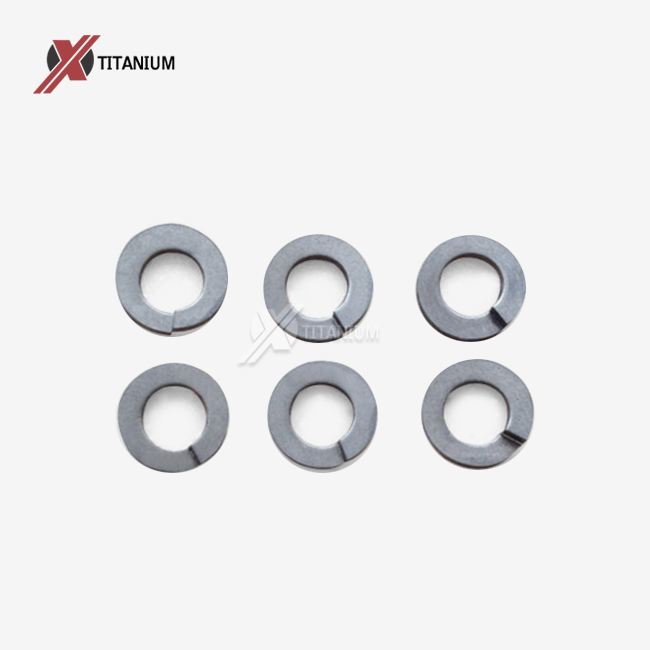
The solution to the question of whether a spring washer or a flat washer is better depends on the needs of your application. Spring washers work great in settings that are always changing and where preventing loosening, vibration, and temperature cycles is important. A titanium spring washer made from Grade 5 Ti-6Al-4V metal is better at keeping things from coming loose because it has a helical split shape that keeps bolt heads and mating surfaces in constant elastic tension. This loading system keeps the joint strong even when it's under a lot of stress. On the other hand, flat washers spread compression loads over larger surface areas and protect materials from damage, but they don't actually lock in place. In fields like aerospace, petrochemical processing, and marine engineering, where the reliability of fasteners directly affects safety and operational continuity, spring washers, especially those made from titanium, solve problems with material consistency, corrosion resistance, and weight reduction that flat washers can't.
Understanding Spring Washers and Flat Washers
Fundamental Roles in Fastening Systems
Washers are important for the mechanical safety and long life of industrial fastening systems. In these setups, spring washers and flat washers do different things. The shape of spring washers—split, wave, or Belleville shapes cause axial spring force when compressed—makes them active closing devices. This force stops rotary loosening that can happen because of shaking or thermal expansion, which is a common way for things to fail in high-stress situations. Flat washers do nothing but spread bolt loads over a bigger surface area. This lowers the stress on parts that are taking the load and keeps the surface from deforming. It depends on your setup whether dynamic stability or static load spread is more important. Neither type is always better.
Design Variations and Their Implications
There is a spiral cut in split spring washers that lets the washer bend and create restoring power. Wave washers have many waves going around their outside, which makes them lighter and better for low-preload situations. Belleville washers are plates with a cone shape that hold a lot of weight in a small space along their length. They are often used in heavy machinery. There are three types of flat washers: normal, fender, and structural.
Each is made for a different type of load-bearing situation. Titanium alloys are used instead of traditional steel to make a titanium spring washer. This gives the mechanical benefits of spring action along with excellent resistance to corrosion and weight savings. These are important factors in aerospace fuselage assemblies and offshore drilling equipment where every kilogram counts and salt fog speeds up material degradation.
Industry-Specific Application Patterns
Locking nuts are used by aerospace engineers on engine mount bolts and control surface hinges where vibrations could cause them to come loose and fail catastrophically. In chlorine service, petrochemical plants use corrosion-resistant locking washers on flange joints instead of flat washers, which would only spread the load and not stop the bolt from turning. Biocompatible titanium locking washers are used by medical device makers in surgery tool assemblies to keep them clean and stop them from coming loose during autoclaving processes.
Marine experts choose titanium versions for propeller shaft bolts because the constant shaking and corrosion from salt water make the material last a long time. These patterns show that flat washers work well in static systems where vibration is low, while spring washers are better for mission-critical uses where durability is important.
Titanium Spring Washers: Properties and Advantages
Material Superiority in Demanding Environments
Titanium Grade 5 (Ti-6Al-4V) has qualities that change the way a titanium spring washer works. Its tensile strength is 930 MPa, which is about the same as high-strength steel, but its density of 4.43 g/cm³ makes each part 45% lighter. Even though the material's elastic stiffness is lower than steel's at 113 GPa, it still has enough spring memory to lock properly when the right dimensions are used. When scratched, titanium's passive oxide layer grows back right away, protecting against rust even in chloride-filled settings where stainless steel 316 fails through pitting. This mixture solves an ongoing problem in purchasing: getting high-strength, lightweight locking screws that keep working in harsh chemical and thermal environments without having to be replaced often.
Performance Across Temperature Extremes
Grade 5 titanium metals keep their mechanical qualities up to 400°C, which means that these washers can be used for both turbine exhaust and systems that handle liquefied gases. The low thermal expansion rate (8.6 × 10⁻⁶/°C) of the material keeps the dimensions from changing too much during thermal cycle. This keeps the preload from being lost, which happens a lot with carbon steel washers in high-temperature service. Titanium locking washers keep bolt tightness constant during flight cycles in aircraft engine parts where temperatures range from -55°C at high altitude to 350°C near the combustion chambers. This thermal stability makes repair times longer and cuts down on unplanned checks, which directly lowers the total cost of ownership for people who run large fleets of complex equipment.
Customization and Processing Capabilities
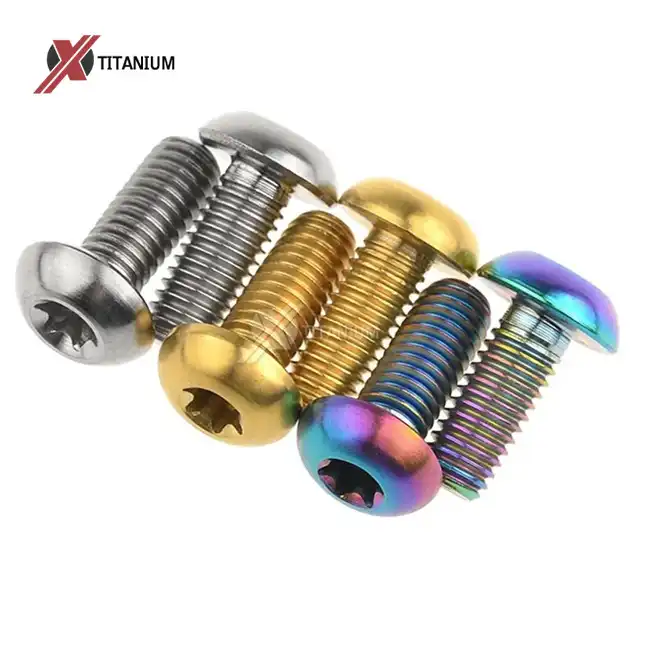
CNC cutting gives you exact control over the sizes, tolerances, and finishes of titanium washers. Anodizing creates oxide layers in colors like gold, blue, purple, and black. These layers are both aesthetically pleasing and useful because they make the surface harder and lower the risk of galling. Nitriding methods make things even more resistant to wear in situations where they will be put together many times.
Custom sizing works with bolt widths that aren't standard, which is common in repair jobs or equipment designs that aren't made by anyone else. We can machine both standard DIN 127 shapes and fully custom shapes that are made to fit specific load profiles or limited room here at Chuanglian. This adaptability solves a major problem for businesses that deal with other businesses: getting unique fixing parts without having to buy large amounts at once, which can put a strain on budgets or lead to design compromises.
Spring Washer vs Flat Washer: Performance and Selection Criteria
Vibration Resistance and Tension Management
By stretching and contracting, a titanium spring washer creates friction that flat washers can't. This makes rotational action harder. According to DIN 65151 testing, assemblies with only flat washers lose up to 40% of their bolt tension after 10,000 shaking cycles, while assemblies with properly placed split spring washers keep 85–90% of their initial preload. When shaking is steady, this performance gap is very important in machinery that moves back and forth, suspension systems, and shipping equipment.
Titanium versions improve this benefit by not losing their spring force due to rust, which is a process that carbon steel washers can't handle in wet or chemically harsh environments. When purchasing managers look at how reliable fasteners are, they should put spring washers at the top of the list for any part that is subject to dynamic loads or practical vibration.
Load Distribution Versus Active Locking
When bolt heads or nuts touch soft materials like aluminum, alloys, or covered substrates, flat washers protect the bearing surface very well. Their bigger width spreads out compressive stress, which stops the surface from giving way and stops pull-through fails. Even when spring washers are used, this function is still necessary. In fact, many important systems use both types together, with flat washers covering surfaces and spring washers providing locking action.
When flat washers are used in static situations, the material doesn't matter as much; stainless steel is fine when rust isn't too bad. When different metals come into contact with seawater or acidic process streams, however, titanium flat washers stop the galvanic corrosion that happens. This stops a common way for naval buildings and chemical processing equipment to fail.
Environmental Resilience and Lifecycle Costs
Titanium doesn't react with chlorine, acidic, or high-salinity conditions, so it lasts longer and needs to be replaced less often. A lifecycle study of Grade 5 titanium spring washers and stainless steel 316 counterparts in offshore platform service showed that titanium needed to be replaced every 6–8 years, while stainless steel only needed to be replaced every 2–3 years. This is true even though titanium was more expensive to buy at first. The study looked at the prices of repair access, downtime for replacement, and getting rid of corroded parts.
This information supports the use of titanium in long-lasting uses where replacement costs are higher than material prices. This is good news for procurement managers who are watching their budgets. When used in similar conditions, flat washers need similar material upgrades but don't add any extra closing benefit. This is why spring washers are the best choice when both rust protection and loosening prevention are needed.
Procurement Guide: Buying Titanium Spring Washers for B2B Clients
Supplier Certification and Quality Verification
Choosing sources with strong quality control systems makes sure that materials can be tracked and that performance stays the same. AS9100 certification means that the process is controlled to aerospace standards, and ISO 9001 certification means that quality is managed consistently at all steps of production. Biocompatibility paperwork for medical uses must be in line with ISO 13485. If you don't carefully choose your raw materials, batch-to-batch changes in titanium alloys can affect the performance of a titanium spring washer.
Make sure you get material test reports (MTRs) for each production lot that confirm the chemical makeup and mechanical qualities. Procurement offices that don't want to take risks need suppliers that can fully trace their products from mill test certificates to final inspection reports. This shows that the supply chain is open and honest. This paperwork is very important during failure analysis or regulatory checks, where the exact history of a material needs to be established.
Custom Order Processes and Lead Time Management
Titanium is expensive to work with and needs to be machined in a certain way, which usually makes wait times longer than for regular screws. For custom setups that need new tools, allow 6 to 8 weeks. For standard DIN 127 dimensions in popular sizes, allow 3 to 4 weeks. Minimum order numbers depend on how complicated the product is. For example, easy split washers may have a minimum order quantity of 500 pieces, while complex Belleville profiles need 1,000 or more pieces to cover the cost of setup over time.
Talk to your sellers about inventory consignment programs to find a balance between the costs of keeping stock and the risks of running out of items. This is especially important for uses in maintenance, repair, and operations (MRO) that need quick replacements when something breaks. When you sign a long-term supply deal with an annual volume promise, you can usually get better prices and priority production slots. This takes care of the delivery reliability issues that come up with project-based procurement in the building and equipment manufacturing sectors.
Building Strategic Partnerships with Suppliers
Buying titanium fasteners is very different from buying trade goods. Good suppliers offer expert advice while choosing materials, which helps engineers match the need for efficiency with the limitations of the budget. They offer sample sizes so that you can check the fit and test them before committing to full production. This lowers the risk of making mistakes that cost a lot of money. Setting up rules for how to talk about things like order progress updates, quality issues, and changes to designs builds trust, which is important for long-term relationships.
Suppliers who put effort into building relationships with you will often put your orders at the top of their list when they are short on capacity and let you know ahead of time when the prices of raw materials change, which helps you plan your budget better. In the aircraft, medical device, and marine engineering industries, where technical validation and supply chain security are more important than small price differences, this collaborative method fits well with the complicated, multi-stakeholder buying processes that are common there.
Case Studies and Application Examples
Aerospace Assembly Integrity Enhancement
During regular checks, a commercial airplane manufacturer found that fasteners were coming loose at the places where the wings attached to the fuselage. During flight cycles, the vibrations and airflow loads were causing Grade 8 steel bolt combinations with flat washers to lose preload, which could be dangerous. When they switched to a titanium spring washer assembly, they stopped loosening failures and cut the weight of the assembly by 2.1 kilograms per plane, which added up to a big weight savings across a fleet of hundreds of planes.
The ability to fight corrosion was also useful for businesses near the coast, where the salty air meant that inspections had to be done more often in the past. Maintenance costs went down by 18% a year because check cycles were lengthened and retorquing procedures were done less often. This shows that material upgrades save money in more ways than one.
Chemical Processing Equipment Durability
A chlor-alkali factory had terrible pump case failures because stainless steel 316 flat washers wore through in wet chlorine service, letting process fluid leak out. The highly oxidizing climate was too much for 316 stainless steel to handle, so the washers had to be replaced often and the plant had to shut down without warning. Putting titanium split spring washers on pump mounting bolts fixed both the rust and loosening issues.
The washers kept the bolts tight even when the process was shaking, and after three years of constant exposure, they showed no corrosion. Changing the temperature between room temperature and 90°C during starting and shutdown processes had no effect on the performance of titanium washers. In the past, this would cause steel assemblies to relax thermally. This use shows that titanium is the only material that can handle multiple failure modes at the same time in harsh chemical conditions.
Marine Hardware Performance Validation
Offshore platform owners in the North Sea tested different fastener systems in saltwater splash zones, which are harsh working conditions because of corrosion and shaking. After six months, test units with 316 stainless steel flat washers showed rust and a 35% loss of preload. Assemblies with carbon steel split spring washers kept their pressure, but they showed a lot of rust stains and material wear.
After 18 months of exposure, Titanium Grade 5 spring washers showed no signs of rust and kept 92% of their original bolt strain. Titanium costs about six times more than stainless steel, but the four times longer replacement interval and lack of need for emergency repair during production operations—where platform downtime costs more than five million dollars every day—made up for the higher price. Titanium's value in harsh sea environments is proven by this real-world evidence.
Conclusion
To figure out if spring washers or flat washers are better for your purpose, you need to know how it works. Active locking is provided by a titanium spring washer through elastic tension, which keeps assemblies from coming free in places where vibrations are likely to happen. Passive load distribution and surface protection are provided by flat washers. Titanium versions of spring washers make their benefits even greater by joining their ability to keep things from loosening with their high corrosion resistance, low weight, and heat stability.
Titanium locking screws solve multiple engineering problems at the same time in fields that have to deal with tough environments, strict weight limits, or high reliability standards. When deciding what to buy, the starting cost of the materials should be weighed against their lifetime costs, replacement regularity, upkeep access, and the effects of a failure. For important tasks where bolt integrity affects safety and the ability to keep operations going, titanium spring washers are an investment that will pay off in the long run and lower the total cost of ownership.
FAQ
Q1: Can titanium spring washers directly replace stainless steel washers in existing assemblies?
A: There is physical interchangeability, but engineers have to take into account that a titanium spring washer has a lower elastic stiffness (113 GPa vs. 200 GPa for steel). This difference changes the load-deflection curve, which could mean that the width needs to be changed or the grade needs to be changed in order to get the same clamping forces. To keep things from being too tight or too loose, torque specs may also need to be re-calibrated. When replacing steel with titanium in important load-bearing uses, talk to people who know a lot about the materials.
Q2: Why choose Grade 5 titanium for spring screws instead of commercially pure grades?
A: Pure titanium sold in stores (Grades 1-4) doesn't have enough yield strength to work as a spring; it forever deforms under normal bolt loads and doesn't have the elastic rebound needed for locking. Grade 5 (Ti-6Al-4V) has the right amount of strength and spring memory thanks to the aluminum and vanadium alloying. It can keep its shape even after being compressed and expanded many times.
Q3: Does titanium galling present installation challenges?
A: If friction makes too much heat, titanium surfaces can get gallic during fitting. To lower this risk, either treat the surface with anodizing, which makes it harder, or use molybdenum disulfide (MoS₂) anti-seize chemicals while putting it together. Controlled tightening speeds and good lube keep the surface from getting damaged and make sure that the pressure is met.
Q4: In what temperature range do titanium spring washers work reliably?
A: Grade 5 titanium metals keep their mechanical features even when they are heated from very cold to 400°C. Beyond this point, the material becomes less stiff, and stress release makes sealing less effective. When temps stay above 400°C for a long time, different materials or washer designs that are best for high temperatures are needed.
Partner With Chuanglian for Your Titanium Fastener Needs
Baoji Chuanglian New Metal Material Co., Ltd. makes a high-performance titanium spring washer from Grade 5 Ti-6Al-4V alloy and commercially pure titanium. The washers are made with precision CNC cutting and can have different surface processes, such as anodizing and nitriding. Our quality control method makes sure that each batch is the same, from inspecting the raw materials to checking the end product. This meets the performance reliability needs of aerospace, petrochemical, and medical device buyers.
As a company that makes titanium spring washers in Baoji, China—the country's titanium production center—we can help you choose the right fasteners by using our knowledge of the material and quick technical support. You can email our team at info@cltifastener.com or djy6580@aliyun.com to talk about your specific application needs, ask for material certifications, or get quotes for unique configurations that are made just the way you want them.
References
1. Boyer, R., Welsch, G., & Collings, E. W. (1994). Materials Properties Handbook: Titanium Alloys. ASM International.
2. Bickford, John H. (2008). Introduction to the Design and Behavior of Bolted Joints: Non-Gasketed Joints. CRC Press.
3. Schutz, R. W., & Thomas, D. E. (1987). "Corrosion of Titanium and Titanium Alloys." Metals Handbook, Volume 13: Corrosion, ASM International.
4. Budinski, Kenneth G. (1996). Engineering Materials: Properties and Selection. Prentice Hall.
5. Junker, George H. (1969). "New Criteria for Self-Loosening of Fasteners Under Vibration." SAE Transactions, Volume 78, Society of Automotive Engineers.
6. Donachie, Matthew J. (2000). Titanium: A Technical Guide. ASM International.
Learn about our latest products and discounts through SMS or email