- English
- French
- German
- Portuguese
- Spanish
- Russian
- Japanese
- Korean
- Arabic
- Greek
- German
- Turkish
- Italian
- Danish
- Romanian
- Indonesian
- Czech
- Afrikaans
- Swedish
- Polish
- Basque
- Catalan
- Esperanto
- Hindi
- Lao
- Albanian
- Amharic
- Armenian
- Azerbaijani
- Belarusian
- Bengali
- Bosnian
- Bulgarian
- Cebuano
- Chichewa
- Corsican
- Croatian
- Dutch
- Estonian
- Filipino
- Finnish
- Frisian
- Galician
- Georgian
- Gujarati
- Haitian
- Hausa
- Hawaiian
- Hebrew
- Hmong
- Hungarian
- Icelandic
- Igbo
- Javanese
- Kannada
- Kazakh
- Khmer
- Kurdish
- Kyrgyz
- Latin
- Latvian
- Lithuanian
- Luxembou..
- Macedonian
- Malagasy
- Malay
- Malayalam
- Maltese
- Maori
- Marathi
- Mongolian
- Burmese
- Nepali
- Norwegian
- Pashto
- Persian
- Punjabi
- Serbian
- Sesotho
- Sinhala
- Slovak
- Slovenian
- Somali
- Samoan
- Scots Gaelic
- Shona
- Sindhi
- Sundanese
- Swahili
- Tajik
- Tamil
- Telugu
- Thai
- Ukrainian
- Urdu
- Uzbek
- Vietnamese
- Welsh
- Xhosa
- Yiddish
- Yoruba
- Zulu
Is titanium a good anode?
Yes, titanium is an excellent anode material, particularly when enhanced as a platinized titanium anode. This advanced electrode combines titanium's exceptional corrosion resistance and dimensional stability with platinum's superior electrocatalytic properties. The titanium substrate provides structural integrity and chemical inertness, while the platinum coating ensures optimal current transfer and extended operational life. This combination addresses critical industry challenges including dimensional instability, bath contamination, and energy inefficiency that plague traditional anode materials like graphite or lead.
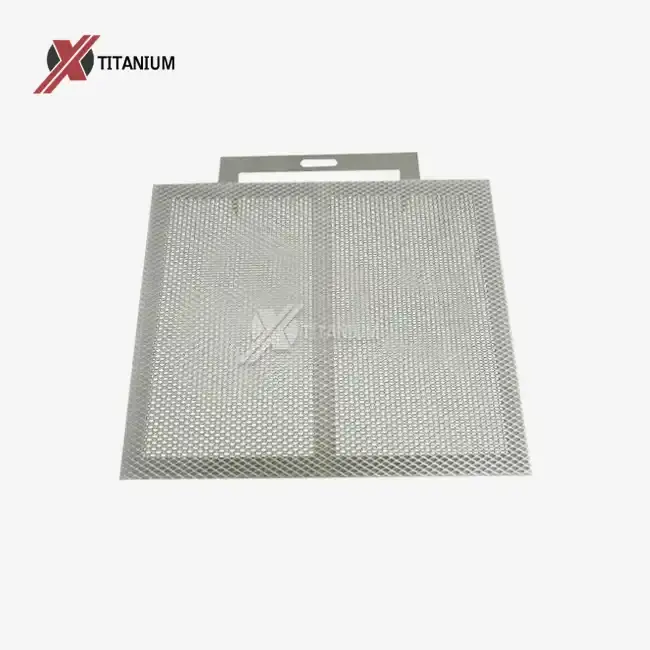
Understanding Titanium as an Anode Material
The electrochemical focal points of titanium-based anodes stem from the one of a kind properties of both the substrate and coating materials. Titanium serves as an perfect establishment due to its valve metal characteristics, which give common passivation and resistance to forceful chemical environments.
Fundamental Electrochemical Properties
Titanium shows remarkable erosion resistance over a wide pH run, making it appropriate for assorted mechanical applications. The material's tall strength-to-weight proportion guarantees auxiliary astuteness indeed in requesting operational conditions. When combined with platinum coating, these properties make an cathode framework that keeps up reliable execution all through expanded benefit periods. The platinum layer upgrades the anode's electrocatalytic action altogether. Not at all like customary materials that endure from tall overpotentials, platinum-coated surfaces encourage productive electron exchange forms. This effectiveness interprets straightforwardly into diminished vitality utilization and moved forward prepare financial matters for mechanical operations.
Superior Performance Characteristics
Modern platinized titanium anode designs incorporate precise coating thickness control, typically ranging from 0.5 to 20 microns depending on application requirements. This customization allows engineers to optimize performance for specific electrochemical processes while maintaining cost-effectiveness.
The dimensional stability of these anodes represents a significant advancement over traditional alternatives. Unlike graphite anodes that erode during operation or lead anodes that generate harmful sludge, titanium-based systems maintain their geometric properties throughout their operational life. This consistency ensures uniform current distribution and eliminates the need for frequent electrode replacements.
Comparing Platinized Titanium Anodes with Other Anode Types
Understanding the performance differences between anode materials helps procurement professionals make informed decisions based on their specific operational requirements and budget constraints.
Performance Analysis Against Traditional Materials
When assessed against graphite anodes, titanium-based frameworks illustrate prevalent life span and operational steadiness. Graphite endures from utilization amid electrolysis, driving to changing cathode crevices and conflicting current conveyance. This debasement requires visit support and substitution, expanding operational costs and downtime. Lead anodes, whereas generally common in certain applications, display critical natural and operational challenges. These materials create slime that sullies electrolyte showers and requires expensive filtration frameworks. The platinized titanium anode disposes of these defilement issues whereas giving prevalent current efficiency.
Cost-Effectiveness and Operational Benefits
Mixed metal oxide (MMO) anodes offer great execution in particular applications but need the flexibility and life span of platinum-coated frameworks. Whereas MMO anodes give satisfactory benefit life, they cannot coordinate the electrocatalytic proficiency of platinum surfaces. Stainless steel anodes speak to the most prudent alternative but endure from constrained chemical resistance and destitute current dissemination characteristics.
The higher introductory venture in titanium-based frameworks regularly pays for itself through decreased support prerequisites and moved forward vitality proficiency over the operational lifetime. Pure platinum anodes convey fabulous execution but at restrictive costs for most mechanical applications. The platinized titanium anode gives comparable electrocatalytic execution at a division of the taken a toll, making progressed cathode innovation available to a broader extend of applications.
Applications and Maintenance of Platinized Titanium Anodes
These advanced electrode systems find widespread application across industries requiring reliable, efficient electrochemical processes. Their robust construction and superior performance characteristics make them particularly valuable in demanding operational environments.
Industrial Applications and Case Studies
Chlor-alkali generation speaks to one of the biggest application ranges for these anode frameworks. The combination of tall current densities and forceful chemical situations requests materials able of withstanding extraordinary conditions whereas keeping up productivity. Platinum-coated titanium anodes have illustrated benefit lives surpassing conventional choices by variables of three to five in these applications.
Electroplating operations advantage essentially from the dimensional solidness and current dissemination characteristics of these anodes. The steady anode geometry guarantees uniform plating thickness, diminishing dismissal rates and making strides item quality. Metal wrapping up offices report significant advancements in handle control and item consistency after transitioning to titanium-based cathode systems.
Maintenance Protocols and Service Life Optimization
Proper maintenance practices significantly extend the operational life of platinized titanium anode systems. Regular inspection schedules help identify potential issues before they impact performance. Visual examination of the platinum coating can reveal wear patterns that indicate the need for maintenance or replacement.
Cleaning conventions must adjust viability with conservation of the platinum coating. Gentle chemical cleaning operators and appropriate taking care of methods avoid harm to the catalytic surface whereas keeping up ideal execution. Set up support programs ordinarily amplify anode life by 20-30% compared to responsive support approaches. The erosion resistance of the titanium substrate guarantees that coating wear speaks to the essential restriction on benefit life. Progressed coating procedures and made strides platinum definitions proceed to amplify operational periods, with a few establishments accomplishing benefit lives surpassing five a long time in requesting applications.
How to Choose and Procure the Right Platinized Titanium Anode?
Selecting appropriate electrode systems requires careful evaluation of multiple performance criteria and operational requirements. The procurement process involves technical assessment, supplier qualification, and long-term support considerations.
Performance Criteria and Specification Development
Current thickness prerequisites drive crucial plan choices for terminal frameworks. For longer benefit life, higher current applications might require platinum coatings that are thicker or distinctive base arrangements. Another critical calculate is prepare chemistry compatibility, since diverse chemical situations may require distinctive coating formulas. Options for physical structure incorporate work, plate, pole, and custom shapes that are made to disperse current most effectively for certain employments. Engineers can meet troublesome physical necessities whereas keeping the electrical execution steady when they can make complex shapes.
Supplier Evaluation and Quality Assurance
Different businesses have diverse certification needs, but AS9100 is frequently required for flying machine applications, ISO9001 for common fabricating, and particular therapeutic certifications for healthcare-related employments. As portion of the provider capability handle, these licenses ought to be checked, and the generation and quality control strategies ought to too be looked at. When choosing suppliers, testing aptitudes are a exceptionally vital thing to think approximately. Progressed strategies for characterizing items, such as measuring coating thickness, testing for attachment, and checking electrical execution, make beyond any doubt that the quality and solidness of the item.
When a provider offers full testing administrations, clients can be more certain in the execution and constancy of their products. Delivery timeline administration gets to be indeed more vital given the customized nature of numerous cathode applications. Lead times for custom setups can be a few weeks long, so buying groups and generation plans require to work together to make beyond any doubt everything runs easily. More solid shipping execution comes from providers that have been around for a whereas and have the right stock administration and generation capacity.
Future Trends and Innovations in Titanium Anode Technology
Technological advancement continues to enhance the performance and applicability of titanium-based electrode systems. These developments address both operational efficiency and environmental sustainability concerns.
Advanced Coating Technologies
New platinum coating methods offer better bonding and longer service life. Some of these methods are improved thermal spray processes and electrochemical deposition techniques that make coatings that are more regular and last longer. Further research into different valuable metal formulations could lead to lower costs while keeping the same performance levels.
Putting digital monitoring systems into electrode assemblies lets you track performance in real time and plan for future repair. To get the best performance and the longest service life, these systems keep an eye on the current flow, temperature patterns, and state of the coating. The information gathered helps with efforts to make things better all the time and finds ways to make processes run more smoothly.
Sustainability and Environmental Considerations
Environmental laws are favoring electrode technologies that produce less trash and have less of an effect on the environment. These trends are supported by platinized titanium anode systems, which have a longer useful life and don't need any replaceable electrode materials.
End-of-life electrode recycling programs get back valuable platinum while getting rid of titanium supports in the right way. These programs help the economy by recovering valuable metals and reducing the damage that electrode systems do to the environment. Suppliers who are on the cutting edge give full disposal services along with their products.
Conclusion
Titanium is a great material for an anode when designed and used correctly. Combining titanium’s structural strength with platinum’s electrocatalytic performance creates electrode systems that overcome the main limitations of standard materials. Contact us for a platinized titanium anode free sample to evaluate performance in your specific applications. These advanced anodes offer better dimensional stability, longer service life, and better energy economy in a wide range of commercial settings. When you engage in titanium-based electrode technology, you usually get a lot back in the form of lower upkeep costs, better process control, and more reliable operations. Platinized titanium anode systems are a tried-and-true option for demanding electrochemical uses as environmental rules continue to change and operational efficiency becomes more crucial.
FAQ
What is the typical service life of a platinized titanium anode?
Service life varies significantly based on application conditions, but most industrial installations achieve 3-7 years of operation before requiring coating renewal or replacement. Factors affecting longevity include current density, electrolyte chemistry, operating temperature, and maintenance practices.
Can platinized titanium anodes be customized for specific applications?
Yes, these anodes can be made in almost any shape, such as a mesh, plate, rod, tube, or a complex special form. The amount of the coating can be adjusted to work best in certain situations, and different types of titanium are available to meet the needs of different applications.
How do maintenance requirements compare to traditional anode materials?
Platinized titanium anode systems need a lot less upkeep than alternatives that wear out quickly, like graphite or lead. Visual inspection and cleaning on a regular basis are the main upkeep tasks. This eliminates the need for regular replacement and electrolyte filtering that comes with regular materials.
What certifications should I look for when selecting a supplier?
Some important qualifications are ISO9001 for managing quality, AS9100 for use in aircraft, and certifications specific to the medical or nuclear fields. Suppliers should also show that they can test products and give paperwork on how to track materials.
Partner with Chuanglian for Premium Platinized Titanium Anode Solutions
Baoji Chuanglian New Metal Material Co., Ltd. stands as your trusted platinized titanium anode manufacturer, combining over a decade of titanium processing expertise with cutting-edge electrode technology. Our comprehensive quality control system ensures consistent performance from raw material selection through final inspection, meeting the demanding requirements of aerospace, chemical processing, and electroplating applications. Located in China's renowned "City of Titanium," we leverage advanced CNC machining capabilities and rigorous testing protocols to deliver customized electrode solutions that optimize your operational efficiency. Contact our technical team at info@cltifastener.com or djy6580@aliyun.com to discuss your specific requirements and receive competitive quotations backed by our commitment to quality and reliability.
References
1. Modern Electroplating Technology: Advances in Titanium-Based Electrode Systems, Journal of Applied Electrochemistry, 2023
2. Corrosion Resistance and Performance Analysis of Platinized Titanium Anodes in Industrial Applications, Materials and Corrosion Engineering Review, 2022
3. Electrochemical Performance Comparison of Anode Materials in Chlor-Alkali Production, Industrial Chemistry and Process Technology, 2023
4. Platinum Coating Techniques for Enhanced Electrode Performance, Surface Engineering and Materials Science, 2022
5. Cost-Benefit Analysis of Advanced Anode Technologies in Metal Finishing Operations, Electroplating and Surface Treatment Industry Report, 2023
6. Environmental Impact Assessment of Titanium-Based Electrode Systems, Green Technology and Sustainable Manufacturing, 2022
Learn about our latest products and discounts through SMS or email