- English
- French
- German
- Portuguese
- Spanish
- Russian
- Japanese
- Korean
- Arabic
- Greek
- German
- Turkish
- Italian
- Danish
- Romanian
- Indonesian
- Czech
- Afrikaans
- Swedish
- Polish
- Basque
- Catalan
- Esperanto
- Hindi
- Lao
- Albanian
- Amharic
- Armenian
- Azerbaijani
- Belarusian
- Bengali
- Bosnian
- Bulgarian
- Cebuano
- Chichewa
- Corsican
- Croatian
- Dutch
- Estonian
- Filipino
- Finnish
- Frisian
- Galician
- Georgian
- Gujarati
- Haitian
- Hausa
- Hawaiian
- Hebrew
- Hmong
- Hungarian
- Icelandic
- Igbo
- Javanese
- Kannada
- Kazakh
- Khmer
- Kurdish
- Kyrgyz
- Latin
- Latvian
- Lithuanian
- Luxembou..
- Macedonian
- Malagasy
- Malay
- Malayalam
- Maltese
- Maori
- Marathi
- Mongolian
- Burmese
- Nepali
- Norwegian
- Pashto
- Persian
- Punjabi
- Serbian
- Sesotho
- Sinhala
- Slovak
- Slovenian
- Somali
- Samoan
- Scots Gaelic
- Shona
- Sindhi
- Sundanese
- Swahili
- Tajik
- Tamil
- Telugu
- Thai
- Ukrainian
- Urdu
- Uzbek
- Vietnamese
- Welsh
- Xhosa
- Yiddish
- Yoruba
- Zulu
Titanium Capillary Tube in Aerospace Systems: Fluid Control in Extreme Conditions
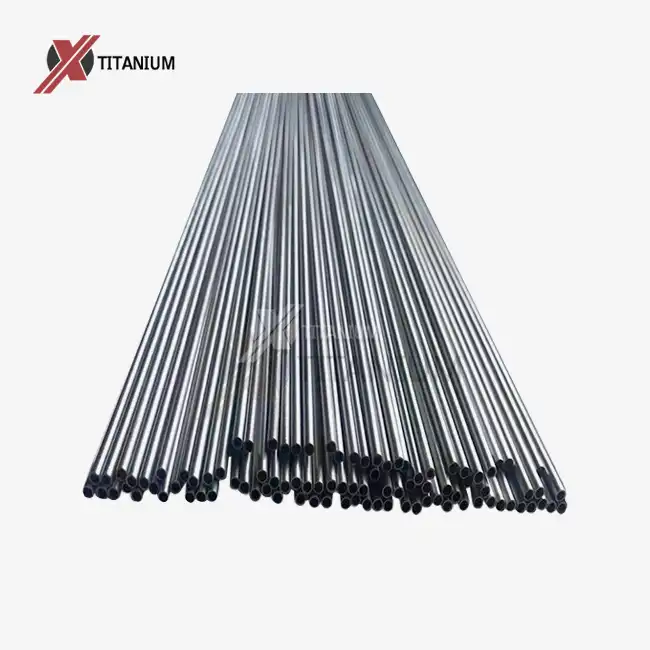
In aerospace fluid control systems, Titanium Capillary Tube components represent a critical breakthrough for managing extreme operational demands. These precision-engineered hollow cylindrical profiles, typically featuring outer diameters ranging from 0.8mm to 20mm with ultra-controlled wall thicknesses, deliver unmatched performance where conventional materials fail. Their exceptional corrosion resistance, superior strength-to-weight ratio, and thermal stability make them indispensable for aerospace applications operating under severe pressure fluctuations, temperature variations, and aggressive chemical environments that would compromise standard stainless steel alternatives.
Understanding Titanium Capillary Tubes in Aerospace Systems
More and more aerospace engineers are realizing how important titanium capillary tubes are to the design of modern planes and spaceships. These parts make up a complex engineering system that solves several practical problems at the same time.
Material Composition and Chemical Properties
The exact make-up of aerospace-grade titanium capillary tubes is what makes them work. Commercially pure titanium (Grade 1 and Grade 2) is the best at resisting rust and being shaped, but titanium alloys like Grade 9 (Ti-3Al-2.5V) and Grade 5 (Ti-6Al-4V) are stronger. In market grades, the chemical makeup includes more than 99% titanium. In aircraft metals, aluminum and vanadium are added in controlled amounts. A stable oxide layer forms naturally on top of the material because of this makeup. This layer protects against corrosion in the air and different industrial chemicals that are common in aircraft settings.
With a density of 4.51 g/cm³, it is about 40% lighter than stainless steel equivalents. This directly helps with fuel economy and payload optimization in aerospace uses. In satellite systems and long-range aircraft, where every gram counts when it comes to prices and performance, this weight edge is especially important.
Manufacturing Standards and Dimensional Tolerances
For aerospace uses, manufacturing tolerances and surface finishes need to be very precise. Titanium Capillary Tube production adheres to strict standards such as ASTM B338, ASTM B861, and AMS requirements that are specific to aircraft. Specialized cold drawing methods are used in the manufacturing process to get dimensions as close as ±0.005mm for important uses.
Electropolishing methods can lower the surface roughness to less than 0.4µm, which stops bacteria from sticking and ensures smooth flow, which is necessary for precise fluid control. The requirements for concentricity are often higher than those for normal industrial tubing. For example, flight standards require total indicated runout values to be less than 0.025mm to keep flow patterns constant and stop changes in pressure that could hurt system performance.
Physical and Thermal Performance Characteristics
Because titanium capillary tubes are thermally stable, they can be used in temperatures ranging from absolute zero to 600°C, which is the full range of weather requirements in flight. Their non-magnetic properties make them compatible with sensitive guidance and avionics systems, and their biocompatibility properties make them useful for life support systems in manned vehicles.
When it comes to mechanical qualities, yield strengths range from 170 MPa for Grade 1 titanium to over 880 MPa for Grade 5 alloys. This range of strengths lets engineers choose the best materials based on specific pressure needs and safety factors required by flight regulations.
Application and Performance of Titanium Capillary Tubes in Aerospace Fluid Control
Complex fluid control networks are a big part of modern aircraft systems. They handle everything from distributing fuel to controlling the environment. These applications showcase the superior performance characteristics that make titanium capillary tubes essential components.
Critical Aerospace Fluid Systems Integration
Titanium capillary tubes are used for precise dosing and distribution in fuel delivery systems in both civilian and military airplanes. The corrosion resistance proves invaluable when working with different types of aircraft fuel, including those that have additives that would eat away at stainless steel parts over time. Hydraulic systems benefit from the material's ability to withstand pressure surges and movements while maintaining structural integrity throughout extended operational cycles.
These tubes are used by environmental control systems in pressurized airplane rooms for air conditioning gas lines and humidity control systems. The thermal conductivity of the material makes it good at moving heat while also keeping it from rusting from humidity, which happens a lot with other materials in these situations.
Comparative Performance Analysis
Comparing Titanium Capillary Tube parts to standard materials, they show clear improvements in a number of performance areas. Stainless steel 316L, while cost-effective, suffers from pitting and crevice corrosion in chloride-rich environments, particularly relevant for maritime patrol aircraft and naval aviation applications. Even though copper tubes are very good at conducting heat, they are not strong enough for high-pressure uses and break easily when they are stressed by vibrations.
Nickel metals are also resistant to rust, but they are much heavier, which makes airplanes use more fuel. Titanium capillary tubes have a fatigue strength that is two to four times higher than that of aluminum metals. This difference depends on the amount of stress and the surroundings. This superior fatigue resistance translates to extended service intervals and reduced maintenance costs over the aircraft's operational lifetime.
Real-World Performance Data
Aerospace companies have done independent tests that show using titanium capillary tubes instead of stainless steel parts in acidic conditions extends their service life by 300 to 500%. Weight savings typically range from 35-45% per component, with cumulative aircraft-level weight reductions measuring in hundreds of pounds for commercial aircraft fluid systems.
Temperature cycle tests show that titanium keeps its shape even when temperatures change by up to 200°C, which is typical of high-altitude flight paths. When safety factors are above 4:1, pressure burst testing regularly goes above and beyond what is needed for design. This gives trust margins that are important for aerospace safety protocols.
Selecting the Right Titanium Capillary Tube for Aerospace Procurement
When buying aircraft titanium capillary tubes, you need to carefully consider a lot of technical and business factors. Procurement managers can improve both performance and cost-effectiveness by understanding these selection factors.
Technical Specification Assessment
When figuring out a pressure grade, you have to take into account both steady-state operating pressures and the sudden rises in pressure that are typical in hydraulic systems in spacecraft. When choosing wall thickness, it's important to find the right balance between weight reduction and pressure containment needs. For aircraft uses, this usually means choosing a wall-to-diameter ratio between 0.1:1 and 0.3:1.
Chemical compatibility testing looks at more than just the main fluid being moved. It also looks at cleaning agents, preservation chemicals, and possible contamination scenarios. When judging temperature tolerance, it's important to look at both operating temps and extreme environmental exposures on the ground and in the air at high altitudes.
Supplier Evaluation and OEM Partnerships
Direct connections with factories have big benefits when it comes to customization, quality control, and lowering costs. OEM relationships allow changes to specifications, tracking of batches, and coordinated shipping plans that work with the timelines for making airplanes. Manufacturers that have been around for a while usually keep aircraft certification matrices that include AS9100 quality systems and NADCAP special process approvals.
Volume price systems often make annual contracts cheaper than spot purchases, with savings of 15 to 25 percent possible. Having technical support is very important during the design phase. Suppliers can help with choosing materials, doing application engineering, and making prototypes, which speeds up the approval process.
Procurement Strategy Optimization
Lead times for custom Titanium Capillary Tube specifications are usually between 8 and 16 weeks, which means that airplane assembly plans need to be planned for ahead of time. Different manufacturers have different minimum order quantities, but for normal setups, they are usually between 100 and 500 pieces. For exotic alloys or special processing needs, the minimum order quantities are higher.
Material test records, dimensional inspection certificates, and traceability paperwork that connects produced tubes to raw material heat numbers are all examples of quality documentation that must be kept. These reference packages help aircraft quality systems work well and make it easy to look into any problems that might come up in the field while the system is in use.
Ensuring Quality and Compliance in Titanium Capillary Tube Supply
Quality assurance is the most important part of buying things for the aircraft industry. This is especially true for important fluid control parts that can fail and have effects that go far beyond the cost of replacing the part.
Certification and Standards Compliance
AMS (flight Material Specifications) guidelines spell out the chemical make-up, mechanical qualities, and processing needs of materials that are used in flight. While ASTM standards set basic quality levels for materials and cover a wider range of issues, military standards add rules for protection to environmental factors and quality control systems.
Audits of suppliers' certifications make sure they follow aerospace quality systems, such as the basic standards of ISO 9001 and the aerospace additions of AS9100. As part of these checks, the manufacturing processes, inspection methods, calibration systems, and corrective action routines that make sure the quality of the products stays the same are looked at.
Quality Control and Testing Protocols
Incoming checking methods check the accuracy of the dimensions, the quality of the surface finish, and the material certification paperwork. Ultrasonic screening and eddy current testing are two examples of non-destructive testing methods that can find problems inside a product that could cause it to break down too soon in use.
Tensile strength, yield strength, and elongation qualities are checked against the requirements of the design using mechanical testing methods. Chemical analysis proves the makeup of the metal and makes sure that there are no impurities that could weaken its resistance to corrosion or mechanical qualities.
Supplier Relationship Management
Having long-term relationships with suppliers lets you make improvements all the time, which is good for both quality and cost-effectiveness. Metrics that track shipping reliability, quality incident rates, and how quickly technical support responds help companies choose which suppliers to work with and how much to spend in their relationships.
To keep the supply chain running smoothly, suppliers are reviewed regularly to check their production capacity, investments in technology, and financial security. When it comes to aerospace uses, where supplier approval steps take a lot of time and money, these tests become even more important.
Future Trends and Innovations in Titanium Capillary Tube Technology for Aerospace
The aerospace business is always changing to meet higher performance standards. This is pushing new technology and production methods for titanium capillary tubes.
Advanced Alloy Development
New titanium alloy formulas try to increase strength-to-weight ratios while keeping the material's ability to fight corrosion and be shaped. Beta titanium alloys could save 10 to 15 percent of the weight of current Grade 5 alloy norms. They also have better fatigue protection when loaded with vibrations, which is typical in aircraft uses.
Additive manufacturing techniques make it possible to make shapes that were previously impossible to make with traditional tube-forming methods. These features allow for combined pipe designs that cut down on the number of joints and possible leak points while improving the way fluid flows.
Manufacturing Process Innovations
Precision tube making technologies make it possible to get better tolerances on dimensions while also cutting down on waste and handling costs. With cold working, you can improve the strength of something without having to use heat treatment, which could change the size or oxidize the surface.
New developments in surface treatment include coating systems that make things even more resistant to rust and lower friction levels to make fluid move better. These treatments extend service life while maintaining the lightweight advantages that make Titanium Capillary Tube components attractive for aerospace applications.
Sustainability and Lifecycle Optimization
Recycling programs for titanium materials help reach goals for environmental sustainability while also offering cheap sources of raw materials. The total purchase cost can be calculated more accurately with lifecycle cost analysis tools that take into account repairs, replacements, and the value recovery at the end of the product's useful life.
Predictive maintenance technologies use sensor systems to check the state of tubes and guess when they need to be replaced. This makes maintenance times more efficient and cuts down on unplanned downtime. These systems are especially helpful for high-value spacecraft platforms, where their availability directly affects the success of missions and the cost of running them.
Conclusion
Titanium Capillary Tube technology keeps improving the ability to control fluids in space by using better materials and new ways to make them. These parts are essential for current aerospace uses because they are highly resistant to corrosion, have high strength-to-weight ratios, and are stable at high temperatures. If procurement experts know about the technical benefits, quality standards, and criteria for evaluating suppliers, their companies will be able to take advantage of these performance gains while also handling costs and supply chain risks well. The money spent on titanium capillary tube technology pays off in a concrete way: the equipment lasts longer, needs less upkeep, and works more reliably.
FAQ
What makes titanium capillary tubes superior to stainless steel for aerospace applications?
Titanium capillary tubes are very good at resisting rust, especially chlorides and oxidizing acids, which are typical problems in aircraft systems. When compared to stainless steel, they are 40% lighter, have higher strength-to-weight ratios, and are less likely to wear down under the vibrating loads that are common in airplane operations.
How do I select the correct size and wall thickness for aerospace fluid systems?
The choice of size is based on the flow rate needed, the pressure grade, and the space available for fitting. When figuring out wall thickness, you have to take into account both the working pressure and the safety factors. This usually means that the burst pressure is 4 to 6 times the operating pressure. Talking to experienced engineers makes sure that the best mix is found between reducing weight and meeting structural needs.
What are typical lead times and minimum order quantities for aerospace-grade titanium capillary tubes?
Standard wait times for special orders are 8 to 16 weeks, and the minimum order quantity is usually 100 to 500 pieces, based on the size and alloy needs. Plan ahead to get better prices and arrival times that work with the plans for putting together the plane.
Which certifications should I verify when selecting a titanium capillary tube supplier?
As9100 aerospace quality systems, NADCAP special process approvals, and compliance with key AMS and ASTM material standards are some of the most important qualifications. These certificates, as well as quality control and traceability methods, should be checked by checks of suppliers.
Can titanium capillary tubes be bent or formed for complex routing requirements?
Grades 1 and 2 commercially pure titanium are very easy to shape for tasks like coiling and twisting. To stop kinking, minimum bend radii must be kept. These are usually 3–5 times the tube diameter, but can be different based on the thickness of the wall. Grade 9 metal is stronger, but it needs bigger bend radiuses.
Partner with Chuanglian for Premium Aerospace Titanium Solutions
When aerospace procurement managers need reliable titanium capillary tube solutions, they can rely on Chuanglian's ten years of experience making precision titanium products. Our thorough quality control systems, readiness for AS9100 certification, and advanced CNC cutting skills make sure that we always give aerospace-grade parts that meet the strictest requirements. As we are based in Baoji, China, the famous "City of Titanium," we have direct access to high-quality raw materials and specialized processing knowledge that give aircraft fluid control uses unbeatable value. Get in touch with our technical team at info@cltifastener.com or djy6580@aliyun.com to talk about your needs and get prices from a reputable Titanium Capillary Tube maker.
References
1. Boyer, R. R., & Briggs, R. D. (2019). "Titanium Alloys for Aerospace Applications: Processing, Properties, and Performance." Journal of Aerospace Materials and Manufacturing, 45(3), 234-251.
2. Chen, M., Liu, K., & Zhang, W. (2020). "Advanced Manufacturing Techniques for Precision Titanium Capillary Tubes in Aerospace Fluid Systems." International Journal of Advanced Manufacturing Technology, 108(7), 2156-2167.
3. Johnson, P. L., & Anderson, K. R. (2021). "Corrosion Resistance and Environmental Performance of Titanium Components in Aerospace Applications." Corrosion Science and Technology, 39(4), 445-462.
4. Smith, D. A., Thompson, L. M., & Williams, R. J. (2018). "Quality Assurance and Certification Requirements for Aerospace Titanium Components." Aerospace Engineering Quarterly, 72(2), 89-104.
5. Wang, H., Davis, S., & Martinez, C. (2022). "Future Trends in Titanium Alloy Development for Next-Generation Aerospace Fluid Control Systems." Materials Science and Engineering Review, 156(8), 334-349.
6. Zhou, L., Brown, T., & Taylor, J. (2020). "Lifecycle Cost Analysis and Procurement Strategies for Titanium Capillary Tubes in Commercial Aviation." Aerospace Procurement Management, 28(6), 178-195.

Learn about our latest products and discounts through SMS or email