- English
- French
- German
- Portuguese
- Spanish
- Russian
- Japanese
- Korean
- Arabic
- Greek
- German
- Turkish
- Italian
- Danish
- Romanian
- Indonesian
- Czech
- Afrikaans
- Swedish
- Polish
- Basque
- Catalan
- Esperanto
- Hindi
- Lao
- Albanian
- Amharic
- Armenian
- Azerbaijani
- Belarusian
- Bengali
- Bosnian
- Bulgarian
- Cebuano
- Chichewa
- Corsican
- Croatian
- Dutch
- Estonian
- Filipino
- Finnish
- Frisian
- Galician
- Georgian
- Gujarati
- Haitian
- Hausa
- Hawaiian
- Hebrew
- Hmong
- Hungarian
- Icelandic
- Igbo
- Javanese
- Kannada
- Kazakh
- Khmer
- Kurdish
- Kyrgyz
- Latin
- Latvian
- Lithuanian
- Luxembou..
- Macedonian
- Malagasy
- Malay
- Malayalam
- Maltese
- Maori
- Marathi
- Mongolian
- Burmese
- Nepali
- Norwegian
- Pashto
- Persian
- Punjabi
- Serbian
- Sesotho
- Sinhala
- Slovak
- Slovenian
- Somali
- Samoan
- Scots Gaelic
- Shona
- Sindhi
- Sundanese
- Swahili
- Tajik
- Tamil
- Telugu
- Thai
- Ukrainian
- Urdu
- Uzbek
- Vietnamese
- Welsh
- Xhosa
- Yiddish
- Yoruba
- Zulu
Is titanium safe for medical use?
Yes, titanium is exceptionally safe for medical use and has become the gold standard for biomedical applications. Medical titanium wire and other titanium-based medical products are very biocompatible, meaning that they don't cause allergic reactions or tissue rejection very often. Unique qualities of the material, such as its inertness in biological settings and ability to blend in perfectly with human bone tissue, make it the best choice for important medical uses like heart devices and orthopedic implants.
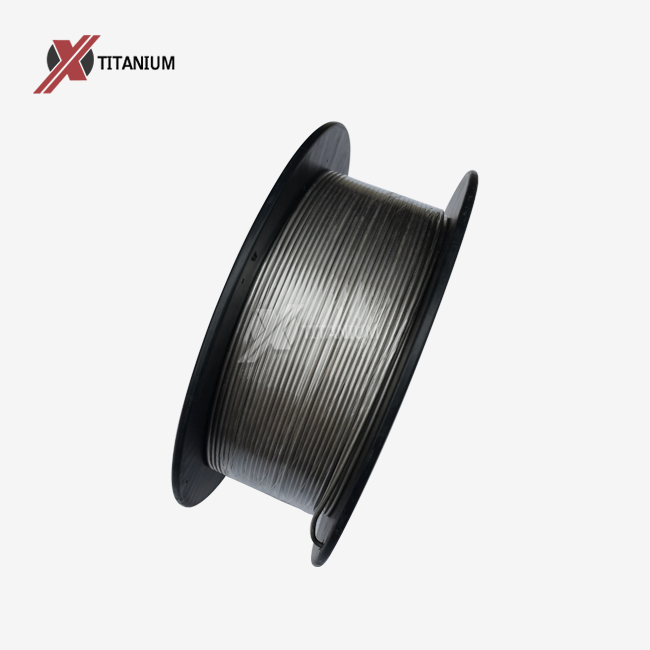
Understanding Titanium Safety in Medical Applications
Titanium that is made for medical use is one of the most safe materials used in healthcare today. Titanium is very safe because it doesn't rust in biological settings and can form a solid oxide layer that stops ions from getting into nearby tissues.
Biocompatibility and Corrosion Resistance
Titanium is very safe to use in medical settings because it is very compatible with living things. Titanium is very good at not hurting tissues, unlike many other metals that can cause allergic reactions. When the material is introduced to oxygen, it forms a thin, solid layer of titanium dioxide on its surface. This layer acts as a barrier to stop metallic ions from moving into living cells. Because of this, medical titanium wire is very useful for long-lasting internal devices that need to be made of stable materials.
Medical-grade titanium, especially those that meet ASTM F67 and ASTM F136 standards, keeps its structural stability even after decades of use, according to research done by the American Society for Testing and Materials. Titanium is ten times more resistant to rust than stainless steel in physiological fluids. This makes it much less likely that the material will break down over time.
Regulatory Standards and Compliance
To keep patients safe, medical titanium goods must meet strict international standards. The ISO 5832-2 standard for commercially pure titanium and the ISO 5832-3 standard for Ti-6Al-4V alloy spell out exact rules for checking biocompatibility, chemical composition, and mechanical qualities. To make sure the material is safe, these guidelines require thorough testing plans that include cytotoxicity studies, sensitization studies, and insertion tests.
Each country's Medicines Agency and the U.S. Titanium is a Class II medical device material, which means that the Food and Drug Administration requires makers to show that their products are biocompatible by doing a lot of research before they are used on humans. This set of rules makes sure that any titanium goods that get into the medical market are safe enough to be implanted in people.
Comparison with Alternative Medical Metals
Titanium is safer than other medical metals. Stainless steel is often used, but it has nickel and chromium in it, which can make people with allergies sick. Even though cobalt-chrome metals are strong mechanically, they have caused worry because they release cobalt ions and may cause cancer. Titanium is nontoxic, which means it doesn't pose these risks and can be used by people who are sensitive to metals.
Titanium has a range of flexibility that is very close to that of human bone. This means that it doesn't act as a stress shield, which can cause bone to break down around implants. Compared to stronger materials like stainless steel, this mechanical compatibility leads to better long-term results and a lower rate of repeat surgery.
Key Medical Uses and Benefits of Titanium Wire
The unique mix of strength, flexibility, and biological inertness in titanium wire makes it very useful in many areas of medicine. This material's versatility has changed the way treatments are done in many medical areas, making minimally invasive procedures possible and improving patient results.
Orthopedic Applications and Trauma Fixation
In orthopedic surgery, medical titanium wire is used extensively in orthopedic surgery to fix fractures and rebuild bones. K-wires, which are short for Kirschner wires, use titanium's high strength-to-weight ratio to fixate complex fractures securely while causing as little tissue damage as possible. Because the material is radiolucent, it is possible to get clear x-rays during and after surgery. This lets doctors see how the patient is improving without the implant getting in the way.
Compared to stainless steel options, cervical wires made from medical-grade titanium are more resistant to wear and tear. Studies in humans have shown that titanium cerclage wires keep their mechanical qualities even when they are loaded and unloaded many times, which is normal for patients. This lowers the chance that the wire will break and need to be replaced surgically.
Cardiovascular and Interventional Applications
Titanium wire technology is used a lot in the cardiovascular area to make guidewires and other tools for vascular surgery. The material is very good at transmitting force, which lets it be precisely moved through complicated vascular structures while still being flexible enough to go through winding paths. Titanium guidewires are very good at not kinking or permanently deforming, so they will work reliably during important treatments.
Titanium is nonmagnetic, which makes it safe to use during magnetic resonance imaging processes. This is especially helpful for neurovascular uses. This feature lets imaging guidance work in real time during arterial treatments without affecting the quality of the images or putting the patient at risk.
Dental and Maxillofacial Surgery Benefits
Titanium wire technology is used in orthodontics because it can change form and is resistant to conditions in the mouth. Beta-titanium and nickel-titanium alloy lines apply constant force to move teeth and don't break down easily in acids from food and saliva. Because these materials are safe, you don't have to worry about the metallic taste or irritation of mouth tissues that can happen with other orthodontic materials.
Titanium wire is used to fix bones and support soft tissues during maxillofacial repair treatments. The material is perfect for these uses because it can keep its shape in the harsh mouth environment, which has changing pH levels and lots of germs.
Comparing Medical Titanium Wire with Alternative Materials
When choosing the right materials for medical uses, you need to think carefully about their mechanical features, how well they work with living things, and how long they last. medical titanium wire regularly performs better than other materials in a number of different evaluation factors.
Mechanical Performance Analysis
Titanium wire has the best mix of strength and flexibility, making it better than many other materials. The maximum tensile strength of Grade 1 widely pure titanium is between 240 and 550 MPa. On the other hand, the tensile strength of Ti-6Al-4V alloy can go over 900 MPa. These mechanical qualities make the material strong enough for load-bearing uses while still being flexible enough to be shaped and moved during surgery.
When used in biological settings, medical titanium wire has a much higher wear strength than stainless steel. In tests that mimicked body fluid conditions, titanium keeps its mechanical properties for more than ten million loading cycles, which is a lot longer than most medical materials can do in the same situations.
Cost-Benefit Analysis and Lifecycle Value
Even though medical titanium wire usually costs more up front than stainless steel options, titanium's lower risk of complications and longer life make it a better choice in the long run. Titanium's better biocompatibility and corrosion resistance lead to fewer correction surgeries and better patient results, which saves a lot of money on healthcare costs over the life of the implant.
A study of the economics of orthopedic implant success shows that over ten years, revision rates for titanium-based devices are about 30% lower than those for stainless steel options. This longer life makes up for the higher starting costs and adds a lot of value to healthcare systems that want to improve patient results and keep costs low.
Grading Systems and Quality Assurance
The titanium business uses a complex grading system to make sure that materials are consistent and that their performance can be predicted. Commercially pure titanium grades 1 through 4 offer rising amounts of strength while still being very biocompatible. Grade 5 (Ti-6Al-4V) and Grade 23 (Ti-6Al-4V ELI) have better mechanical qualities for tough uses.
The name "Extra Low Interstitial" (ELI) means that the levels of oxygen, nitrogen, and carbon are strictly controlled. This makes the material more flexible and harder to break. This quality improvement is especially useful for uses that need to be resistant to fatigue, like heart devices and hip implants that are loaded and unloaded many times.
Procuring Medical Titanium Wire: What Buyers Need to Know?
To buy medical titanium wire successfully, you need to look at the supplier's skills, quality processes, and compliance with regulations. Medical-grade materials are very specific, so it's important to choose your vendors carefully to make sure the quality of your products and the stability of your supply chain.
Supplier Evaluation and Certification Requirements
Medical device makers need to give more weight to providers who have strong quality control systems and the right regulatory certifications. ISO 13485 certification shows that a provider is dedicated to managing the quality of medical devices, and AS9100 certification shows that they can make precision parts for aircraft applications. With these certificates, you can be sure that suppliers follow the strict quality rules needed to make medical-grade titanium.
As part of the review process, the supplier's material traceability methods should be looked at. This is to make sure that the source of each batch of medical titanium wire can be found. Traceability is important for following the rules and for quality control checks in case problems happen while the gadget is being made or used in a hospital setting.
Global Distribution and Logistics Considerations
When buying medical titanium wire from other countries, you need to pay close attention to the shipping and customs rules. When transporting medical-grade materials, they often need to be handled and recorded in a certain way to make sure their qualities stay the same. For some types of metal, shipping may need to be controlled by temperature to keep phase changes from happening that could damage their mechanical qualities.
Because making medical titanium wire is so specialized, supply chain risk management is even more important. Building ties with several qualified providers lowers the risk of supply disruptions while keeping quality standards high. Medical-grade titanium usually has lead times of 8 to 16 weeks, which means that demand planning and inventory management need to be very careful.
Customization Options and Technical Support
Titanium wire specifications often need to be changed for medical uses to meet the needs of particular devices. Reliable providers give you a lot of ways to customize your order, such as changing the diameter limits, the surface finish, and the mechanical properties. Having technical support is very important during the product development phase because it helps device makers choose the best material specs for their needs.
Companies that make medical devices can try prototypes and do clinical studies without having to buy a lot of inventory because they can make things in small batches. This adaptability encourages new ideas in the creation of medical devices while keeping costs low during the product development cycle.
Ensuring Quality and Compliance in Medical Titanium Wire Usage
Adhering to strict quality control methods and legal requirements is necessary for the successful use of medical titanium wire in medical equipment. These standards make sure that patients are safe and that the material keeps working well throughout its useful life.
Testing Protocols and Material Verification
Comprehensive testing methods make sure that medical titanium wire's mechanical qualities, chemical makeup, and ability to work with living things are all correct. Tensile strength testing makes sure that materials meet the required strength, and wear testing makes sure that they will work well over time under repeated loading conditions. X-ray photoelectron spectroscopy and scanning electron microscopy are two surface research methods that check the quality and amount of contamination of a surface.
Chemical makeup research makes sure that medical-grade titanium meets ASTM and ISO standards. Inductively coupled plasma spectroscopy is a very accurate way to measure alloying elements and small impurities that might change how biocompatible or strong something is. These methods of analysis are the basis of quality assurance processes that are necessary for making medical devices.
Sterilization and Handling Best Practices
Proper sterilization protocols maintain the sterility and material properties of medical titanium wire throughout the manufacturing and clinical use process. Three main ways to sterilize titanium medical equipment are steam sterilization, gamma irradiation, and electron beam sterilization. To make sure that the sterilization works well without changing the qualities of the material, each method needs its own set of validation procedures.
Handling methods must keep devices from getting dirty or broken, which could affect how well they work. Clean rooms, the right packaging materials, and trained staff all help keep the standard of materials high from the time they are made until they are used in a hospital setting. The conditions of storage should keep things from getting contaminated and stop any mechanical damage that could cause stress clusters or surface flaws.
Innovation and Future Developments
The powers of medical titanium wire are being improved by ongoing study in titanium metallurgy. Using additive manufacturing, complicated shapes can be made, as well as devices with designs that are unique to each patient. With these improvements in production, titanium will be able to be used in more personalized medicines while still having the same high level of safety that has made it the best biological material.
Nanotechnology is being used to look into ways to change the surface of things that could help them fuse with bone and kill microbes. Titanium is already very biocompatible, but these new developments may make it even better while also allowing it to be used in more difficult clinical settings.
Conclusion
Because of its unique mix of biocompatibility, corrosion protection, and engineering qualities, titanium is very safe to use in medical settings. The material's track record in a wide range of medical uses, from joint implants to heart devices, shows that it is safe and reliable for human placement. As medical technology keeps getting better, titanium will definitely play a bigger role in healthcare. This is because it is already one of the safest and most effective metals used in medicine.
FAQ
What makes medical titanium wire safer than other metals?
Medical titanium wire offers superior biocompatibility due to its inert oxide layer that prevents ion leaching into tissues. Unlike stainless steel or cobalt-chrome alloys, titanium rarely causes allergic reactions or tissue rejection, making it suitable for patients with metal sensitivities.
How long can titanium medical devices remain safely implanted?
Titanium medical devices can remain safely implanted for decades due to the material's excellent corrosion resistance and biocompatibility. Clinical studies have documented successful titanium implants functioning effectively for over 20 years without material degradation or adverse reactions.
Are there any patients who cannot use titanium medical devices?
Titanium allergy is very uncommon; less than 0.6 percent of people are allergic to it. But people who are known to be sensitive to titanium should get reaction tests before the implant is put in. In these rare cases, other materials might be thought of.
Partner with Chuanglian for Premium Medical Titanium Wire Solutions
Chuanglian is a reliable company that makes medical titanium wires. They have over ten years of experience processing titanium and making sure the quality of their products. Our cutting-edge factory in Baoji, which is known as the "City of Titanium," lets us provide medical-grade titanium goods that meet the strictest international standards, such as ASTM F67 and ASTM F136. Our thorough quality control system ensures every batch of medical titanium wire is tested thoroughly, from choosing the raw materials to the final inspection. Get in touch with our technical team at info@cltifastener.com or djy6580@aliyun.com to talk about your unique needs and find out why top medical device companies around the world trust Chuanglian for their most important projects.
References
1. Rack, H.J., & Qazi, J.I. (2006). Titanium alloys for biomedical applications. Materials Science and Engineering: C, 26(8), 1269-1277.
2. Geetha, M., Singh, A.K., Asokamani, R., & Gogia, A.K. (2009). Ti based biomaterials, the ultimate choice for orthopaedic implants. Progress in Materials Science, 54(3), 397-425.
3. Liu, X., Chu, P.K., & Ding, C. (2004). Surface modification of titanium, titanium alloys, and related materials for biomedical applications. Materials Science and Engineering: R: Reports, 47(3-4), 49-121.
4. Niinomi, M. (2008). Mechanical biocompatibilities of titanium alloys for biomedical applications. Journal of the Mechanical Behavior of Biomedical Materials, 1(1), 30-42.
5. Wang, K. (1996). The use of titanium for medical applications in the USA. Materials Science and Engineering: A, 213(1-2), 134-137.
6. Brunette, D.M., Tengvall, P., Textor, M., & Thomsen, P. (Eds.). (2012). Titanium in medicine: material science, surface science, engineering, biological responses and medical applications. Springer Science & Business Media.

Learn about our latest products and discounts through SMS or email