- English
- French
- German
- Portuguese
- Spanish
- Russian
- Japanese
- Korean
- Arabic
- Greek
- German
- Turkish
- Italian
- Danish
- Romanian
- Indonesian
- Czech
- Afrikaans
- Swedish
- Polish
- Basque
- Catalan
- Esperanto
- Hindi
- Lao
- Albanian
- Amharic
- Armenian
- Azerbaijani
- Belarusian
- Bengali
- Bosnian
- Bulgarian
- Cebuano
- Chichewa
- Corsican
- Croatian
- Dutch
- Estonian
- Filipino
- Finnish
- Frisian
- Galician
- Georgian
- Gujarati
- Haitian
- Hausa
- Hawaiian
- Hebrew
- Hmong
- Hungarian
- Icelandic
- Igbo
- Javanese
- Kannada
- Kazakh
- Khmer
- Kurdish
- Kyrgyz
- Latin
- Latvian
- Lithuanian
- Luxembou..
- Macedonian
- Malagasy
- Malay
- Malayalam
- Maltese
- Maori
- Marathi
- Mongolian
- Burmese
- Nepali
- Norwegian
- Pashto
- Persian
- Punjabi
- Serbian
- Sesotho
- Sinhala
- Slovak
- Slovenian
- Somali
- Samoan
- Scots Gaelic
- Shona
- Sindhi
- Sundanese
- Swahili
- Tajik
- Tamil
- Telugu
- Thai
- Ukrainian
- Urdu
- Uzbek
- Vietnamese
- Welsh
- Xhosa
- Yiddish
- Yoruba
- Zulu
Lightweight titanium bolt kits for mountain biking
Mountain bike titanium bolt kits are an important upgrade that does a lot more than just make your bike lighter. They will improve its speed and longevity. These special sets of fasteners, made from aerospace-grade Ti-6Al-4V metal, offer a unique mix of very light weight, resistance to corrosion, and high tensile strength that regular steel hardware just can't match. Whether you're putting together a fleet of rental bikes, coming up with new bike designs, or getting parts for racing teams, titanium bolt kits solve basic problems with longevity, maintenance costs, and consistent performance in a range of riding situations.
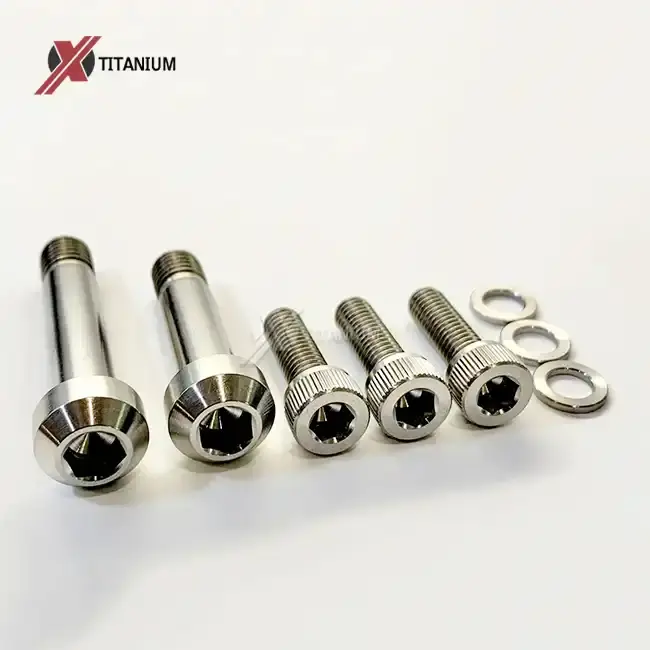
Why Choose Lightweight Titanium Bolt Kits for Mountain Bikes?
Purchasing workers and engineers have to make a big strategy choice when they decide to switch from steel or aluminium fasteners to titanium ones. Understanding the material science behind this upgrade makes it clear why high-end makers and serious users always choose titanium, even though it costs more at first.
Superior Strength-to-Weight Ratio
Tensile strength for grade 5 titanium is between 950 and 1050 MPa, and its mass is only 4.43 g/cm³. This means that they are about 40% lighter than similar steel nuts without affecting the strength of the structure. This savings adds up quickly when you look at how many fasteners are saved across dozens of parts of a bike, from stem clamps to brake callipers to gear hangers. This weight loss happens at important places high up on the bike frame, dropping the center of gravity and making the bike easier to handle when turning quickly and going down steep hills.
The technical effects go beyond just lowering the mass. Titanium naturally reduces vibrations, which keeps fasteners from wearing out in high-stress situations like suspension links and handlebar clamps. This feature is especially useful in enduro and downhill sports, where repeated shock loads can make regular screws open or break before they should.
Unmatched Corrosion Resistance
Titanium naturally protects itself from rust and chemical breakdown by creating a stable, self-healing oxide layer when it comes into contact with air. This feature handles one of the most constant pain points in mountain biking: fastener rust in wet, muddy, and saline environments. Due to galvanic corrosion, traditional steel bolts often get stuck in aluminium frame threads, which makes servicing a headache during regular service intervals. Titanium completely gets rid of this electrochemical bonding, so parts can be taken off easily even after years of being in harsh conditions.
When bike shops and fleet operators switched to mountain bike titanium bolt kits, the labour costs that came with fixing seized fasteners dropped by a huge amount. The material stays stable in pH ranges from very acidic to very basic. Mountain bike titanium bolt kits keep their shape even when exposed to chemicals used for bike washes, road salt, or coastal moisture. This durability immediately turns into longer service intervals and less frequent replacement, both of which are important factors in figuring out the total cost of ownership for procurement departments that are in charge of big stockpiles.
Engineering Precision and Manufacturing Quality
Premium titanium screws are made using CNC machines that keep the dimensions within strict limits set by ISO 965-2 standards. Thread profiles are usually rolled instead of cut. This keeps the metal's grain structure and makes it more resistant to wear when it is loaded and unloaded many times. Surface treatments like vacuum nitriding or Physical Vapour Deposition coating make the surface harder than 2000 HV. This lowers friction coefficients by a large amount and stops thread galling when the part is being put on or taken off.
These manufacturing standards matter greatly in professional uses. Parts with fine thread engagement don't come loose when the trail shakes, and they don't need too much force, which could damage carbon fibre or aluminium parts. Quality control methods make sure that each batch is the same, which is very important for OEMs and wholesalers who need consistent performance across production runs.
How to Select the Right Titanium Bolt Kits for Mountain Bikes?
To do effective procurement, you need to match the fastener specs to the needs of the application, the riding skills, and the long-term supplier's abilities. Beyond just matching sizes, the selection process includes expert review of a number of factors.
Material Grade Verification
According to ASTM B348 norms, real Grade 5 titanium (Ti-6Al-4V) is made up of about 90% titanium, 6% aluminium, and 4% vanadium. This particular metal makeup strikes the best balance between strength, flexibility, and resistance to corrosion for use in bicycles. Procurement teams should check material approvals and request test results proving chemical composition and mechanical properties. Some sellers sell titanium that isn't as good or other materials that don't work as well as expected, which can lead to liability issues and problems with customer happiness.
Application-Specific Requirements
Different mountain biking sports place different performance demands on fastener systems. Cross-country riding focuses on reducing the weight of parts like handlebar stems, seatpost clamps, and bottle cage mounts as much as possible, since every gram affects how well the bike climbs. Titanium's low thermal conductivity stops heat from moving to frame structures during long descents, which is important for downhill uses that need to get rid of heat in brake calliper mounting systems. Enduro and trail riding take both of these things into account, plus the need for rust protection in parts that get wet and muddy a lot.
By understanding these application settings, procurement professionals can choose the right mountain bike titanium bolt kits for specific use cases instead of looking for general solutions. When fixing different frame geometries or retrofitting older bike models with current component standards, the ability to choose custom sizes is especially useful.
Supplier Qualification Assessment
Establishing relationships with qualified manufacturers requires reviewing skills beyond product specs. Quality management certifications, such as ISO9001, show that processes are controlled in a planned way, while credentials related to the business show that the person is an expert in making precision fasteners. Traceability rules make sure that every production batch can be tracked from where the raw materials come from to the final review. This makes sure that people are held responsible when quality problems happen.
At our Baoji facility, we have strict quality control methods in place. From checking the raw materials to making sure the end dimensions are correct, there are many steps in the inspection process. With our CNC machining centers and testing tools, we can meet the most strict requirements while also being able to adjust production to handle both small orders and large ones. Technical support is also important. Suppliers should offer torque specs, installation instructions, and application engineering help to make sure that their products or services work well with yours.
Installing and Maintaining Titanium Bolt Kits: Best Practices
Titanium screws work best and last longer if they are installed and maintained correctly. Common installation mistakes that hurt safety and dependability can be avoided.
Installation Procedures
Titanium needs specific torque values lower than steel versions due to its different friction traits and elasticity. If you tighten aluminium parts too much, the threads could get stripped, and if you tighten them too little, the screws could come loose when the part moves. Always use calibrated torque tools and refer to the torque values given by the maker to make sure you're applying them correctly. Before putting the parts together, clean all the threaded connections very well to get rid of dirt, old grease, and oxidation that could stop the threads from engaging properly.
Use the right anti-seize compounds sparingly on thread surfaces. Because titanium is naturally lubricious, using too much lubricant can make the clamping force less accurate. Specialised titanium assembly pastes have tiny ceramic bits in them that stop galling and keep the torque-tension relationships that you expect. Install bolts in suggested tightening sequences, especially for multi-bolt applications like stem face plates or brake adapters, ensuring even load distribution across mounting surfaces.
Maintenance Protocols
As part of regular inspections, the heads of bolts should be looked at visually for wear, anodised finishes should have consistent colours checked, and measured tools should be used to confirm torque retention. Because titanium doesn't rust, fasteners rarely need to be replaced because of damage from the environment. However, mechanical wear from multiple installation processes does cause them to need to be replaced. Set service intervals based on how often the bikes are actually used. For example, professional race bikes that are put together and taken apart a lot need more frequent replacements than bikes that are used for fun in a rental fleet.
Harsh abrasives that scratch anodised surface treatments should not be used for cleaning. Mild soap solutions and soft brushes are good ways to get rid of mud and grime while keeping the protected layers in place. Keep titanium hardware in clean, dry conditions when keeping extra inventory. Individual packaging will keep the surface from getting damaged during handling. These simple care steps make the product last longer and keep the nice look of the coloured anodised finishes that many riders like because they let them customise their bikes.
Top Titanium Bolt Kits for Mountain Bikes in 2026: Market Overview
There are a lot of different price ranges, customisation choices, and levels of service from suppliers on the market right now. Understanding how competitors are positioned helps procurement professionals find the best sourcing partners for their needs.
Performance and Durability Factors
Leading makers set themselves apart by using precise making, consistent materials, and features that add value. Premium products come in full kits that include all the important parts, like stem hardware, brake parts, derailleur mounting, bottle cages, and suspension links. This way, you don't have to buy different parts separately. The weight savings are about 40% compared to steel across all quality suppliers, but the precision of the measurements and quality of the finish vary a lot between makers.
When comparing durability, you should look at real-world performance data instead of theoretical specs. Suppliers with a history of working with professional racing teams have shown they can be trusted in harsh situations. Customer feedback from bike shops and team techs is very helpful for understanding practical issues like how easy something is to install, how well it holds torque, and how guarantee claims are handled.
Customization and Service Capabilities
Today's buying calls for more and more custom solutions that meet the needs of each product. You can customise by choosing from different sizes, finishes like natural titanium, gold, blue, green, purple, black, and colourful anodising, and different head styles that fit your style or wants. Private labelling, custom packing, and just-in-time shipping programs help buyers who buy in bulk because they lower the costs of keeping inventory on hand while keeping the supply steady.
Through our CNC machining skills, we can make mountain bike titanium bolt kits that are completely customised to meet the exact needs of OEM uses. Our surface treatment facilities provide multiple finishing choices for mountain bike titanium bolt kits, from polishing for simple looks to nitriding for maximum surface hardness. The process of colour anodising gives mountain bike titanium bolt kits a unique look and makes them scratch-resistant so they look professional for a long time. With these features, wholesalers and makers can make their mountain bike titanium bolt kits stand out while keeping quality standards high across all of their lines.
Global Logistics and Support Infrastructure
International procurement includes factors beyond product specs. Reliable suppliers keep extra goods on hand so that orders can be filled quickly and without having to wait for long lead times that mess up production plans or store stocking. Packaging rules should keep screws safe while they're being shipped internationally and make the receiving and quality control processes run more smoothly.
When working together across languages and time zones, communication technology is very important. Technical support teams that are quick to respond answer questions about applications, help with installation, and quickly fix any quality issues. Customs clearance is faster and easier when export processes and documentation experience are used. This means that purchasing teams don't have to deal with as many delays and paperwork. When it comes to building long-term relationships that work, these organisational factors are often just as important as the quality of the products.
Conclusion
It's clear that lightweight mountain bike titanium bolt kits offer measurable performance and operational benefits that support their high price tag in professional mountain biking settings. The mix of a large weight decrease, complete resistance to corrosion, and high strength solves some of the most important problems that OEMs, distributors, and service providers face. When evaluated through total cost of ownership rather than original purchase price alone, titanium fasteners show clear value through extended service life, reduced maintenance requirements, and improved end-user happiness. Strategic relationships with qualified makers give you access to technical know-how, reliable supply lines, and the ability to customise products. These things help your business grow and set you apart from competitors in tough markets.
FAQ
Does titanium rust or corrode in extreme mountain biking conditions?
Titanium is very good at resisting rust in a wide range of environments. The substance creates a steady oxide layer that naturally protects against water, mud, salt, and chemical cleaners that are common in mountain riding. Titanium stays strong and doesn't rust or seize up in aluminium threads like steel screws do. This means that parts can be easily removed even after years of use in seaside or winter riding conditions.
How much lighter are titanium bolts compared to aluminum alternatives?
Titanium is about 40% lighter than steel, but it's hard to make straight comparisons with aluminium because they are so different. Aluminium is lighter than titanium, but it's not as strong, so it needs bigger cross-sections to hold the same amount of weight. This increase in size usually cancels out any weight savings that might be there while lowering longevity. Titanium offers ideal mix of lightweight construction and long-term dependability for critical fastening applications.
Can you accommodate custom bulk orders for OEM integration?
Our manufacturing skills allow us to make customised production runs that meet particular requirements for size, finish, and packing. We regularly work with bike makers, component brands, and sellers who need custom solutions. Our flexible production schedule works with both ongoing supply deals and the project-based procurement rounds that are common in the bicycle business. This lets us offer competitive pricing.
Source Reliable Mountain Bike Titanium Bolt Kits from a Trusted Manufacturer
Baoji Chuanglian New Metal Material Co., Ltd. specializes in precision-engineered titanium fastener solutions serving the global cycling industry. Located in China's renowned "City of Titanium," we combine over a decade of metallurgical expertise with advanced CNC machining capabilities to produce mountain bike titanium bolt kits meeting the most demanding performance specifications. Our Grade 5 titanium fasteners undergo rigorous quality verification at every production stage, ensuring dimensional accuracy, material purity, and surface finish consistency across all orders.
We understand procurement professionals require more than quality products—you need reliable partners delivering consistent supply, responsive communication, and technical support throughout the product lifecycle. Our comprehensive service approach includes application engineering assistance, custom finishing options, and flexible order quantities accommodating both prototype development and volume production requirements. Whether you're sourcing titanium fasteners for competitive racing applications or developing next-generation bike platforms, our team provides the expertise and manufacturing capabilities supporting your success.
Contact our technical sales team today at info@cltifastener.com or djy6580@aliyun.com to discuss your specific requirements. We welcome the opportunity to provide detailed quotations, material certifications, and sample kits demonstrating why leading bike manufacturers and distributors trust Chuanglian as their mountain bike titanium bolt kits supplier.
References
1. ASTM International. (2021). "ASTM B348: Standard Specification for Titanium and Titanium Alloy Bars and Billets." West Conshohocken, PA: ASTM International Standards Organization.
2. Donachie, M.J. (2000). "Titanium: A Technical Guide, 2nd Edition." Materials Park, OH: ASM International.
3. ISO 965-2:2013. "ISO General Purpose Metric Screw Threads - Tolerances - Part 2: Limits of Sizes for General Purpose Bolt and Nut Threads - Medium Quality." Geneva: International Organization for Standardization.
4. Lutjering, G. and Williams, J.C. (2007). "Engineering Materials and Processes: Titanium, 2nd Edition." Berlin: Springer-Verlag.
5. Peters, M., Kumpfert, J., Ward, C.H., and Leyens, C. (2003). "Titanium Alloys for Aerospace Applications." Advanced Engineering Materials, 5(6), 419-427.
6. Schutz, R.W. and Watkins, H.B. (1998). "Recent Developments in Titanium Alloy Application in the Energy Industry." Materials Science and Engineering: A, 243(1-2), 305-315.
Learn about our latest products and discounts through SMS or email