- English
- French
- German
- Portuguese
- Spanish
- Russian
- Japanese
- Korean
- Arabic
- Greek
- German
- Turkish
- Italian
- Danish
- Romanian
- Indonesian
- Czech
- Afrikaans
- Swedish
- Polish
- Basque
- Catalan
- Esperanto
- Hindi
- Lao
- Albanian
- Amharic
- Armenian
- Azerbaijani
- Belarusian
- Bengali
- Bosnian
- Bulgarian
- Cebuano
- Chichewa
- Corsican
- Croatian
- Dutch
- Estonian
- Filipino
- Finnish
- Frisian
- Galician
- Georgian
- Gujarati
- Haitian
- Hausa
- Hawaiian
- Hebrew
- Hmong
- Hungarian
- Icelandic
- Igbo
- Javanese
- Kannada
- Kazakh
- Khmer
- Kurdish
- Kyrgyz
- Latin
- Latvian
- Lithuanian
- Luxembou..
- Macedonian
- Malagasy
- Malay
- Malayalam
- Maltese
- Maori
- Marathi
- Mongolian
- Burmese
- Nepali
- Norwegian
- Pashto
- Persian
- Punjabi
- Serbian
- Sesotho
- Sinhala
- Slovak
- Slovenian
- Somali
- Samoan
- Scots Gaelic
- Shona
- Sindhi
- Sundanese
- Swahili
- Tajik
- Tamil
- Telugu
- Thai
- Ukrainian
- Urdu
- Uzbek
- Vietnamese
- Welsh
- Xhosa
- Yiddish
- Yoruba
- Zulu
Best M8 titanium rotor bolts for mountain bikes
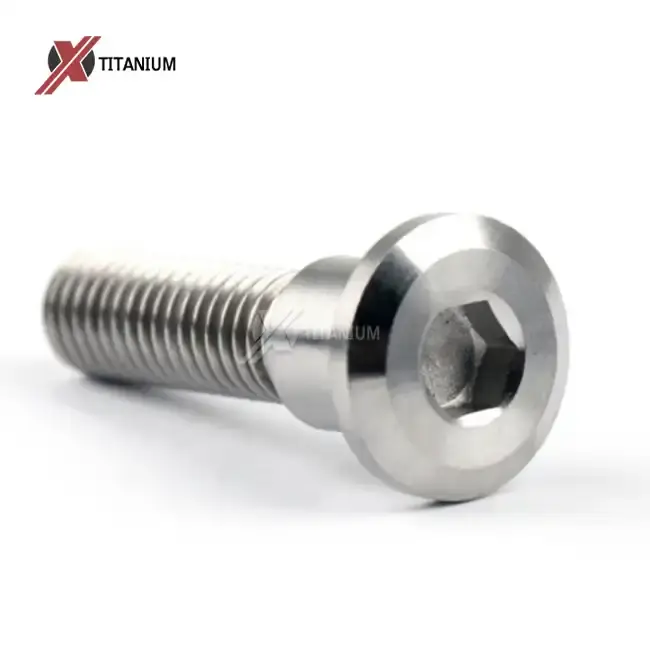
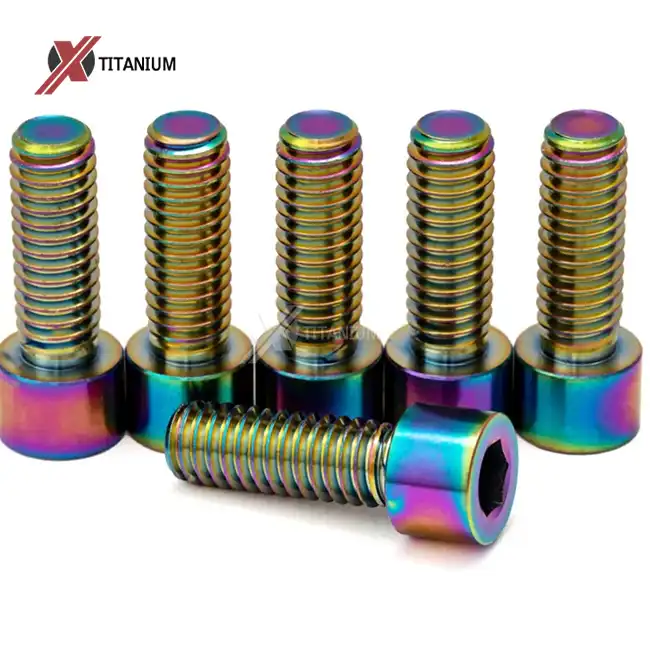
In this article, we'll talk about the best M8 titanium rotor bolts for mountain bikes. These are screws made from aerospace-grade Ti-6Al-4V titanium metal, which is very strong, light, and resistant to corrosion. These special M8 titanium rotor bolts hold brake rotors to wheel hubs with tensile strength greater than 950 MPa. Compared to steel alternatives, they reduce rotational mass by about 45%, making them essential for high-performance cycling situations where safety and efficiency are important.
Understanding M8 Titanium Rotor Bolts: Material and Performance
Defining the M8 Standard and Its Critical Role
M8 titanium rotor bolts are precision fasteners with a normal 1.25mm pitch and an 8mm metric thread width. They are made to handle the high shear forces and thermal cycling that happen in mountain bike brake systems. These parts aren't just for looks; they're important for safety because they keep the brake rotors lined up during steep descents, sudden stops, and long periods of riding in the rain, where regular steel gear often fails. The research that went into these bolts solves some of the most important problems in mountain bike performance. During a single downhill run, the disc brakes heat up to over 300°C and then quickly cool down during recovery periods. This causes the rotor bolts to expand and contract many times. In addition, they have to deal with constant vibrations from uneven trails and huge shear loads when the stopping force is applied to its fullest.
Material Science: Why Grade 5 Titanium Outperforms Alternatives
The formal name for grade 5 titanium metal is Ti-6Al-4V, and it is made up of 6% aluminum and 4% vanadium. Its mechanical qualities make it perfect for use as a rotor bolt because of this particular makeup. The aluminum makes it more resistant to rust and lighter overall, and the vanadium stabilizes the beta phase structure so that it stays strong at high temperatures. At Chuanglian, our CNC machining methods make sure that every bolt is within strict measurement limits of ±0.05mm. This is necessary to keep the clamping force the same across the rotor mounting surface. Precision thread rolling, instead of cutting, is part of the production process. This cold-works the material and lines up the grains along the thread profile, making it much more resistant to wear.
Because titanium has a density of 4.51 g/cm³, a full set of six M8 titanium rotor bolts weighs about 18 grams less than steel ones of the same size. This weight loss is greatest at the wheel's outer radius, where spinning inertia has the most effect. This means that the bike can respond faster to acceleration and use less energy during climbs, which are two things that procurement engineers in the cycle business always put first.
Comparative Material Analysis
Understanding important trade-offs helps buying teams make choices that meet performance needs and stay within budget. Titanium bolts are about 60% lighter than stainless steel bolts, but stainless steel bolts are not as resistant to rust and cost less. Even worse, steel hubs and rotors have a very different thermal expansion coefficient from steel. This creates interface stress during thermal cycling that finally causes thread galling or lasting seizure. Even though aluminum alloy nuts save a lot of weight, they are not strong enough for high-stress situations. Their normal tensile strength of 310–380 MPa is far below the safety margin needed for emergency stopping situations. This is especially true with modern four-piston hydraulic calipers that can clamp forces above 2000N.
Carbon fiber composite fasteners are still in the experimental stage, and there are problems that can't be solved with how long the threads last and how well they resist creeping under long-term gripping loads. Their brittleness causes catastrophic failure modes that happen without notice, so they can't be used for safety-critical brake mounting purposes, even if they are lighter. Grade 5 titanium is the best in this group of materials because it has a tensile strength of 950+ MPa, a hardness of about 35 HRC, and is almost completely resistant to rust from air and saltwater without the need for protection plating that adds weight and breaks down over time.
Comparing M8 Titanium Rotor Bolts with Alternatives for Mountain Bikes
Weight Reduction and Performance Impact
When you look at the specs for the rotor bolts, you can figure out how the rotating mass affects the pedaling performance. When using a standard six-bolt fastening design, steel bolts that weigh an average of 3.2 grams each add up to 19.2 grams per wheel. Titanium wheels, which weigh only 1.8 grams each, cut this down to 10.8 grams per wheel, saving 16.8 grams per bicycle. The parallel axis theory is used to figure out the rotational inertia at the radius that is farthest from the hub axle. This is where the decrease happens. The energy saves are most noticeable during sprints, acceleration stages, and technical climbs, where spinning the wheels up requires a lot of energy input over and over again. Professional testing teams have shown that wattage saves are measurable, but individual results will vary depending on the type of riding style and the location.
Lifecycle Cost Considerations for Procurement Teams
M8 titanium rotor bolts are more expensive than steel options, but a full lifecycle study shows that they have strong total cost benefits. When steel bolts are exposed to wet ride conditions, winter road salt, or coastal environments, they usually corrode within 6 to 12 months and need to be replaced or drilled out during regular maintenance to get rid of seized fasteners. Titanium's inactive oxide layer heals itself when it gets scratched, protecting against rust forever without breaking down. If M8 titanium rotor bolts are put correctly, they should last the life of the bike, saving you the money and time needed to replace rusted fasteners and the work that goes into removing them. This durability is especially useful for procurement managers who are in charge of fleet operations or rental programs, since it means that repair intervals are greatly increased and unexpected breakdowns are decreased.
Anti-Galling Properties in Repeated Assembly
People often say that titanium's tendency to galling (cold welding of joining surfaces under pressure) is a weakness, but this isn't a problem at all if you follow the right installation steps. Using an anti-seize powder made for titanium surfaces keeps bolt threads and aluminum hub threads from touching each other. This habit, along with using the right amount of force, makes sure that removal goes smoothly even after years of use.
When you compare titanium bolts put into aluminum wheels to steel bolts in the same situation, the anti-galling benefit goes the other way. Because steel and aluminum are not electrically compatible and have different hardnesses, there is electrochemical corrosion at the thread contact. This can cause lasting seizure that breaks hub threads when they are tried to be removed. Titanium is more galvanically compatible with aluminum, and its strength is similar to that of aluminum. This makes thread contact more gentle, which protects the hub's integrity over many service cycles.
Installation and Maintenance of M8 Titanium Rotor Bolts
Proper Installation Sequence and Torque Specifications
M8 titanium rotor bolts will work reliably for their whole working life if they are installed correctly. Isopropyl alcohol is used to remove industrial oils, dirt, and old anti-seize residue from the rotor bearing surfaces and hub threads. This is the first step in the process. If these surfaces are contaminated, it changes how the tightening force is distributed and causes stress to build up in some places. After that, the threads are prepared by putting a thin layer of titanium-specific anti-seize powder on the threads and the bottom of the bolt heads. It is important not to use too much compound because it can move into the brake surfaces or make the clamping contact less frictional. The right amount makes a film that can be seen and doesn't build up in thread dips.
To make sure that the clamping forces are spread out evenly across the bearing surface, the rotor installation process needs to be tightened in a star design. To start, all six bolts are finger-tightened. Then, 50% of the goal force is applied, which is usually 3–4 Nm, following a star pattern. On the second pass, each bolt is tightened to 6-7 Nm, and the star pattern is kept. This stepwise method stops the rotor from warping, which is what causes brake pulsation and uneven pad wear.
Essential Tools and Quality Control
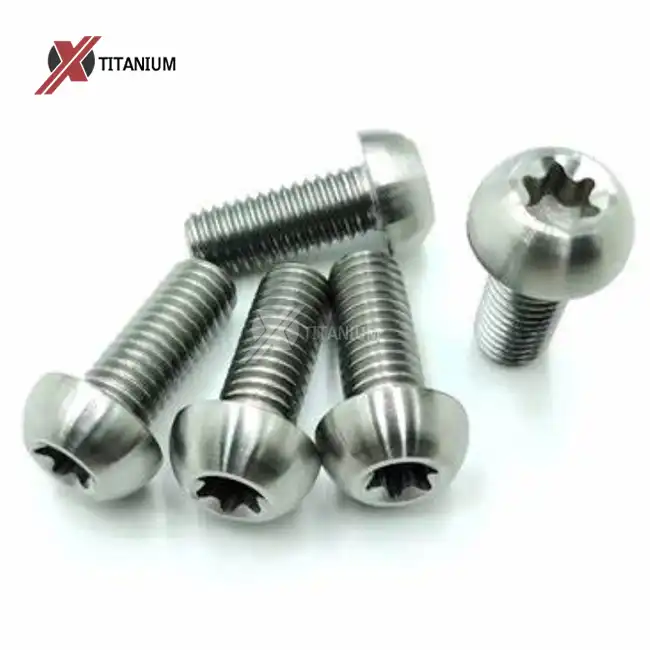
For a good fitting, you need a torque wrench that has been measured and has an accuracy certificate for the 3–10 Nm range. Beam-type torque wrenches are accurate and don't lose their tuning over time. Click-type types are easier to use but need to be calibrated every year. To keep the head from rounding off during fitting, the drive type must precisely match the bolt head specs, such as T25 Torx or a similar hex socket.
Maintenance Protocols and Inspection Intervals
Titanium rotor nuts don't need much care other than being inspected every so often during regular brake work. A visual inspection should look for damage to the bolt head that could mean it was hit or the tool wasn't engaged properly. Thread expansion should be checked to make sure the engagement depth is right, and rotor surface contact should be checked to make sure the tightening force is spread out evenly. Checking the torque every 500 to 1000 kilometers of riding or after taking off a wheel makes sure that the locking integrity stays strong. If bolts keep losing torque, it could mean that the hub's threads are broken and need to be fixed. On the other hand, stable torque numbers mean that the bolts were installed correctly and that the parts will work together. Changing the anti-seize substance once a year during deep maintenance keeps contaminants from building up and making future dismantling harder.
Procurement and Sourcing Guide for M8 Titanium Rotor Bolts
Evaluating Supplier Credentials and Manufacturing Capabilities
When buying M8 titanium rotor bolts, you need to do more than just compare prices when you look at different suppliers. As part of the manufacturing capability assessment, CNC machining equipment that can handle titanium processing should be confirmed. This is because titanium's work-hardening and thermal qualities mean that it needs special tools and cutting settings that are very different from those used for steel or aluminum.
Quality standards give concrete proof of process control and the ability to track down materials. ISO 9001 certification shows that quality management is done in a planned way, and material certifications that confirm compliance with ASTM B348 show that the Grade 5 titanium formula is real. Concerns should be raised right away about the authenticity of materials from suppliers who can't provide batch-specific test results that show tensile strength, chemical makeup, and country of origin. Stable production capacity and wait times are very important for procurement managers who are planning when products will be released or keeping track of inventory levels. Manufacturers who have dedicated CNC capacity and established relationships with titanium suppliers can keep delivery schedules. Traders or small-scale businesses, on the other hand, often have trouble meeting delivery deadlines because of a lack of materials or machines.
Bulk Purchasing Strategies for B2B Buyers
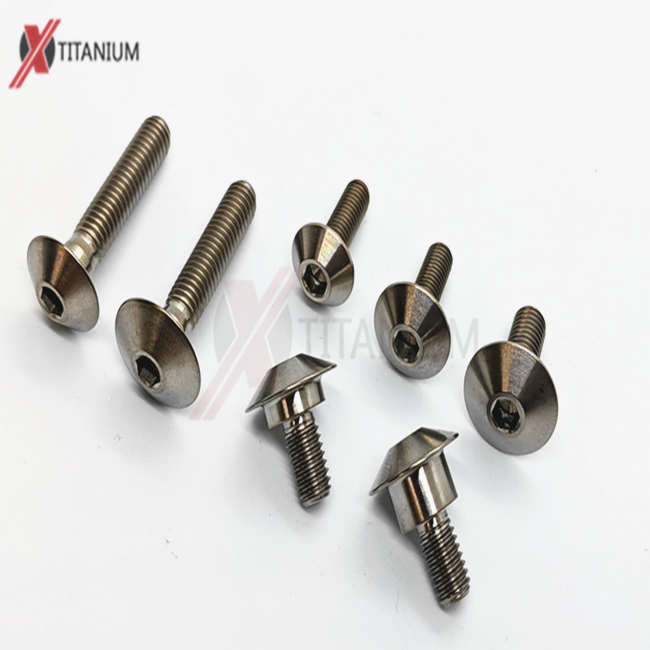
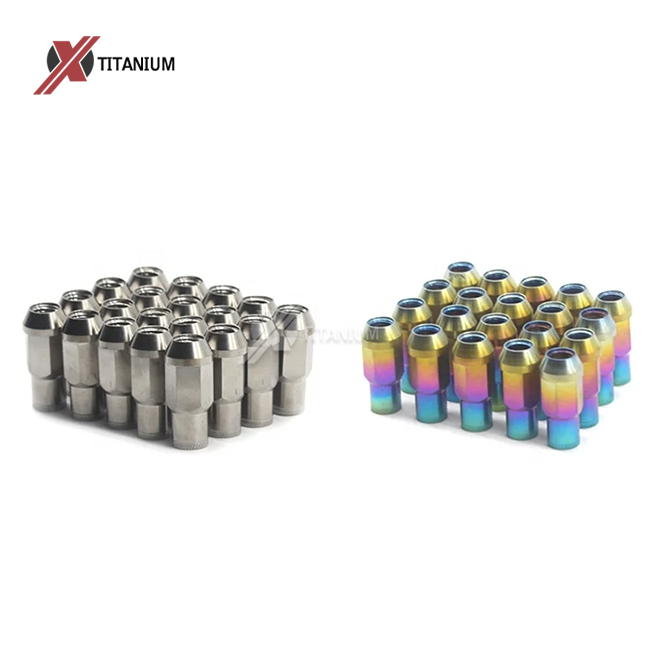
When you buy a lot of titanium screws, you usually get big discounts. The discounts start around 1000 pieces, and there are even bigger ones at 5000 and 10,000 pieces. These numbers are a good fit for the production runs of OEM bicycle makers or the quarterly inventory restocking rounds of aftermarket dealers. Custom surface treatment choices, such as anodized color finishes in blue, gold, purple, black, and colorful shades, let brands stand out and product lines be divided without having to use different bolt designs. Custom anodizing usually has a minimum order quantity of 500 pieces per color. This means that mid-volume buyers who want to stand out with their products can use this choice.
Logistics costs and how the product looks to the end customer are both affected by packaging. For OEM uses, bulk packaging in sealed bags with desiccant saves money, while retail-ready packing with product information and installation directions works best for aftermarket outlets. If you talk about packing needs with the seller at the beginning, you can avoid expensive repackaging jobs and unhappy customers.
Establishing Long-Term Supplier Relationships
The supply chain for titanium fasteners benefits from stable relationships that help improve quality and streamline processes over time. Suppliers who know about the needs of a certain application can suggest design improvements, keep particular inventory on hand to support just-in-time shipping, and set aside technical resources for custom development projects. Baoji Chuanglian New Metal Material Co., Ltd. is a good example of this partnership method because they have specialized titanium manufacturing skills that they have built up over more than ten years of focused production. Baoji City is known around the world as the "City of Titanium" because it has a lot of infrastructure for smelting and processing titanium. Chuanglian has direct relationships with companies that make titanium materials and uses CNC equipment that is calibrated specifically for titanium machining.
Why Choose Titanium Rotor Bolts for Your Mountain Bike Projects?
Quantifiable Performance Advantages
Not just because they look better, the choice to use M8 titanium rotor bolts was based on measured performance gains. A weight loss of 15 to 20 grams per wheel directly improves acceleration and climbing efficiency by lowering the friction of spinning. When competing in cross-country and trail riding, this is especially helpful because small improvements in speed over long distances add up to big time wins. Corrosion resistance greatly increases the useful life compared to steel options, especially in tough settings like coastal areas, winter riding conditions with road salt exposure, or warm countries with high humidity. Mountain bikes that are kept up with titanium gear look and work like new for years longer than bikes that use regular fasteners. This protects the bike's selling value and lowers the total cost of ownership.
Titanium's qualities and the right way of making it give it resistance to vibration and wear. When you combine rolled thread production with high elastic modulus and great fatigue strength, you get fasteners that keep their preload through millions of vibration cycles without coming loose or cracking. This dependability is very important for installing brakes because a broken bolt immediately poses a safety risk.
Industry Applications Beyond Mountain Biking
The technical needs that make M8 titanium rotor bolts popular in mountain bike are similar to those in many other high-performance industries. Professional racing use the same fastener technology for both motorbike and car brake systems because it saves weight and doesn't rust, which gives them a competitive edge. Titanium's high strength-to-weight ratio is used in aerospace for rotor assemblies in helicopters and unmanned aerial vehicles that work in harsh marine settings. Marine engineering uses titanium rivets more and more for braking systems on boats and coastal structures, since steel fasteners break down quickly in saltwater. This validation across industries shows that the material works well and can be made easily. This gives buyers trust that titanium rotor bolt technology is a tried-and-true answer, not just an experiment with new materials.
Future Developments in Titanium Fastener Technology
Material scientists are still looking into ways to make titanium metals stronger while keeping their weight benefits and resistance to corrosion. Beta-titanium alloys that are still being developed have tensile strengths that are close to 1200 MPa. This could mean that even more weight can be saved by lowering the cross-sectional requirements while still keeping safety limits.
Additive manufacturing methods, such as selective laser melting, show promise for making complicated fastener shapes that can't be done with traditional cutting. However, high production costs and problems with surface finish make them less likely to become commercially viable in the near future. As these technologies get better, they might make it possible to add features like locking mechanisms or better head shapes that make installation go more smoothly. Plasma nitriding methods are new ways to treat surfaces that go beyond traditional anodizing. They make the surface harder to 70+ HRC while keeping titanium's resistance to rust. Even though these methods aren't normal, they could be useful in situations where the same thing needs to be installed over and over or where clamping forces are very high.
Conclusion
Finding the best M8 titanium rotor bolts for mountain bikes means balancing performance needs, price limits, and the supplier's skills through a thorough review. Grade 5 titanium alloy has the best strengths, resistance to corrosion, and weight saves. Its high price is justified by its longer service life and measured performance gains. Installing the bike correctly with measured torque tools and titanium-compatible anti-seize will make sure it works well for a long time. Buying from well-known companies that have a track record of processing titanium, full quality standards, and a stable supply chain infrastructure lowers the risks of buying and allows for long-term relationship benefits.
FAQ
Q1: Are M8 titanium rotor bolts compatible with all brake rotor types?
A: Most mountain bike disc brake rotors with six-bolt mounting patterns can be used with M8 titanium rotor bolts that have a 1.25mm thread size. The ISO 7380 and DIN 912 guidelines make sure that all bike parts are the same size, so Shimano, SRAM, Magura, Hope, and many other brands are compatible. The length range of 15mm to 40mm can fit a variety of hub types and rotor thickness requirements. Before you order, make sure you know the exact hub thread depth to make sure the threads engage properly. Usually, a minimum 8mm thread engagement is enough to keep the clamps secure. Centerlock rotor systems need different mounting tools and can't be used with six-bolt bolts, no matter what the material is.
Q2: How can I verify authentic Grade 5 titanium from suppliers?
A: Suppliers you can trust give you material test results that show the chemical makeup analysis shows that the titanium balance meets ASTM B348 Grade 5 standards, with 5.5 to 6.75% aluminum, 3.5 to 4.5% vanadium, and no more than 0.25% iron. Tensile strength approval should say at least 950 MPa, and most numbers are around 1000 MPa. Instead of general certificates, ask for paperwork that is specific to the batch. When you look closely, you can tell that titanium is different because its natural finish is a gray-silver color that is darker than aluminum but lighter than steel. Real titanium feels noticeably lighter than steel versions of the same thing and is not magnetic. Using precise scales to check the weight shows that the density is expected to be about 4.51 g/cm³.
Q3: What is the expected lifespan under normal mountain bike use?
A: When installed correctly, Grade 5 titanium rotor bolts usually last longer than the frame can be used for in regular leisure and enthusiast riding situations. The material is very resistant to stress and rust, which stop the wear and tear processes that shorten the life of steel fasteners. Competitive riders who put their gear through harsh conditions should check the nuts during regular maintenance and maybe replace them every two to three years just to be safe, even though measured wear and tear is still rare. Instead of bolt material breaking down, the main reason for replacement is thread damage from bad fitting or hub thread failure. An annual check of the torque and a visual review are enough to keep an eye on most uses.
Partner with Chuanglian for Premium M8 Titanium Rotor Bolts
You can trust Baoji Chuanglian New Metal Material Co., Ltd. to be your reliable source for M8 titanium rotor bolts. They have the expertise to make them and the customer service to meet your specific B2B needs. Our factory has special CNC machines that are made to work with titanium. We have strict quality control systems that make sure every batch meets the requirements of ASTM B348 for the material and ISO 9001 for the process. We can make solutions just for you, with different head styles, lengths (15mm to 40mm), and anodized color finishes that help your brand stand out. For purchasing managers, clear prices for large orders, solid lead times backed by well-kept inventory, and full material certifications with full tracking paperwork are all benefits. You can email our technical team at info@cltifastener.com or djy6580@aliyun.com to talk about your unique needs, get full product specs, or get price quotes for large orders.
References
1. ASTM International. (2020). Standard Specification for Titanium and Titanium Alloy Bars and Billets (ASTM B348). West Conshohocken: ASTM International.
2. Donachie, M.J. (2000). Titanium: A Technical Guide, 2nd Edition. Materials Park: ASM International.
3. International Organization for Standardization. (2011). Hexagon Socket Button Head Screws (ISO 7380-1:2011). Geneva: ISO.
4. Lutjering, G. & Williams, J.C. (2007). Titanium, 2nd Edition. Berlin: Springer-Verlag.
5. Peters, M., Kumpfert, J., Ward, C.H. & Leyens, C. (2003). Titanium Alloys for Aerospace Applications. Advanced Engineering Materials, 5(6), 419-427.
6. Society of Automotive Engineers. (2015). Aerospace Material Specification for Titanium Alloy Bars, Wire, Forgings (AMS 4928). Warrendale: SAE International.
Learn about our latest products and discounts through SMS or email