- English
- French
- German
- Portuguese
- Spanish
- Russian
- Japanese
- Korean
- Arabic
- Greek
- German
- Turkish
- Italian
- Danish
- Romanian
- Indonesian
- Czech
- Afrikaans
- Swedish
- Polish
- Basque
- Catalan
- Esperanto
- Hindi
- Lao
- Albanian
- Amharic
- Armenian
- Azerbaijani
- Belarusian
- Bengali
- Bosnian
- Bulgarian
- Cebuano
- Chichewa
- Corsican
- Croatian
- Dutch
- Estonian
- Filipino
- Finnish
- Frisian
- Galician
- Georgian
- Gujarati
- Haitian
- Hausa
- Hawaiian
- Hebrew
- Hmong
- Hungarian
- Icelandic
- Igbo
- Javanese
- Kannada
- Kazakh
- Khmer
- Kurdish
- Kyrgyz
- Latin
- Latvian
- Lithuanian
- Luxembou..
- Macedonian
- Malagasy
- Malay
- Malayalam
- Maltese
- Maori
- Marathi
- Mongolian
- Burmese
- Nepali
- Norwegian
- Pashto
- Persian
- Punjabi
- Serbian
- Sesotho
- Sinhala
- Slovak
- Slovenian
- Somali
- Samoan
- Scots Gaelic
- Shona
- Sindhi
- Sundanese
- Swahili
- Tajik
- Tamil
- Telugu
- Thai
- Ukrainian
- Urdu
- Uzbek
- Vietnamese
- Welsh
- Xhosa
- Yiddish
- Yoruba
- Zulu
What are the benefits of using titanium bolts on a bicycle frame?
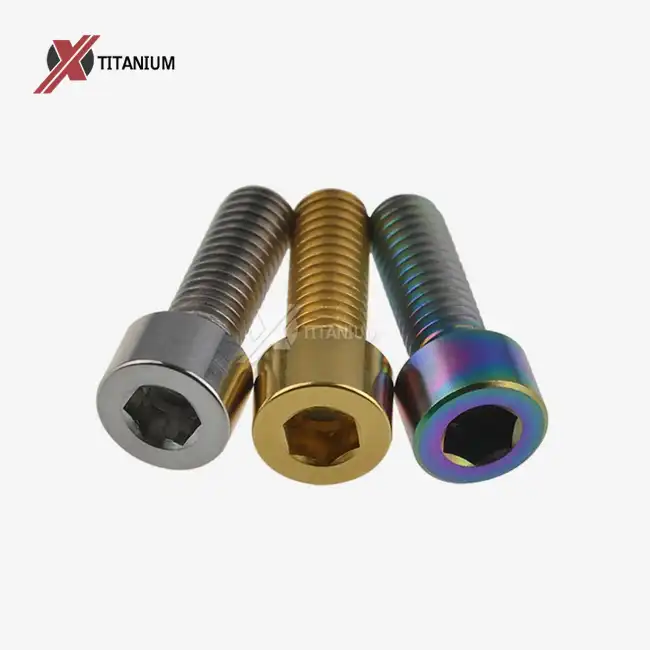
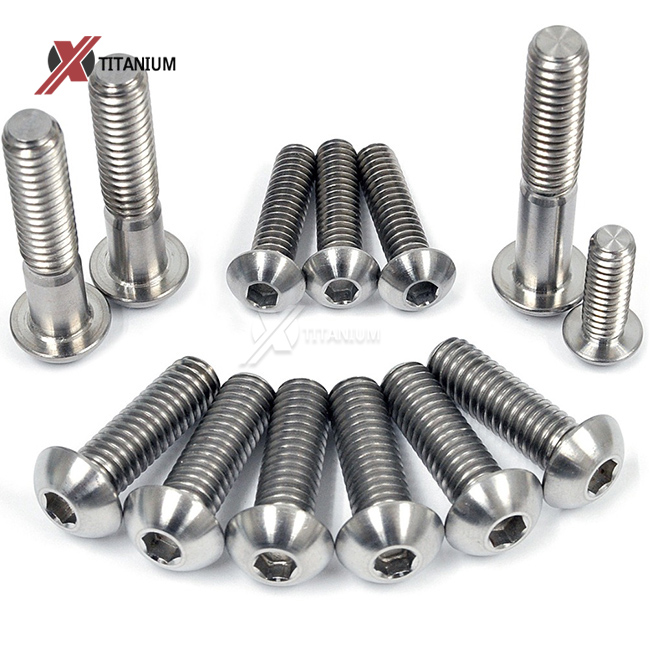
Titanium bicycle bolts are a strategic upgrade for companies that want to improve performance, longevity, and brand placement in bike markets that are very competitive. These precision-engineered fasteners are mostly made from aerospace-grade Ti-6Al-4V (Grade 5) titanium alloy. They offer an excellent mix of lightness, resistance to corrosion, and mechanical strength that solves important problems in bicycle frame assembly and management throughout its lifecycle. Compared to steel or aluminium bolts, titanium bicycle bolts lower frame weight by about 40% per fastener while keeping tensile strengths of up to 900 MPa, which ensures structural integrity during high-stress riding situations. Their self-healing oxide layer makes them extremely resistant to damage from the environment. It gets rid of rust and galvanic corrosion problems that shorten the life of parts and make insurance costs go up.
Understanding Titanium Bicycle Bolts: Specifications and Key Properties
Titanium bicycle bolts made for bicycle frames are made using special techniques that set them apart from other gear. At Chuanglian, we make these parts using CNC machining on Grade 5 titanium metal. This makes sure that all output batches are the same size and have the same mechanical properties.
Material Composition and Alloy Characteristics
The Ti-6Al-4V alloy is made up of 90% titanium, 6% aluminium, and 4% vanadium. Its structure is a good mix of flexibility and toughness. The stress strength of this particular mixture is about 880 MPa, but it only has a density of 4.43 g/cm³, which is almost half that of steel. The aluminium content raises the ratio of strength to weight, and the vanadium content makes it easier to work with in hot conditions and keeps the beta phase stable during heat treatment. Manufacturers who work with custom frame designs like this metal because it is easy to predict how it will behave during installation and doesn't melt when cold, which can happen with titanium when it touches itself under load.
Manufacturing Processes and Quality Control
Instead of cutting, our production method uses thread rolling technology, which keeps the material's grain structure and makes the wear life 30% longer than with polished threads. Through this cold-working process, the thread sides become work-hardened. This makes the surface stronger against cyclic stress from vibration and contact. The sizes of each bolt are checked against DIN 912 or ISO 7380 standards, based on the needs of the head style. Some surface treatments are polishing for rough finishes, anodising for special colours like gold, blue, green, purple, black, and rainbow, and nitriding for tougher surfaces in high-wear situations.
Size Range and Application Specifications
Standard production sizes range from M3 to M12 in diameter, and can be used for a wide range of things, such as bottle cage mounts, stem clamp bolts, and brake calliper attachments. The thread size is based on ISO metric coarse standards, but custom fine-thread specs can be made to fit specific frame designs. Tolerances for length keep accuracy at +/-0.1mm, making sure that threaded plugs or frame bosses have the right contact depth. Procurement managers like that these standard sizes work well with current assembly methods and don't require any changes to the tools used when switching from steel parts.
Core Benefits of Using Titanium Bolts on Bicycle Frames
Bicycle makers can meet a number of operating and market positioning goals by switching to titanium bicycle bolts. These benefits go beyond just switching materials; they have measurable effects on the prices and perceptions of a business over its entire lifecycle.
Weight Reduction and Performance Enhancement
When compared to steel gear, each titanium bolt saved saves about 6 to 8 grams. When used on the whole frame assembly—which usually needs 20 to 40 nuts, depending on the part—the weight saves add up to 120 to 320 grams. This decrease happens at important connection places instead of in the structural tubes, which lowers the mass that rotates at the wheel hubs and the weight that is sprung in suspension systems. These savings are especially useful for competitive racing uses where rules don't let you change the frame but do let you switch out the hardware. When engineers are trying to meet UCI weight limits, they need titanium parts to make sure they stay under 6.8 kg without sacrificing safety.
Corrosion Resistance and Environmental Durability
A inactive oxide layer forms naturally on titanium surfaces. This layer protects well against chloride, wetness, and changes in pH. After 1000 hours of contact in salt spray tanks, there is no measurable corrosion. This is in conditions that make pitting noticeable in stainless steel within 200 hours. This resistance is especially helpful for bikes that are used near the coast, during the winter when they are exposed to road salt, or while bikepacking where they have to cross streams and deal with changing weather. Maintenance times are greatly increased because bolts keep their original torque specifications and don't thread gall or seizure like they do at aluminum-to-steel interfaces. The number of warranty claims for failed fasteners goes down by a measurable amount. This lowers the cost of after-sales help and protects the brand's image.
Mechanical Reliability Under Cyclic Loading
Titanium has great wear qualities that make it work reliably after millions of stress cycles. Because the material has a high durability limit (about 510 MPa for Grade 5 alloy), bolts won't crack even in places with a lot of shaking, like disc brake mounts or suspension pivots. Titanium stays strong even when the suggested preload range is fully exceeded, while aluminium bolts can fail from fatigue at force levels well below their static strength value. Quality assurance data from field testing shows that properly fitted titanium bicycle bolts don't fail because of fatigue over ten years of use. This is true even in professional race situations where landing hard many times and stopping hard is common.
Aesthetic Value and Brand Differentiation
Titanium gear looks good, which adds to the perceived value of high-end frame builds. The unique grey finish or anodised colour choices of raw titanium make it possible to match frame colours, providing a unified look that shows attention to detail. Custom builders use this ability to change the way things look to set their products apart in crowded markets where looks are just as important as technical specs when it comes to buying decisions. Titanium stays clean and corrosion-free throughout a product's lifetime, which is better for photography for marketing materials than steel bolts that get rust spots on clear-coated frames.
Titanium Bicycle Bolts vs Other Common Bolt Materials: A B2B Comparison
Before making a purchase choice, you need to know how titanium bicycle bolts stack up against other materials in terms of performance and cost. Each material has its own pros and cons that make it suitable for different product plans and customer groups.
Steel Bolts: Traditional Strength with Weight Penalties
High tensile strength at a low cost is what grade 8.8 and 10.9 steel nuts offer. This is why they come standard on entry-level and mid-range frames. Their main flaw is that they are heavier than titanium alternatives—a full bolt kit adds 200 to 400 grams. To stop corrosion, you need to use zinc plating or black oxide coats, but these wear off over time and make surfaces look bad. Putting threads into aluminium frames can cause galvanic rusting at the contact, so dielectric grease needs to be used during assembly. Steel is still good for uses where weight is less important than cost, but makers that are trying to reach performance consumers see it as a compromise more and more.
Aluminum Bolts: Lightweight but Limited by Fatigue Characteristics
Aluminium metal screws (usually 7075-T6) can reduce weight in a way that is similar to titanium, but the cost of the materials is much lower. Their lower tensile strength (about 500 MPa), on the other hand, means they can only be used in low-stress connection places like fender mounts or accessory clips. Aluminium isn't good for high-cycle or important structure links because it doesn't hold up well against fatigue. Thread stripping during installation is a constant quality control problem, especially when assembly workers don't know how to work with the material's limited flexibility. When purchasing aluminium, teams have to weigh the initial cost savings against higher scrap rates and a smaller range of uses.
Stainless Steel: Corrosion Resistance Without Weight Optimization
Austenitic types of stainless steel (304, 316) are very good at resisting rust and still being strong. The weight stays the same as carbon steel, so the efficiency benefits in uses that care about weight are lost. Because the material tends to gall when installed, it's important to be careful with the pressure and use anti-seize powder. Some types of stainless steel have magnetic qualities that can mess up electronic shifting systems or power meter calibration. In small amounts, titanium's high price makes stainless steel a compromise that doesn't meet the needs of either cost or performance optimisation.
Titanium is the best material when the value over its lifetime justifies the cost of the original investment. Total cost of ownership analysis, which takes into account weight performance, maintenance intervals, insurance claims, and brand positioning, shows that makers who serve performance-oriented market groups can make a lot of money.
Procurement Insights: Sourcing Titanium Bicycle Bolts for Your Business
To build trusting relationships with suppliers of titanium bicycle bolts, you need to look at more than just price quotes. To make sure stable quality and reliable delivery, manufacturing complexity and the ability to track materials require thorough screening processes.
Supplier Qualification and Certification Verification
Manufacturers with a good reputation use ISO 9001 quality management systems and give out material certifications that can be tracked back to mill test records. Make sure that the titanium alloy your sellers use meets ASTM B348 standards and that they keep records of the metal's chemical make-up and mechanical properties for each production lot. Coordinate measuring machines (CMM) should be used for dimensional checking in manufacturing facilities, and calibration records for torque testing tools should be kept. Site audits show limits on production capacity and quality control procedures that affect the uniformity of batches. Suppliers to the aircraft or medical device industries usually have stricter process controls, which makes it less likely that fastening performance will vary.
Custom Specification Development and Prototype Cycles
Custom bolt specs are often needed for frame designs with unique geometry or special attachment systems. Good providers help engineers come up with specifications by giving advice on things like thread engagement length, head style choice, and surface treatment choices. Before committing to production numbers, prototype sizes let you test fitment and torque characteristics. Lead times for special tools are usually between 4 and 6 weeks, and the first production runs happen about 2 to 3 weeks after that. It's important to be clear about dimensional tolerances, surface finish standards, and packaging specs so that goals are met and goods are shipped on time.
Volume Pricing Structures and Inventory Management
The high cost of titanium and the difficulty of working with it make economies of scale that favour bigger orders. Price breaks usually happen when 500, 1000, or 5000 pieces of a size or style are sold. Annual forecasting lets sellers buy raw materials ahead of time at good prices, which lowers unit costs by 15 to 20 percent compared to spot sales. With consignment inventory deals, producers can keep their production options open without having to spend a lot of money on fastener stock. For normal sizes, the minimum order quantity usually starts at 100 pieces. For custom specs, the minimum order quantity is higher to cover the cost of the tools needed to make the product.
Maintenance and Best Practices for Titanium Bicycle Bolts
The performance benefits and service life of titanium bicycle bolts are at their best when they are installed and maintained correctly. Technical help for assembly teams makes sure that the work is done well and that damage doesn't happen because of bad handling.
Installation Torque Specifications and Thread Preparation
Because titanium has a lower modulus of elasticity than steel, the torque numbers need to be changed to get the same gripping force. Most of the time, recommended torque sets are 10 to 15 percent less than steel versions of the same size. When you use torque wrenches that are set to within ±4% accuracy, you can avoid over-tightening, which can damage the threads, and under-tightening, which lets the threads come loose when the machine shakes. Applying anti-seize powder to the first three threads of aluminium or carbon fibre parts improves thread engagement by lowering installation force and stopping galling. Standard assembly greases should not be used because they can trap moisture and weaken the oxide layer's defensive properties.
Inspection Protocols and Service Interval Guidelines
Every 500 hours of riding or once a year, whichever comes first, the bike should be inspected visually. Check the contact face of the bolt heads for signs of rust. This means that different metals are reacting galvanically, which needs dielectric separation. Check the threads for damage or cross-threading that could weaken the clamps. Taking off and putting back on during regular maintenance lets you check the state of the threads in frame bosses. Any bolt that has obvious deformation, cracks starting at the head-to-shank radius, or thread damage that covers more than 10% of the contact length needs to be replaced. Keeping track of the force values during reinstallation gives quality control systems information about trends.
Storage Conditions and Handling Procedures
Keep your goods in climate-controlled spaces where the relative humidity is below 60% to keep finished surfaces from getting wet. Store nuts in bins that are separated by size and finish to keep them from getting mixed up and to make inventory management easier. Anodised surfaces are easy to scratch when handled, so expensive finishes need to be kept in padded cases or individually packed. When getting ready for an installation, don't touch any steel tools because the embedded steel bits can cause localised rust. Teaching assembly workers how to handle titanium in a special way lowers the risk of damage and ensures that the parts work perfectly when they are installed.
Conclusion
Titanium bicycle bolts offer real benefits in reducing weight, lasting longer in harsh environments, and being mechanically reliable, all of which meet the needs of frame manufacturers who focus on performance. The material's high strength-to-weight ratio, resistance to rust, and resistance to wear make it useful for differentiating brands in competitive markets and solving important problems in managing the lifecycle of a product. Even though the starting costs are higher than other options, the total cost of ownership study shows that it is well worth the extra money because it requires less maintenance, has longer service intervals, and is less likely to void the warranty.
For integration to go smoothly, you need to work with skilled providers who can help with engineering, keep up strict quality standards, and make sure that all output batches of materials have the same properties. When used properly and according to the instructions, these screws are an investment in the quality of the product and its place in the market.
FAQ
Are titanium bicycle bolts completely rust-proof in all conditions?
Titanium forms an oxide layer that heals itself, which makes it very resistant to rust in almost all riding conditions, such as salty air and high humidity. It won't rust like steel, but it's still important to follow the right steps when installing it. When you use different metals together without dielectric separation, galvanic reactions can happen that affect other parts nearby. Regular inspections should still be part of maintenance plans, but they should happen at much longer times than with steel tools.
How much weight can manufacturers save by switching to titanium fasteners?
A full frame setup usually needs 20 to 40 nuts, but this depends on the specifications of each part. When compared to steel bolts, each titanium bicycle bolt saves about 6 to 8 grams. Total weight loss is between 120 and 320 grams per frame. Full-suspension versions with a lot of pivot and linkage pins save the most weight. This weight loss happens at attachment places instead of structural parts. This improves efficiency without weakening the frame.
Can Chuanglian produce custom titanium bolts for specialized frame designs?
Yes, special specs can work with different shapes and attachment methods. Engineering support helps with choosing the right head style, optimising thread contact, and describing the surface treatment. Before committing to production, prototype numbers are used to make sure that the parts fit properly. Typical wait times for first custom orders, which include preparing the tools, are 6 to 8 weeks.
Partner with Chuanglian for Premium Titanium Bicycle Bolt Solutions
Chuanglian is an expert at making high-precision titanium bicycle bolts that meet the strict needs of frame makers who focus on performance. Our CNC milling skills and knowledge of Grade 5 Ti-6Al-4V materials help make sure that the quality of each output batch is the same. This is backed up by full material certifications and measurements checking. During the integration process, procurement managers can get expert help, changeable order numbers, and help making custom specifications. Our factory in Baoji, China, is the heart of titanium making in the country. It offers a stable supply chain and low prices for both prototypes and large orders.
We keep our ISO 9001 license and work with clients in medical, high-performance sports, and the aircraft industry. To talk about your titanium bicycle bolt needs, email our tech team at info@cltifastener.com or djy6580@aliyun.com. Chuanglian provides the quality, dependability, and technical support that are necessary for successful product development, whether they are getting standard sizes or making custom screws for unique frame designs.
References
1. American Society for Testing and Materials. (2020). Standard Specification for Titanium and Titanium Alloy Bars and Billets. ASTM B348-13. West Conshohocken, PA: ASTM International.
2. Boyer, R., Welsch, G., & Collings, E.W. (2019). Materials Properties Handbook: Titanium Alloys. Materials Park, OH: ASM International.
3. Deutsches Institut für Normung. (2018). Hexagon Socket Head Cap Screws: Product Grade A. DIN 912. Berlin: DIN Standards Committee.
4. International Organization for Standardization. (2017). Fasteners—Mechanical Properties of Corrosion-Resistant Stainless Steel Fasteners. ISO 3506-1. Geneva: ISO Central Secretariat.
5. Lutjering, G., & Williams, J.C. (2021). Titanium: Engineering Materials and Processes (2nd ed.). Manchester: Springer-Verlag.
6. Society of Automotive Engineers. (2016). Aerospace Material Specification for Titanium Alloy Bars, Wire, Forgings, and Rings. AMS 4928. Warrendale, PA: SAE International.
Learn about our latest products and discounts through SMS or email