- English
- French
- German
- Portuguese
- Spanish
- Russian
- Japanese
- Korean
- Arabic
- Greek
- German
- Turkish
- Italian
- Danish
- Romanian
- Indonesian
- Czech
- Afrikaans
- Swedish
- Polish
- Basque
- Catalan
- Esperanto
- Hindi
- Lao
- Albanian
- Amharic
- Armenian
- Azerbaijani
- Belarusian
- Bengali
- Bosnian
- Bulgarian
- Cebuano
- Chichewa
- Corsican
- Croatian
- Dutch
- Estonian
- Filipino
- Finnish
- Frisian
- Galician
- Georgian
- Gujarati
- Haitian
- Hausa
- Hawaiian
- Hebrew
- Hmong
- Hungarian
- Icelandic
- Igbo
- Javanese
- Kannada
- Kazakh
- Khmer
- Kurdish
- Kyrgyz
- Latin
- Latvian
- Lithuanian
- Luxembou..
- Macedonian
- Malagasy
- Malay
- Malayalam
- Maltese
- Maori
- Marathi
- Mongolian
- Burmese
- Nepali
- Norwegian
- Pashto
- Persian
- Punjabi
- Serbian
- Sesotho
- Sinhala
- Slovak
- Slovenian
- Somali
- Samoan
- Scots Gaelic
- Shona
- Sindhi
- Sundanese
- Swahili
- Tajik
- Tamil
- Telugu
- Thai
- Ukrainian
- Urdu
- Uzbek
- Vietnamese
- Welsh
- Xhosa
- Yiddish
- Yoruba
- Zulu
Are titanium screws better for rear derailleurs in wet conditions?
Engineers and procurement specialists often wonder if titanium screws work better than other types of screws in wet conditions when they are looking at fastener materials for bicycle gear parts. Without a doubt, the answer is yes. Rear Derailleur Titanium Screw assemblies are much more resistant to rust, mechanical reliability, and life than steel or aluminium bolts when they are exposed to salt rain, water, and humidity. Because they are naturally resistant to environmental degradation and have a high strength-to-weight ratio, they are the best choice for high-performance cycling uses that happen in bad weather where component failure has big practical and cost effects.
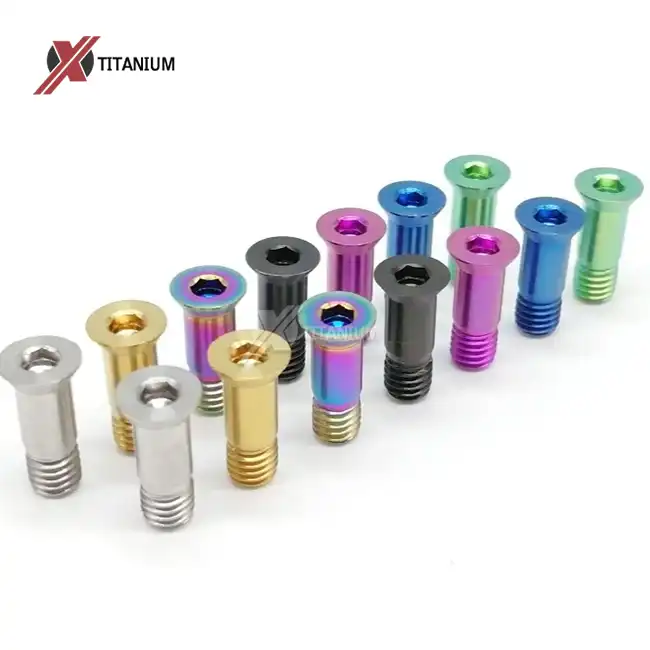
Understanding Titanium Screws in Rear Derailleurs
Rear derailleur kits are important parts of the drivetrain that make sure the chain is properly positioned and that the shifts work well. During their service life, the bolts that hold these systems together are constantly subjected to mechanical stress, vibration, and the elements. Traditional steel bolts are strong enough at first, but they quickly weaken when they come into contact with water. This can cause corrosion-related failure modes that affect the accuracy of the moving and the mechanical integrity of the system.
The Functional Role of Derailleur Fasteners
The guide pulleys, tension arms, and frame connection points stay perfectly aligned thanks to mounting nuts and adjusting screws inside derailleur assemblies. These small parts are a big part of keeping the accuracy of linked changing across all gear ranges. Any changes in size or strength caused by rust directly lead to poor shift quality and the possibility of total mechanical failure while in use.
Material Selection Impact on Component Lifecycle
Choosing between titanium, steel, and aluminium screws has a big impact on how often they need to be maintained, replaced, and the total cost of ownership. Decisions about procurement made during the early stages of product design have an impact on insurance claims, customer happiness, and the image of the brand. Understanding how materials work in the real world lets you make smart buying decisions that balance the money you spend now with the value you get in the long run.
Why Wet Conditions Challenge Rear Derailleur Screws?
Bicycle screws can fail in a number of ways when they are exposed to moisture. Corrosive substances are released by rain, humidity, sweat, and road spray. These attack metal surfaces through electrochemical processes. Wet places speed up the oxidation process, damage protective layers, and allow galvanic corrosion to happen when metals that are not the same type touch each other in part combinations.
Corrosion Mechanisms in Humid Environments
When steel fasteners are subjected to water and air, they rust, which is made of iron oxide. This makes the structure less strong over time by removing material. This process of breaking down speeds up when salt from the coast or winter road repairs is present. Even though aluminium screws naturally make protective oxide layers, they can crack and pit when they are loaded and unloaded over and over again in chloride-rich settings. These types of failure show up as threads that won't move, less clamping force, and severe fastener breakage.
Operational Consequences of Fastener Degradation
Corroded derailleur mounting bolts make it harder to align the bike correctly, which causes changing problems and faster wear on the gear. When adjustment screws get stuck, they stop the cable tension from being properly calibrated, which means that rear derailleurs don't work. When mechanical stress and environmental damage come together, they cause traditional fasteners to fail early, which means they need to be replaced more often and add to the upkeep load for both fleet managers and individual users. Upgrading to a Rear Derailleur Titanium Screw eliminates corrosion-related seizing, maintains precise adjustment over years of use, and significantly reduces the frequency of drive-train servicing in wet or salty conditions.
Economic Impact on Supply Chain Management
When fastener corrosion causes a part to fail, it leads to guarantee claims, which hurt the brand's image and raises support costs. When looking at initial material cost differences, procurement workers who are interested in areas that get a lot of wet weather must take into account replacement cycles, field service needs, and unhappy customers. It might seem like choosing steel screws will save you money at first, but the savings aren't always there when you add up the costs of repair and labour over the course of their life.
Material Comparison: Titanium vs. Steel and Aluminum Screws for Rear Derailleurs
Knowing the technical performance features of different fastener materials lets you make choices based on facts. Grade 5 titanium metal (Ti6Al4V) has a unique mix of mechanical qualities and resistance to the environment that sets it apart from other options.
Mechanical Property Benchmarks
Grade 5 titanium metal has a tensile strength of more than 900 MPa and a mass that is 43% less than steel. This amazing strength-to-weight ratio makes it possible to reduce weight without affecting the performance of the structure. Steel bolts usually have a higher overall tensile strength, but they are much heavier. Aluminium is lightweight, but compared to titanium metals, it has lower tensile strength and less resistance to wear.
The following mechanical advantages characterize precision CNC-machined titanium fasteners:
- Superior Corrosion Resistance: Titanium naturally creates a steady, renewing oxide layer that shields the material below from damage from the environment. This passive film stays stable at temperatures ranging from -40°C to +400°C, so it can be used in a wide range of situations. Titanium is naturally resistant to corrosion, unlike painted or plated steel bolts where damage to the covering leaves the base metal exposed and vulnerable.
- Exceptional Fatigue Performance: All fastener materials finally wear out because of cyclic loads from shaking and moving forces. Titanium alloys are better at resisting fatigue than aluminium and many types of steel. This means they last longer when they are put through multiple stress cycles, which is common in bicycle uses. People who compete in riding find this trait especially useful because they can't risk the durability of their parts.
- Lightweight Construction Benefits: Less unsprung mass and total bike weight make it faster, better at climbs, and easier to handle. Screws made of titanium weigh about 40% less than screws made of steel, but they are just as strong, if not stronger. By using lighter fasteners on more parts of a full bike build, this weight advantage adds up to measured speed gains. Swapping out standard steel hardware for a Rear Derailleur Titanium Screw is one of the most effective single-component upgrades, shedding grams at the rear end where rotational and unsprung weight matter most for acceleration and suspension responsiveness.
These technical features directly lead to operational benefits for end users and competitive advantages for original equipment makers (OEMs) who place their goods in high-end market groups.
Lifecycle Value Analysis
Titanium fasteners are three to five times more expensive to buy at first than steel options. The difference depends on the number, specifications, and supplier relationships. This price difference makes buying teams hesitant because they are only looking at the costs of individual parts and not the value of the whole system. A full lifetime study shows a different picture of the economy. Titanium screws usually last the whole life of a bicycle, so you don't have to pay for replacements or the work that goes along with them. When steel screws are exposed to wet conditions on a daily basis, they usually need to be replaced every 18 to 24 months, which adds up to more costs than the initial cost of titanium.
Best Practices for Installing and Maintaining Titanium Screws on Rear Derailleurs
When titanium fasteners are installed correctly, they work better and problems like galling or thread damage are less likely to happen. Technical teams need to know how to handle different materials in ways that are different from how steel fasteners are installed.
Installation Protocol for Titanium Fasteners
Before adding pressure, you should make sure that the threads are engaged. Because titanium has a lower modulus of elasticity than steel, it needs slightly lower torque requirements—usually 10-15% less than steel bolt values for the same thread sizes. Galling is a cold-welding process in which titanium surfaces stick together under pressure and friction. Applying anti-seize powder to threads stops galling. Titanium screws work well with anti-seize solutions that are based on molybdenum disulphide or copper.
Torque Specification Guidelines
When attaching aluminium hangers or carbon fibre frames, M5 titanium screws, which are often used in gear uses, need between 4.5 and 5.5 Nm of torque. Using CNC to achieve thread accuracy of ±0.02mm makes sure that the threads connect properly and that the load is spread out evenly. Surface sharpness requirements between 0.8 and 3.2μm reduce friction while keeping good thread locking properties.
Maintenance Protocols for Extended Service Life
As part of a periodic check, you look for any signs of mechanical damage or contamination growth. Because titanium doesn't naturally rust, regular care is mostly about keeping it clean rather than stopping corrosion. Cleaning gently with water and light soap gets rid of dirt buildup without hurting anodised colour finishes. Every year or after any accident that could change the position of the derailleur, the threads should be checked. Titanium screws will last for decades if they are maintained according to the right procedures when used normally.
Market Insights: Leading Titanium Screw Brands and Supplier Considerations
There are both well-known original equipment makers (OEMs) and specialised aftermarket companies that make titanium bolts that sell bicycle parts around the world. Procurement workers can find trusted partners who can meet their quality, volume, and service needs by learning about supplier landscapes.
OEM Versus Aftermarket Supplier Evaluation
Titanium fasteners are used in high-end component groups by major gear makers like Shimano, SRAM, and Campagnolo. These OEM-supplied screws are made to specific requirements and have brand authentication. Aftermarket sellers provide an alternative source with reasonable prices and the ability to customise products that OEM outlets do not offer. Quality changes a lot between secondary sources, so it's important to qualify suppliers.
Critical Supplier Assessment Criteria
When purchasing managers look at titanium fastener providers, they should make sure that these key skills are met. Certifications for manufacturing, like ISO 9001, show that the quality control system is mature. Material certificates that prove the composition of Grade 5 titanium alloy guarantee the mechanical qualities that are required. Manufacturing precision is proven by CNC machining skills with proven measurement accuracy. Expertise in surface treatments like polishing, anodising, and nitriding methods changes both how something looks and how well it works.
Baoji Chuanglian New Metal Material Co., Ltd., which is in China's "City of Titanium," is an example of a specialised producer that only designs and makes titanium products. Their more than ten years of experience with titanium cutting, large collection of CNC equipment, and strict quality control systems make them reliable partners for business-to-business purchases that need custom Rear Derailleur Titanium Screw solutions. Companies that want to work with a seller for a long time should work with makers who know a lot about the materials they use instead of general fastener distributors.
Logistical and Commercial Considerations
Customised titanium screws usually have lead times between 4 and 8 weeks, but this depends on how many are ordered and how complicated the specifications are. Different suppliers have different minimum order amounts, but for unique pieces, they usually start at 500 to 1,000 pieces. Professional sellers are different from commodity dealers because they are clear about their prices and willing to provide relevant certifications. Logistics for international shipping, payment terms, and how quickly people respond to messages all have a big effect on the whole buying experience and the trustworthiness of the supply chain.
Making the Procurement Decision: Is Titanium Right for Your Rear Derailleur Needs?
When choosing a material for fasteners, decision processes have to take into account a lot of different factors, such as performance needs, price limitations, brand strategy, and where the product fits in the market. Titanium screws are the best choice for some situations, but they might have too impressive of performance qualities for low-cost product lines.
Application-Specific Suitability Assessment
Titanium fastener standards are justified for high-end bike builds aimed at hobbyist and competitive markets by performance benefits and brand placement. Products sold in wet climates, like the Pacific Northwest, Northern Europe, and seaside areas, last much longer when they use corrosion-resistant screws. Titanium's strength-to-weight ratio makes it useful in racing situations where losing weight gives a competitor an edge. On the other hand, entry-level product lines aimed at price-conscious customers may find that steel screws with the right finishes work just as well but cost less.
Volume and Customization Considerations
Bicycle manufacturers who make more than 10,000 bikes a year should work with titanium fastener providers who can meet their production plans while maintaining quality and on-time delivery. Differentiating products is possible with customisation choices such as anodised colour finishes, unique thread forms, and different head styles. With CNC machining, providers can make fasteners that exactly meet the customer's needs, instead of having to make design choices based on what's in stock.
Strategic Supplier Partnership Development
Long-term partnerships with reputable titanium fastener makers offer a stable supply chain, predictable costs, and chances to work together on product development. Suppliers who offer expert advice help component makers choose the right materials, make the best specifications, and figure out if they can make the part. When entering new markets or making new goods, this partnership method is especially helpful because the performance of fasteners has a direct effect on the reliability of the whole component.
In the end, the choice to use titanium screws shows how the brand is positioned, what the target customers expect, and a dedication to product quality. Titanium specs help manufacturers compete in high-end markets by supporting brand values like speed, durability, and technology excellence.
Conclusion
Titanium screws work better than steel and aluminium ones for rear derailleur uses when it's wet because they are more resistant to rust, have better strength-to-weight ratios, and last longer. Titanium fasteners have a higher starting cost, but they offer appealing lifetime value by eliminating the need for replacement and making customers happier. When procurement experts look at fastener specifications, they shouldn't just look at the original component prices. They should also think about the application setting, the expectations of the target market, and the total cost of ownership. Partnerships with titanium makers with a lot of experience give you access to unique solutions, technical know-how, and a reliable supply chain that are necessary to compete in the global bicycle market. For drivetrain reliability in particular, specifying a Rear Derailleur Titanium Screw is a small investment that pays large dividends in corrosion resistance, adjustment precision, and long-term rider satisfaction.
FAQ
What makes titanium screws ideal for wet-weather cycling applications?
Titanium makes a stable, self-healing oxide layer that protects against corrosion even without any extra coats. This passive film works well in a wide range of temperatures and doesn't get damaged by salt, water, or other natural pollutants. Titanium stays structurally sound and accurately measured even after being exposed to water for a long time, unlike steel bolts that rust or aluminium parts that can pit. Due to its natural qualities, the material doesn't have the coating problems that are common with plated steel fasteners. This means that the fasteners will work reliably for a long time.
How do titanium fasteners compare in strength to traditional steel screws?
Grade 5 titanium alloy (Ti6Al4V) has a tensile strength of more than 900 MPa, which is about the same as many grades of heat-treated steel but about 40% lighter. Due to its high strength-to-weight ratio, Rear Derailleur Titanium Screws can handle mechanical loads without adding extra weight like steel options do. The material's high resistance to fatigue makes it last longer under the cyclic loading conditions that are common in bicycle uses. This lowers the chance of failure during long-term use.
Can I install titanium screws using standard procedures and tools?
When installing titanium bolts, you need to be a little more careful than when using steel screws. Because titanium is not as springy as other metals, torque requirements should be lowered by about 10 to 15 percent. Using an anti-seize substance stops galling, which happens when titanium surfaces stick together under pressure during cold welding. When the right torque values and fitting steps are used, standard hex wrenches and torque drivers work great with titanium screws.
Partner with Chuanglian for Superior Titanium Fastener Solutions
Precision-engineered titanium fittings for tough bicycle uses are what Baoji Chuanglian New Metal Material Co., Ltd. does best. As a leading Rear Derailleur Titanium Screw manufacturer, we use advanced CNC cutting and thorough quality control systems to make sure that the screws we sell meet the strictest performance standards. The threads on our Grade 5 titanium alloy screws are accurate to within ±0.02mm, they come in a variety of anodised colours, and you can fully trace the material used to make them. Whether you need a small number of prototypes or a lot of products for mass production, our expert team is here to help you with everything from developing specifications to making sure samples work and increasing production levels. Get in touch with our purchasing experts at info@cltifastener.com or djy6580@aliyun.com to talk about your unique needs and find out how Chuanglian's titanium knowledge can help your product perform better and put you ahead of the competition.
References
1. Davis, J.R. (2003). Handbook of Materials for Medical Devices. ASM International, Materials Park, Ohio.
2. Lutjering, G. & Williams, J.C. (2007). Titanium: Engineering Materials and Processes, Second Edition. Springer-Verlag, Berlin Heidelberg.
3. Donachie, M.J. (2000). Titanium: A Technical Guide, Second Edition. ASM International, Materials Park, Ohio.
4. Boyer, R., Welsch, G. & Collings, E.W. (1994). Materials Properties Handbook: Titanium Alloys. ASM International, Materials Park, Ohio.
5. Peters, M., Kumpfert, J., Ward, C.H. & Leyens, C. (2003). Titanium Alloys for Aerospace Applications. Advanced Engineering Materials, Volume 5, Issue 6, pp. 419-427.
6. Schutz, R.W. & Watkins, H.B. (1998). Recent developments in titanium alloy application in the energy industry. Materials Science and Engineering: A, Volume 243, Issues 1-2, pp. 305-315.
_1748247519019.webp)
Learn about our latest products and discounts through SMS or email