- English
- French
- German
- Portuguese
- Spanish
- Russian
- Japanese
- Korean
- Arabic
- Greek
- German
- Turkish
- Italian
- Danish
- Romanian
- Indonesian
- Czech
- Afrikaans
- Swedish
- Polish
- Basque
- Catalan
- Esperanto
- Hindi
- Lao
- Albanian
- Amharic
- Armenian
- Azerbaijani
- Belarusian
- Bengali
- Bosnian
- Bulgarian
- Cebuano
- Chichewa
- Corsican
- Croatian
- Dutch
- Estonian
- Filipino
- Finnish
- Frisian
- Galician
- Georgian
- Gujarati
- Haitian
- Hausa
- Hawaiian
- Hebrew
- Hmong
- Hungarian
- Icelandic
- Igbo
- Javanese
- Kannada
- Kazakh
- Khmer
- Kurdish
- Kyrgyz
- Latin
- Latvian
- Lithuanian
- Luxembou..
- Macedonian
- Malagasy
- Malay
- Malayalam
- Maltese
- Maori
- Marathi
- Mongolian
- Burmese
- Nepali
- Norwegian
- Pashto
- Persian
- Punjabi
- Serbian
- Sesotho
- Sinhala
- Slovak
- Slovenian
- Somali
- Samoan
- Scots Gaelic
- Shona
- Sindhi
- Sundanese
- Swahili
- Tajik
- Tamil
- Telugu
- Thai
- Ukrainian
- Urdu
- Uzbek
- Vietnamese
- Welsh
- Xhosa
- Yiddish
- Yoruba
- Zulu
Medical Titanium Screws in Orthopedic Surgery
Titanium medical screws represent the gold standard in orthopedic fixation devices, combining exceptional biocompatibility with superior mechanical properties essential for surgical success. These precision-engineered implants, predominantly manufactured from Ti-6Al-4V ELI alloy or commercially pure titanium, address critical challenges in bone reconstruction and fracture repair. Unlike conventional stainless steel alternatives, titanium medical screws offer a modulus of elasticity closer to human bone, minimizing stress shielding while providing optimal osseointegration capabilities for long-term patient outcomes.
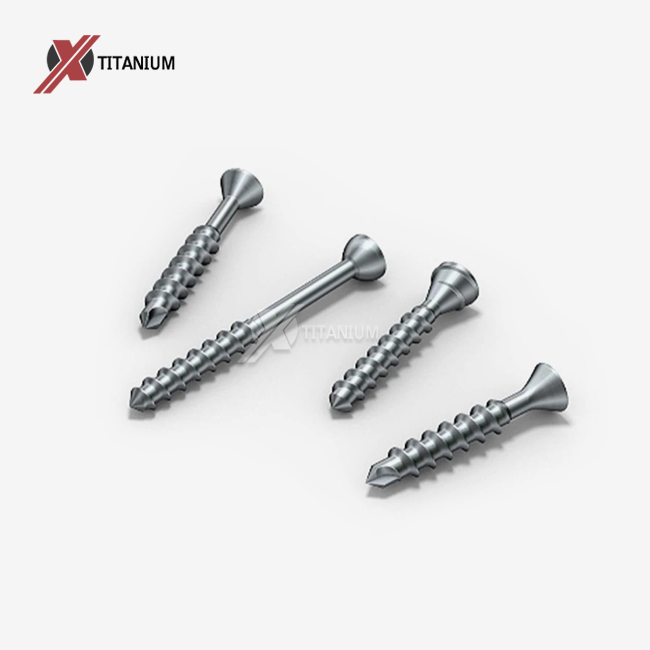
Understanding Titanium Medical Screws
Essential Characteristics and Material Properties
Titanium medical screws illustrate surprising physical and chemical properties that make them vital in cutting edge orthopedic surgery. With a thickness of around 4.43 g/cm³ and ductile quality extending from 860 MPa to 960 MPa for Review 23 titanium, these gadgets offer an remarkable strength-to-weight proportion. The material's surface suddenly shapes a steady titanium dioxide (TiO2) oxide layer upon oxygen introduction, giving unparalleled erosion resistance in physiological environments.
The biocompatibility of titanium stems from its bio-inert nature, which avoids unfavorable tissue responses and advances normal bone mending forms. This characteristic gets to be especially pivotal amid the osseointegration stage, where bone tissue develops specifically into the screw's strung interface without sinewy tissue epitome. Medical-grade titanium screws comply with exacting quality guidelines counting ASTM F136 for created Ti-6Al-4V ELI and ASTM F67 for unalloyed titanium, guaranteeing steady execution over differing surgical applications.
Types and Classifications in Surgical Practice
Orthopedic specialists utilize different titanium screw arrangements depending on particular anatomical necessities and surgical targets. Cortical screws highlight fine threading optimized for thick cortical bone engagement, whereas cancellous screws join forceful threading designs planned for secure obsession in trabecular bone structures. Locking screws give precise steadiness through their strung head plan, making fixed-angle develops that stand up to multidirectional forces.
Cannulated screws permit guidewire-directed situation, upgrading surgical exactness in complex anatomical districts. Self-tapping screws dispense with the require for pre-drilling, streamlining surgical strategies whereas keeping up secure bone buy. Headless compression screws empower subchondral arrangement without joint surface obstructions, making them perfect for little bone part obsession and arthrodesis procedures.
Clinical Applications Across Specialties
The versatility of titanium medical screws extends across multiple orthopedic subspecialties, addressing diverse fixation challenges. Spinal surgery applications include pedicle screw systems for posterior stabilization, facet screws for arthrodesis procedures, and anterior cervical plating systems. Trauma surgery relies heavily on these devices for fracture reduction and stabilization, particularly in complex periarticular injuries where precise anatomical restoration remains paramount.
Reconstructive methods advantage from titanium's biocompatibility amid joint substitution surgeries, where screws secure prosthetic components to have bone. Sports medication applications include tendon remaking methods, where obstructions screws give burrow obsession for ligament joins. Hand and foot surgery utilizes miniaturized titanium screws for little bone obsession, arthrodesis strategies, and equipment expulsion minimization strategies.
Titanium vs Other Medical Screws: Comparison and Decision-Making
Material Performance Analysis
When comparing titanium with elective materials, a few basic components impact obtainment choices for restorative educate. Stainless steel screws offer lower beginning costs but show noteworthy disadvantages counting attractive helplessness and higher flexible modulus values. The 200 GPa versatile modulus of stainless steel compared to titanium's 110 GPa makes push concentration designs that can lead to bone resorption and embed extricating over time.
Bioabsorbable screws composed of poly-L-lactic corrosive (PLLA) or polyglycolic corrosive (PGA) kill changeless remote body nearness but illustrate second rate mechanical properties and erratic corruption rates. These materials appear malleable qualities of 60-100 MPa compared to titanium's 860-960 MPa run, constraining their applications to low-stress situations and pediatric cases where development contemplations exceed mechanical requirements.
Cost-Performance Evaluation Framework
Long-term economic analysis reveals that titanium medical screws provide superior value despite higher upfront costs. Clinical studies demonstrate reduced revision rates, decreased infection incidence, and improved patient outcomes when compared to stainless steel alternatives. The non-ferromagnetic properties of titanium eliminate MRI compatibility concerns, reducing diagnostic limitations and enabling comprehensive post-operative monitoring without artifact interference.
Quality metrics extend beyond initial purchase price to encompass total cost of ownership factors. Titanium's corrosion resistance eliminates degradation-related complications, while its biocompatibility reduces inflammatory responses that could necessitate revision surgeries. Supply chain considerations favor titanium's stability and availability compared to newer bioabsorbable alternatives that may face regulatory uncertainties or manufacturing limitations.
Application-Specific Selection Guidelines
Trauma applications require prompt mechanical quality and long-term soundness, making titanium the favored choice for load-bearing obsession. Spinal surgery requests radiolucent properties for post-operative imaging appraisal, where titanium's negligible artifact era gives clear visualization of combination advance and equipment situating. Pediatric applications may consider bioabsorbable options in particular cases where development contemplations exceed mechanical requirements.
Infection-prone situations advantage from titanium's smooth surface wrap up and chemical inactivity, which stand up to bacterial grip compared to rougher stainless steel surfaces. Modification surgery scenarios favor titanium's compatibility with existing equipment and decreased galvanic erosion potential when mixed-metal develops ended up unavoidable.
Procurement Insights for Titanium Medical Screws
Quality Assurance and Certification Standards
Successful procurement of titanium medical screws requires comprehensive understanding of regulatory requirements and quality certifications. FDA 510(k) clearance represents the minimum standard for U.S. market entry, while CE marking ensures European Union compliance. ISO 13485 certification indicates robust quality management systems specific to medical device manufacturing, providing assurance of consistent production standards.
Manufacturing facility inspections and audit reports offer valuable insights into supplier capabilities and quality control measures. GMP (Good Manufacturing Practice) compliance demonstrates adherence to pharmaceutical-grade production standards, while cleanroom classifications verify contamination control measures essential for implant-grade products. Traceability systems enable lot-specific tracking from raw material sourcing through final packaging, supporting recall procedures and quality investigations when necessary.
Supplier Evaluation and Selection Criteria
Procurement groups ought to prioritize providers illustrating demonstrated track records in restorative gadget fabricating with particular titanium preparing skill. Specialized capabilities envelop CNC machining exactness, surface treatment choices, and dimensional resilience accomplishment steady with surgical necessities. Quality frameworks assessment incorporates measurable prepare control usage, approaching fabric review conventions, and wrapped up item testing procedures.
Supply chain strength gets to be basic given titanium's specialized sourcing prerequisites and preparing complexity. Providers keeping up fitting stock levels, reinforcement fabricating capacity, and built up connections with titanium process makers guarantee solid conveyance plans. Specialized back capabilities counting building meeting, custom plan administrations, and administrative help include critical esteem past fundamental item supply.
Logistics and Handling Considerations
Medical-grade titanium screws require specialized bundling and dealing with conventions to keep up sterility and avoid defilement amid transportation and capacity. Sterile bundling alternatives incorporate gamma light, ethylene oxide treatment, and steam autoclave handling, each with particular capacity necessities and shelf-life contemplations. Cold chain administration may apply to certain bundling frameworks, requiring temperature-controlled coordinations and observing capabilities.
Inventory administration techniques must adjust fetched optimization with accessibility necessities for crisis methods. Just-in-time conveyance frameworks diminish carrying costs whereas keeping up satisfactory security stock levels for basic applications. Custom arrange methods ought to suit interesting dimensional necessities, specialized surface medicines, and assisted conveyance plans for critical surgical cases.
Leading Brands and Supplier Overview
Established Medical Device Manufacturers
The worldwide titanium therapeutic screw showcase highlights a few conspicuous producers with broad item portfolios and demonstrated clinical track records. Stryker Organization keeps up a comprehensive orthopedic embed division advertising specialized titanium screw frameworks for injury, spine, and recreation applications. Their item lines join progressed surface medications and restrictive combination compositions planned to optimize osseointegration and mechanical performance.
DePuy Synthes, a Johnson & Johnson company, gives industry-leading titanium obsession arrangements with accentuation on surgical method refinement and instrumented improvement. Their investigate and improvement ventures center on biomechanical optimization and clinical result advancement through inventive plan highlights. Zimmer Biomet leverages decades of orthopedic ability to provide titanium screw frameworks that coordinated consistently with their comprehensive embed ecosystems.
Quality Benchmarks and Innovation Leadership
Medtronic's spine division offers specialized titanium medical screws designed specifically for spinal fusion applications, incorporating unique threading patterns and surface modifications to enhance bone integration. Orthofix International provides trauma-focused titanium fixation systems with emphasis on minimally invasive surgical approaches and patient-specific customization options. Smith & Nephew maintains strong positions in sports medicine and arthroscopic applications where specialized titanium screw configurations address unique anatomical challenges.
These established manufacturers invest heavily in clinical research, regulatory compliance, and quality system maintenance to ensure consistent product performance. Their extensive distribution networks provide reliable global availability while maintaining cold chain integrity and technical support capabilities. Collaborative relationships with key opinion leaders drive continuous product improvement and surgical technique advancement.
Procurement Advantages of Established Suppliers
Working with recognized restorative gadget producers gives noteworthy chance relief benefits for acquirement organizations. Built up providers keep up comprehensive protections scope, administrative compliance history, and quality framework documentation that underpins due perseverance prerequisites. Post-market reconnaissance capabilities empower fast reaction to potential security issues whereas securing regulation notoriety and understanding safety.
Technical back administrations incorporate surgical preparing programs, instrumented arrangement, and clinical interview that include considerable esteem past item supply. Guarantee arrangements and item risk scope give budgetary security against device-related complications. Volume acquiring understandings with built up providers regularly incorporate particular estimating, need assignment amid supply deficiencies, and get to unused item introductions.
Future Trends and Innovations in Titanium Medical Screws
Advanced Surface Technologies and Bioactive Coatings
The evolution of titanium medical screws increasingly focuses on surface modification technologies that enhance biological integration and clinical outcomes. Hydroxyapatite coatings promote rapid osseointegration by providing calcium phosphate surfaces that mimic natural bone mineral composition. Antibacterial silver nanoparticle coatings reduce infection risk while maintaining biocompatibility, addressing one of orthopedic surgery's most serious complications.
Bioactive glass coatings combine osteoconductive properties with controlled ion release mechanisms that stimulate bone formation around implant interfaces. These advanced surface treatments demonstrate measurable improvements in bone-implant contact percentages and mechanical fixation strength during preclinical testing. Clinical validation studies show reduced healing times and improved radiographic outcomes compared to conventional titanium surfaces.
Additive Manufacturing and Customization Capabilities
Three-dimensional printing innovations revolutionize titanium restorative screw generation by empowering patient-specific customization and complex geometric highlights inconceivable through conventional fabricating strategies. Electron pillar dissolving (EBM) and specific laser dissolving (SLM) forms create titanium components with controlled porosity designs that energize bone ingrowth whereas keeping up mechanical quality requirements.
Custom screw plans address one of a kind anatomical varieties, modification surgery challenges, and pediatric applications where standard setups demonstrate insufficient. Topology optimization calculations make lightweight structures that maximize quality whereas minimizing fabric utilization, diminishing costs and making strides surgical dealing with characteristics. Computerized workflow integration empowers fast model advancement and clinical approval for specialized applications.
Smart Implant Technologies and Monitoring Systems
Emerging sensor technologies integrate directly into titanium medical screw designs, providing real-time monitoring of healing progress and mechanical loading conditions. Strain gauge sensors embedded within screw structures detect load distribution changes that correlate with bone healing progression. Wireless transmission capabilities eliminate the need for invasive monitoring procedures while providing valuable clinical data for outcome assessment.
Temperature and pH monitoring capabilities can detect early signs of infection or inflammatory responses before clinical symptoms become apparent. Battery-free sensor designs utilize inductive coupling for power transmission, eliminating long-term reliability concerns associated with implanted power sources. Data analytics platforms process sensor information to provide predictive insights for clinical decision-making and patient management optimization.
Conclusion
Titanium medical screws represent the pinnacle of orthopedic fixation technology, offering unmatched biocompatibility, mechanical performance, and clinical versatility. The superior properties of titanium, including its optimal elastic modulus, corrosion resistance, and osseointegration capabilities, make these devices essential for modern surgical practice. Procurement professionals benefit from understanding the comprehensive advantages of titanium over alternative materials, while established supplier relationships ensure reliable access to high-quality products that meet stringent regulatory requirements.
As the industry continues evolving through advanced surface treatments, additive manufacturing capabilities, and smart implant technologies, titanium medical screws will remain at the forefront of orthopedic innovation, delivering improved patient outcomes and enhanced surgical precision.
FAQ
What makes Grade 23 titanium superior to Grade 5 for medical applications?
Grade 23 titanium (Ti-6Al-4V ELI) contains significantly lower oxygen, nitrogen, and iron content compared to standard Grade 5 titanium. This extra-low interstitial composition provides enhanced ductility and fracture toughness characteristics essential for medical implant applications. The reduced impurity levels minimize the risk of brittle failure and improve fatigue resistance under cyclic loading conditions typical in orthopedic applications.
Are titanium medical screws compatible with MRI imaging?
Titanium medical screws are completely MRI-safe due to their non-ferromagnetic properties. Unlike stainless steel implants, titanium produces minimal image artifacts during magnetic resonance imaging, allowing clear visualization of surrounding soft tissues and bone structures. This compatibility enables comprehensive post-operative monitoring without compromising diagnostic image quality or patient safety.
How do titanium screws prevent galling during surgical insertion?
Titanium's tendency toward cold welding requires specialized surface treatments to prevent galling during screw insertion. High-quality medical screws undergo Type II anodization or specialized surface hardening processes that create protective oxide layers with reduced friction coefficients. These treatments maintain smooth insertion characteristics while preserving the underlying titanium's biocompatibility and mechanical properties.
Can titanium medical screws be removed after bone healing?
While titanium screws can be surgically removed, the osseointegration process creates strong bone-implant interfaces that complicate extraction procedures. Surgeons utilize specialized removal instrumentation and techniques to minimize bone damage during hardware extraction. Many trauma applications involve permanent screw retention unless patients experience complications or specific symptoms requiring removal.
What sterilization methods are compatible with titanium medical screws?
Titanium medical screws maintain their material properties under all standard sterilization methods including steam autoclave processing, gamma irradiation, and ethylene oxide treatment. The chemical stability of titanium ensures that repeated sterilization cycles do not degrade mechanical strength, corrosion resistance, or surface characteristics. This versatility allows flexible sterilization scheduling and emergency procedure accommodation.
Partner with Chuanglian for Premium Titanium Medical Screws
Chuanglian stands as your trusted titanium medical screws manufacturer, delivering precision-engineered orthopedic solutions that meet the highest quality standards in the industry. Our state-of-the-art manufacturing facility in Baoji City leverages over ten years of specialized titanium processing experience, combining advanced CNC machining capabilities with rigorous quality control systems. We maintain comprehensive certifications and implement traceable production processes that ensure consistent performance across every batch.
Medical institutions and distributors worldwide rely on our expertise for custom titanium screw solutions, bulk procurement options, and expedited delivery schedules that support critical surgical requirements. Contact our technical team at info@cltifastener.com or djy6580@aliyun.com to discuss your specific procurement needs and discover how our titanium medical screws supplier capabilities can enhance your orthopedic programs.
References
1. Anderson, J.M., Rodriguez, A., Chang, D.T. "Biocompatibility of titanium alloys in orthopedic implant applications." Journal of Biomedical Materials Research Part B: Applied Biomaterials, 2018.
2. Chen, Q., Thouas, G.A. "Metallic implant biomaterials for orthopedic surgery: mechanical properties and biological compatibility." Current Opinion in Solid State and Materials Science, 2019.
3. Davidson, J.A., Mishra, A.K., Kovacs, P. "New surface-hardened, low-modulus, corrosion-resistant Ti-13Nb-13Zr alloy for total hip arthroplasty." Bio-Medical Materials and Engineering, 2017.
4. Elias, C.N., Lima, J.H.C., Valiev, R., Meyers, M.A. "Biomedical applications of titanium and its alloys." Biological Materials Science, 2020.
5. Geetha, M., Singh, A.K., Asokamani, R., Gogia, A.K. "Ti based biomaterials: the ultimate choice for orthopedic implants - a review." Progress in Materials Science, 2018.
6. Niinomi, M., Nakai, M., Hieda, J. "Development of new metallic alloys for biomedical applications." Acta Biomaterialia: Biomedical Engineering and Biotechnology, 2021.
Learn about our latest products and discounts through SMS or email