- English
- French
- German
- Portuguese
- Spanish
- Russian
- Japanese
- Korean
- Arabic
- Greek
- German
- Turkish
- Italian
- Danish
- Romanian
- Indonesian
- Czech
- Afrikaans
- Swedish
- Polish
- Basque
- Catalan
- Esperanto
- Hindi
- Lao
- Albanian
- Amharic
- Armenian
- Azerbaijani
- Belarusian
- Bengali
- Bosnian
- Bulgarian
- Cebuano
- Chichewa
- Corsican
- Croatian
- Dutch
- Estonian
- Filipino
- Finnish
- Frisian
- Galician
- Georgian
- Gujarati
- Haitian
- Hausa
- Hawaiian
- Hebrew
- Hmong
- Hungarian
- Icelandic
- Igbo
- Javanese
- Kannada
- Kazakh
- Khmer
- Kurdish
- Kyrgyz
- Latin
- Latvian
- Lithuanian
- Luxembou..
- Macedonian
- Malagasy
- Malay
- Malayalam
- Maltese
- Maori
- Marathi
- Mongolian
- Burmese
- Nepali
- Norwegian
- Pashto
- Persian
- Punjabi
- Serbian
- Sesotho
- Sinhala
- Slovak
- Slovenian
- Somali
- Samoan
- Scots Gaelic
- Shona
- Sindhi
- Sundanese
- Swahili
- Tajik
- Tamil
- Telugu
- Thai
- Ukrainian
- Urdu
- Uzbek
- Vietnamese
- Welsh
- Xhosa
- Yiddish
- Yoruba
- Zulu
OEM Guide to Gr5 Titanium Bolt Kits for Motorcycle Manufacturers
An OEM guide to Gr5 titanium bolt kits for motorcycle builders starts with one rule: the bolt needs to fit the joint. A metal mix called Ti-6Al-4V is used in Gr5 titanium bolt kits for motorcycles. It's about 44% less dense than steel, and water and road salt don't hurt it at all. People who want to buy a kit still need to check the paperwork, fitment, torque, galling, and galvanic contact before they do so. This guide talks about the parts, how to use them, exact measurements, setup, testing, and picking a supplier. Another thing that is shown is how Chuanglian, the company that makes Baoji titanium, makes CNC-machined kits just for motorcycle brands and OEM teams.
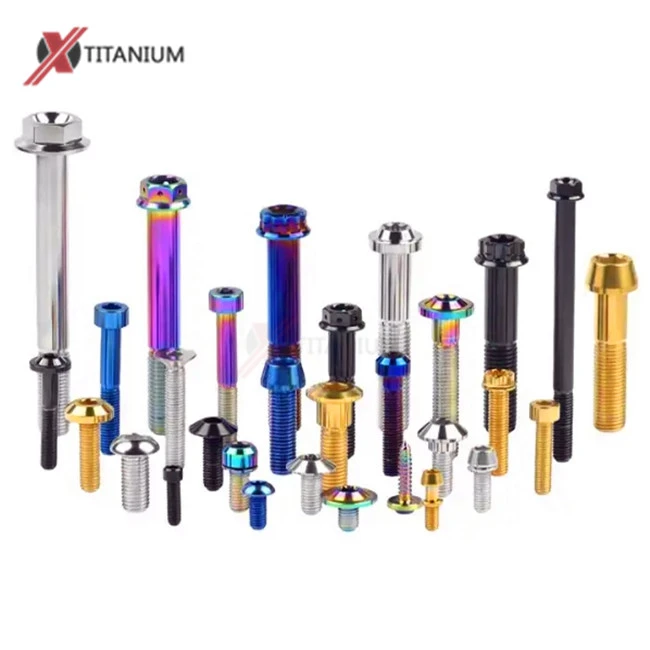
Gr5 Titanium Bolt Kits for Motorcycle: Material, Benefits, and Trade-Offs
Before making any other choice, you should think about the material and what it gives and takes away.
What Are Grade 5 Titanium Bolt Kits for Motorcycles?
A mix of alpha and beta metals, it has about 6% aluminum and 4% vanadium. It is made of Ti-6Al-4V and is grade 5. All grades of titanium bars and billets are covered by ASTM B348. This includes Grade 5. This makes it easy for buyers to find the right stuff. A titanium motorcycle bolt kit has bolts, nuts, and washers that are all the same model or for the same area, like fairings, engine covers, or brackets. Just because a bolt is made of a certain type of metal doesn't mean it will fit every joint. Size, the quality of the threads, heat treatment, machining, and inspection can also change performance. People who want to buy should keep fairing kits, engine-only kits, full kits, and racing programs separate. Every type has different needs when it comes to price, volume, service, and more. Each type also needs its own bill of materials.
Benefits and Limitations of Ti-6Al-4V Motorcycle Bolts
Gr5 titanium is only 4.43 g/cm³ dense, while steel is about 7.85 g/cm³ dense. This gap makes it possible for titanium fasteners on bikes to cut weight. In fact, our kits are sometimes up to 45% lighter than bolts made of steel. Titanium also forms a passive oxide layer that can't be damaged by many chemicals, saltwater, or road salt. Look at the bill of materials and multiply the number, size, and length of bolts by 100 to find out how much you can save. The metal titanium can only do so much. Steel is stiffer than titanium, but some joints can hold more weight with high-strength steel. Titanium that doesn't have anti-seize can also gall. It also costs more. It's worth the extra cost if it looks good, doesn't rust, or is heavy. Just make sure that any safety-critical swap is safe.
Grade 5 Titanium vs. Other Motorcycle Fastener Materials
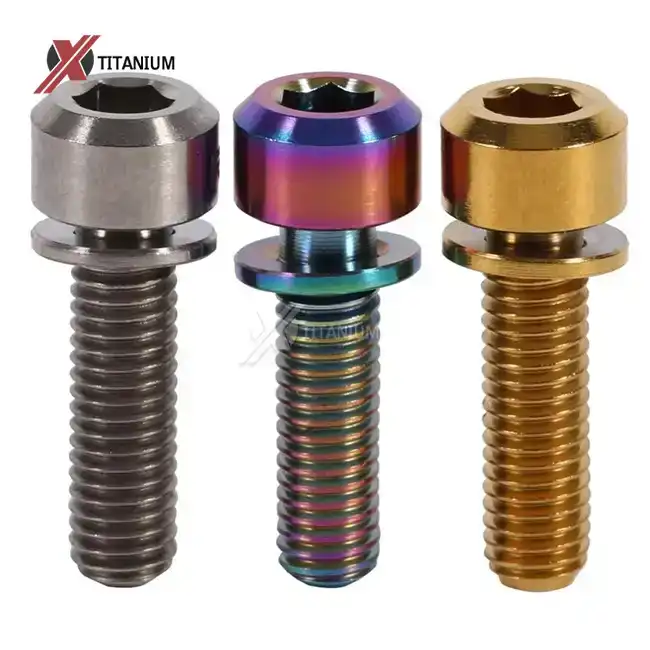
Silver is lighter than stainless steel, but stainless steel doesn't rust, so it's a better choice for bodywork in general. Al is lighter than titanium, but it's not as strong and the threads aren't as strong, so it's best for trim parts that don't have to hold a lot of weight. For joints that hold a lot of weight, high-strength steel is still the most popular choice. It is strong, meets standards, and is easy to find. This choice is split down the middle by the Gr5 titanium. It's strong for its weight, doesn't rust, and looks high-end, so it's good for racing, performance, and show-quality builds. It's also important to finish. We can polish, anodize, and nitride metal that is natural titanium, gold, blue, green, purple, black, or rainbow. Make sure that each finish is the same color, won't scratch, and works with torque before you give the production go-ahead.
Application, Fitment, and Kit Selection for OEM Programs
This part talks about where kits go and how to describe them because mistakes in fitting cost more than the bolts themselves.
Application and Fitment Guide for Motorcycle Titanium Bolt Kits
The fairing and bodywork bolts are the best place to start. They keep their loads low and make things look better. For the bolts that hold the engine cover and clutch cover in place, it's important to get a better handle on their height, thread engagement, and clearance. You can use our kits to fix engine fasteners, exhaust systems, suspension parts, frame parts, foot pegs, and handlebars on both street and race motorcycles.
The brakes, axle, steering, and chassis all have joints that need a lot more engineering work. This is necessary because rider safety, fatigue, vibration, and preload are all important. A sound fitment table keeps track of the year, type of engine, trim, where the fasteners are located, the OEM part number, the thread size, the length, and the number of items. This record keeps track of any extra or missing bolts. Kit sales often end with returns and bad reviews because of this.
How to Select the Right Kit for Motorcycle Production
First, you need to figure out what kind of buyer you are: OEM production, limited editions, racing teams, aftermarket brands, or wholesale distribution. Before you ask for quotes, decide what your technical objectives are for Gr5 titanium bolt kits for motorcycle manufacturing. Among these goals should be the Ti-6Al-4V material, the size, the shape of the threads, the strength, the finish, the torque, and the paperwork. Then, make sure the bill of materials is correct. It should list the correct number of washers, nuts, position labels, and spares.
Our kits come with between 10 and 50 bolts, nuts, and washers, depending on the model of motorcycle. You can get threads in M6, M8, M10, and M12 sizes, or you can ask for sizes that aren't listed. You should add the unit price to the costs of shipping, testing, rework, and warranty risk when you compare quotes. Fixing a cheap kit costs more than buying a fair-priced kit that fits.
OEM Design and Specification Checklist for Custom Titanium Bolts
With a clear specification, you can avoid most sampling delays. Write down the diameter, the thread pitch, the length, the head shape, the washer requirements, the finish, the marking, the packaging, and a way to keep track of the item. The metric thread match, engagement length, clearance, stacking of parts, and cross-threading risk must all be checked by engineers to make sure they are correct. Some important tolerances are thread gages, surface roughness, concentricity, chamfers, burrs, and how the head fits on the shank.
We use CNC machines to make one-of-a-kind titanium bolts and put together kits based on your model data and plans. In private-label programs, models-specific labels, markings on the heads, and installation sheets are often added. Tell your supplier about these things right away. Before making a lot of them, make sure you agree with the last drawing and list of materials. This will make sure that the sample parts and the production parts are the same.
Installation, Testing, and Procurement Risks
This program has checks that make sure it stays stable. If people who buy or install the kit don't do the basics, even a well-made kit might not work.
Installation, Torque, and Anti-Galling Guidance
It is very important to use controlled installation for Gr5 titanium bolt kits for motorcycle because friction, lubrication, and thread condition all have a big impact on the preload a bolt reaches. Find out the model of the motorcycle, where the fasteners go, how long the bolts are, and what part goes with it before you put it together. The threads should be cleaned, the bolt should be put on by hand, and then the torque wrench should be used to make it tight.
For all Gr5 bolts, there is no one torque value that works. Follow the instructions that came with your motorcycle and check with the company that sold you the kit to make sure you have the right number. It relies on the diameter, the type of joint, the condition of the threads, and the lubricant used. Note whether a value is based on dry or oiled threads. Titanium threads can gall, which means they can seize and cold-weld. A compound that doesn't cause seize-ups can be helpful. Since power tools speed up and heat up the work, it's more likely to happen. It's even worse when there's dirt in the threads.
Quality, Testing, and Safety Requirements for OEM Buyers
Find out how the raw materials got to the ship by asking for records. It is helpful to have papers like Ti-6Al-4V material certificates, dimensional reports, lot numbers, and certificates of conformity. A chemical test shows that the metal is Grade 5 and not Grade 2, which is less strong. Scales and thread gages are used to make sure the sizes are correct. If the mechanical quality is good, tests for tensile strength, hardness, and microstructure are done. Burrs and tool marks can also be seen. As far as tests go, the most important ones for joints that join titanium to aluminum are torque-preload, vibration, fatigue, and corrosion tests. We check every part of the process at Chuanglian, from the raw materials to the finished item. To save weight, don't change a fastener that is necessary for safety. An engineer has to sign off on any changes to the brakes, axle, steering, or suspension.
Common Procurement Mistakes and How to Avoid Them
If something says "Grade 5" without any proof, that's the first mistake. Also, you're not always right when you say that titanium is stronger than steel. 3. People who buy steel don't check to see if the parts are oiled before copying torque values. Fourth, they believe that universal kits will always work. Fifth, they pick the cheapest price without checking to see if the process works well or if all the colors in the kit match.
Sixth, they don't care about the charge exchange. But water can eat away at the aluminum around a titanium bolt because titanium is more fine than aluminum. It can help to use an isolating washer or compound. To avoid making these mistakes, make sure you get samples, drawings, certificates, inspection data, fitment tables, and torque guidance. It's better to get written permission than to just agree on the price.
Choosing an OEM Titanium Fastener Supplier
Once the supplier knows how the program works, they make sure it is there.
OEM Supplier Evaluation and Purchasing Process
Ask for a full list of details for Gr5 titanium bolt kits for motorcycle, such as the motorcycle model, what it will be used for, drawings, part numbers, material, finish, volume, packaging, and inspection needs. You should ask for production samples that come with certificates of material, reports of measurements, samples of the finish, and confirmation that they will fit. The first steps in a program are usually to look into models and review suppliers.
The next step is to make a sample, test it on a real bike, place the first order, and keep doing that every so often. When you plan to launch, think about how long it takes for samples to be approved. When you talk about business, you should agree on the MOQ, tooling, lead time, Incoterms, freight, payment terms, and warranty. Check the first item, set up a pilot run, sign off on the bill of materials, confirm the packaging, and follow the change-notification rules before giving the final go-ahead.
How a Qualified Supplier Adds OEM Value
A good supplier does more than just cut metal. During development, the supplier looks over the drawings, makes sure the parts fit, and warns of any risks that might have to do with threads, clearance, torque, galling, that kind of thing. It can handle small batches for things like racing programs, aftermarket kits, prototypes, and private-label orders. The city where we work, Baoji, is called the "City of Titanium."
For more than ten years, we've studied and worked with titanium. Our titanium goods are used in the medical, aerospace, marine, petrochemical, and racing industries. A dozen CNC machines are in use here. You should keep an eye on the response time, sample accuracy, delivery performance, repeatability, and the steps that are taken to fix issues. These tests check to see if a supplier can keep quality high from the first sample to orders that come back.
Chuanglian Gr5 Titanium Bolt Kit Specifications
Here is a quick list of the motorcycle programs we offer.
| Item | Detail |
|---|---|
| Material | Titanium alloy, Gr5 (Ti-6Al-4V) |
| Processing | CNC machined |
| Surface treatment | Polishing, anodizing, nitriding |
| Colors | Natural titanium, gold, blue, green, purple, black, rainbow |
| Thread sizes | M6, M8, M10, M12; custom sizes on request |
| Kit contents | 10–50 pcs each of bolts, nuts, and washers, by bike model |
| Weight reduction | Up to 45% lighter than steel bolts |
| Tensile strength | 1,000 MPa |
| Standard | Customized |
If you want hardware that lasts a long time, these kits are a good choice. They can handle harsh weather, acids, alkalis, saltwater, and other chemicals. As a guide, use 1,000 MPa for your design. Also, check with your engineers to make sure that every joint meets the standards.
Conclusion
When people buy Gr5 titanium bolt kits for motorcycle programs, they should make sure that the material fits the joint perfectly. Ti-6Al-4V doesn't rust, has a high-end finish, and is 44% less dense than steel. It does cost more, though, and can gall without anti-seize. Many joints that take a lot of weight are still made of high-strength steel. Because of this, any changes to the brakes, axles, steering, or suspension must first be approved by an engineer. A good fitment table, clear specifications, controlled torque, galvanic checks, and inspection records that can be tracked can cut down on returns and rework. The supplier should look at samples, paperwork, the consistency of the finish, and the ability to make the same thing over and over again. A titanium kit is more than just a change of material when used in this way; it makes the fairing, engine, exhaust, and racing better in a lot of ways.
FAQ
Q1: Is Gr5 titanium stronger than steel?
A: Not all the time. At 1,000 MPa, Gr5 is strong for its weight, which is what our kits say. But some joints can hold more weight when made of high-strength steel. Compare based on a need you both have.
Q2: Can I use titanium bolts on brakes, axles, or suspension?
A: After getting written confirmation and engineering approval. Not only are these joints lighter, but they are also stronger against preload, fatigue, and vibration. Losing weight alone is not a good enough reason to switch.
Q3: Do I need anti-seize on titanium bolts?
A: Yes. Titanium can gall, so use an anti-seize that is safe for titanium to clean the threads and a calibrated torque wrench to tighten them. Do not use power tools.
Q4: Can titanium bolts touch aluminum parts?
A: Sure, but be careful. If aluminum gets wet, galvanic corrosion can happen. To stop this, use isolating washers or compound and check the joint as needed.
Q5: What documents should I request from a supplier?
A: Make sure you have the material certificates, inspection data, fitment tables, and samples before you place a large order.
Request Custom Gr5 Titanium Bolt Kits from Chuanglian
Chuanglian is a company in Baoji that makes Gr5 titanium bolt kits for motorcycles. They have been making titanium parts for more than ten years. Email your model, drawings, sizes, quantities, and finish needs to info@cltifastener.com or djy6580@aliyun.com. We'll check to see if they fit and suggest a custom CNC-machined kit.
References
1. ASTM International, ASTM B348/B348M Standard Specification for Titanium and Titanium Alloy Bars and Billets, 2019
2. International Organization for Standardization, ISO 898-1 Mechanical Properties of Fasteners Made of Carbon Steel and Alloy Steel, Part 1: Bolts, Screws and Studs with Specified Property Classes, 2013
3. ASM International, Materials Properties Handbook: Titanium Alloys, 1994
4. ASM International, Titanium: A Technical Guide (2nd Edition), 2000
5. Wiley-VCH, Titanium and Titanium Alloys: Fundamentals and Applications, 2003
6. ASM International, ASM Handbook Volume 2: Properties and Selection: Nonferrous Alloys and Special-Purpose Materials, 1990
Learn about our latest products and discounts through SMS or email