- English
- French
- German
- Portuguese
- Spanish
- Russian
- Japanese
- Korean
- Arabic
- Greek
- German
- Turkish
- Italian
- Danish
- Romanian
- Indonesian
- Czech
- Afrikaans
- Swedish
- Polish
- Basque
- Catalan
- Esperanto
- Hindi
- Lao
- Albanian
- Amharic
- Armenian
- Azerbaijani
- Belarusian
- Bengali
- Bosnian
- Bulgarian
- Cebuano
- Chichewa
- Corsican
- Croatian
- Dutch
- Estonian
- Filipino
- Finnish
- Frisian
- Galician
- Georgian
- Gujarati
- Haitian
- Hausa
- Hawaiian
- Hebrew
- Hmong
- Hungarian
- Icelandic
- Igbo
- Javanese
- Kannada
- Kazakh
- Khmer
- Kurdish
- Kyrgyz
- Latin
- Latvian
- Lithuanian
- Luxembou..
- Macedonian
- Malagasy
- Malay
- Malayalam
- Maltese
- Maori
- Marathi
- Mongolian
- Burmese
- Nepali
- Norwegian
- Pashto
- Persian
- Punjabi
- Serbian
- Sesotho
- Sinhala
- Slovak
- Slovenian
- Somali
- Samoan
- Scots Gaelic
- Shona
- Sindhi
- Sundanese
- Swahili
- Tajik
- Tamil
- Telugu
- Thai
- Ukrainian
- Urdu
- Uzbek
- Vietnamese
- Welsh
- Xhosa
- Yiddish
- Yoruba
- Zulu
Recommended applications for titanium socket cap screws
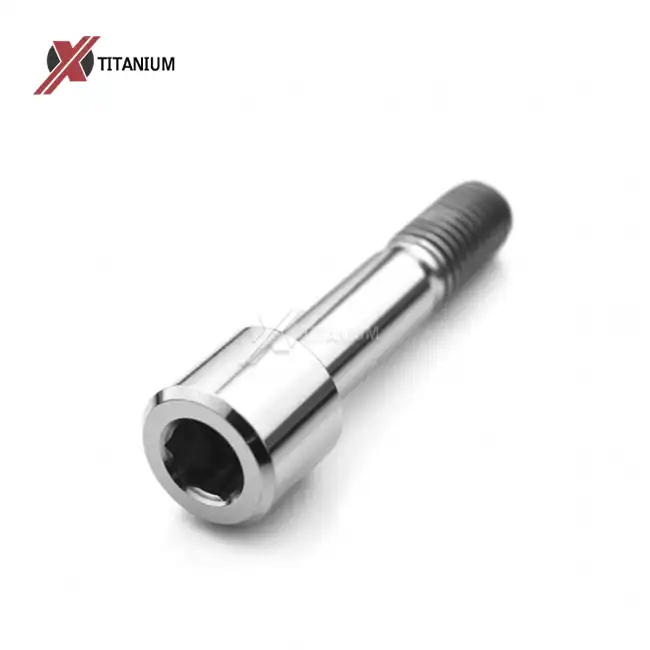
Titanium socket cap screws serve critical roles across aerospace, motorsport, medical, and marine engineering — anywhere weight savings and corrosion resistance directly affect performance outcomes. Among the most specialized variants in this category are M10 titanium Torx socket cap bolts for Ducati motorcycle bike assemblies. These fasteners combine Grade 5 Ti-6Al-4V alloy with a Torx 50 drive interface, delivering tensile strength of ≥895 MPa while weighing 45% less than equivalent steel bolts. For Ducati engineers and aftermarket procurement teams, that combination translates into measurable gains in handling, durability, and maintenance efficiency.
Understanding Titanium Socket Cap Screws and Their Characteristics
What Sets Ti-6Al-4V Apart From Conventional Fastener Materials?
The official name for Grade 5 titanium alloy is Ti-6Al-4V. It is made up of 6% aluminum and 4% vanadium, which gives it a microstructure with a density of 4.43 g/cm³. That's about 45% lighter than alloy steel and about 60% heavier than aluminum. However, its tensile strength is at least 895 MPa, which is higher than the strength of steel-class fasteners that can only be reached with large amounts of alloying. Titanium also forms a stable, self-renewing oxide layer that can stand up to acidic, alkaline, road salt, and wet conditions without any extra coating.
Mechanical Advantages of the Torx Socket Cap Design
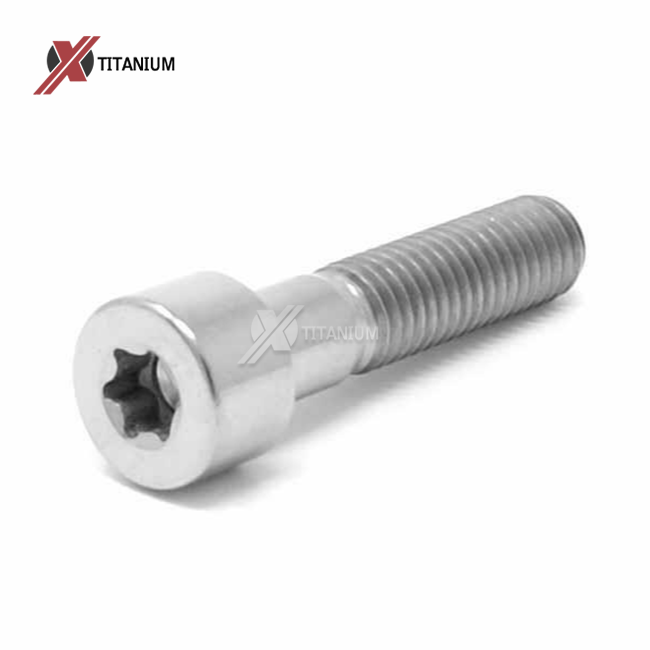
The Torx 50 drive geometry spreads installation torque over six contact lobes instead of six corner points. This makes the drive interface less stressed and almost completely eliminates cam-out. The socket cap head profile keeps the fastener low-profile and recessed, which is important in Ducati engine bays that are already tight because there isn't much room around the headers and frame junctions. The 6g-class engagement tolerances are kept consistent by CNC-machined thread forms, and the smooth shank surface prevents galling, which happens a lot when titanium contacts aluminum housings that are vibrating. Titanium can work in temperatures ranging from -40°C to +400°C, which means it can be used for mounting places next to exhaust pipes, where stainless steel screws would only cause surface damage over time.
Recommended Applications and Benefits of Titanium Socket Cap Screws in Ducati Motorcycles
Ducati makes its engines, chassis, and brake systems to exacting standards that require fasteners like M10 titanium torx socket cap bolts for ducati motorcycle bike that can handle repeated loads without stressing or coming loose due to wear and tear. Titanium socket cap screws meet these needs in a number of different construction areas.
The main places where these fasteners have been shown to be useful are listed below:
- Engine case and cylinder head mounting: M10 Torx socket cap bolts secure cylinder head covers and crankcase halves where thermal cycling between cold starts and sustained high-rpm operation generates repeated expansion and contraction. Titanium's low thermal conductivity (approximately 6.7 W/m·K versus 50 W/m·K for steel) reduces heat transfer into threaded aluminum bosses, extending boss life and reducing the risk of thread pull-out.
- Chassis and subframe junctions: Unsprung weight reduction is a documented performance variable in road racing. Replacing OEM steel M10 fasteners at subframe attachment points with titanium equivalents sheds measurable grams per fastener location, which suspension engineers quantify as improved transient response. Ducati Panigale V4 homologation documentation references fastener weight as a design variable in chassis tuning.
- Brake caliper mounting: Caliper bolts operate under intermittent shear and tension from braking forces. Titanium's high fatigue resistance under cyclic loading — a property enhanced by rolled rather than cut threads — makes it appropriate here, provided correct torque values specific to titanium cross-sections are applied.
Because of these benefits, the market for aftermarket titanium fasteners for Ducati platforms keeps growing among track-day users, dealership service teams, and providers that work closely with OEMs.
How to Select the Best M10 Titanium Torx Socket Cap Bolts for Ducati Motorcycles?
When buying titanium fasteners for Ducati, procurement teams should use a structured set of technical and commercial criteria instead of just price to choose which candidates to go with.
Key Selection Criteria for B2B Buyers
Most important for M10 titanium torx socket cap bolts for ducati motorcycle bike is material certification. Verified mill test results that prove the chemistry and mechanical qualities of Ti-6Al-4V (tensile strength ≥895 MPa, yield strength ≥828 MPa) are a must for quality-controlled supply chains. When buying titanium fasteners from overseas sources, procurement engineers often have trouble with batch-to-batch property variations. Suppliers with ISO 9001 or AS9100 certification show that they have process controls in place to reduce these differences.
It is not enough to know that a thread standard is compatible with Ducati's metric specifications (M10 × 1.25 or M10 × 1.5, depending on the application point); you must also check Go/No-Go gage records to be sure. Surface treatments like polishing, anodizing, and nitriding change both how something looks and how well it works. Anodized finishes in natural titanium, gold, blue, green, purple, black, or rainbow colors make Ducati owners happy who like to change how their bikes look. Nitriding makes the surface harder and lowers the chance of galling when aluminum threaded plugs are used.
When comparing titanium to A4-80 alternatives made of stainless steel, the difference in weight is enough to justify the higher unit cost for uses that need efficiency. Stainless steel is also resistant to rust, but each bolt weighs about 30–40% more. Even though aluminum bolts are lighter, they have a lot less tensile strength, which means they can't be used as mounting places for structures.
Installation Best Practices and Common Pitfalls to Avoid
Correct Torque Application and Anti-Galling Protocol
Using torque values from steel bolt tables is the most dangerous mistake that can be made when installing titanium fasteners. Because titanium has a different elastic modulus than steel, force requirements for steel will put too much stress on titanium cross-sections. Always use torque values that have been estimated especially for the grade of titanium alloy in the bolt and the length of the thread engagement in the received material. Anti-seize chemical has to be used. When titanium is threaded directly into aluminum without a lubricating barrier, it can gall, which is the same thing as cold welding. Putting a copper-based or ceramic anti-seize paste on the threads before installation stops this from happening and makes it easy to remove when it's time for service.
Set up a Torx T50 driver or socket and use it for M10 titanium torx socket cap bolts for ducati motorcycle bike. When drivers are worn or not the right size, they cause localized lobe stress that damages the drive recess. This damage can't be fixed in titanium because it hardens when it works. Before each installation, check the drive tool. There is still a risk in the supply chain for fake or misrepresented titanium fasteners. Before you accept a lot of materials for structural or brake-adjacent uses, make sure you have material certifications with traceable heat numbers.
Purchasing Guide: Where and How to Buy M10 Titanium Torx Socket Cap Bolts for Ducati?
To get verified titanium fasteners for Ducati platforms, you need a supplier that can both make the parts and provide clear quality documentation. Both authorized repair outlets and direct-from-manufacturer procurement are good options. Direct-from-manufacturer procurement usually gives you more customization options and shorter lead times for non-standard sizes.
When you buy in bulk from a direct maker, you avoid the markups that distributors add on, and you can change the thread size, length, surface treatment, and color of an entire order. Lead times for standard M10 Torx socket cap configurations from specialized CNC machining operations are usually between two and four weeks, but this depends on the number of orders and the surface treatment chosen. The price of Grade 5 titanium M10 screws is based on the cost of the raw materials, the difficulty of the machining process, and the cost of approval. Titanium costs more per unit than steel versions, but over the course of three to five years of upkeep, it often saves money in the long run because it doesn't need to be replaced as often because of corrosion.
Conclusion
M10 titanium torx socket cap bolts for ducati motorcycle bike assemblies and other high-performance platforms that care a lot about weight, corrosion resistance, and fatigue life are a good idea. Grade 5 Ti-6Al-4V has a tensile strength of more than 895 MPa and a density that is 45% lower than steel. It can be used in temperatures ranging from -40°C to +400°C. Buying choices should be based on approved material traceability, checked thread tolerances, and the quality system qualifications of the seller. If these conditions are met, titanium screws will last a long time and be worth the money.
FAQ
Q1: Are M10 titanium Torx socket cap bolts as strong as steel bolts for Ducati engines?
A: The tensile strength of Grade 5 Ti-6Al-4V is about the same as that of ISO Grade 8.8 steel, which is ≥895 MPa. This means it can be used to mount the engine case, chassis, and brake calipers on Ducati platforms. Before switching to titanium, structural positions that need Grade 10.9 or 12.9 steel equivalents should be checked with engineering calculations that are specific to the titanium cross-section.
Q2: What torque setting should I use for M10 titanium fasteners?
A: Do not use torque tables made for steel bolts. Titanium has a different elastic modulus than steel, and numbers that are based on steel can put too much stress on the bolt. Check the supplier's torque specification sheet for titanium, and always use anti-seize powder on threads before installing.
Q3: Do aftermarket titanium bolts affect my Ducati warranty?
A: What happens with the warranty depends on the Ducati model, where the new fastener is mounted, and whether it meets or exceeds the OEM's technical requirements. Check Ducati's service records and keep the original fasteners for warranty service appointments if needed.
Q4: What surface treatment should I specify for track use?
A: Nitriding gives the hardest surface and best resistance to galling, so it is the best treatment for places with a lot of vibration and torque. Anodizing lets you change the way something looks and protects it from corrosion well enough for road and occasional track use.
Q5: Can I get custom lengths and thread pitches?
A: Reliable makers can customize CNC machines to fit the specs of Ducati bikes. To avoid size mistakes, make sure you know the thread pitch (M10×1.25 or M10×1.5), the length of the shank, and the type of head when you ask about it.
Partner With Chuanglian for Certified Titanium Fastener Supply
Our factory in Baoji, China, makes M10 titanium torx socket cap bolts for use on Ducati motorcycles and in other industries. Baoji is known as the center of titanium processing in China. We are a verified provider of M10 titanium torx socket cap bolts and have been CNC-machining titanium for over ten years. We offer full material certifications, quality controls that are in line with ISO 9001, and customization options for surface treatments and colors. Send us your specifications directly at info@cltifastener.com or djy6580@aliyun.com about your buying needs.
References
1. Boyer, R. R. (1996). "An overview on the use of titanium in the aerospace industry." Materials Science and Engineering: A, Elsevier.
2. Lutjering, G., & Williams, J. C. (2007). Titanium, 2nd ed. Springer.
3. ASTM International. (2021). ASTM F136: Standard Specification for Wrought Titanium-6Aluminum-4Vanadium ELI Alloy for Surgical Implant Applications. ASTM International.
4. ISO. (2011). ISO 14579: Hexalobular Socket Head Cap Screws. International Organization for Standardization.
5. Donachie, M. J. (2000). Titanium: A Technical Guide, 2nd ed. ASM International.
6. Peters, M., Kumpfert, J., Ward, C. H., & Leyens, C. (2003). "Titanium alloys for aerospace applications." Advanced Engineering Materials, Wiley-VCH.
Learn about our latest products and discounts through SMS or email