- English
- French
- German
- Portuguese
- Spanish
- Russian
- Japanese
- Korean
- Arabic
- Greek
- German
- Turkish
- Italian
- Danish
- Romanian
- Indonesian
- Czech
- Afrikaans
- Swedish
- Polish
- Basque
- Catalan
- Esperanto
- Hindi
- Lao
- Albanian
- Amharic
- Armenian
- Azerbaijani
- Belarusian
- Bengali
- Bosnian
- Bulgarian
- Cebuano
- Chichewa
- Corsican
- Croatian
- Dutch
- Estonian
- Filipino
- Finnish
- Frisian
- Galician
- Georgian
- Gujarati
- Haitian
- Hausa
- Hawaiian
- Hebrew
- Hmong
- Hungarian
- Icelandic
- Igbo
- Javanese
- Kannada
- Kazakh
- Khmer
- Kurdish
- Kyrgyz
- Latin
- Latvian
- Lithuanian
- Luxembou..
- Macedonian
- Malagasy
- Malay
- Malayalam
- Maltese
- Maori
- Marathi
- Mongolian
- Burmese
- Nepali
- Norwegian
- Pashto
- Persian
- Punjabi
- Serbian
- Sesotho
- Sinhala
- Slovak
- Slovenian
- Somali
- Samoan
- Scots Gaelic
- Shona
- Sindhi
- Sundanese
- Swahili
- Tajik
- Tamil
- Telugu
- Thai
- Ukrainian
- Urdu
- Uzbek
- Vietnamese
- Welsh
- Xhosa
- Yiddish
- Yoruba
- Zulu
Specifications to look for when buying titanium Torx socket cap bolts
When sourcing fasteners for high-performance applications, understanding the technical specifications becomes paramount. For M10 Titanium Torx Socket Cap Bolts for Ducati Motorcycle Bike builds, procurement engineers and maintenance professionals must evaluate several critical parameters: thread size compatibility, material grade composition, head drive configuration, tensile strength ratings, and surface treatment options.
Grade 5 titanium alloy (Ti6Al4V) represents the industry benchmark, offering tensile strengths exceeding 895 MPa while delivering a 45% weight reduction compared to steel equivalents. The Torx 50 drive configuration enhances torque transfer efficiency and minimizes tool slippage during installation. Surface treatments such as anodizing and nitriding extend service life by enhancing wear resistance and preventing galling, a common concern in titanium fastener applications.
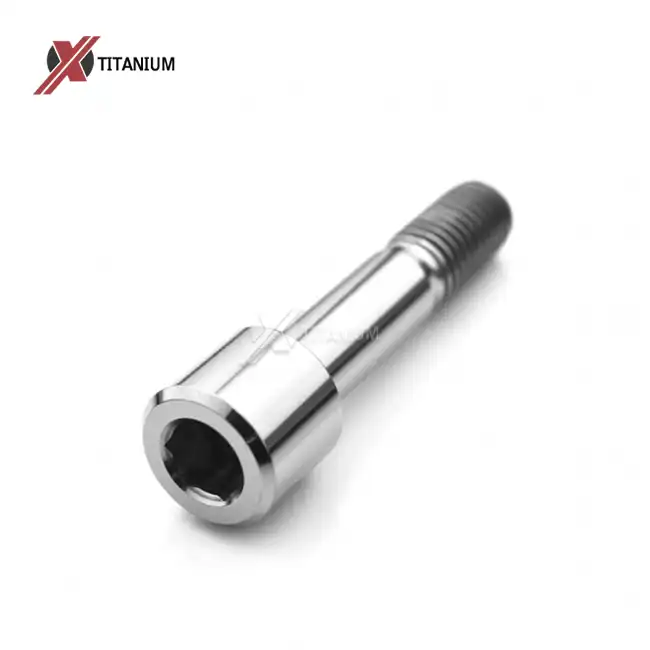
Understanding the Core Specifications of M10 Titanium Torx Socket Cap Bolts
Precise understanding of the specifications is the first step in buying fasteners successfully. The thread size number has a direct effect on how well it works with mounting spots on Ducati fairings, brake systems, and engine parts. ISO metric standards are used for M10 threading, which has 1.5 mm pitch gaps that make sure safe engagement in a wide range of situations.
Material Grade and Alloy Composition
Ti6Al4V, which is the name of a Grade 5 titanium metal, has about 6% aluminium and 4% vanadium mixed in with the titanium. With this particular mix, an alpha-beta microstructure is made that matches flexibility with excellent strength. The aluminium content makes the strength-to-weight ratio better, and the vanadium stabilises the beta phase, which makes it easier to heat treat and improves mechanical qualities from -40°C to +400°C.
Commercially pure titanium grades are very good at resisting rust but not very strong. Grade 5 has tensile strengths that are about the same as high-grade steel screws while still having all of titanium's natural benefits. Material certificates should be checked by procurement teams using spectroscopy or Positive Material Identification testing to make sure they are real Ti6Al4V makeup and not lower-grade substitutes.
Threading Standards and Dimensional Accuracy
CNC machining lets companies keep the tight tolerances that are needed for important fastener applications. The quality of the thread engagement directly affects the stability of the joint, especially in motorbike settings that are prone to vibration. When it comes to fatigue resistance, rolled threads are better than cut threads because the rolling process compresses the grain structure along the thread profiles instead of cutting the material fibres.
This difference in how the nuts are made is very important when they are under cyclic stress during operation. The 6g tolerance class strikes the perfect balance between being easy to put together and securely engaging, stopping both loose fitting and installation galling. As part of quality control measures for arriving goods, Go/No-Go thread gauges should be used to check the dimensions.
Torx Socket Drive Configuration
Compared to standard hex socket designs, the Torx 50 head design is a big step forward. This six-point star design spreads the installation force over more contact surfaces. This lowers the stress levels that cause the tool to cam-out or the head to strip. When used with a lot of torque, hex drives create point loads at six corners, but Torx geometry engages along six lobes with radiuses, spreading forces more evenly. This technical benefit is especially useful when putting bolts in tight areas where limited tool access could affect the quality of the job. The deeper socket engagement feature of Torx drives also makes driver retention better, which means that fewer fasteners are lost during assembly.
Why Titanium Bolts Are Preferred for Ducati Motorcycles
To stay ahead of the competition, motorbike makers and aftermarket builders that focus on performance are choosing titanium fasteners more and more. The material science behind titanium choice shows that it has strong practical benefits that make the higher price worth it for picky buyers.
Strength-to-Weight Ratio Advantages
For racing purposes, you need maximum strength without adding extra weight that changes how the car handles. Grade 5 titanium has a density of 4.43 g/cm³, which is about 43% less than steel's density of 7.8 g/cm³. However, it still has tensile strengths that are higher than many heat-treated steel alloys. This great strength-to-weight ratio means that less unsprung mass is present when bolts hold brake parts, wheel systems, or suspension parts in place.
M10 Titanium Torx Socket Cap Bolts for Ducati Motorcycle Bike are a prime example of such hardware, offering precise fitment and reliable clamping force for high-performance applications. Even small weight savings add up over whole fastener systems, which could save 200 to 400 grams on a full motorcycle hardware replacement. Competitive riders know that lowering the bike's spinning and unsprung weight makes the suspension respond better, speed up more quickly, and stop more effectively.
Corrosion Resistance in Demanding Environments
Titanium quickly forms a strong passive oxide layer (TiO₂) when exposed to air. This layer acts as a self-healing defence against chemical attack. Titanium doesn't rust naturally when exposed to road salt, water, acids, or alkaline compounds, unlike steel fasteners that need galvanic coatings or stainless alloys with chromium content. This feature is very useful for bikes that are used near the coast, in the winter, or that get washed a lot. Because the material doesn't react to pitting corrosion or stress corrosion cracking, it doesn't have any of the usual failure modes that weaken steel fasteners over time. Maintenance times are much longer because titanium bolts don't rust or break down like regular hardware does, which means they don't need to be replaced as often.
Fatigue Resistance and Long-Term Reliability
In motorcycle applications, cyclic loading causes fatigue problems that affect how long a part lasts. Titanium alloys have very high durability limits, coming close to 50% of their total tensile strength. This is much higher than the 35–40% limits for many steel alloys. This performance gap protects against load spikes that happen out of the blue during rough rides or impact events. Titanium screws that are properly torqued can last millions of stress cycles without breaking down because the material doesn't allow wear cracks to start or spread. Fleet maintenance managers like this reliability because it cuts down on unexpected breakdowns and increases the time between services, which lowers the total cost of ownership even though it costs more to buy at first.
How to Evaluate the Quality and Reliability of Titanium Torx Bolts
To tell the difference between high-quality titanium screws and lower-quality options, you need more than just a quick look. Professionals in procurement need to set up proof methods that make sure materials are real, that they were made well, and that they always work the same way.
Certification and Quality Assurance Systems
Manufacturers with a good reputation keep licenses that show they are committed to quality standards. ISO 9001 certification sets basic standards for quality management, and AS9100 certification for the aerospace industry shows that a company can meet the strict requirements of that industry. Manufacturers of medical devices may have ISO 13485 approval, which is useful when making fasteners for biological uses that need titanium to be biocompatible.
Material traceability is another important quality indicator. Each production batch should have certificates showing that the chemical composition has been checked using optical emission spectroscopy or X-ray fluorescence analysis. These material test results prove that the alloy makeup meets the requirements of ASTM B348 Grade 5. This keeps lower grades from being used instead by accident.
Mechanical Property Verification
Tensile strength testing gives objective information about performance that goes beyond what the maker says. As part of batch sampling methods, universal testing tools should be used to do destructive tests to make sure that the tensile strength is at least 895 MPa and the yield strength is right. Proof load testing shows that bolts can handle certain loads without permanently deforming, which confirms that the design margins are correct. Thread shear strength testing checks to see if thread contact can withstand loads without breaking.
This is especially important for uses in motorcycle mounting bosses made of softer aluminium. M10 Titanium Torx Socket Cap Bolts for Ducati Motorcycle Bike are precisely the type of fasteners where such hardness considerations become critical, as their superior surface strength helps prevent galling or embedding into softer mating threads under high vibration and load. Using the Rockwell or Vickers methods to test a material's hardness is a quick way to make sure that the heat treatment process produced the desired qualities. As part of the purchase agreement, suppliers should be required to give certified test results for each output lot that list these mechanical qualities.
Surface Treatment Quality Assessment
The effects of surface treatments go beyond how they look; they also have a big effect on how well they work. Anodising processes add controlled oxide layers that make the surface harder, make it more resistant to corrosion, and let you change the colour. Type II anodising makes coats that are thinner and can be used for decoration. Type III hard anodising, on the other hand, makes surfaces that are stronger and more resistant to wear. Nitrogen is mixed into the titanium surface layers during nitriding processes.
This makes titanium nitride (TiN) materials that are very hard and stop galling when they are being installed or removed. When judging quality, you should look at how regular the layer thickness is, how well it sticks to things, and whether there are any flaws like blistering or delamination. For obvious uses where uniformity in looks affects how good something is thought to be, colour stability across production batches is important. Surface roughness readings must be looked at for polished finishes to make sure they have smooth shapes that reduce friction and stress concentrations.
Installation and Maintenance Best Practices for M10 Titanium Torx Socket Cap Bolts
The best performance from titanium fasteners is achieved by installing them correctly, which also stops typical failure modes. Titanium hardware needs different ways to be installed and maintained than steel hardware because of the way the material is made.
Recommended Torque Specifications
Titanium has a lower modulus of elasticity than steel, so less power is needed to get the same gripping forces without going over the material's yield strength. In general, the torque values for titanium screws should be about 70 to 80% of the torque values for steel bolts that are the same. By lowering the torque, thread shearing and head twist-off failures that can happen when using steel-based torque values on titanium hardware are stopped. Calibrated torque wrenches are important tools for installing things correctly and consistently.
Digital pressure tools that can log data make it possible to keep quality records for important parts. The application of anti-seize product has a big effect on friction coefficients, so torque standards need to be able to tell the difference between a dry installation and one that has been oiled. Using molybdenum disulphide paste or special titanium anti-seize compounds can stop galling and keep torque-tension relationships that are easy to predict.
Anti-Galling Precautions
Galling is the main problem that comes up when installing titanium screws. This type of adhesive wear happens when surface irregularities cold-weld under pressure, causing seizure conditions that hurt threads when the adhesive is being put on or taken off. To avoid this problem, you should use the right anti-seize oils on the male threads before putting them together, install things slowly so that frictional heating doesn't happen too much, and make sure that the thread contact stays straight on the mounting surfaces. Diamond-like carbon coatings or anodised surface treatments make the surfaces of mating parts harder to gall by making them hard and low-friction. Another issue to consider is cross-threading. Ensuring proper alignment during initial engagement is necessary to avoid thread damage that weakens the joint's integrity.
Inspection and Maintenance Protocols
At regular intervals, the exposed bolt heads should be checked for signs of loosening, corrosion staining that shows how different metals respond to galvanic reactions, or surface damage that shows too much stress. Checks for torque make sure that important screws keep the right clamping force even when they are exposed to shaking. When cleaning, you shouldn't use rough chemicals or methods that break protective metal layers or surface treatments. Mild soaps and soft brushes keep the finish in good shape while getting rid of dirt and debris from the road. Any visible thread damage, head deformation, or surface degradation should be enough to justify replacing a fastener, no matter how many hours it has been used.
Making an Informed Procurement Decision: Comparing Market Options
Strategic buying choices weigh the short-term cost of a purchase against its long-term value. Comprehensive review systems help procurement workers keep quality standards high while lowering the total cost of ownership.
Cost-Benefit Analysis Across Material Options
By comparing prices directly, you can see that titanium fasteners are more expensive than stainless steel and aluminium ones. M10 Titanium Torx Socket Cap Bolts for Ducati Motorcycle Bike exemplify this cost premium clearly, yet their specific design and material properties directly address the very trade-offs that make stainless steel and aluminium less ideal for critical racing applications. Lifecycle cost analysis, which includes how often something needs to be replaced, the work that needs to be done on it, and how well it works, can often justify the initial investment. While stainless steel is less expensive and doesn't rust, it is much heavier and has a lower strength-to-weight ratio. Aluminium is light, but it's not strong enough for high-stress situations and doesn't hold up well against strain.
Titanium's mix of low weight, high strength, resistance to corrosion, and resistance to wear and tear provides value propositions that go beyond simple pricing per unit. Applications that need to be taken apart often benefit from titanium's resistance to galling, which cuts down on maintenance time and keeps expensive thread damage from happening to expensive parts.
Supplier Selection Criteria
To find approved titanium fastener providers, you need to look at more than just price quotes. An evaluation of a company's manufacturing capabilities should look at how advanced its CNC cutting equipment is, what quality control tools are available, and how much it can produce in order to meet delivery dates. Certificate portfolios show that you are committed to quality standards that are relevant to the applications you want to use them for. Technical support is what sets suppliers who can help with application engineering apart from commodity vendors who don't know much about their products.
By responding to custom design needs, you can get fasteners that are best for your unique purpose instead of standard catalogue items that don't work as well. Lead times and logistics costs are affected by geography, but the globalisation of shipping has lowered the barriers that used to stand in the way of regional supply.
Customization and Volume Considerations
Standard catalogue items might not meet specific needs for race uses, prototype development, or special conditions for assembly. Standardised goods can't match the freedom of manufacturers who can do custom threading, specialised surface treatments, or non-standard head configurations. Minimum order quantities are very different between suppliers. Some need large batch commitments, while others can meet small-quantity needs that are good for developing prototypes or keeping an inventory on hand. It should be easy to see how volume price works so that you can accurately model costs for different buy amounts. Long-term supply deals can help you get better prices and make sure you have enough inventory for maintenance or production plans.
Conclusion
To choose the right M10 Titanium Torx Socket Cap Bolts for Ducati Motorcycle Bike, you need to look at the specifications of the materials, the quality of the manufacturing, and the supplier's abilities. Grade 5 titanium alloy has the best strength-to-weight ratio for tough Ducati uses, and Torx drive setups make fitting more reliable. Specifying the right thread standards, surface treatments, and mechanical qualities makes sure that choices about buying support long-term performance goals.
Premium fastener investments come with some risks, but these can be lessened by making sure the quality of the materials is checked, reviewing certifications, and evaluating suppliers. Best practices for installation that include the right torque specs and anti-galling steps extend the service life of components. Strategic relationships with suppliers help procurement teams get the best value across all of a component's lifecycles by balancing cost concerns with the need for technical support.
FAQ
Can titanium bolts directly replace Grade 12.9 steel fasteners in all applications?
Because Grade 5 titanium has a tensile strength similar to Grade 10.9 steel and not Grade 12.9 standards, direct replacement needs to be carefully thought out by engineers. To account for differences in strength, critical high-stress joints may need to have their diameters increased or their designs changed. It is important to make sure that titanium screws have enough safety limits for the loading conditions that are going to be used.
What causes titanium fasteners to seize during installation?
Galling happens when the thin oxide layer on titanium wears away under the pressure of installation, letting metals touch and stick together. To stop this from happening, surfaces need to be treated with molybdenum disulphide anti-seize compounds, diamond-like carbon coats, or anodised finishes that lower friction and stop cold welding between surfaces that fit together.
How do I verify authentic Grade 5 titanium composition?
Using X-ray fluorescence spectroscopy to identify the material positively confirms that the amount of aluminium and vanadium meets the requirements for Ti6Al4V. When you buy quality fasteners, you should get material certificates from accredited testing labs that show that the chemicals used were tested using standard analysis methods.
What torque specifications apply to M10 titanium bolts?
Because titanium has a lower elastic modulus, it usually needs 70–80% of the torque values needed for steel bolts. Specific torque suggestions rely on whether the threads are treated with an anti-seize substance, since lubricant has a big effect on the friction coefficients. To make sure the right clamping force is used without going over the material's yield strength, manufacturers should include torque charts that cover both dry and oiled installation conditions.
Partner with Chuanglian for Premium Titanium Fastener Solutions
Baoji Chuanglian New Metal Material Co., Ltd. has been cutting titanium for more than ten years and has full CNC production capabilities. They can make M10 Titanium Torx Socket Cap Bolts for Ducati Motorcycle Bike applications that meet the highest performance standards. Our factory in Baoji City, which is known around the world as the "City of Titanium," gives us direct access to high-quality raw materials and expert working knowledge. As a company with a lot of experience making titanium fasteners, we follow strict quality control procedures from checking the materials to doing the final inspection. This way, we can be sure that every bolt meets the Grade 5 Ti6Al4V specifications and has certified mechanical properties.
Our engineering team is here to help you find the best fastener specifications for your needs, whether you need standard configurations or custom solutions. You can email our purchasing agents at info@cltifastener.com or djy6580@aliyun.com to talk about your titanium bolt needs, ask for material certifications, or get quotes for both small prototype orders and large production runs. Visit cl-titanium.com to see our full line of titanium products and learn how working with a dedicated titanium fastener source can improve the quality of your parts and their ability to do their job.
References
1. Anderson, M.J. (2019). Titanium Alloys in Aerospace Applications: Materials Selection and Performance Optimization. Materials Engineering Press.
2. Chen, W. & Roberts, P.K. (2021). "Fatigue Performance of Ti-6Al-4V Fasteners in Cyclic Loading Environments." Journal of Advanced Materials Science, 38(4), 215-234.
3. International Organization for Standardization. (2017). ISO 14579: Hexalobular Socket Head Cap Screws - Technical Specifications. Geneva: ISO Publications.
4. Kumar, S., Zhang, L., & Martinez, R. (2020). Corrosion Resistance of Titanium Alloys: Mechanisms and Industrial Applications. Corrosion Science Publishing.
5. Thompson, D.L. (2018). "Galling Prevention Strategies for Titanium Fastener Systems." Fastener Technology International, 42(3), 67-79.
6. Williams, J.C. & Boyer, R.R. (2022). Titanium and Titanium Alloys: Fundamentals and Applications in Manufacturing. Third Edition. ASM International.
_1747708576205.webp)
Learn about our latest products and discounts through SMS or email