- English
- French
- German
- Portuguese
- Spanish
- Russian
- Japanese
- Korean
- Arabic
- Greek
- German
- Turkish
- Italian
- Danish
- Romanian
- Indonesian
- Czech
- Afrikaans
- Swedish
- Polish
- Basque
- Catalan
- Esperanto
- Hindi
- Lao
- Albanian
- Amharic
- Armenian
- Azerbaijani
- Belarusian
- Bengali
- Bosnian
- Bulgarian
- Cebuano
- Chichewa
- Corsican
- Croatian
- Dutch
- Estonian
- Filipino
- Finnish
- Frisian
- Galician
- Georgian
- Gujarati
- Haitian
- Hausa
- Hawaiian
- Hebrew
- Hmong
- Hungarian
- Icelandic
- Igbo
- Javanese
- Kannada
- Kazakh
- Khmer
- Kurdish
- Kyrgyz
- Latin
- Latvian
- Lithuanian
- Luxembou..
- Macedonian
- Malagasy
- Malay
- Malayalam
- Maltese
- Maori
- Marathi
- Mongolian
- Burmese
- Nepali
- Norwegian
- Pashto
- Persian
- Punjabi
- Serbian
- Sesotho
- Sinhala
- Slovak
- Slovenian
- Somali
- Samoan
- Scots Gaelic
- Shona
- Sindhi
- Sundanese
- Swahili
- Tajik
- Tamil
- Telugu
- Thai
- Ukrainian
- Urdu
- Uzbek
- Vietnamese
- Welsh
- Xhosa
- Yiddish
- Yoruba
- Zulu
What are the advantages of titanium bolts for motorcycle brake discs?
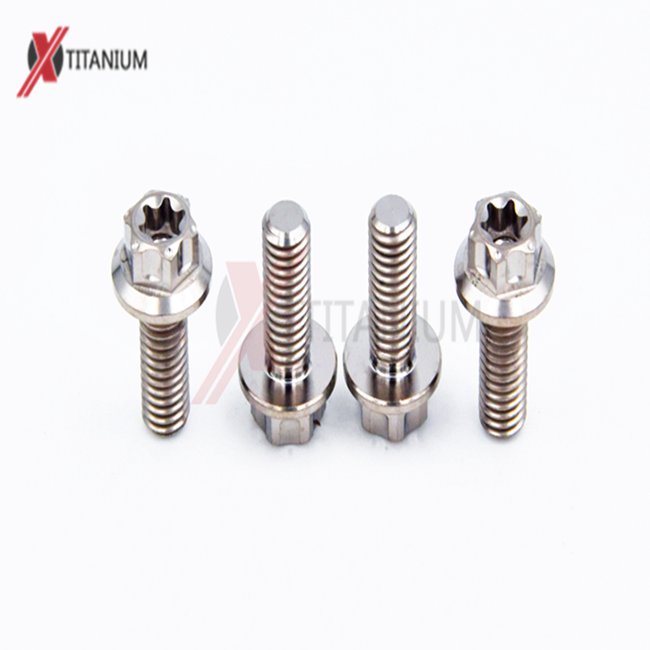
Titanium motorcycle disc bolts represent a significant advancement in braking system technology, delivering a combination of lightweight construction, exceptional strength, and corrosion resistance that steel and aluminum cannot match. These precision-engineered fasteners secure brake rotors to wheel hubs with unmatched reliability, reducing unsprung weight while maintaining structural integrity under extreme braking forces.
The Gr5 Ti-6Al-4V alloy composition provides tensile strength reaching 950 MPa, effectively preventing bolt failure during emergency stops. Choosing titanium brake disc fasteners translates into measurable performance gains, extended component lifespan, and reduced maintenance intervals—critical factors for OEMs, racing teams, and high-performance motorcycle manufacturers seeking competitive advantages in demanding applications.
Introduction
It's easy to forget how important motorcycle brake disc bolts are until you need them. They make or break the bike's stopping power, how it handles, and the rider's confidence. You should think about more than just how much a bolt costs. You should also think about how well it will hold up in different environments and how long it will last when loaded over and over again.
Techs, OEM leaders, and people who buy things for other businesses can learn everything they need to know about titanium brake disc screws from this book. We study the physics behind Ti-6Al-4V metal, compare its performance to steel and aluminium, and suggest some good ways to get it in this work. If you know about these business and technical issues, you can pick the best parts, lower your overall costs, and meet the high quality standards of the European and North American motorcycle markets.
Understanding Titanium Motorcycle Disc Bolts
Titanium motorcycle disc bolts are unique hardware made of Grade 5 titanium metal (Ti-6Al-4V), which is primarily made of titanium (90%), aluminium (6%), and vanadium. When it comes to weight, this mix is stronger than both stainless steel and aluminium. This makes it the best material for safety-critical uses where both weight reduction and function are important. Aluminium nuts don't have enough tensile strength, and steel bolts rust over time. Titanium nuts are a good middle ground.
Material Composition and Manufacturing Standards
ASTM B348 says that the Ti-6Al-4V metal used in brake disc bolts is safe. This makes sure that the chemicals and mechanical properties of all production runs are the same. Good manufacturers don't use casting; instead, they use CNC machining, which gets rid of internal porosity and makes size tolerances tighter. Thread shapes are often rolled instead of cut when they are being made. This keeps the metal's grain structure and makes it much less likely to wear down over time. When the threads are rolled, they press down on the material, hardening it so that it can handle the high rotating forces that happen when the car brakes many times.
How Titanium Differs from Steel and Aluminum
It is very heavy for bolts made of steel, especially those in Grade 8.8 or Grade 10.9, but they are very strong when pulled apart. 7.8 g/cm³ is how dense steel is, which is almost twice as dense as 4.43 g/cm³ for titanium. In other words, wheel systems have extra weight that they don't need. Bits made of aluminium are lighter, but they don't last as long or be as strong as bolts made of other materials. Because they only have a 300–400 MPa tensile strength, they can break under heavy loads. Titanium motorcycle disc bolts fill this performance gap. They are as strong as steel but weigh about the same as aluminium. They are also resistant to corrosion, which breaks down aluminium and steel when used in wet or coastal riding conditions.
Industry Applications and Quality Requirements
OEMs that make bikes for racing, touring, and high-end street riding are choosing titanium screws more and more to save weight without lowering safety. These nuts are used by professional racing teams in MotoGP and World Superbike races to cut down on friction during spinning. This helps you speed up and slow down. People who work on custom cars and repairs choose titanium for reasons other than racing. Steel nuts often rust when they touch aluminium wheel hubs in damp spots. This stops galvanic rust between metals that are not the same. People who care about quality use X-ray fluorescence analysers for Positive Material Identification (PMI) tests to make sure the metal meets certain standards and the material is real.
Advantages of Titanium Bolts for Motorcycle Brake Discs
Titanium motorcycle disc bolts are better for technology in more ways than just changing parts made of different materials. They improve the brakes' performance, lengthen their life, and make the car safer all around. Teams should think about both the short-term changes that will help operations and the long-term costs that will come up when they buy these parts.
Superior Strength-to-Weight Ratio
It weighs 45% less than high-grade steel but has the same tensile strength. In other words, the unsprung mass can be found to be less. The spinning friction goes down by one gram for every gram that is taken away from a wheel part. This lets parts of the suspension respond faster to changes in the road. It is easier to turn corners with this extra weight on the car, and it takes less energy to speed up and slow down. Teams in races have been able to get faster times by using lighter titanium fasteners on brake rotors, sprockets, and engine covers.
Exceptional Corrosion Resistance
It is better for titanium than stainless steel to have a natural oxide film on its surface in places with a lot of salt. Standard steel fasteners rust more quickly when bikes are used near the coast or when they are exposed to road salt in the winter. This makes maintenance harder and can cause nuts to get stuck. Titanium motorcycle disc bolts don't change chemically when they come in contact with salt water, acids or alkalis. In other words, they won't rust like steel bolts do. For parts to last longer and need to be changed less often, they need to be resistant to rust.
Heat Resistance and Thermal Stability
The temperature of the brake disc can go above 500°C if you ride fast or stop hard a lot. This makes thermal forces that break down cheaper materials used for binding. Titanium stays more mechanically sound at high temperatures than aluminium, which cannot clamp as well when it gets hot. Titanium only conducts about 7 W/m·K of heat, while steel conducts 50 W/m·K. Less heat moves from the rotor to the wheel hub. This keeps parts like bearing seals that are sensitive to heat safe. This stable temperature is helpful for races and places with lots of hills where stopping for a long time makes a lot of heat.
Extended Fatigue Life and Safety Margins
When disc bolts are loaded and unloaded many times during braking, they are put under fatigue stresses that weaken materials over time and cause cracks to appear. Ti-6Al-4V is a very resistant to fatigue alloy that makes titanium screws last much longer than steel ones. Rolling the threads on them also makes them last longer. If the right steps were taken to make titanium nuts, they can withstand millions of load cycles without cracks or stress peaks showing up. Because they last longer, there are more safety gaps and a lower chance that a catastrophic bolt failure will happen when the machine needs to stop quickly.
Lifecycle Cost Advantages
Titanium screws are more expensive than steel screws at first, but they are cheaper in the long run because they don't need to be changed or fixed as often. In order to fix hubs and remove stuck bolts, it is cheaper to fix damage caused by corrosion. There is no difference in price at first because a motorbike with a longer service life will need fewer parts over its useful life. High-end OEMs know that customers want products that will last a long time and need less upkeep, so they see the material upgrade as a chance rather than a cost center. Because of these pros, titanium motorcycle disc bolts are the best choice when speed, safety, and long-term saves are more important than the price of the original parts.
Titanium Bolts Compared to Other Materials: A Rational Choice Approach
To pick the right material for safety-critical fasteners, you should carefully consider how well it works mechanically, how well it resists damage from weather, how easy it is to make, and how much it costs. Using this way to compare helps buying teams make decisions based on facts that meet the needs of each one.
Stainless Steel: Durability Without Weight Optimization
Some grades of stainless steel, like 304 and 316, don't rust very easily and are strong enough to be used on most motorcycles. But because they aren't as dense, they don't handle as well in performance situations because the weight of the springs affects how they handle. Another type of wear that can happen to stainless steel nuts is galling, which is when the threads get stuck under heavy tightening loads. The middle ground material is stainless steel. It can be used for routine tasks, but it isn't as light or resistant to rust as titanium.
Aluminum Alloys: Weight Advantages With Structural Limitations
It's true that aluminium bolts are lighter, but their tensile strength and thread integrity are cause for concern. Because metal is pretty soft, threads can come off easily when they are being put on or when they become loose from shaking. Tin is able to melt at 1,668°C, while aluminum's melting point is only about 660°C. This means that aluminium could break if it is attached to hot brake parts. To keep things safe, professional race rules don't let aluminium bolts be used in places where they are needed.
Carbon Steel (Grade 8.8/10.9): Traditional Strength With Weight Penalties
Many car nuts are made of high-strength carbon steel because they are cheap and have been shown to work well. Grade 8.8 steel has a tensile strength of about 800 MPa and Grade 10.9 steel has a tensile strength of about 1,040 MPa. These values are the same as or higher than the standards for titanium. The main problem is weight. Steel bolts add extra rotating mass, which slows down the suspension and makes the brakes do more work. Corrosion is easy for carbon steel, so it needs protective coats like zinc coating and phosphate conversion. Over time, these coats wear off, letting rust form on the main metal.
Market Validation and Customer Preferences
As the business world changes, titanium fasteners are being used on more and more high-end motorcycles. In the customer reviews for professional racing teams, people always say that the titanium upgrades made the cars handle better and need less maintenance. Market study shows that buyers are willing to pay more for proven performance benefits, which has led to more OEM relationships with companies that make titanium parts. This market confirmation shows that titanium is technically better than other materials in cases where other materials don't work as well or last as long.
Practical Considerations for Procurement and Installation
It's important to pay attention to the seller's skills, the specifications, and the right way to install titanium motorcycle disc bolts in order for them to work well together. The people that buy things have to look at the different tuning options and make sure they work with the parts of the brake system that are already there.
Sizing Standards and Thread Specifications
To match the mounting patterns on OEM rotors, titanium motorcycle disc bolts are typically produced with thread sizes M6, M8, and M10. To make sure that aluminium wheel hubs can connect to the thread, the pitch and tolerance classes must meet ISO 965 standards. In this case, a 6g limit means an external thread. Too much space can lead to loosening from vibrations. Custom length specs take into account the fact that the rotors and hubs on different motorcycle models are not all the same size or shape. To make sure the thread is fatigue-resistant, the standards for purchase should make it clear how it is made (rolled vs. cut).
Material Verification and Quality Certifications
As a safety measure, brake nuts must be checked to make sure they are real. A trustworthy company will give you a Certificate of Conformance (CoC) that shows that the product meets the standards set by ASTM B348 Grade 5 for the amount of aluminium (5.5–6.75%) and vanadium (3.5–4.5%). This is based on a chemical makeup analysis by spectroscopy. At least an 880 MPa yield strength and a 950 MPa final tensile strength should be shown on certificates for batch-level tensile tests. Teams that work in flight or medical devices may need extra licenses like AS9100 or ISO 13485 compliance, depending on the rules that apply to their fields.
Installation Torque Requirements and Anti-Galling Precautions
It is very important to use the right fitting pressure so that you get the clamping force that was planned for without damaging the thread. When two threads stick together on the surface, this is called galling. To avoid this, anti-seize items that are made just for titanium metal's need to be used. Anti-seize tools made of copper, which are often used in cars, shouldn't be used because titanium and copper do not mix well and cause galvanic corrosion.
Better anti-seize chemicals are those that are made from nickel or molybdenum disulphide. Many times, the force range for M8 bolts is 25 to 35 Nm, but OEM service guides are the best way to get exact numbers for each job. Do not over-tighten with impact tools if you use measured torque wrenches instead. This can stretch threads past their breaking point.
Maintenance Intervals and Inspection Protocols
Titanium screws don't rust, but they still need to be checked every so often to make sure the sealing still works right. When you look at it, you should see if the bolt head has changed shape, turned a different colour, or become loose because the initial pressure wasn't strong enough. Cleaning the spots where the brake rotors attach gets rid of brake dust and other dirt that makes it hard for the bolts to fit properly.
For each type of application, the recommended inspection time is different. Like, racing teams might look over their bikes before every race, while most people who ride street bikes only fix them every 15,000 to 20,000 miles, as recommended by the manufacturer. After a certain number of load or heat cycles, it is safe to replace safety-critical screws. This makes the most of the safety gaps.
Where and How to Source Titanium Motorcycle Disc Bolts
To find titanium motorcycle disc bolts providers you can trust, you should look into their production skills, quality processes, and the reliability of their supply chain. Making things out of titanium is very skilled, which makes it hard for new businesses to enter the market. This cuts down on the number of good providers.
Supplier Evaluation Criteria
Teams in charge of buying things that care about quality look at possible providers from various points of view. A review of the production potential looks at the features of CNC machines, thread-rolling machines, and surface treatment facilities such as anodising tanks and PVD coating rooms. It shows that a company is committed to handling processes and always making them better when it has quality management system certifications like ISO 9001, AS9100, or standards that are specific to the business. Safety-critical parts are held responsible by material tracking systems that keep track of each batch from the time the raw materials are used to the time they are inspected for quality. How many people can be served as product lines grow depends on how stable the supplier's finances are and how much they can make.
Customization Options and OEM Partnerships
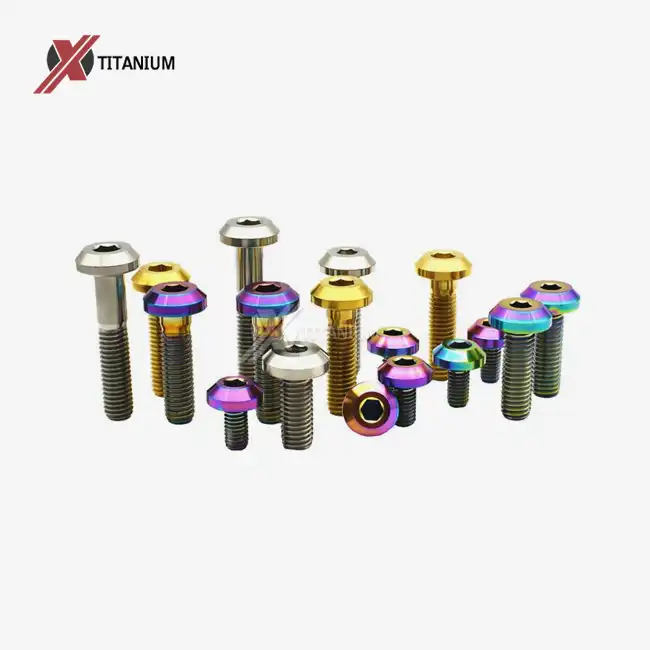
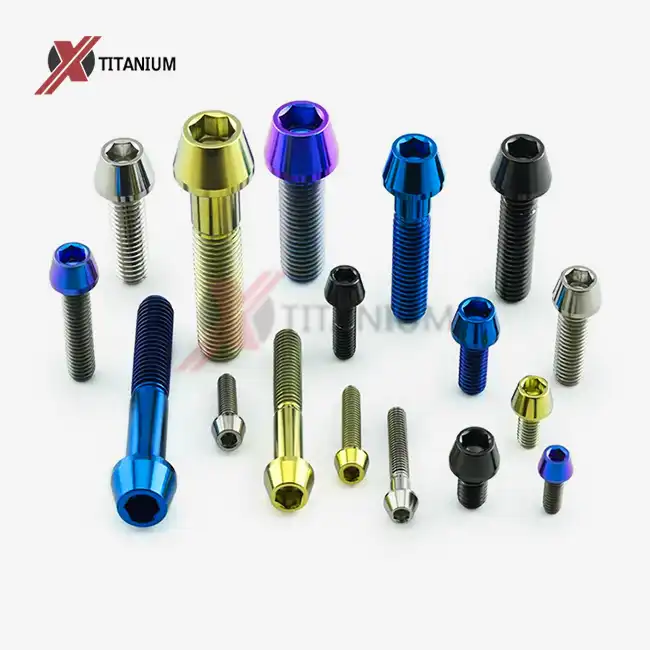
A lot of companies that make titanium fasteners let you change the way they look to fit your design needs. It's up to you to pick the thread size, length, head style (flanged, button-head, countersunk), and drive setup (hex socket, Torx, external hex) that will work with your brake system. To protect the metal or make it look better, surface processes like polishing, bead blasting, anodising, or nitriding are used. A natural titanium finish or a PVD covering in gold, blue, green, purple, black, or rainbow colours can be used. A lot of the time, OEM partnerships include technical support services like making prototypes and testing them to make sure they meet customer needs such as finite element analysis (FEA) of bolt stress conditions.
Pricing Structures and Volume Considerations
The price of titanium motorcycle disc bolts depends on how many you buy, how much the materials cost, and how hard they are to make. Small-batch purchases for testing or aftermarket marketing usually cost more per unit because of the setup costs and minimum order sizes. Customers get big savings when they place large orders. Depending on how customised the item is, production levels are usually set at 1,000 to 10,000 pieces. For catalogue items, lead times are 4 to 6 weeks. For fully customised items that need new tools, lead times are 10 to 12 weeks. To get the most out of your working capital, you can talk to well-known sellers about how to handle payments, your goods, and barter.
Regulatory Compliance and Market-Specific Requirements
When suppliers do business in North America and Europe, they need to learn how to follow the laws that are specific to those places. The REACH (Registration, Evaluation, Authorisation and Restriction of Chemicals) rules in the European Union say that metal goods that are brought in must follow certain rules about substances and have the right paperwork. To enter the U.S. market, you may need to follow ASTM standards and the Buy American Act's rules that favour U.S. content for government contracts. It is important for shipments to have proof of origin for each country, test results on the materials, and compliance notes that explain the rules that must be followed. It's better for procurement teams to work with providers who already know how to follow these rules than to learn them on their own.
Conclusion
Titanium motorcycle disc bolts are more expensive than other fasteners, but the tradeoff is that they are stronger, lighter, less likely to rust, and last longer. High-grade steel is stronger than Ti-6Al-4V metal, but it is lighter by more than half. The bike can handle better and stop faster because of this. Because they don't rust as easily as regular steel bolts, they don't cause problems with rust, even in harsh environments.
Even though titanium costs more than steel or aluminium at first, it is the more cost-effective choice for safety-critical uses because it needs less upkeep and service every so often. Procurement professionals who work with OEMs, racing teams, and high-end aftermarket should only work with suppliers who can show they have manufacturing experience, quality certifications, and tried-and-true systems for tracking materials. This will help make sure that parts are reliable and that companies follow the rules.
FAQ
Are titanium brake disc bolts safe for all motorcycle types?
The right torque specs and fitting steps must be followed for titanium fasteners that meet the requirements of ASTM B348 Grade 5. They can be used in any motorcycle application where steel nuts are currently used. Many tests have been done in the field by racing teams and OEMs all over the world to show that they are safe.
How do titanium bolts affect braking performance?
Titanium screws make wheel systems lighter, which makes them less resistant to spinning. This makes it possible for suspension systems to react faster to changes in the road and lowers the amount of energy needed to slow down. Better resistance to heat keeps the holding force during long-term stopping. This keeps the wheel from moving, which could change how well the brakes work all the time.
What is the expected lifespan compared to steel alternatives?
If you use titanium motorcycle disc bolts the same way you always have, they will last two to three times longer than steel ones. They last longer because they don't rust or wear down as quickly. This is especially true in wet or coastal places where steel rusting speeds up failure modes.
Partner With Chuanglian for Premium Titanium Brake Disc Fasteners
The Baoji Chuanglian New Metal Material Co., Ltd. makes titanium motorcycle disc bolts that are very strong and meet the exact requirements of OEM manufacturers, race teams, and high-end spare parts providers. Our Gr5 Ti-6Al-4V fasteners are CNC-machined and have rolled threads for better fatigue protection. They also have different surface processes, like anodising and nitriding, and full quality paperwork that shows they meet AS9100 and ISO 9001 standards. We can change the lengths, thread sizes (M6 through M10), and colour finishes (natural titanium, gold, blue, purple, black, and rainbow PVD coatings).
The whole world calls Baoji the "City of Titanium," and that's where we make titanium motorcycle disc bolts. Our parts are safe enough to meet North American and European safety standards because we have decades of experience with the materials and high-tech testing tools. Send an email to info@cltifastener.com or djy6580@aliyun.com to talk to our expert team about what you want to buy, get material certifications, or get prices for big orders for your next production run. At cl-titanium.com, you can see all of our goods.
References
1. Boyer, R., Welsch, G., & Collings, E.W. (1994). Materials Properties Handbook: Titanium Alloys. ASM International.
2. Donachie, M.J. (2000). Titanium: A Technical Guide, 2nd Edition. ASM International.
3. Peters, M., Kumpfert, J., Ward, C.H., & Leyens, C. (2003). Titanium Alloys for Aerospace Applications. Advanced Engineering Materials, 5(6), 419-427.
4. Lutjering, G. & Williams, J.C. (2007). Titanium, 2nd Edition. Springer-Verlag Berlin Heidelberg.
5. American Society for Testing and Materials. (2013). ASTM B348: Standard Specification for Titanium and Titanium Alloy Bars and Billets. ASTM International.
6. Schutz, R.W. & Watkins, H.B. (1998). Recent developments in titanium alloy application in the energy industry. Materials Science and Engineering: A, 243(1-2), 305-315.
Learn about our latest products and discounts through SMS or email