- English
- French
- German
- Portuguese
- Spanish
- Russian
- Japanese
- Korean
- Arabic
- Greek
- German
- Turkish
- Italian
- Danish
- Romanian
- Indonesian
- Czech
- Afrikaans
- Swedish
- Polish
- Basque
- Catalan
- Esperanto
- Hindi
- Lao
- Albanian
- Amharic
- Armenian
- Azerbaijani
- Belarusian
- Bengali
- Bosnian
- Bulgarian
- Cebuano
- Chichewa
- Corsican
- Croatian
- Dutch
- Estonian
- Filipino
- Finnish
- Frisian
- Galician
- Georgian
- Gujarati
- Haitian
- Hausa
- Hawaiian
- Hebrew
- Hmong
- Hungarian
- Icelandic
- Igbo
- Javanese
- Kannada
- Kazakh
- Khmer
- Kurdish
- Kyrgyz
- Latin
- Latvian
- Lithuanian
- Luxembou..
- Macedonian
- Malagasy
- Malay
- Malayalam
- Maltese
- Maori
- Marathi
- Mongolian
- Burmese
- Nepali
- Norwegian
- Pashto
- Persian
- Punjabi
- Serbian
- Sesotho
- Sinhala
- Slovak
- Slovenian
- Somali
- Samoan
- Scots Gaelic
- Shona
- Sindhi
- Sundanese
- Swahili
- Tajik
- Tamil
- Telugu
- Thai
- Ukrainian
- Urdu
- Uzbek
- Vietnamese
- Welsh
- Xhosa
- Yiddish
- Yoruba
- Zulu
The Weight-Saving Benefits of Gr5 Titanium Wheel Lug Nuts
When we talk about Gr5 Titanium Wheel Lug Nuts, we're not just talking about nuts and bolts. When compared to standard steel parts, these precision-engineered options are made from an aerospace-grade alloy called Ti-6Al-4V. They are about 45% lighter while still having the same or higher tensile strength. This amazing accomplishment solves the important problem of unsprung weight in vehicle dynamics, which has a direct effect on how quickly a vehicle accelerates, how well it stops, and how well its suspension works. In addition to being lighter, these fasteners don't have the corrosion and seizing problems that common steel lug nuts do when they are exposed to road salts and other environmental stressors. This makes them essential for high-performance automotive applications and industrial fleet operations where dependability and longevity are key factors in purchasing decisions.
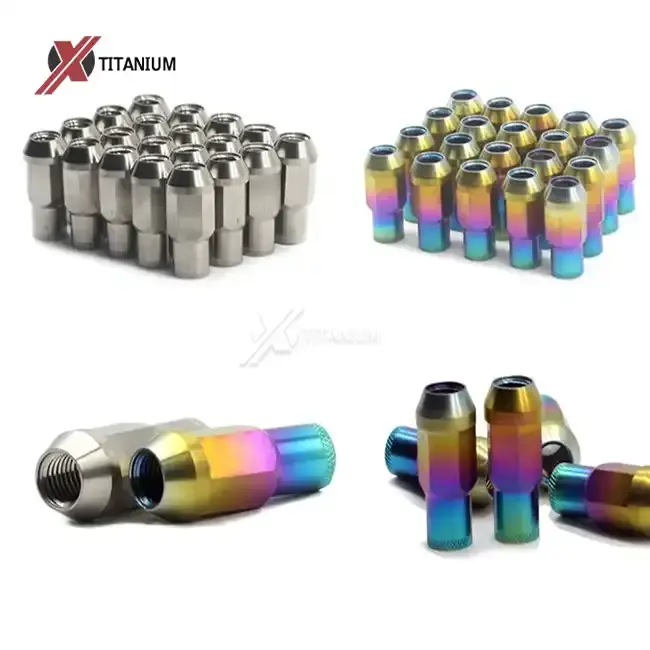
Understanding Gr5 Titanium Wheel Lug Nuts and Their Weight-Saving Advantages
The science behind Ti-6Al-4V alloy shows why this grade is used in the most demanding aerospace, racing, and high-end car uses. About 90% of the metal is titanium, 6% is aluminum, and 4% is vanadium. This makes a microstructure that balances strength with reduced mass in ways that completely change how engineers build parts.
The Material Science Behind Weight Reduction
The density of titanium Grade 5 is only 4.43 g/cm³, while the density of steel is 7.85 g/cm³. There are real efficiency gains from this difference in density that go beyond simple weight numbers. When twenty steel lug nuts are swapped out for Gr5 Titanium Wheel Lug Nuts, the total weight savings per car can hit 400-500 grams. This number may not seem important by itself, but when you look at how it affects rotating mass, it becomes important. Rotating parts need more energy to speed up and slow down than static mass, which means that removing a gram from wheels, tires, and bolts makes a big difference in how well they work.
Aluminum in the alloy strengthens it solidly, and vanadium keeps the beta phase stable. This makes a material that stays strong even when it's loaded and unloaded many times, which is common in car fastening uses. Testing shows that properly made Ti-6Al-4V lug nuts can handle tensile loads of more than 950 MPa, which is about the same as Grade 10.9 steel bolts. They also have wear resistance that stops cracks from spreading like they do in steel parts that are over-torqued.
Quantifying Performance Impact in Real-World Scenarios
Multiple performance metrics are used by fleet managers and OEM makers to figure out how weight loss helps them. Less unsprung mass makes the suspension respond better by letting the dampers and springs better control how the wheels move, especially on roads that aren't smooth. This better control shows up as a more consistent tire contact patch, which has a direct effect on stopping distances and turning grip. Motorsport teams have tested titanium fasteners on tracks and found that they make a measurable difference in lap times. In some high-performance uses, lap times have gone down by 0.2-0.4 seconds.
Even small improvements in fuel efficiency per car add up to big savings when used across a large fleet. Commercial fleet managers who are in charge of hundreds of cars have reported yearly fuel savings that more than cover the high cost of the titanium gear within 18-24 months of deployment. When you take into account the longer service life and the lack of corrosion-related upkeep, the math looks even better.
Engineering Considerations for Weight-Critical Applications
When purchasing professionals look at titanium screws, they need to know that just because they are lighter doesn't mean that the specifications should change. Thermal efficiency, chemical resistance, and long-term dimensional stability must all be included in the choice grid. It is important for brake-adjacent parts that suffer a lot of heat transfer during hard stopping or aggressive driving that Ti-6Al-4V keeps its mechanical properties at temperatures up to 400°C. The alloy's inactive oxide layer naturally protects against rust without any extra surface treatments. This gets rid of the problems that come up when different metals touch each other in wet conditions and road salts.
Comparing Gr5 Titanium Lug Nuts with Alternative Materials
When choosing a material for important binding jobs, you need to carefully look at a lot of different factors. When you pick Gr5 Titanium Wheel Lug Nuts, steel, aluminum, or another material, you have to make trade-offs that affect both the performance right away and the total cost of ownership over the span of the part.
Steel Lug Nuts: Traditional Reliability with Weight Penalties
Due to its low cost and well-established manufacturing methods, steel is still the most common material used to make OEM lug nuts. Grade 8.8 and 10.9 steel fasteners are strong enough for most passenger car uses. The pressure specs range from 80-110 ft-lbs, based on the diameter of the stud and the type of vehicle. The main problems show up when they are used for a long time in harmful settings. Exposure to road salt causes rust to form, which then grows within the lug nut's internal threads. This causes seizure, which makes it harder to change tires on the side of the road and takes longer to do regular maintenance.
When you compare full wheel sets, the difference in weight makes sense. A normal M12x1.5 steel lug nut weighs between 45-55 grams, while a properly made titanium one weighs between 25-30 grams. When you multiply this difference by four to six fasteners per wheel and then by all four sides of a vehicle, you get total saves that change how the vehicle moves and how efficiently it uses energy.
Aluminum Alloy Fasteners: Lightweight but Compromised
When it comes to density, aluminum metals, especially 7075-T6, are close to titanium but cost a lot less. This difference in price draws shoppers on a budget and some aftermarket providers. When you look closely, the choices become clear. When you torque something made of aluminum, the thread is more likely to bend because aluminum is not as hard as Ti-6Al-4V (30-36 HRC vs. 15-18 HRC for 7075-T6). There is a much higher chance of galling, and the material's wear strength under cyclic loads is not as good as titanium's.
Thermal differences make these materials even more different. The thermal expansion rate for aluminum is much higher than that for titanium. This could cause power loss as parts heat and cool through thermal cycles. Because of these problems, procurement managers who are looking for parts for high-performance or safety-critical uses usually don't look at aluminum lug nuts.
Grade Distinctions Within Titanium Alloy Families
Knowing the differences between the different types of titanium keeps you from misspecifying and makes sure you get the best performance. The widely pure titanium grade 2 is very resistant to rust and strong enough for many industrial uses. However, its tensile strength of 340 to 450 MPa is not high enough for high-stress fastening applications. Some sellers offer cheaper Grade 2 titanium lug nuts, which can be confusing for people who don't know the difference in performance between grades.
Grade 9 (Ti-3Al-2.5V) is in the middle. It is stronger than Grade 2 and cheaper than Grade 5. The alloy's mechanical qualities make it useful for some tasks, but it hasn't caught on as much in automobile fastening as Grade 5, which is a well-known standard. To make sure they get the right grade, procurement workers should ask for Material Test Reports (MTRs) and use Positive Material Identification (PMI) testing to check the chemical makeup. This is because looking at something can't tell the difference between titanium alloys.
Installation and Maintenance: Ensuring Optimal Use of Gr5 Titanium Wheel Lug Nuts
The possible benefits of Gr5 Titanium Wheel Lug Nuts will only be realized if they are installed and maintained correctly. If they are not, they could fail early and cause safety issues. Technical teams have to change processes that were made for steel gear to work with titanium's unique properties.
Torque Specifications and Installation Best Practices
Because titanium has a lower amount of elasticity than steel, it is important to be careful when applying pressure. Manufacturers of vehicles give torque values based on steel fasteners, but these values should still work for titanium fasteners if the right anti-seize chemicals are used. The main difference has to do with how the force is applied. Impact wrenches are useful for servicing a lot of wheels, but they give power by rapidly hammering, which can damage titanium's finish and cause stress to build up in the threads.
Professional installation instructions call for hand tools along with torque wrenches that have been measured. The chain of torque should look like a star, going from 50% of the stated torque to 75% of it to 100% over several passes. This method makes sure that the pressure is spread out evenly and stops the wheels from twisting. Re-torquing after 50 to 100 miles of use is an important step after installation because the binding force can change due to initial heat cycles and mechanical settling.
Addressing Galling and Thread Protection
When titanium touches steel wheel pins, the main worry is galling, which is the adhesive wear that happens when similar metals cold-weld under pressure. Physical Vapor Deposition (PVD) coats or anodization are used on the outside of professional-grade titanium lug nuts to make a protective layer. Instead, special anti-seize compounds made for titanium-steel surfaces need to be used during the fitting process.
Copper-based anti-seize goods work fine, but nickel-based formulas are more stable at high temperatures, making them better for performance uses. It's important how the coating is applied; a thin, even coating on both the internal threads and the bearing surface stops galling without adding extra material that could change torque readings. Manufacturers of aerospace fasteners send out technical notes with advice that can be used in car settings. One important point they make is that proper lubrication lowers installation force by 15-25% compared to dry assembly.
Inspection Protocols and Service Life Monitoring
Setting structured check times for titanium fasteners extends their useful life and finds possible problems before they become dangerous. When taking off a wheel, it should be inspected visually for damage to the threads, rust of steel parts that fit together, and changes in the shape of the lug nut's outside. Thread gauges make sure that both the internal and external threads stay within the allowed range. This is important because broken threads combine stress and raise the risk of failure.
Fleet managers can benefit from installing tracking systems that keep track of each wheel's torque value, service date, and miles. This information shows trends that could mean bad installation methods or problems with the materials that need to be fixed by the provider. Because titanium is naturally resistant to corrosion, if you take good care of your titanium lug nuts, they can last as long as the vehicle does. This is very different from steel bolts, which usually need to be replaced every 3-5 years in harsh conditions.
Procurement Insights: How to Buy Gr5 Titanium Wheel Lug Nuts for Industrial Use?
When choosing where to get Gr5 Titanium Wheel Lug Nuts, there are more things to think about than just price. Both the original performance of the product and the long-term profitability of the relationship are affected by the supplier's manufacturing skills, quality systems, and supply chain stability.
Supplier Qualification and Manufacturing Standards
Titanium fastener companies with a good reputation make sure their quality control systems are in line with industry standards like ISO 9001 for general manufacturing or AS9100 for aerospace uses. These certifications show that process control, traceability, and ongoing growth are done in a planned way. Purchasing departments should make sure that sellers get their raw materials from reliable mills and keep track of each batch from the ingot to the final inspection.
The way a product is made has a big effect on its quality. When compared to machined parts, lug nuts that are cold-formed or forged have better grain structure, which makes them more resistant to wear. CNC cutting from bar stock gives you better physical accuracy and a better finish, but it costs more to make. When procurement workers know how a seller makes their products, they can match product specifications with application needs and price limits.
Pricing Dynamics and Total Cost Analysis
Titanium pin prices depend on the cost of raw materials, how hard they are to make, and how many are ordered. The price of Ti-6Al-4V alloy bar stock on the market right now is 3-5 times the price of similar steel material. This price difference shows up in the prices of finished components as well. Long-term contracts and bulk buying can cut the cost per unit by 15-30% compared to buying one at a time. This makes volume promises appealing for OEM uses or large fleet operations.
To do a full cost analysis, you need to look at more than just the buy price. You also need to look at the costs of work for installation, repairs, replacements, and downtime. Steel lug nuts are cheaper to buy at first, but they need to be replaced more often and cause service calls when rust makes them hard to install or remove. Titanium has a longer service life and less upkeep, which often leads to better lifecycle economics, even though it costs more up front. This is especially true for harsh working areas or sites that are hard to get to.
Logistics Considerations and Supply Chain Planning
Lead times for titanium parts are very different depending on whether sources keep standard versions in stock or make them when an order comes in. Common thread sizes, such as M12x1.5 and M14x1.5, are often kept in stock so that finished things can be sent out within days. Custom specs that need special sizes, coatings, or testing can make wait times 8-12 weeks long, so project-based buying needs to be planned ahead of time.
In an industry with limited titanium smelting capacity and processing sites that are spread out geographically, supply chain stability needs to be taken into account. Diversifying your providers across different areas lowers the risks that come with things like transportation problems, output delays, or changes in geopolitics. Companies can keep up with their production plans and keep their promises to customers even when the market is volatile if they use procurement strategies that balance lowering costs with making sure they always have enough supplies.
Future Trends and Strategic Value of Gr5 Titanium Lug Nuts in Wheel Technology
Industry trajectory research shows that lightweight materials are being used more and more in the automobile and industry sectors. This is because of rules and competition, which make Gr5 Titanium Wheel Lug Nuts more of a necessity than an extra.
Regulatory Drivers and Performance Standards
Around the world, rules on emissions are getting stricter. For example, in the US, CAFE standards and similar rules in Europe and Asia are pushing makers to set very high weight reduction goals. Every kilogram less of a vehicle's mass helps it meet regulations in a measurable way. This creates economic benefits for lightweighting efforts that didn't exist before because they were too expensive. When you use titanium screws, you can save weight across the whole car without having to make major design changes.
Adopting electric vehicles makes it even more important to reduce weight, since battery weight already makes it hard for engineers to keep range and performance reasonable. Getting rid of some of the battery's weight by making parts lighter increases range and efficiency, which directly affects people's choices to buy. OEM engineers are asking for titanium to be used in more than just high-performance cars. This means that parts that were once only used in unusual situations are becoming more common.
Manufacturing Technology Evolution
New developments in the handling of titanium look like they will make both the quality of the products and their prices better. Additive manufacturing methods are still only useful for prototypes and small-scale specialty uses, but they are getting better all the time and will soon be able to be used in mass production. Selective laser melting and electron beam melting can make complicated shapes that can't be made any other way. This could lead to better lug nut designs that are lighter while still meeting structural needs.
Making changes to the way standard industry is done also has benefits. Better cutting settings, more powerful CNC machines, and better manufacturing materials all cut down on cycle times and increase tool life, which lowers the cost of production. Better knowledge of how titanium alloys react to heat has led to improvements in die casting technology for titanium parts. This allows for near-net-shape production, which reduces material waste and the need for cutting.
Strategic Differentiation and Brand Positioning
Material choice is used by high-end car brands as part of larger stories about engineering excellence and technology leadership. Choosing aerospace-grade titanium parts supports the brand's messages about quality, efficiency, and attention to detail. People who are knowledgeable about cars and are willing to pay more for ones with real technical benefits respond well to marketing messages that stress these specs.
The strategic value stretches to specialty vehicles and the aftermarket, where the quality of parts has a direct effect on the image of the brand. Motorsport teams, companies that modify high-end cars, and owners of high-performance fleets choose sources based on their technical skills and the reliability of their products, not on who bids the lowest price. By building relationships with suppliers in these high-demand markets, you can get reference accounts that prove your skills and help you move into bigger markets.
Conclusion
Gr5 Titanium Wheel Lug Nuts have measured benefits that go far beyond just lowering weight. They meet important needs for performance, dependability, and managing costs over the life of the vehicle. Due to its unique mix of strength, resistance to rust, and low density, the material is the best choice for difficult situations where a component failing would have major effects.
When procurement pros look at different fastener choices, knowing the differences between titanium grades, the right way to install them, and the criteria for qualifying suppliers helps them make smart decisions that match the requirements of the parts with the goals of the organization. Titanium fasteners will go from being used in specialized applications to being widely used because the industry is moving toward lighter materials and better performance standards. This means that early supplier ties and technical knowledge will become more valuable competing assets.
FAQ
Can titanium lug nuts be used with impact wrenches during installation?
When using an impact wrench with Gr5 Titanium Wheel Lug Nuts, you need to be careful. Because titanium has a smaller amount of elasticity, the fast hammering action can damage the finishes on the surfaces and could over-torque the nuts past their breaking point. Professional installers use hand tools along with measured torque wrenches to make sure they use the right amount of tightening force without damaging any parts. This method also makes it easier to use the star-pattern torque sequence, which makes sure that all the screws are under the same amount of pressure.
How do I verify that I'm receiving authentic Grade 5 titanium rather than inferior grades?
Different types of titanium can't be told apart by sight, so paperwork is very important. Ask providers for Material Test Reports (MTRs) that list the chemical make-up and mechanical qualities. X-ray fluorescence tests for Positive Material Identification (PMI) shows the alloy content. Another way to be sure is to test the hardness. Grade 5 usually has a hardness of 30-36 HRC, while commercially pure grades are much weaker. As part of quality control procedures, reputable providers give this information on request.
What maintenance procedures extend the service life of titanium wheel fasteners?
Problems can be found early on by inspecting the wheels regularly during repair. Check the threads for harm, make sure the right torque values are used, and make sure the anti-seize powder is still on the surfaces that fit together. To account for mechanical settling, re-torque screws after the first time they are installed and after taking the wheel off. Clean the parts every so often to get rid of road dirt that could get in the way of proper sitting. If you take good care of your titanium lug nuts, they should last longer than the vehicle itself before they need to be replaced.
Partner with a Trusted Gr5 Titanium Wheel Lug Nuts Manufacturer
Precision-engineered Gr5 Titanium Wheel Lug Nuts for challenging industrial and automobile uses are what Chuanglian does best. Because we are in Baoji City, which is known around the world as the "City of Titanium," we have full CNC cutting skills and strict quality control systems that make sure every part meets aerospace-grade standards. Our Ti-6Al-4V lug nuts go through strict testing procedures, and we give full material tracking with MTRs for every batch we make.
We have been processing titanium for more than ten years and have built relationships with clients in the motorsport, aerospace, and high-end car industries. This means we know what technical standards and supply chain stability B2B procurement pros look for. You can get help from our engineering team to choose the best parts for your application, whether you need standard setups or custom specs. Get in touch with us at info@cltifastener.com or djy6580@aliyun.com to talk about your needs with a seller of Gr5 Titanium Wheel Lug Nuts who is dedicated to quality, accuracy, and quick customer service.
References
1. Boyer, R., Welsch, G., & Collings, E. W. (1994). Materials Properties Handbook: Titanium Alloys. ASM International.
2. Donachie, M. J. (2000). Titanium: A Technical Guide, 2nd Edition. ASM International.
3. Lütjering, G., & Williams, J. C. (2007). Titanium, 2nd Edition. Springer-Verlag Berlin Heidelberg.
4. Peters, M., Kumpfert, J., Ward, C. H., & Leyens, C. (2003). "Titanium Alloys for Aerospace Applications." Advanced Engineering Materials, 5(6), 419-427.
5. SAE International. (2018). Aerospace Material Specification AMS 4928: Titanium Alloy Bars, Wire, Forgings, Rings, and Drawn Shapes 6Al-4V Annealed. Society of Automotive Engineers.
6. Veiga, C., Davim, J. P., & Loureiro, A. J. R. (2012). "Properties and Applications of Titanium Alloys: A Brief Review." Reviews on Advanced Materials Science, 32(2), 133-148.
Learn about our latest products and discounts through SMS or email