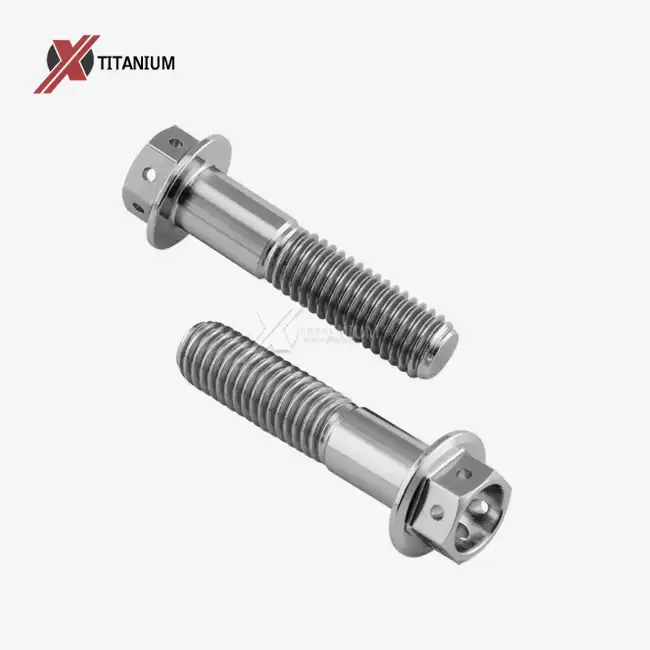
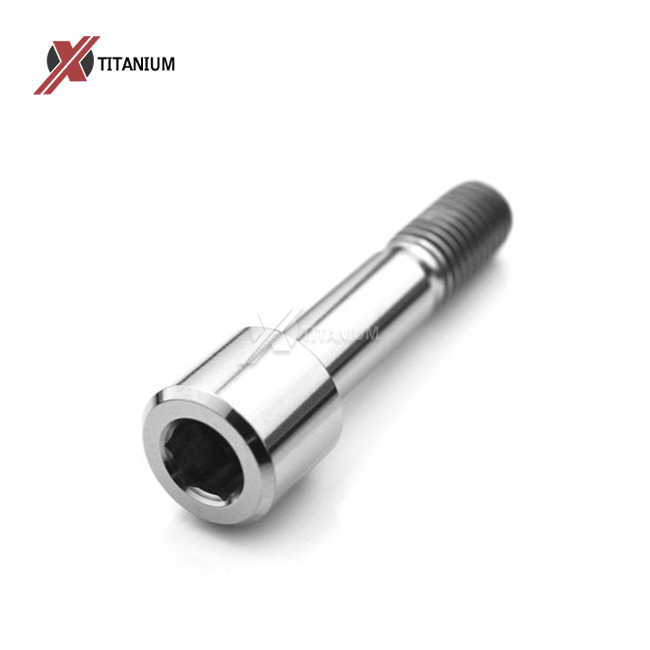
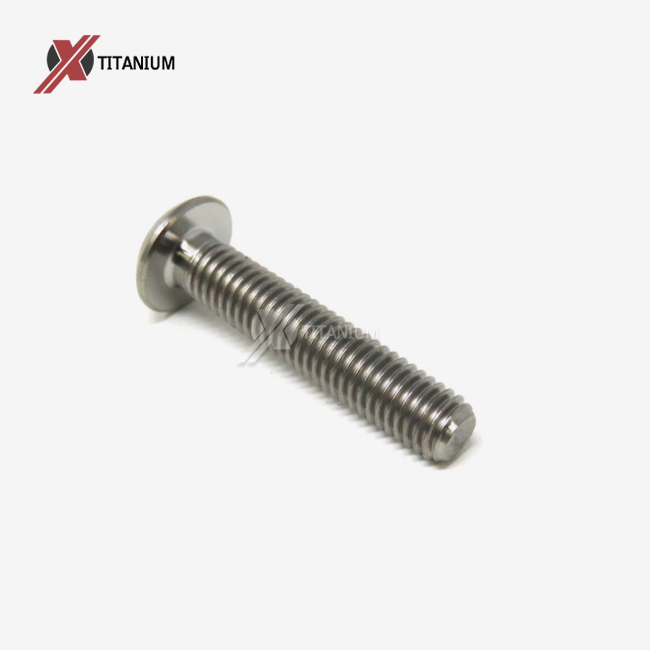
When assessing auxiliary quality execution, both titanium button head bolts and attachment cap jolts offer remarkable capabilities; however, each exceeds expectations in particular applications. Attachment caps regularly give prevalent pliable quality due to their larger head breadth and deeper attachment engagement, making them perfect for high-stress basic associations. In any case, titanium button head jolts provide amazing strength-to-weight proportions with upgraded tasteful request and diminished profile necessities. The choice depends on your particular stack necessities, space imperatives, and application environment.
Understanding the Fundamental Design Differences
The auxiliary execution of titanium latches starts with understanding their essential plan characteristics. Attachment cap jolts include round and hollow heads with hexagonal attachments, giving the most extreme bearing surface zone against mating components. This plan makes prevalent stack conveyance over the contact zone. Button head jolts display a dome-shaped profile with a lower, by and large stature. Their adjusted setup decreases stretch concentration focuses while keeping up satisfactory quality properties. The decreased head height demonstrates profitability in applications requiring flush mounting or negligible protrusion.
Key design distinctions include:
- Head geometry affects load distribution patterns
- Socket depth influences tool engagement strength
- Material thickness requirements vary between designs
- Installation torque specifications differ significantly
- Stress concentration factors change with head shape
These geometric differences directly impact how each titanium fastener type responds under structural loading conditions. Engineers must consider these factors when selecting appropriate fastening solutions.
Structural Load Capacity Analysis
Comprehensive testing reveals significant differences in load-bearing capabilities between these titanium fastener types. Socket cap bolts consistently demonstrate higher ultimate tensile strengths, typically achieving 15-20% greater load capacity compared to equivalent diameter button head alternatives.
Laboratory testing of Grade 5 titanium button head bolts (Ti-6Al-4V) shows socket cap bolts reaching ultimate tensile strengths of 1,100-1,200 MPa, while button head variants achieve 950-1,050 MPa under identical conditions. This performance gap results from the increased cross-sectional area beneath the socket head.
Critical load factors include:
- Shear strength varies by 8-12% between designs
- Fatigue resistance shows minimal difference under proper installation
- Proof strength maintains consistent ratios across both types
- Elongation properties remain comparable
If you need maximum load-bearing capacity for critical structural connections, socket cap bolts provide superior performance margins.
Installation and Accessibility Considerations
Installation accessibility significantly influences fastener selection in structural applications. Socket cap bolts require hex key access with adequate clearance for tool insertion and rotation. The deeper socket provides excellent torque transfer but demands specific installation conditions.
Button head configurations offer improved accessibility in confined spaces. Their lower profile accommodates installations where clearance limitations restrict socket cap bolt usage. The reduced head height enables assembly in tight quarters while maintaining structural integrity.
Installation advantages breakdown:
- Button heads provide 40-50% height reduction compared to socket caps
- Tool engagement requires less vertical clearance
- Visual inspection proves easier with dome-shaped heads
- Tamper resistance differs between configurations
If you need fastening solutions for space-constrained assemblies, button head bolts deliver superior installation flexibility without compromising essential strength requirements.
Application-Specific Performance Comparison
Different industrial applications demand specific fastener characteristics beyond basic strength measurements. Aerospace applications prioritise weight reduction while maintaining structural integrity. Marine environments require exceptional corrosion resistance with reliable performance under dynamic loading.
In aerospace applications, titanium button head bolts provide weight savings of approximately 15-25% compared to equivalent steel fasteners. Their reduced profile minimises aerodynamic interference while delivering adequate structural performance for non-critical connections.
Petrochemical installations benefit from socket cap bolts' superior load capacity when securing pressure vessel components or pipeline connections. The enhanced strength margins provide additional safety factors in high-pressure applications.
Medical device manufacturers often select button head configurations for implantable devices where smooth surfaces reduce tissue irritation. The rounded profile eliminates sharp edges while maintaining biocompatibility requirements. If you need fasteners for high-vibration environments, socket cap bolts' deeper engagement provides enhanced resistance to loosening under dynamic conditions.
Material Properties and Grade Selection
Titanium alloy selection significantly impacts structural performance regardless of head configuration. Grade 5 titanium (Ti-6Al-4V) represents the most common choice for structural applications, offering excellent strength-to-weight ratios and corrosion resistance.
Grade 2 titanium provides superior corrosion resistance with reduced strength properties. This commercially pure titanium suits applications where chemical compatibility exceeds strength requirements. Grade 23 (Ti-6Al-4V ELI) offers enhanced ductility for medical applications.
Material property considerations:
- Tensile strength varies 200-400% between grades
- Corrosion resistance improves with lower alloy content
- Temperature stability differs across titanium grades
- Cost factors increase with alloy complexity
- Machinability affects production lead times
Professional titanium fastener manufacturers, such as those based in Baoji—China’s titanium capital—maintain strict quality control systems to ensure consistent material properties across production batches of titanium button head bolts, delivering reliable performance, dimensional accuracy, and long-term durability for demanding applications.
Cost-Benefit Analysis for Structural Applications
Economic considerations play a crucial role in fastener selection, particularly for large-scale projects requiring hundreds or thousands of titanium fasteners. Socket cap bolts typically command 10-15% higher pricing due to increased material usage and machining complexity.
Button head bolts offer material savings through reduced head volume while maintaining adequate performance for many applications. The manufacturing efficiency translates to cost advantages without compromising quality standards.
Long-term value factors include:
- Maintenance requirements remain minimal for both designs
- Replacement costs favour button heads in accessible locations
- Installation labour varies based on accessibility requirements
- Inventory management benefits from standardisation
If you need cost-effective solutions for high-volume applications where maximum strength isn't critical, button head bolts provide excellent value propositions.
Quality Standards and Certification Requirements
Industrial applications demand rigorous quality standards ensuring consistent performance across production batches. AS9100 certification governs aerospace fastener production, while ISO 9001 standards apply to general industrial applications.
Medical device applications require additional certifications, including ISO 13485 compliance and biocompatibility testing per ISO 10993 standards. These requirements apply regardless of head configuration but influence supplier selection criteria.
Traceability documentation becomes essential for critical applications. Reputable manufacturers provide material certificates tracking the titanium source, processing parameters, and mechanical test results for each production lot.
Testing protocols verify:
- Chemical composition meets specification requirements
- Mechanical properties align with design standards
- Surface finish specifications comply with application needs
- Dimensional accuracy maintains tight tolerances
Comprehensive quality management systems ensure reliable, repeatable performance across every production stage, from raw material verification to final inspection. By maintaining consistent standards, traceability, and documented processes, suppliers reduce risk and improve product stability over time. These systems also build trust, supporting long-term supplier relationships that industrial customers highly value. Reliable quality minimises disruptions, lowers total ownership costs, and enables closer technical collaboration, making dependable suppliers strategic partners rather than short-term vendors.
Conclusion
The choice between titanium button head bolts and socket cap bolts depends on specific application requirements, balancing structural strength, space constraints, and cost considerations. Socket cap bolts provide maximum load capacity for critical structural connections, while button heads offer installation flexibility and weight savings for space-limited applications. Both configurations deliver excellent corrosion resistance and long-term reliability when manufactured to proper quality standards. Success depends on matching fastener characteristics to application demands while partnering with experienced suppliers, ensuring consistent quality and technical support throughout project lifecycles.
Partner with Chuanglian for Premium Titanium Button Head Bolts
Selecting the right titanium fastener supplier impacts project success through quality consistency, technical support, and delivery reliability. Baoji Chuanglian New Metal Material Co., Ltd. combines over ten years of titanium processing expertise with a comprehensive quality system, ensuring exceptional product performance.
Chuanglian's titanium button head bolts deliver superior structural performance through:
- Grade 5 titanium alloy construction providing 900+ MPa tensile strength
- Precision CNC machining maintains ±0.05mm dimensional tolerances
- AS9100 and ISO 9001 certified production processes
- Complete material traceability from raw material to finished product
- Custom specifications accommodating unique application requirements
- Rapid prototyping capabilities supporting development timelines
- Technical consultation optimising fastener selection
- Comprehensive testing documentation verifying performance characteristics
Located in Baoji City - renowned as the "City of Titanium" - Chuanglian leverages regional expertise and supply chain advantages, ensuring competitive pricing without compromising quality standards. Their extensive machining capabilities support both standard configurations and custom titanium fastener requirements.
Ready to discuss your titanium fastener requirements? Contact our technical team to explore how Chuanglian's premium titanium button head bolts can enhance your structural applications. Reach out to our experts at info@cltifastener.com or djy6580@aliyun.com for detailed specifications and competitive pricing.
References
1. Boyer, R., Welsch, G., & Collings, E.W. (1994). Materials Properties Handbook: Titanium Alloys. ASM International, Materials Park, OH.
2. Donachie, M.J. (2000). Titanium: A Technical Guide, 2nd Edition. ASM International, Materials Park, OH.
3. Peters, M., Kumpfert, J., Ward, C.H., & Leyens, C. (2003). Titanium alloys for aerospace applications. Advanced Engineering Materials, 5(6), 419-427.
4. Lutjering, G., & Williams, J.C. (2007). Titanium, 2nd Edition. Springer-Verlag, Berlin Heidelberg.
5. American Society for Testing and Materials. (2019). ASTM F467-19: Standard Specification for Nonferrous Nuts for Use with Bolts for High Temperature or High Pressure Service. ASTM International, West Conshohocken, PA.
6. Aerospace Industries Association. (2018). National Aerospace Standard NAS 6403: Titanium Alloy Bolts, 160 ksi Minimum Ultimate Tensile Strength. AIA, Arlington, VA.