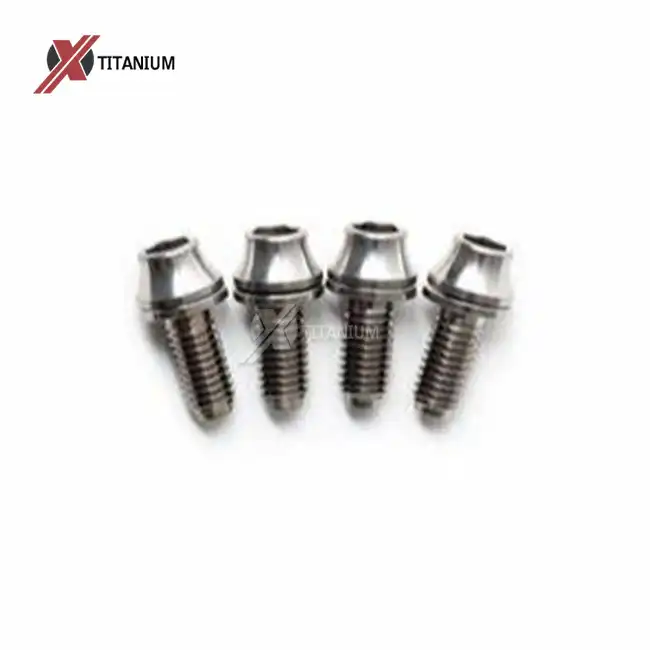
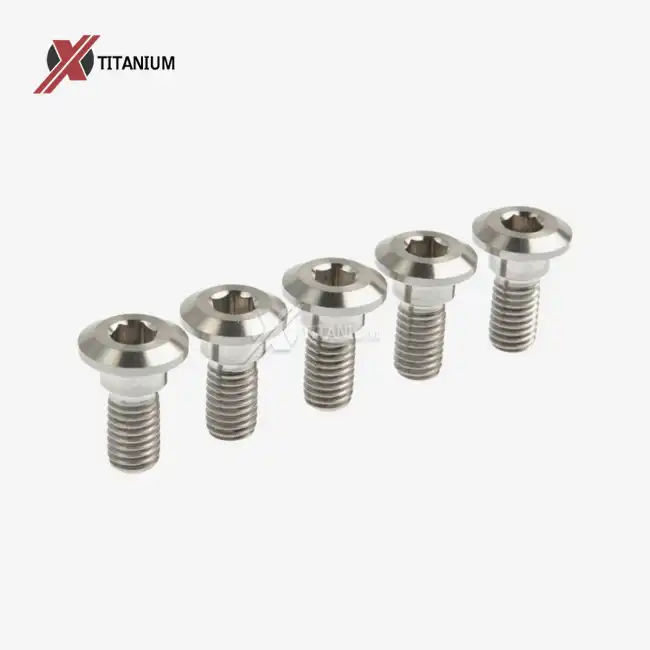
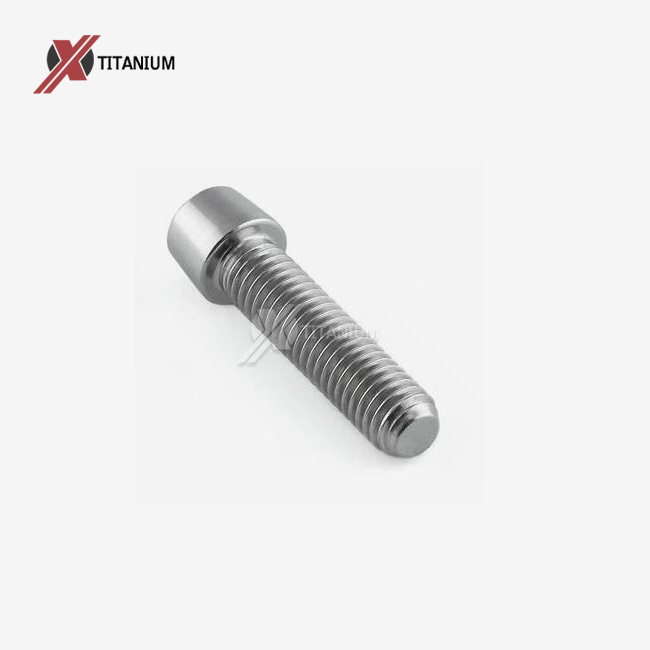
Titanium socket cap bolts are the best industrial fastening technology because they have the best strength-to-weight ratio and the best rust protection. These precision-engineered screws are used in medical products, aircraft, naval engineering, and high-performance manufacturing, among other fields. Engineers who want to get the best performance in tough settings need to know about their specific qualities, uses, and selection factors. Technical workers can learn everything they need to know about choosing, getting, and using titanium socket head screws in their hardest projects in this in-depth book.
Introducing Titanium Socket Head Screws: Material Science and Engineering Properties
Material science and engineering properties you need to know. Titanium metal nuts are very different from regular steel screws because they have special properties. The mass of the material, which is about 4.5 g/cm³, makes it about 45% lighter than steel options. In aircraft uses, where every gram counts, this weight loss is very important. Grade 5 titanium nuts, which are made of a metal called Ti-6Al-4V, have great functional qualities. They can withstand tensile forces between 895 and 1000 MPa and don't get worn down easily. The alpha-beta substructure gives the best mix of strength, flexibility, and toughness to break. Another defining feature is its corrosion resistance.
Titanium forms a solid oxide layer that heals itself when it gets broken. This makes it better at protecting against salt environments, acids, and sea conditions. Titanium socket screws are great for chemical handling equipment and remote uses because they can fix themselves. Temperature performance goes from very cold temperatures to 400°C for long periods of time. Together, these thermal stability and low thermal expansion factors ensure that the dimensions stay the same over a wide range of temperatures. When tight specs are needed for precision uses, engineers like this level of dependability.
Critical Applications Across High-Performance Industries
Titanium socket cap bolts are used a lot in aerospace engineering for building airplanes, engine parts, and landing gear systems. The Boeing 787 Dreamliner uses thousands of titanium screws to save weight and make it more resistant to wear and tear. Titanium aircraft nuts are used by engine makers in compressor parts that need to be strong at high temperatures. Biocompatible materials that can safely bond with human flesh are needed for medical devices. When used in hip implants, titanium machine screws have great osseointegration qualities.
Titanium is used in spinal fusion gear, joint replacement parts, and tooth implants because it is non-toxic and doesn't affect the immune system. When it comes to marine engineering, rust is a big problem that titanium precision nuts can solve well. Titanium doesn't rust in saltwater, which is good for offshore drilling platforms, submarine ships, and desalination equipment. Titanium screw bolts keep their structural integrity even after decades of being exposed to seawater. Titanium structural bolts are used in reactors, heat exchangers, and pressure tanks that deal with toxic media in the chemical processing industry.
These screws are required by petrochemical plants for equipment that will be exposed to hydrogen sulfide, chlorine chemicals, and acidic process streams. The inertness of the material keeps it from getting contaminated and ensures operating safety. Titanium lightweight nuts are used in high-end production industries, such as Formula 1 racing, luxury cars, and high-end sports goods, to improve performance. Racing uses like the material's high strength-to-weight ratio, and luxury markets like how it looks and how long it lasts.
Material Grades and Specifications: Choosing the Right Titanium Alloy
Picking the Right Titanium Alloy Grade 2 commercially pure titanium is very resistant to rust and not too strong. These titanium bolts won't rust and are good for uses that value chemical compatibility over maximum mechanical strength. For non-structural links, marine gear, and chemical handling equipment often say Grade 2. Grade 5 (Ti-6Al-4V) is the titanium metal that is most often used for building structures. This alpha-beta metal is the best combination of strength, flexibility, and ease of processing.
Grade 5 titanium high-strength nuts are often used in aerospace structures, medical implants, and high-performance race parts. Grade 23 (Ti-6Al-4V ELI) is better for biocompatibility because it has less intermediate material. This ultra-pure version is required for medical uses that need to come into close contact with flesh. Grade 23 is used in surgical tools and implantable devices because it has a better biological reaction. Beta titanium alloys, such as Ti-15V-3Cr-3Sn-3Al, are stronger and can reach levels close to 1400 MPa.
These special types are used in specific situations where the highest load-bearing ability is needed. Even though they cost more, aerospace bolts that are used in places with a lot of stress may require beta metals. Treatments that are applied to the surface improve efficiency even more. Anodizing makes something more resistant to wear and provides color coding for easy identification. Nitriding processes make the surface harder for uses that need to avoid galling or rolling contact.
Manufacturing Excellence and Quality Assurance Standards
Making titanium socket cap bolts with great accuracy takes special tools and knowledge. Cold heading is a way to make socket heads while keeping the material's features. Thread rolling processes make exact thread profiles without taking away any material, so the threads keep their greatest strength. The steps used for heat treatment determine how the microstructure grows and what the end mechanical qualities are. Solution treatment followed by age makes the best use of strength and flexibility.
Keeping the temperature within ±5°C makes sure that all output runs have the same effects. Quality control methods make sure that aircraft standards like AS9100 and medical device standards like ISO 13485 are being followed. From the raw material to the final review, material tracking tools keep track of the alloy's chemistry. Certificate compliance paperwork gives important apps a full history of the material they use. Coordinate measuring tools and visual comparators are used in dimensional checking to check the shape of threads, the size of sockets, and the designs of heads.
Measurements of the surface finish make sure that certain roughness factors are met. Tensile strength, proof load, and torque-tension relationships are all checked by mechanical tests. Penetrant inspection and ultrasound analysis are two non-destructive testing methods that can find internal flaws. These methods find possible ways that parts could fail before they are used. Statistical process control checks the regularity of output and finds problems that are happening more often.
Installation Considerations and Torque Specifications
When titanium bolts are installed correctly, they work better and last longer. When compared to steel fasteners, titanium fasteners need different pressure standards because they have a lower amount of flexibility. Most of the time, torque numbers are between 60 and 70% of what is required for a similar steel bolt. Lubricating the threads stops them from galling during fitting. Because titanium tends to cold join when under pressure, the right fluids are needed.
Anti-seize products with copper or nickel bits work well to keep things from seizing up. Lubricants made from silver are used in high-temperature situations. When making installation tools, titanium's unique properties need to be taken into account. To keep them from rounding, hex keys must precisely fit the hole dimensions. To avoid wear, tool materials should be harder than titanium. The tuning of a torque wrench makes sure that the charge is applied correctly. Joint design has a big effect on how well fasteners work. Preload retention is affected by clamped material qualities, surface treatments, and hole precision.
Engineers have to take into account the fact that titanium screws and base materials expand and contract at different rates when heated. Inspection methods make sure that the work was done right and look for possible problems. Torque checks confirm the preloads that were given. A visual inspection shows any damage or contamination in the fitting. Documentation tools keep track of installation details so that upkeep can be planned.
Supply Chain Excellence: Sourcing Reliable Titanium Fastener Solutions
For reliable titanium socket cap bolts, buying, building strong ties with suppliers is essential. Lead times are usually between 6 and 12 weeks for normal setups. For unique specs, more time is needed for development. Stability in the supply chain affects how projects are planned and how material is managed. As part of the supplier approval process, factory skills, quality systems, and shipping performance are all looked at. AS9100 approval shows that an aircraft business meets certain standards.
Getting registered with ISO 9001 means that you handle quality in an organized way. Biocompatible goods must have ISO 13485 approval before they can be used in medical devices. Premium suppliers are different from basic suppliers because they offer technical help. Application engineering help makes it easier to choose the right fasteners for each job. Material property records give a lot of information about how things work. Expertise in failure analysis helps with fixing and efforts to make things better all the time. Strategies for managing inventory balance, how much it costs tokeep,p and how much is available.
Titanium is a very valuable material that needs to be carefully optimized for stock. With vendor-managed inventory programs, sellers pay for keeping items on hand while making sure they are available. With planned releases, blanket buy orders offer better prices for large orders. When global buying, things to think about are the costs of shipping, the effects of duties, and the safety of the supply chain. Regional providers have faster lead times and make transportation easier. If you need a lot of something, international sources may be cheaper. Dual-sourcing methods lower the chance of supply disruptions.
Conclusion
Titanium socket cap bolts represent advanced fastener technology essential for high-performance applications across aerospace, medical, marine, and precision manufacturing industries. Their exceptional strength-to-weight ratios, corrosion resistance, and biocompatibility properties make them irreplaceable in demanding environments. Successful implementation requires understanding material grades, proper installation techniques, and reliable supply chain partnerships. Engineers who master these fundamentals gain access to fastener solutions that enable breakthrough performance in their most challenging applications. The investment in premium titanium fasteners delivers long-term value through enhanced reliability, reduced maintenance, and superior operational performance.
Partner with Chuanglian for Premium Titanium Socket Cap Screw Solutions
Selecting the right titanium socket cap bolts supplier determines project success in demanding applications. Chuanglian's decade-plus experience in titanium processing and machining delivers the reliability, quality, and technical expertise that aerospace, medical, and marine engineering projects require. Our comprehensive manufacturing capabilities include precision CNC machining, strict quality control systems, and complete material traceability from raw material through final delivery.
Our strategic location in Baoji City, renowned as the "City of Titanium," provides direct access to premium raw materials and specialized manufacturing infrastructure. The company maintains rigorous quality standards, including AS9100 aerospace certification and ISO 9001 compliance. Every titanium fastener undergoes coa mprehensive inspection protocol,s esuring consistent performance across production batches.
Technical engineering support distinguishes our service approach from commodity suppliers. Application specialists provide material selection guidance, joint design optimization, and installation recommendations tailored to specific project requirements. This collaborative partnership approach helps engineers achieve optimal performance while minimizing development risks and delays.
Whether sourcing grade 5 titanium bolts for aerospace structures, biocompatible fasteners for medical devices, or corrosion-resistant hardware for marine applications, our comprehensive inventory and custom manufacturing capabilities meet diverse engineering requirements. Experience the reliability and technical excellence that leading manufacturers worldwide trust for their most critical applications. Contact us at info@cltifastener.com or djy6580@aliyun.com to discuss your titanium fastener requirements with our technical team.
References
1. Boyer, R..R. "An Overview on the Use of Titanium in the Aerospace Industry." Materials Science and Engineering A, Vol. 213, 1996.
2. Donachie, Matthew J. "Titanium: A Technical Guide, 2nd Edition." ASM International, 2000.
3. Peters, M., Kumpfert, J., Ward, C.H., and Leyens, C. "Titanium Alloys for Aerospace Applications." Advanced Engineering Materials, Vol. 5, No. 6, 2003.
4. Rack, H.J. and QazJ.I I "Titanium Alloys for Biomedical Applications." Materials Science and Engineering C, Vol. 26, 2006.
5. Lutjering, G. and William J.. .C. ".Titanium: Engineering Materials and Processes, 2nd Edition." Springer-Verlag, 2007.
6. American Society for Testing and Materials. "ASTM F467 - Standard Specification for Nonferrous Nuts for General Use." ASTM International, 2019.