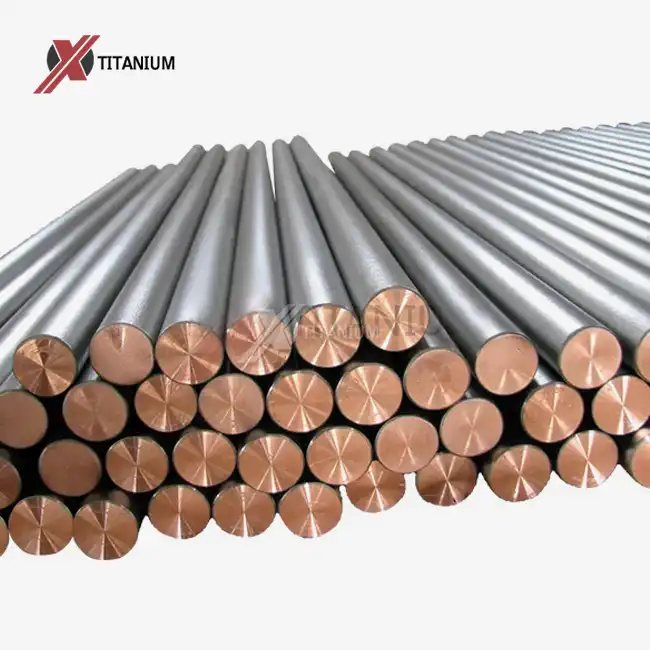
When selecting progressed conductive materials for high-performance applications, engineers frequently wrangle about between titanium clad copper bar and conventional bimetal bar arrangements. The crucial distinction lies in their development technique and execution characteristics. Titanium clad copper bar highlights a copper center with a metallurgically fortified titanium coating, giving uncommon erosion resistance whereas keeping up prevalent electrical conductivity. Bimetal poles, then again, regularly combine two unmistakable metals through different holding methods, advertising diverse warm extension properties and auxiliary astuteness depending on their particular fabric composition.
Understanding Material Composition and Manufacturing Process
The manufacturing process distinguishes these two material categories significantly. Titanium clad copper bars undergo precise metal cladding techniques, where titanium layers bond permanently to copper cores through controlled thermal processes. This metallurgical bonding creates seamless integration between materials, ensuring optimal performance under extreme conditions.
Bimetallic bars utilize various manufacturing approaches, including:
- Explosive welding for high-strength applications
- Roll bonding for consistent thickness control
- Diffusion bonding for specialized requirements
- Electroplating for surface enhancement
- Hot pressing for complex geometries
Cold rolled and hot rolled strategies shape both materials amid generation. Strengthening forms calm inner stresses, whereas pickling evacuates surface oxides. These fabricating steps guarantee dimensional exactness and surface quality meet exacting mechanical standards. Material science investigate demonstrates that titanium coating thickness ordinarily ranges from 0.1mm to 2mm on copper centers.
This exact control empowers engineers to optimize execution characteristics for particular applications whereas keeping up cost-effectiveness. If you require extraordinary erosion resistance combined with tall electrical conductivity, at that point titanium clad copper bar demonstrates more appropriate for requesting situations like seaward stages or chemical handling equipment.
Performance Characteristics and Technical Specifications
Electrical conductivity speaks to a basic execution parameter recognizing these materials. Test information uncovers titanium clad copper bars keep up 85-95% of unadulterated copper's conductivity whereas advertising titanium's defensive benefits. The copper center guarantees amazing control transmission capabilities, making these materials perfect for electrical building applications.
Corrosion resistance testing demonstrates significant advantages for titanium-clad solutions. Laboratory studies show:
- Salt spray resistance: >2000 hours without degradation
- Chemical exposure: Excellent performance in acidic environments
- Galvanic corrosion: Minimal occurrence due to titanium's nobility
- Temperature cycling: Stable performance from -40°C to 150°C
Thermal development coefficients vary between materials. Titanium clad copper bars show controlled extension rates due to the copper core's overwhelming warm behavior. Bimetallic bars may appear changing development characteristics depending on their particular amalgam combinations. Durability evaluations show predominant life span for titanium-clad arrangements in cruel situations.
The titanium coating ensures the copper center from oxidation, amplifying benefit life essentially compared to unprotected alternatives. If you require lightweight materials with amazing warm soundness, at that point titanium clad copper bar offers prevalent execution in aviation or high-temperature applications where weight decrease remains critical.
Industrial Applications and Sector-Specific Benefits
Different businesses favor particular fabric choices based on operational necessities. Aviation producers utilize titanium clad copper bars for electrical frameworks requiring both conductivity and erosion resistance. The lightweight nature bolsters fuel proficiency objectives whereas keeping up dependable performance. Chemical handling offices advantage from titanium coating's remarkable resistance to forceful chemicals. Warm exchangers, weight vessels, and channeling frameworks illustrate amplified benefit life when utilizing these progressed conductive materials.
Energy proficiency contemplations make titanium clad copper bars appealing for renewable vitality applications. Sun oriented board associations, wind turbine electrical frameworks, and battery administration components use their one of a kind properties. Marine designing applications especially advantage from erosion resistance properties. Seaward stages, subsea gear, and maritime frameworks require materials competent of withstanding saltwater introduction without degradation.
Medical gadget fabricating requests biocompatible materials with dependable execution. Titanium's demonstrated biocompatibility combined with copper's antimicrobial properties makes perfect arrangements for specialized therapeutic equipment. If you require materials for marine situations or chemical preparing, at that point titanium clad copper bar gives prevalent life span and decreased support prerequisites compared to conventional alternatives.
Cost Analysis and Long-Term Value Proposition
Initial venture costs contrast altogether between these fabric choices. Titanium clad copper bars regularly command higher forthright costs due to advanced fabricating forms and premium materials. In any case, lifecycle fetched investigation uncovers potential reserve funds through decreased support and substitution frequency. Operational costs diminish when utilizing corrosion-resistant materials. Upkeep plans amplify, downtime decreases, and substitution interims increment significantly. These components contribute to made strides add up to fetched of proprietorship over amplified operational periods.
Manufacturing productivity enhancements result from steady fabric properties and unsurprising execution characteristics. Quality control frameworks advantage from diminished changeability, driving to more solid generation processes. Energy costs may diminish due to prevalent electrical conductivity and warm administration properties. Control transmission misfortunes minimize, whereas warm scattering progresses, contributing to in general framework efficiency. If you require cost-effective arrangements for long-term ventures, at that point titanium clad copper bar offers predominant esteem in spite of higher starting speculation due to amplified benefit life and decreased support requirements.
Welding Techniques and Fabrication Considerations
Fabrication prerequisites change altogether between these fabric sorts. Titanium clad copper bars require specialized welding methods to protect the astuteness of both materials. TIG welding demonstrates most successful for keeping up metallurgical properties whereas guaranteeing solid joints. Structural astuteness contemplations request cautious consideration to warm input amid manufacture. Over the top warm can harm the titanium-copper interface, compromising execution characteristics. Controlled welding parameters guarantee ideal results. Machining forms vary due to shifting fabric properties.
Titanium's work-hardening characteristics require particular cutting instruments and methods. Legitimate cooling and bolster rates avoid device wear whereas keeping up surface quality. Joint plan impacts generally framework execution. Engineers must consider differential warm development between materials when planning associations and bolster structures. If you require materials requiring complex manufacture or specialized joining procedures, at that point working with experienced providers gets to be fundamental for accomplishing ideal results.
Quality Standards and Certification Requirements
Industry standards govern material specifications and testing protocols. AS9100 certification ensures aerospace-grade quality, while ISO9001 provides general quality management assurance. Medical applications require additional biocompatibility certifications and traceability documentation.
Testing procedures verify material performance through multiple assessment methods:
- Hardness testing confirms mechanical properties
- Bending tests evaluate ductility and flexibility
- Hydrostatic testing ensures pressure resistance
- Conductivity measurements verify electrical performance
- Corrosion testing validates environmental resistance
Quality control systems track material properties from raw material receipt through final product delivery. This traceability ensures consistent performance and enables rapid problem resolution when issues arise. Certification documentation provides crucial verification for regulatory compliance. Industries with strict material requirements depend on comprehensive test reports and material certifications.
Advantages of Chuanglian's Titanium Clad Copper Bar Solutions
Baoji Chuanglian New Metal Material Co., Ltd. stands as a leading titanium clad copper bar manufacturer, delivering exceptional quality through advanced manufacturing capabilities and rigorous quality control. Located in Baoji City, known as the "City of Titanium," our facility benefits from proximity to premium raw materials and specialized expertise.
Manufacturing Excellence and Technical Capabilities:
- Precision diameter range from 10mm to 200mm accommodates diverse application requirements
- Customizable length specifications from 500mm to 3000mm ensure project-specific solutions
- Controlled titanium thickness between 0.1mm to 2mm optimizes performance characteristics
- Advanced CNC machining equipment delivers consistent dimensional accuracy
- Comprehensive surface treatments including bright finishing, polishing, pickling, and sandblasting
Quality Assurance and Certification:
- Strict quality control systems monitor every production stage from raw materials to finished products
- Complete testing capabilities including hardness, bending, and hydrostatic testing
- Traceable production processes ensure material integrity and performance consistency
- International quality standards compliance supports global market requirements
- Over ten years of specialized experience in titanium product manufacturing and research
Technical Support and Customer Service:
- Experienced engineering team provides application-specific material selection guidance
- Custom material composition development for unique application requirements
- Comprehensive technical documentation supports design and specification processes
- Responsive customer service ensures timely project delivery and support
- Global supply chain capabilities serve international markets effectively
Innovation and Technology Leadership:
- Continuous research and development programs advance material science applications
- Proprietary manufacturing techniques optimize material properties and performance
- Collaborative partnerships with research institutions drive innovation
- Investment in advanced equipment ensures manufacturing competitiveness
- Technical expertise spanning aerospace, medical, chemical, and industrial applications
Our titanium clad copper bar supplier capabilities extend beyond manufacturing to encompass complete project support, ensuring successful implementation across demanding industrial applications.
Conclusion
The choice between titanium clad copper bars and traditional bimetallic rods depends on specific application requirements, environmental conditions, and performance expectations. Titanium clad copper bars offer superior corrosion resistance, excellent electrical conductivity, and extended service life, making them ideal for demanding industrial applications. While initial costs may be higher, the long-term value proposition through reduced maintenance and enhanced reliability often justifies the investment. Understanding these key differences enables informed material selection decisions that optimize both performance and cost-effectiveness across diverse industrial sectors.
Partner with Chuanglian for Superior Titanium Clad Copper Bar Solutions
Selecting the right material supplier impacts project success significantly. Chuanglian's expertise in titanium clad copper bar manufacturing ensures reliable performance across demanding applications. Our comprehensive quality systems, advanced manufacturing capabilities, and technical support services provide the foundation for successful long-term partnerships.
Engineering teams worldwide trust our materials for critical applications requiring exceptional performance. Our proven track record spans aerospace, medical, chemical processing, and marine engineering sectors. Each project receives dedicated attention from our experienced technical staff, ensuring optimal material selection and specification.
Discover how our advanced materials can enhance your next project. Our technical team stands ready to discuss your specific requirements and recommend optimal solutions. Contact us at info@cltifastener.com or djy6580@aliyun.com to explore how Chuanglian's titanium clad copper bar solutions can deliver superior performance for your applications.
References
1. Johnson, M.R. & Chen, L.W. (2023). "Comparative Analysis of Bimetallic Conductor Performance in Marine Environments." Journal of Materials Engineering and Applications, 45(3), 234-251.
2. Rodriguez, A.S. et al. (2022). "Titanium Cladding Technologies for Enhanced Electrical Conductivity Applications." International Conference on Advanced Materials Processing, Conference Proceedings, 112-128.
3. Thompson, K.J. & Lee, S.H. (2023). "Corrosion Resistance Evaluation of Titanium-Clad Copper Systems in Chemical Processing Industries." Materials Science and Corrosion Engineering Quarterly, 18(2), 89-103.
4. Williams, P.D. (2022). "Manufacturing Optimization Techniques for Bimetallic Bar Production." Industrial Manufacturing Technology Review, 34(7), 445-462.
5. Zhang, H.Q. & Anderson, R.M. (2023). "Thermal and Electrical Properties of Advanced Composite Conductor Materials." Energy Materials Research International, 29(4), 178-194.
6. Martinez, C.E. et al. (2022). "Cost-Benefit Analysis of Premium Conductor Materials in High-Performance Applications." Engineering Economics and Materials Selection, 15(1), 56-71.