- English
- French
- German
- Portuguese
- Spanish
- Russian
- Japanese
- Korean
- Arabic
- Greek
- German
- Turkish
- Italian
- Danish
- Romanian
- Indonesian
- Czech
- Afrikaans
- Swedish
- Polish
- Basque
- Catalan
- Esperanto
- Hindi
- Lao
- Albanian
- Amharic
- Armenian
- Azerbaijani
- Belarusian
- Bengali
- Bosnian
- Bulgarian
- Cebuano
- Chichewa
- Corsican
- Croatian
- Dutch
- Estonian
- Filipino
- Finnish
- Frisian
- Galician
- Georgian
- Gujarati
- Haitian
- Hausa
- Hawaiian
- Hebrew
- Hmong
- Hungarian
- Icelandic
- Igbo
- Javanese
- Kannada
- Kazakh
- Khmer
- Kurdish
- Kyrgyz
- Latin
- Latvian
- Lithuanian
- Luxembou..
- Macedonian
- Malagasy
- Malay
- Malayalam
- Maltese
- Maori
- Marathi
- Mongolian
- Burmese
- Nepali
- Norwegian
- Pashto
- Persian
- Punjabi
- Serbian
- Sesotho
- Sinhala
- Slovak
- Slovenian
- Somali
- Samoan
- Scots Gaelic
- Shona
- Sindhi
- Sundanese
- Swahili
- Tajik
- Tamil
- Telugu
- Thai
- Ukrainian
- Urdu
- Uzbek
- Vietnamese
- Welsh
- Xhosa
- Yiddish
- Yoruba
- Zulu
Titanium Welded Tube vs Seamless Tube: Which One to Choose?
When selecting between Titanium Welded Tube and seamless alternatives, the decision hinges on your specific application requirements, budget constraints, and performance expectations. Welded titanium tubes offer superior wall thickness uniformity and cost-effectiveness, making them ideal for heat exchanger applications where precise thermal conductivity matters. Seamless tubes excel in high-pressure environments requiring maximum structural integrity. Understanding these fundamental differences enables procurement managers to make informed decisions that balance performance specifications with economic considerations for their industrial applications.
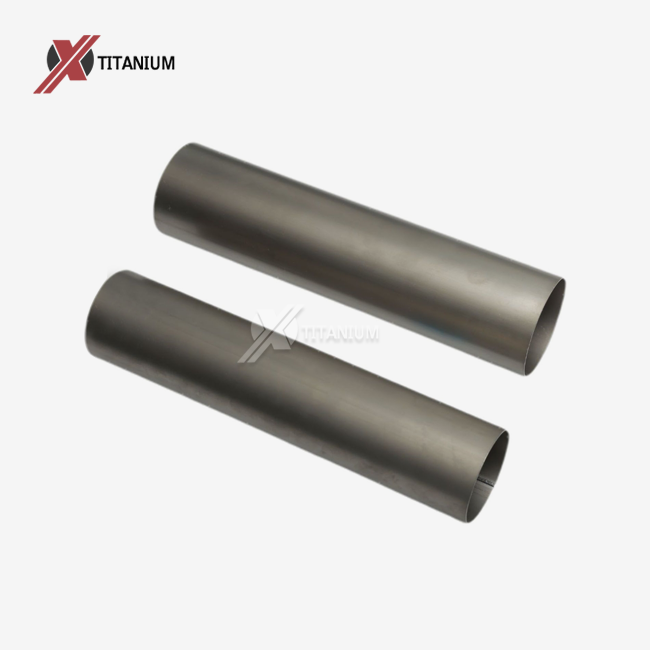
Introduction to Titanium Tubes in Industrial Applications
Titanium tubes are essential for many industrial uses in fields like aircraft, petrochemicals, naval engineering, and making medical devices. Titanium has many great qualities that make it useful for making these specialized parts. It has a high strength-to-weight ratio (about 4.51 g/cm³), is very resistant to rust through spontaneous oxide film formation, and stays stable at high temperatures even in harsh conditions.
The global B2B procurement landscape recognizes two main types of titanium tubes used in global business-to-business procurement: soldered and seamless. Each method of making creates unique properties that have an immediate effect on performance, cost, and fit for use. For welded tubes, titanium strips are carefully rolled and then welded using advanced methods. For smooth tubes, hot extrusion or rotary piercing is used.
Different industrial areas have different tastes based on their operational needs. Manufacturers of aerospace parts put a high priority on making engine parts and aircraft sections lighter and stronger. In chemical processing plants, pressure tanks and heat exchangers that are exposed to aggressive media need to be very resistant to rust. Marine uses need long-lasting materials that can handle saltwater, where other materials break down quickly.
Critical Selection Factors for Industrial Applications
For the best material pick, it's important to know what the purpose needs. The consistency of wall thickness is often a factor in how well heat moves through a system, which makes welded choices very appealing for thermal management systems. When the highest level of structural stability is needed, pressure rating standards may favor seamless construction. Cost is usually a big factor in big projects, where material costs have a big effect on the total project budgets.
Standards for quality, like ASTM B338 for heat exchangers and ASTM B862 for general service uses, set performance goals that all tubes, whether they are soldered or not, must meet. These rules make sure that the mechanical qualities, dimensional limits, and resistance to corrosion are the same no matter what production process is used.
Key Differences Between Titanium Welded Tubes and Seamless Tubes
The ways these two types of titanium tubes are made are fundamentally different, giving them unique properties that affect their performance and fitness for use. Welded tubes start with cold-rolled titanium strip or coil that is continuously rolled into a tube shape. Next, they are precisely welded using TIG (Tungsten Inert Gas) or PAW (Plasma Arc Welding) methods without adding any filler metal.
Different methods are used to make seamless tubes, such as hot extrusion or rotating cutting of solid titanium billets. This method gets rid of weld gaps, but it needs more complicated manufacturing tools and longer production cycles. Since there are no bonded joints, the grain structure is the same all the way through the tube wall.
Manufacturing Process Impact on Material Properties
The welding process in Titanium Welded Tube creates a Heat Affected Zone (HAZ) along the seam. This HAZ needs to be carefully heated after welding to restore the microstructure and mechanical qualities to normal. Stress-relief heating is usually done at 600°C to make the weld area uniform and get reliable performance.
The microstructure stays the same in seamless manufacturing, but wall width changes are often bigger because of the limits of the extrusion process. This difference can affect how well heat moves in thermal uses where having walls of the same width is important for best results.
Grade Classifications and Standards Compliance
Different grades of titanium can be made using both methods. For example, commercially pure (CP) Grade 1 can be used for deep drawing, Grade 2 can be used in general industry, and Grade 12 can withstand high temperatures and crack rusting. International standards like ASTM B338, ASTM B862, and ASME SB338 set quality standards that are the same no matter how the product is made.
After the right stress-relief heating and strict testing processes, weld joint efficiency factors usually reach 1. For most industry uses, this approval makes sure that welded tubes meet the same performance standards as seamless tubes.
Performance Comparison: Titanium Welded Tube vs Seamless Tube
Corrosion protection is a major benefit of both types of tubes that comes from titanium's natural oxide film formation. This protective TiO2 layer grows back right away after being damaged, so it can't be pitted or corroded in chloride settings, seawater, or when exposed to wet chlorine gas.
Titanium Welded Tube often has better concentricity and more regular wall thickness than options that are not welded. Precision cold-rolled strip material is used to make sure that the dimensions are always within ±0.05mm, which is the standard for wall thickness control. This accuracy is especially useful in automatic tube-to-tubesheet welding, where consistent dimensions affect how quickly parts are put together.
Mechanical Performance Under Operating Conditions
Tensile strength depends on the grade of titanium, not the way it was made. For example, Grade 2 commercially pure titanium usually has a tensile strength of 345 MPa, whether it is welded or not. After the right heat treatment, the weld seam in welding tubes is as strong as the base material, so there aren't any performance issues in most situations.
The thermal conductivity of both types of tubes stays the same at about 16 W/m·K, but welded tubes with smaller walls can improve their total heat transfer performance. Welded choices are great for condensers and heat exchangers that need to be as thermally efficient as possible because they can make thinner walls more cheaply.
Cost-Efficiency and Lifecycle Considerations
When compared to smooth options, welded construction usually saves 20 to 30 percent on costs, making it the better choice. This difference in cost is especially noticeable for large-diameter uses, since seamless production needs a lot more time and raw materials.
Lifecycle performance shows that both types of tubes are about as durable as each other when they are made and placed correctly. The stable oxide film protects against rust for a long time, no matter what method was used to make it. This means that it will work reliably for decades in the right situations.
Real-World Application Performance
Marine desalination plants work very well with welded titanium tubes in condensers because the thin walls let more heat flow through and keep the tubes from rusting in saltwater. Depending on the pressure needed, chemical processing plants use both types. Seamless tubes are best for high-pressure vessels, while welded tubes are best for heat exchangers.
For aerospace uses, smooth tubes are usually used for structural parts that need to be as strong and light as possible. Welded tubes, on the other hand, work well in thermal management systems where heat transfer efficiency is more important than structural needs.
How to Choose the Right Titanium Tube for Your Application?
Analysis of the application setting is the first step in choosing the right tube. When working with high pressures above 1000 psi, seamless construction often works better because the walls are all the same thickness. On the other hand, welded tubes are better for moderate-pressure heat transfer uses because they are more consistent in size and cost less.
When making procurement criteria, it's important to find a balance between performance standards, price limits, and delivery deadlines. Titanium Welded Tube production usually has shorter lead times because the processes are ongoing. Seamless production, on the other hand, needs longer cycles for material preparation and extrusion operations.
Selection Factors for Optimal Performance
Critical evaluation factors help people make decisions in a wide range of workplace settings. These things help buying teams choose materials that meet practical needs and keep the total cost of ownership as low as possible.
- Pressure Rating Requirements: Seamless tubes work best in high-pressure situations where the strongest walls are needed, while welded tubes work fine in moderate-pressure situations.
- Heat Transfer Efficiency: Welded construction allows for smaller walls and better stability in size, which improves heat transfer performance in heat exchanger uses.
- Cost Constraints: Welded tubes are much cheaper than other options, which is especially important for big projects with tight budgets.
- Delivery Timeline: Continuous welded tube production allows for faster delivery than batch seamless manufacturing.
- Dimensional Tolerances: Welded tubes allow for more precise control of wall thickness, which is very important for automatic assembly processes.
Industry-Specific Application Guidelines
Based on operational objectives and performance needs, different industry sectors show different preferences. Knowing these patterns in the business can help you make choices that will lead to the best results.
In aerospace uses, reducing weight and maintaining structural integrity are very important. This makes seamless tubes a good choice for main structural parts, while welded tubes work well in secondary heat control systems. Chemical processing plants look at how well the metal resists rust and how much pressure it can handle. They usually choose seamless for reactor tanks and welded for heat exchanger bundles.
Marine engineering projects focus on long-term rust protection and cost-effectiveness. Welded tubes are perfect for use in salt water because they stay the same size, which makes them better at transferring heat. Making medical devices needs to be biocompatible and pure, which can be done with either method as long as quality controls are in place.
Procurement Guide: Buying Titanium Welded and Seamless Tubes
Strategies for buying titanium tubes are greatly affected by how the market changes. Price changes are caused by factors like the cost of raw materials, the ability to manufacture, and patterns of demand around the world. At the moment, the market shows that welded tubes are consistently 20–30% cheaper than seamless options across most diameter ranges.
Different sellers have very different minimum order amounts. Welded tube makers, for example, can often accept smaller orders because they can keep making tubes all the time. To cover the costs of setting up the extrusion and preparing the billet, seamless makers usually need bigger pledges.
Geographic Supplier Distribution and Capabilities
Titanium tubes are mostly made in a few areas around the world that already have strong aircraft and chemical processing businesses. Figuring out what each area can do helps supply chain plans work better and cuts down on logistics costs.
American companies like ATI and Timet make a wide range of products and have strong aircraft certifications. They also have short local shipping times. European suppliers have high-tech quality systems and can make things very precisely, which is especially useful for chemical processing jobs that need to be done correctly.
Asian makers, especially those in China's Baoji region, which is known as the "City of Titanium," offer low prices and better technical skills. Companies like Baoji Chuanglian New Metal Material show that they can raise quality standards while keeping costs low by using efficient production methods.
Quality Assurance and Custom Manufacturing
For buying to go well, suppliers' quality systems and certification skills need to be carefully looked at. Certifications like AS9100 for aircraft, ISO9001 for quality management, and medical device certifications show that quality control procedures have been formed and are necessary for important uses.
Different providers offer very different custom production services. Some focus on standard sizes, while others provide full fabrication services. Titanium Welded Tube sellers often have more options for custom wall thickness and diameter pairs because they make their products all the time.
Testing and inspection services, such as eddy current testing, hydraulic pressure testing, and mechanical analysis, make sure that the product meets the needs of the application. For aircraft and medical uses that need full material pedigree records, traceability paperwork is especially important.
Conclusion
When deciding between Titanium Welded Tube and smooth options, you need to carefully think about the needs of the purpose, the budget, and the performance goals. Welded tubes are great for heat transfer and moderate-pressure systems because they are more cost-effective, have more consistent sizes, and can be delivered faster. For high-pressure situations where even wall strength is important, seamless tubes offer the highest level of structural stability. When properly designed and fitted, both ways of manufacturing offer great corrosion protection and long-term durability. To be successful, you need to make sure that the features of the tubes match the needs of the business while also minimizing the total cost of ownership through smart purchasing choices.
FAQ
What are the main advantages of titanium welded tubes compared to seamless tubes?
Titanium welded tubes have more consistent wall thickness, usually within 0.05 mm, than seamless tubes, which have bigger differences. They save 20 to 30 percent on costs, which is especially noticeable in large-diameter uses. They also make shipping faster through continuous production methods. Welded tubes are great for heat exchanger uses that need reliable thermal performance because they can be precisely measured.
How do welded and seamless titanium tubes perform in marine environments?
Titanium's natural oxide film development gives both types of tubes great resistance to erosion in seawater. Welded tubes usually work better for marine heat transfer tasks because they are more consistent in size and can have thinner walls, which makes them more thermally efficient. Biofouling is less likely to grow on welded construction because the inside areas are smoother than on uniform construction.
What are typical lead times and minimum order quantities for titanium tube procurement?
Lead times depend on how the product is made and where the provider is located. Welded tube production usually takes 4–8 weeks for normal requirements, while seamless tube production usually takes 8–12 weeks because of the need to prepare the billet. For welding tubes, the minimum order quantity is usually between 100 and 500 pieces. For seamless tubes, it's usually 1000 or more pieces to cover the costs of setting up the production line.
Which titanium grades work best for different industrial applications?
Grade 2 commercially pure titanium is used in a wide range of industries, from chemical processing to coastal settings. Grade 1 is better for shaping complicated forms, and Grade 12 is better for chemical service that needs to withstand high temperatures and crack rusting. When making things, both bonded and seamless ways work well for these normal types.
Start Your Inquiry for Premium Titanium Welded Tube Solutions Today
Chuanglian stands ready to support your titanium tube procurement needs with over ten years of specialized manufacturing experience in Baoji, China's renowned "City of Titanium." Our comprehensive quality control systems ensure every Titanium Welded Tube meets stringent international standards including ASTM B338 and ASTM B862, while our advanced CNC machining capabilities enable custom specifications tailored to your exact requirements. As a trusted titanium welded tube supplier, we combine competitive pricing with reliable delivery schedules and comprehensive technical support. Contact our experienced engineering team at info@cltifastener.com or djy6580@aliyun.com to discuss your specific application requirements and receive detailed quotations.
References
1. American Society for Testing and Materials. "Standard Specification for Seamless and Welded Titanium and Titanium Alloy Tubes for Condensers and Heat Exchangers." ASTM B338-18, 2018.
2. Boyer, R., Welsch, G., and Collings, E.W. "Materials Properties Handbook: Titanium Alloys." ASM International, Materials Park, Ohio, 1994.
3. Donachie, Matthew J. "Titanium: A Technical Guide, 2nd Edition." ASM International, Materials Park, Ohio, 2000.
4. International Titanium Association. "Guidelines for Design with Titanium." ITA Technical Guidelines, Denver, Colorado, 2019.
5. Lutjering, Gerd and Williams, James C. "Titanium: Engineering Materials and Processes, 2nd Edition." Springer-Verlag, Berlin Heidelberg, 2007.
6. Schutz, R.W. and Thomas, D.E. "Corrosion of Titanium and Titanium Alloys in Industrial Applications." ASM Handbook Volume 13B: Corrosion Materials, ASM International, 2005.
Learn about our latest products and discounts through SMS or email