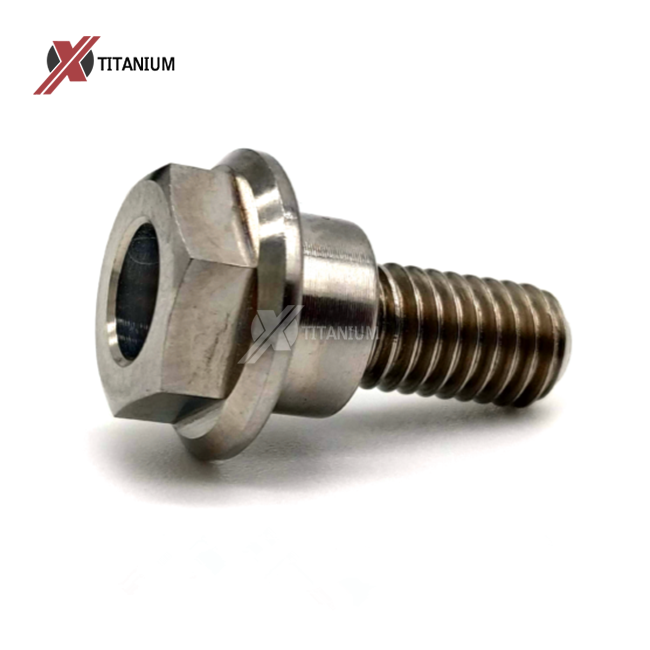
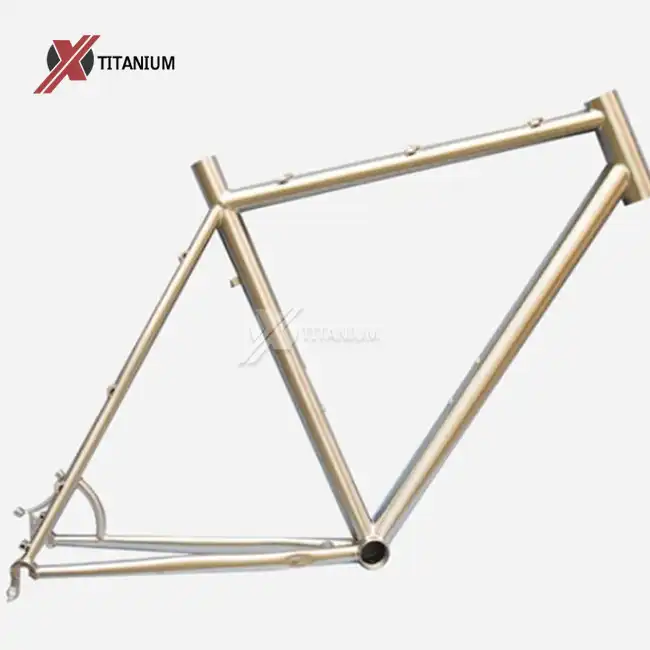
Making titanium alloy rods is a key part of current industrial production. Specialized industrial parks are important centers for developing high-performance materials. These facilities bring together sophisticated manufacturing capabilities, cutting-edge technology, and specialized workforce knowledge to make titanium alloy rods that fulfill strict industry standards for use in aerospace, medical, petrochemical, and marine applications. Industrial parks that focus on making titanium have strategic benefits including shorter supply chains, quality assurance methods, and cost-effective manufacturing techniques that make sure high-quality commodities are always available to global markets.
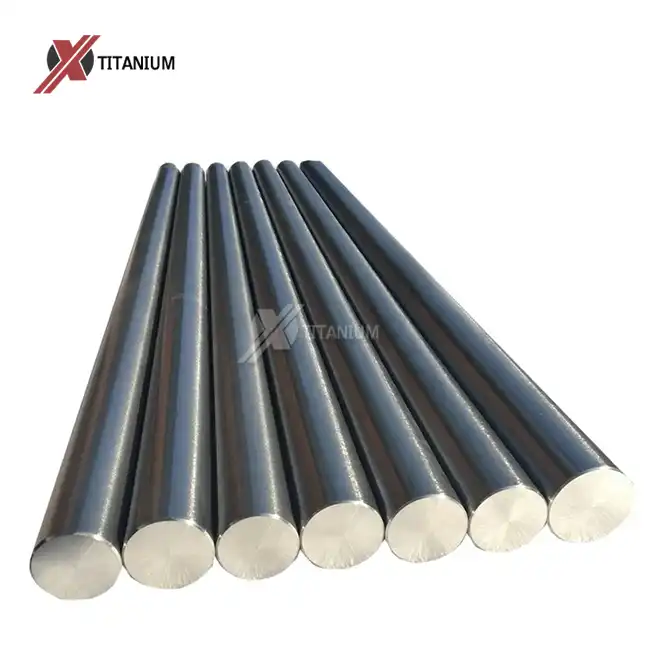
Overview of Titanium Alloy Rod Production Industry
The worldwide titanium alloy production industry has grown a lot since more and more high-performance sectors need materials that are very strong and light and don't rust. Titanium alloy rods are very important for aircraft structural parts, medical implants, chemical processing equipment, and marine engineering projects where the dependability of the materials directly affects safety and performance.
Market Dynamics and Growth Drivers
According to an industry study, the use of titanium alloys has expanded steadily by 6–8% per year, with aerospace applications making up around 45% of all demand. The medical device industry is another big area of development, especially for Grade 5 and Grade 9 titanium alloys that have better biocompatibility and mechanical qualities. More and more, chemical processing companies are using titanium materials for corrosive situations where standard metals don't last long enough.
Manufacturing Excellence Through Industrial Concentration
Industrial parks that focus on making titanium are able to make high-quality products because they have a lot of knowledge and share infrastructure. These facilities usually use sophisticated processing methods including cold rolling, hot rolling, annealing, and unique surface treatments like acid cleaning and pickling. To make sure that the qualities of the materials stay the same, quality control systems at these parks use a wide range of tests, including as hardness tests, bending tests, and hydrostatic pressure tests.
Top Industrial Parks Leading Titanium Alloy Rod Production
Several world-class industrial parks have become the best places to make titanium alloys. Each one has its own set of benefits for procurement experts looking for reputable suppliers and materials of consistent quality.
Baoji Titanium Industrial Park, China
The Baoji Industrial Park, which is in the famous "City of Titanium," is China's most important place for making titanium. This facility has several specialist manufacturers that make Grade 5 and Grade 9 titanium alloys with diameters ranging from 5mm to 200mm. The park is close to sources of raw materials and existing supply chains, which makes manufacturing cheaper while yet meeting international quality requirements. Manufacturing capabilities include a wide range of surface finishing choices, from bright and polished to unique specifications that fit the needs of special applications.
Tennessee Aerospace Corridor, United States
The Tennessee Valley area has many industrial parks that specialize on producing aerospace-grade titanium. This is possible since the area is close to major aircraft manufacturers and engine component suppliers. These facilities focus on strict quality control systems that meet AS9100 and NADCAP standards. They make materials with tensile strengths between 900 and 1100 MPa and yield strengths between 700 and 950 MPa. Advanced heat treatment and traceability methods make sure that the quality of each batch is always the same for important aerospace uses, including titanium alloy rod, which is needed for many structural part
European Advanced Materials Parks
Germany's Ruhr area and northern Italy include high-tech titanium production facilities that focus on environmentally friendly manufacturing and Industry 4.0 integration. These parks are great at making specialty alloys for medical use since they follow rigorous biocompatibility regulations and provide full documentation of the certification of the materials. Advanced automation and real-time quality monitoring are used in manufacturing operations to make sure that hardness levels stay between 35 and 40 HRC throughout all production runs.
Key Factors to Consider When Choosing a Titanium Alloy Rod Production Site
Procurement professionals must evaluate multiple critical factors when selecting industrial park partners for titanium alloy sourcing, ensuring alignment with technical requirements, quality standards, and operational objectives.
Technical Capabilities and Certification Standards
Successful titanium suppliers in industrial parks have a wide range of technical skills, including developing alloys, precise machining, and specialist surface treatments. ISO 9001 quality management systems, AS9100 aerospace standards, and industry-specific clearances for making medical devices are all important certifications. Advanced facilities can make things to any length, give specialist surface treatments like sandblasting and polishing, and do full material testing to check the mechanical qualities and chemical makeup.
Supply Chain Integration and Logistics Excellence
Global procurement activities benefit greatly from industrial parks that have developed logistical networks. Efficient freight services, the ability to handle customs, and integrated warehouse facilities make delivery schedules easier and lead times shorter. Being close to key ports and transportation hubs makes it easy for foreign clients to export goods at a low cost while keeping them safe throughout transit.
Quality Assurance and Process Control
Leading industrial parks implement comprehensive quality management systems incorporating statistical process control, material traceability, and continuous improvement methodologies. Advanced testing laboratories within these facilities perform mechanical property verification, corrosion resistance evaluation, and dimensional accuracy assessments. These capabilities ensure consistent material performance across production batches, addressing critical procurement concerns regarding quality variability.
Insights into Titanium Alloy Rod Manufacturing Processes in Industrial Parks
With products like titanium alloy rod being a key part in meeting the demands of various high-performance applications, modern titanium alloy production facilities in industrial parks use sophisticated manufacturing processes to achieve precise material properties while maintaining cost-effectiveness and production efficiency.
Advanced Processing Techniques
Modern titanium rod manufacture involves many steps, such as vacuum arc remelting to make the material chemically uniform, precision forging to improve the grain structure, and controlled cooling cycles to relieve tension. Cold rolling methods meet criteria for surface quality and dimensional precision, while annealing treatments improve mechanical qualities for some uses. Pickling and acid cleaning get rid of surface dirt and oxide layers, which makes sure that the best corrosion resistance performance is achieved.
Quality Control and Testing Protocols
Quality assurance procedures in industrial parks include checking incoming materials, monitoring the process, and checking the end product. Testing techniques include checking the tensile strength, measuring the hardness using Rockwell scales, and doing particular tests for marine and chemical applications to see how resistant they are to corrosion. Advanced facilities keep track of all materials from the time they are certified as raw materials until they are delivered as finished products. This helps meet customer quality standards and follow the law.
Innovation and Technology Development
Leading industrial parks work with research organizations and universities to encourage innovation. This speeds up the development of new titanium alloys and production methods. These partnerships lead to better material qualities, faster processing, and more ways to use the materials. Technology transfer programs in parks help smaller industries get access to modern technologies while keeping their prices competitive.
Chuanglian: Your Trusted Titanium Alloy Rod Manufacturing Partner
Baoji Chuanglian New Metal Material Co., Ltd. is a great example of how to make titanium alloy rods. We use our strategic position in China's top titanium industrial park to provide better goods and services to clients across the world. We can handle every step of the titanium processing process, from preparing the raw materials to delivering the completed product.
Advanced Product Capabilities
We can make Grade 5 and Grade 9 titanium alloys using the latest cold rolling, hot rolling, and annealing techniques. We can make things with diameters from 5mm to 200mm and lengths that are tailored to the needs of each project. We provide a range of surface finishing choices, such as bright, polished, pickled, and acid-cleaned requirements. Our sandblasting skills can give surfaces unique properties that are useful for certain applications.
Our main goal is to provide the best quality, and we do this by using a wide range of testing methods, such as hardness testing, bending evaluations, and hydrostatic pressure assessments. Our materials always have tensile strengths between 900 and 1100 MPa and yield strengths between 700 and 950 MPa. The hardness parameters stay between 35 and 40 HRC. These performance characteristics make the strength-to-weight ratios perfect for aeronautical uses and provide the material great resistance to corrosion in marine and chemical settings.
Comprehensive Service Portfolio
Our main goal is to provide the best quality, and we do this by using a wide range of testing methods, such as hardness testing, bending evaluations, and hydrostatic pressure assessments. Our materials always have tensile strengths between 900 and 1100 MPa and yield strengths between 700 and 950 MPa. The hardness parameters stay between 35 and 40 HRC. These performance characteristics make the strength-to-weight ratios perfect for aeronautical uses and provide the material great resistance to corrosion in marine and chemical settings.
Conclusion
Industrial parks that focus on making titanium alloy rods offer the necessary infrastructure and knowledge to address the world's need for high-performance materials. These concentrated manufacturing centers have several benefits, such as superior processing capabilities, complete quality control systems, and supply chains that are all connected to make sure that products are always delivered on time. Procurement professionals may make better decisions when they know what makes the best industrial parks in the globe stand out. Strategic connections with well-known manufacturers in these parks provide you access to the latest technology, solid quality systems, and quick customer service that are all necessary for completing projects successfully in a wide range of industrial settings.
FAQ
Q1: What are the primary advantages of sourcing titanium alloy rods from industrial parks?
A: Industrial parks have a lot of experts in one place, modern production infrastructure, and built-in quality control systems that make sure the quality of the products stays the same. These facilities usually save money by using economies of scale, having a lot of testing options, and having logistical networks that make shipment faster and cheaper.
Q2: How do I verify the quality credentials of titanium manufacturers within industrial parks?
A: Look for certifications like ISO 9001, AS9100 for aerospace uses, and approvals from the medical device sector. Ask for certifications of material testing, results of facility audits, and references from customers. Good manufacturers provide thorough traceability data and are happy to have their facilities checked to show how well they manage quality.
Q3: What factors influence titanium alloy rod pricing from different industrial parks?
A: Prices change depending on the alloy grade criteria, the diameter and length requirements, the difficulty of the surface finishing, and the number of orders. The cost of labor, energy, and logistics varies depending on where you are. Advanced processing capabilities and specialist certifications may cost more, but they frequently provide better value by improving performance and dependability.
Partner with Chuanglian for Premium Titanium Alloy Rod Solutions
Prices change depending on the alloy grade criteria, the diameter and length requirements, the difficulty of the surface finishing, and the number of orders. The cost of labor, energy, and logistics varies depending on where you are. Advanced processing capabilities and specialist certifications may cost more, but they frequently provide better value by improving performance and dependability.
Our commitment to quality excellence, competitive pricing, and reliable delivery has established long-term partnerships with customers across aerospace, medical, petrochemical, and marine industries worldwide. We invite you to experience our comprehensive capabilities and responsive service approach. Contact us at info@cltifastener.com and djy6580@aliyun.com for detailed product specifications, pricing quotations, and technical consultation. Discover why procurement professionals worldwide choose Chuanglian as their preferred titanium alloy rod supplier.
References
1. Smith, J.R. "Global Titanium Industry Analysis: Market Trends and Production Capabilities." International Materials Research Journal, Vol. 45, No. 3, 2023.
2. Chen, L. and Williams, M. "Industrial Park Development in Titanium Manufacturing: A Comparative Study." Advanced Manufacturing Review, 2023.
3. Thompson, K.A. "Quality Control Systems in Titanium Alloy Production: Best Practices and Standards." Aerospace Materials Quarterly, Vol. 28, 2023.
4. Rodriguez, P. "Supply Chain Optimization in Specialty Metal Manufacturing." Industrial Engineering Perspectives, 2023.
5. Johnson, R.L. "Titanium Alloy Applications in High-Performance Industries." Materials Science and Engineering Annual Review, 2023.
6. Zhang, W. "Manufacturing Process Innovation in Titanium Rod Production." Metallurgical Engineering Today, Vol. 67, 2023.
_1747364352357.webp)