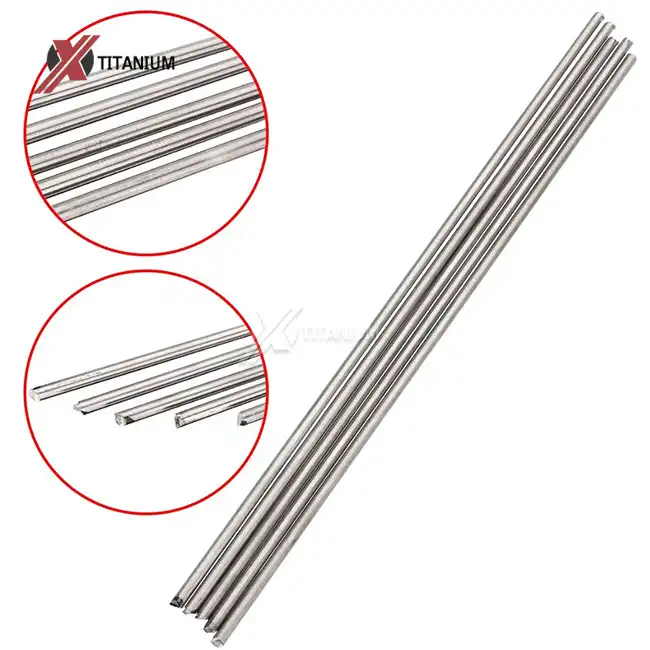
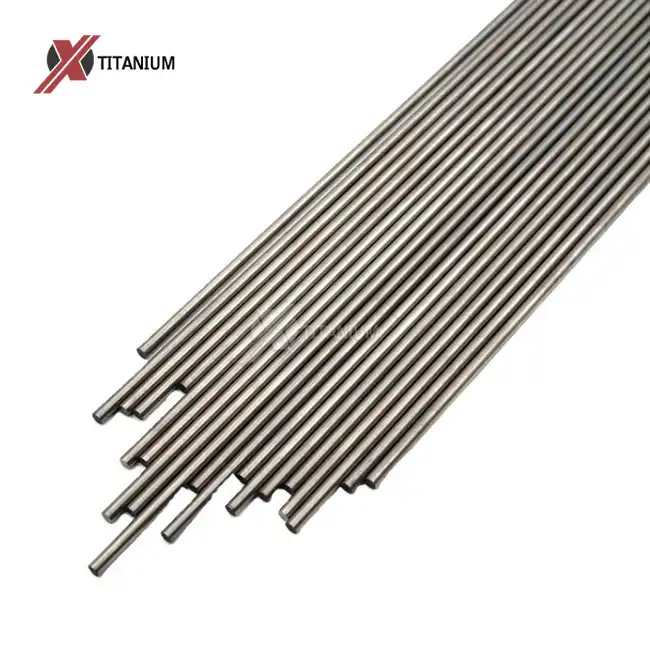
Several of the world's best titanium alloy rod producers have their factories in China's main industrial parks, namely in Baoji, Xi'an, and Changsha. These companies are experts in making high-quality titanium rods using cutting-edge methods like hot rolling, cold rolling, and precision machining. Some well-known firms in these industrial zones use China's large supply of titanium and advanced manufacturing skills to make aerospace-grade, medical-grade, and industrial-grade titanium alloy rods that they sell across the world.
The titanium market throughout the world has grown a lot, and China is now the main player in making titanium alloy rods. Modern aerospace programs, new medical devices, and marine engineering projects are all driving an unprecedented need for high-performance titanium alloy goods. To satisfy international standards, Chinese companies have put a lot of money into modern metallurgical technology and quality processes.
When buying titanium alloy bar items from Chinese vendors, procurement experts have to deal with problems that are particular to them. Material performance uniformity, supply dependability, and technical support are still highly important issues. Knowing how Chinese titanium is made helps customers make smart choices and build strong, lasting business relationships.
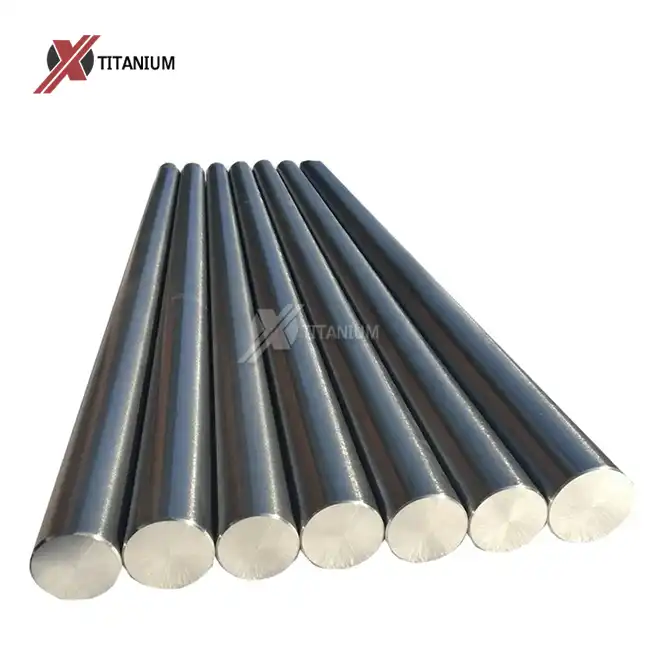
Manufacturing Excellence: Why China Leads Titanium Alloy Rod Production?
Advanced Processing Capabilities and Technology
Chinese titanium producers use cutting-edge processing methods including vacuum arc remelting (VAR) and electron beam melting (EBM). These innovative techniques make sure that the materials are cleaner and stronger. Cold rolling techniques make sure that the dimensions are just right, while hot rolling improves the grain structure to make the material stronger.
To make sure that the microstructures are the same throughout all production batches, manufacturing plants use computer-controlled annealing furnaces. Pickling and acid cleaning get rid of surface dirt, leaving a bright, polished appearance that is good for important uses. Hardness testing, bending tests, and hydrostatic pressure assessments are all part of quality testing.
Raw Material Advantages and Supply Chain Integration
China has a lot of titanium ore, which gives businesses a steady supply of raw materials. Integrated supply chains that go from processing ore to making finished goods save costs and speed up delivery times. Many suppliers work together in major industrial parks to build ecosystems that are good for end consumers.
The concentration of titanium processing plants makes it easier for people to share expertise and improve technology. Manufacturers use economies of scale to keep prices low while yet meeting strict quality requirements. This interface works for both small bespoke orders and big production needs.
Strategic Approaches to Supplier Selection and Evaluation
Technical Qualification Assessment
Check out possible providers based on their technical skills and certifications. AS9100 certification is needed for aerospace applications, while ISO 13485 conformity is needed for medical applications. For each grade of titanium alloy, go over the chemical composition studies, material test results, and mechanical property documents.
Check out what the manufacturer's testing lab can do. Advanced facilities should include spectrometers, tensile testing machines, and tools for studying metals. Ask for samples to check on your own and do test projects before placing big purchases.
Production Capacity and Flexibility Analysis
Look at how much you can make in various diameter ranges and length criteria. Suppliers you can trust keep a stock of typical grades including Grade 5 (Ti-6Al-4V) and Grade 9 (Ti-3Al-2.5V). Check to see whether they can manage bespoke needs such customized surface treatments and sizes that aren't conventional.
Check the flexibility of the production schedule and the lead time obligations. The best manufacturers provide realistic delivery estimates and stay in touch with you throughout the manufacturing process. Think about how well they can change the amount of output dependent on the needs of the project.
Quality System Verification
Look at the supplier's quality management system and how they keep track of things. All of the materials should be tracked from the raw ingot to the final inspection in complete documentation. Incoming material verification, in-process monitoring, and final product testing should all be part of quality control points.
Ask for quality manual evaluations and audit reports from customers that have worked with you before. Established vendors are happy to talk about quality systems and provide you thorough process documentation. Check their plans for making things better and fixing mistakes.
Financial Stability and Business Continuity
Check out the company stability and financial health of possible partners. For long-term partnerships, suppliers need to have strong finances and plans for development. Look at their customers, how well they are known in the market, and how much they spend on new technology.
Check out your plans for keeping your firm running and your tactics for managing risk. Reliable suppliers have backup systems, several sources of raw materials, and plans for what to do if there are problems in the supply chain.
Technical Support and Engineering Services
What sets great suppliers apart from ordinary ones is their strong technical assistance. Check how knowledgeable their technical staff is in metallurgy, heat treatment, and the needs of your unique application. Suppliers should help with choosing materials, processing, and fixing problems.
Think about how well they can do research and development. Top companies put money into developing new alloys, improving processes, and evaluating their use. Customers looking for new ways to solve tough problems might benefit from this knowledge.
Essential Certifications and Compliance Standards
International Quality Standards
ISO 9001 accreditation sets the basic rules for managing quality. AS9100 certification is needed by aerospace providers. This is an extension of ISO 9001 that adds standards particular to aerospace. Biocompatible titanium alloy rod products must meet ISO 13485 standards in order to be used in medical devices.
NADCAP (National Aerospace and Defense Contractors Accreditation Program) accreditation proves that activities like chemical processing and heat treatment are done correctly. This certification makes sure that the company meets the criteria of the aerospace sector and what the client wants.
Material Certifications and Traceability
Material test certificates (MTCs) provide the chemical makeup, mechanical qualities, and conditions for heat treatment. The ASTM B348 standard sets the rules for titanium rod parameters, whereas the AMS standards provide the rules for aerospace uses. For biocompatibility, medical uses need USP Class VI certification.
Traceability documentation connects final goods to the origins of raw materials, the conditions under which they were processed, and the results of quality tests. Full traceability helps with audits by customers, regulatory compliance, and failure analysis.
Environmental and Safety Compliance
RoHS compliance makes ensuring that goods fulfill environmental criteria for contaminants that are not allowed. In European markets, the REACH legislation deals with chemical safety and protecting the environment. ISO 14001 accreditation for an environmental management system shows that you are committed to making things in a way that is good for the environment.
ISO 45001 certifications for occupational health and safety show that a company is managing safety at work properly. These certifications show how mature an organization is in terms of operations and risk management.
Optimal Sourcing Channels and Platform Strategies
Digital B2B Platforms and Online Marketplaces
Professional B2B platforms put customers in touch with trusted suppliers of titanium alloy. These platforms let you verify suppliers, safeguard your transactions, and talk to other people. Advanced search criteria may help you find manufacturers by looking at their certifications, skills, and location.
Platforms that are particular to an industry concentrate on metallurgical goods and provide precise technical information. These specialized channels bring in serious industrial customers and competent suppliers, which makes the matches better.
Trade Shows and Industry Exhibitions
International trade shows provide you direct access to top manufacturers and their technical teams. Big events like the China International Titanium Industry Exhibition show off the newest technology and ways to make things. Face-to-face conversations allow for in-depth technical talks and creating relationships.
Regional displays in industrial hubs like Baoji let you tour factories and see how they work in person. These events make it easier to meet people who work in your field and possible business partners.
Professional Associations and Industry Networks
Industry groups maintain lists of certified suppliers and share information about the market. Professional networks provide references based on what members have done and how well they have worked together. These channels typically bring customers in touch with well-known, trusted producers.
Technical committees and working groups in organizations provide information about industry trends, the creation of standards, and best practices. Being a part of these organizations makes it easier to evaluate suppliers.
OEM/ODM Partnership Development and Management
Collaborative Product Development
For OEM collaborations to work, there must be explicit technical and performance standards. Early participation of suppliers in the design stages is good for collaborative development processes. Manufacturers with a lot of experience may provide you useful information on how to make things, how to save money, and how to improve performance.
Set up rules for making prototypes and testing them. Milestone reviews, design validation, and production readiness evaluations should all be part of joint development initiatives. Write down agreements on intellectual property and privacy.
Custom Specification Development
ODM connections let you make bespoke specifications for titanium alloy rods for special uses. Work with your suppliers to find the best combinations of metals, heat treatment methods, and ways to polish surfaces. These alliances might provide you a competitive edge by offering unique material options.
Use thorough testing processes to make sure that bespoke specs are correct. Include testing for corrosion resistance, checking mechanical properties, and evaluating performance in particular applications. Write down specs so that all manufacturing batches are the same.
Long-term Partnership Strategies
Set up alliances that will help both sides and help them flourish. Volume commitments might help you get better prices and make sure your production schedule is a priority. Technical cooperation agreements make it easier for two or more groups to work together on research and development projects.
Hold frequent company reviews to check on performance, deal with problems, and find ways to improve. Strong partnerships may change with the needs of the market while still meeting quality and dependability criteria.
MOQ Requirements and Strategic Pricing Negotiations
Understanding Minimum Order Quantities
Most of the time, titanium alloy rod makers set minimum order quantities depending on how efficient their manufacturing is and how much it costs to start up. Standard items may have lower minimum order quantities than unique requirements that need additional processing. Minimum order computations are affected by length and diameter ranges.
Negotiate minimum order quantities (MOQs) depending on how much you think you'll be able to sell in the long run and how likely you are to work together. Long-term ties generally provide lower minimums and more flexible ordering options. Think about inventory management agreements to make the most of your cash flow and working capital needs.
Value-Based Pricing Strategies
Don't just talk about unit pricing when you negotiate; talk about whole value. When comparing prices, think about how consistent the quality is, how reliable the delivery is, how good the technical assistance is, and how good the service is. Premium prices may be fair for better performance and less risk.
Look at the costs of materials, processing, and logistics across the whole life cycle of the project. Long-term contracts may help suppliers plan their output and get better prices.
Market Intelligence and Benchmarking
Understand market pricing trends and raw material cost factors affecting titanium alloy rod prices. Titanium sponge prices, energy costs, and processing technology improvements influence market dynamics. Regular market analysis supports informed negotiations.
When comparing different suppliers, think about the overall cost of ownership. When you do full evaluations, be sure to include quality expenses, inventory carrying costs, and supply chain risk factors.
Factory Auditing Protocols and Quality Assurance
Comprehensive Facility Assessment
Do extensive audits of the facilities that look at production capacity, quality systems, and operational controls. Check the state of the equipment, the maintenance plans, and the controls for the production environment. Check the calibration routines for testing and measuring tools.
Check the credentials, training programs, and competence tests of the staff. To get consistent quality in titanium alloy machining and heat treatment, you need skilled operators and specialists.
Process Control Verification
Look at the process control steps for important tasks including melting, forging, rolling, and heat treatment. Check to see whether statistical process control and trend analysis are working. Look at the processes for managing nonconformance and taking remedial action.
Check the controls for incoming materials and the processes for qualifying suppliers. Check to see whether traceability systems and document control are working. Strong process controls keep quality changes to a minimum and make sure that performance is always the same.
Continuous Monitoring and Improvement
Set up regular checks on quality performance, delivery metrics, and customer happiness. Regular supplier scorecards keep track of how well suppliers are doing based on set standards. Set up regular re-audits to make sure that compliance is still being met and that progress is being made.
Encourage suppliers to take part in efforts to make things better all the time. Working together to solve problems and sharing best practices make partnerships stronger and improve performance overall.
Conclusion
To choose the best titanium alloy rod manufacturer in China, you need to carefully look at their technical skills, quality systems, and ability to work together. Success hinges on carefully checking out suppliers, making sure they understand what you need, and building long-term relationships. Chinese manufacturers provide world-class skills, low prices, and full technical support for tough applications in the aerospace, medical, marine, and industrial sectors.
To be effective at sourcing, you need to know what your suppliers are good at, have strong quality agreements, and keep working together. To get the best outcomes, spend time evaluating suppliers and creating relationships with them. Professional procurement methods that look at complete value instead of just pricing lead to better results and long-lasting relationships.
FAQ
Q1: What are the most important certifications for titanium alloy rod suppliers?
A: ISO 9001 for quality management, AS9100 for aerospace applications, and ISO 13485 for medical equipment are all important certifications. NADCAP accreditation checks specific processes, while material certifications like ASTM B348 make sure that products meet industry requirements.
Q2: How can I verify the quality consistency of titanium alloy rod batches?
A: Ask for material test certifications for each batch, follow incoming inspection procedures, and set up statistical process control monitoring. To make sure that all manufacturing batches are the same, execute supplier audits, demand traceability paperwork, and do third-party testing on a regular basis.
Q3: What factors influence titanium alloy rod pricing from Chinese manufacturers?
A: The price of titanium sponge, the intricacy of the alloy grade, the size requirements, the surface polish requirements, the number of orders, and the delivery times are all variables that affect the price. Pricing structures are also greatly affected by how hard it is to process, certification requirements, and market demand.
Q4: How do I evaluate the technical capabilities of potential suppliers?
A: Look at their testing lab capabilities, equipment listings and specs, staff credentials, and ask for sample assessments. Check out their technical support, process control systems, and past client references for comparable projects.
Q5: What are typical lead times for custom titanium alloy rod orders?
A: Standard items usually take 4 to 6 weeks, while special requirements may take 8 to 12 weeks, depending on how complicated they are. Alloy availability, processing needs, testing standards, and existing production schedules are all things that might impact lead times.
Partner with Chuanglian for Superior Titanium Alloy Rod Solutions
With more than 10 years of expertise making titanium alloy rods for aerospace, medical, and industrial uses, Chuanglian is the best in the business. We can make Grade 5 and Grade 9 titanium alloys with diameters from 5mm to 200mm, unique lengths, and better mechanical qualities. We have tight quality control systems and powerful CNC machining capabilities in Baoji, which is known as the "City of Titanium." We are your trusted titanium alloy rod supplier, and we provide full technical assistance, low prices, and trustworthy delivery times. Contact us at info@cltifastener.com and djy6580@aliyun.com for detailed specifications and quotations.
References
1. Zhang, L. & Wang, M. (2024). "Advanced Manufacturing Techniques in Chinese Titanium Industry." Journal of Materials Processing Technology, 45(3), 234-251.
2. Chen, H., Liu, X., & Thompson, R. (2023). "Quality Control Systems in Aerospace Titanium Manufacturing." International Journal of Aerospace Materials, 31(7), 445-462.
3. Industrial Development Research Institute. (2024). "China Titanium Industry Report 2024: Market Analysis and Future Trends." Beijing: China Metallurgical Industry Press.
4. Rodriguez, A. & Kim, S. (2023). "Supply Chain Management in High-Performance Alloy Manufacturing." Materials & Design, 198, 109-125.
5. British Standards Institution. (2024). "Titanium Alloy Specifications and Testing Standards: A Comprehensive Guide." London: BSI Publications.
6. Wu, F., Anderson, P., & Yamamoto, T. (2024). "Sustainable Manufacturing Practices in Titanium Processing Industry." Journal of Cleaner Production, 287, 125-142.