- English
- French
- German
- Portuguese
- Spanish
- Russian
- Japanese
- Korean
- Arabic
- Greek
- German
- Turkish
- Italian
- Danish
- Romanian
- Indonesian
- Czech
- Afrikaans
- Swedish
- Polish
- Basque
- Catalan
- Esperanto
- Hindi
- Lao
- Albanian
- Amharic
- Armenian
- Azerbaijani
- Belarusian
- Bengali
- Bosnian
- Bulgarian
- Cebuano
- Chichewa
- Corsican
- Croatian
- Dutch
- Estonian
- Filipino
- Finnish
- Frisian
- Galician
- Georgian
- Gujarati
- Haitian
- Hausa
- Hawaiian
- Hebrew
- Hmong
- Hungarian
- Icelandic
- Igbo
- Javanese
- Kannada
- Kazakh
- Khmer
- Kurdish
- Kyrgyz
- Latin
- Latvian
- Lithuanian
- Luxembou..
- Macedonian
- Malagasy
- Malay
- Malayalam
- Maltese
- Maori
- Marathi
- Mongolian
- Burmese
- Nepali
- Norwegian
- Pashto
- Persian
- Punjabi
- Serbian
- Sesotho
- Sinhala
- Slovak
- Slovenian
- Somali
- Samoan
- Scots Gaelic
- Shona
- Sindhi
- Sundanese
- Swahili
- Tajik
- Tamil
- Telugu
- Thai
- Ukrainian
- Urdu
- Uzbek
- Vietnamese
- Welsh
- Xhosa
- Yiddish
- Yoruba
- Zulu
What Are the Benefits of a Titanium Bike Bottle Cage Bolt for Riders?
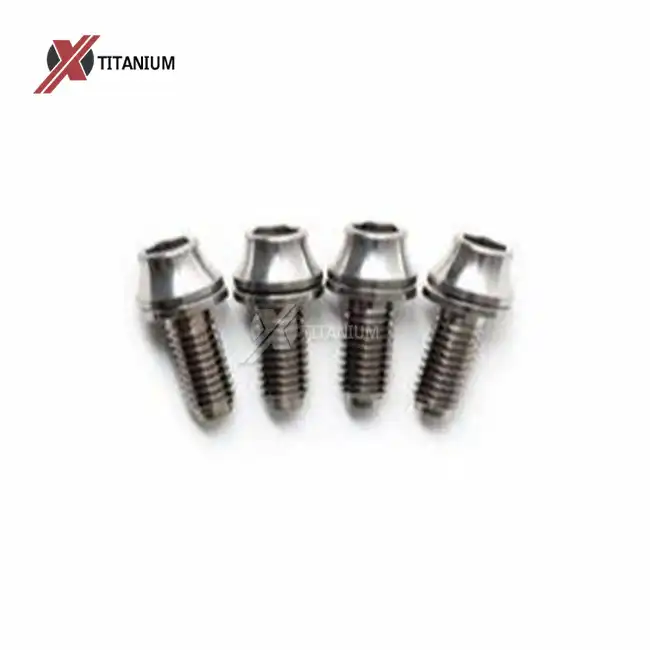
Titanium Bike Bottle Cage Bolt offers riders a lighter, rust-free solution to attach a bottle cage to the frame. Our M5 x 12 mm bolt is made from Grade 5 titanium (Ti-6Al-4V) and weighs roughly 1.5 g and is sweat, rain and sports drink proof. It has a tensile strength of 950MPa. It also comes in natural titanium, gold, blue, green, purple, black and rainbow so you can colour match the cage to the bike. Riders gain a little weight savings, a bolt that will come undone neatly years later, and a crisper appearance. Here’s the rundown, and what to look for before you purchase.
Why Riders Look at a Titanium Bike Bottle Cage Bolt?
What a Bottle Cage Bolt Does
Each bottle cage is held on by two tiny bolts. The M5 x 0.8 thread is used on most road, gravel and mountain frames, with the bolts generally 10 to 15 mm length depending on the cage tab and frame boss. These little bits have to bear the weight of a whole bottle with every bump and vibration. If one rusts, peels or loosens the cage rattles and the frame threads might be damaged. A cheap fastener may be a big pain in the neck when it breaks down. I advise riders to think of it as part of the bike, not a throw-away bolt.
Where Steel and Aluminum Bolts Fall Short?
After months of rain, perspiration and sticky sports drinks, steel bolts typically rust. Rust buildup may seize the bolt in the frame insert and it becomes a hassle to remove. Aluminium bolts are light and colourful; nonetheless, the metal is soft. Aluminium may corrode when in contact with carbon in moist environments. A hex socket can round out beneath a tool. Titanium is not a victim of either condition. It produces a thin, persistent oxide coating on the surface which protects the metal. The Grade 5 alloy is hard enough to retain the sharpness of the drive socket during repeated tool usage.
Who Buys These Bolts?
They are bought by many organisations for various purposes. Weight-conscious cyclists desire to shed grams. Carbon frame owners want a bolt that doesn't seize. DIY builders prefer the colour options since a gold or blue bolt may complement a stem cap or a saddle rail. Bike companies and online accessory vendors are included them in upgrade kits since a bike requires two to four of the Titanium Bike Bottle Cage Bolt, which means the item moves in a consistent volume. A bolt is also tiny and inexpensive compared to a frame, making it a simple initial step into titanium parts.
The Main Benefits Riders Notice
Lower Weight Without Losing Strength
Steel has a density of roughly 7.8 g/cm³, whereas titanium, grade 5, has a density of about 4.43 g/cm³. That makes titanium around 43 percent lighter in bulk. Our M5 x 12 mm bolt weighs ~1.5 g, hence four of them would be ~6 g. To be honest, the actual saving is not that big. Still, hardware replacements aren’t expensive and the grams add up when you combine the bolts with additional titanium components. The bolt doesn’t sacrifice strength for the sake of weight savings, with a tensile strength of 950 MPa.
Corrosion Resistance for Wet and Salty Rides
Titanium reacts with air immediately forming a passive oxide coating. That coating protects against rain, road salt, perspiration and acids in many sports beverages. It’s also resistant to acids and alkalis, which is a big plus for riders who wash their bikes a lot or ride near the ocean. The bolt won't corrode so when you switch cages down the road it comes out clean. Titanium is also galvanically compatible with carbon fibre, so won’t create the corrosion that aluminium may in damp situations. One less thing to worry about for carbon frame owners.
Color Options That Match the Build
Looks important in cycling and bolts are one of the cheapest methods to modify the look of a bike. The colour is part of the metal and not a paint coat , since anodising changes the thickness of the oxide layer on the surface to generate colour . We have natural titanium, gold, blue, green, purple, black, and rainbow and we can bespoke colours. Polishing offers dazzling gloss, nitriding gives a durable surface layer. Riders may match a cage to bar tape or a chain and stores can show off the whole variety of colours in one product listing.
Titanium Compared With Steel, Aluminum, and Stainless Steel
Titanium versus Steel and Stainless Steel
Steel is inexpensive and robust and stainless steel is more rust resistant than ordinary steel. Both have a density of roughly 7.8 to 8 g/cm3 , or about 1.8 times the density of Grade 5 titanium . Stainless may still pit in salt exposure and its threads can gall under strain. Titanium is more expensive per bolt, but it offers low weight and good corrosion resistance in a single part. If you solely care about affordability, a coated steel bolt will suffice. Using titanium makes more sense for a rust-free, long-lasting, and weight-saving bolt.
Titanium vs. Aluminum
Aluminium is lighter than titanium, having a density of around 2.7 g/cm3, and it anodises in vivid colours. This is why it is found in many inexpensive accessories. The trade-off is power. Aluminium bolts are substantially lower in tensile strength therefore flex, peel or break easier during installation or if a cage gets a heavy strike. They may also corrode against carbon or steel elements in damp conditions. A titanium bolt is more expensive but holds its form and colour better with wear. I like the additional margin of strength for a section that holds a bottle at speed.
Grade 5 vs. Grade 2 Titanium
Grade 2 is titanium that is economically pure. It is softer, yet resists corrosion well and machines readily. Grade 5, often known as Ti-6Al-4V, has around 6 percent aluminium and 4 percent vanadium and substantially greater strength. This is a titanium bar used to create parts like a Titanium Bike Bottle Cage Bolt and is covered by the ASTM B348 standard. Grade 5 is tougher, so it resists changing form from repeated torquing by a hex or Torx socket, as happens with a bottle cage bolt. Our bolts are Grade 5, best for riders and builders that want durability.
Chuanglian Titanium Bike Bottle Cage Bolt Specifications and Options
Material and Technical Specifications
Here are the core specifications of our standard bolt:
| Item | Detail |
|---|---|
| Material | Titanium alloy, Grade 5 (Ti-6Al-4V) |
| Size | M5 x 12 mm (custom sizes available) |
| Thread pitch | 0.8 mm |
| Weight | Approx. 1.5 g per bolt |
| Tensile strength | 950 MPa |
| Length accuracy | ±0.1 mm |
| Head diameter | ±0.05 mm |
| Processing | CNC machined |
Tight tolerances help the bolt thread in smoothly and sit flat against the cage tab.
Finishes and Colors
All bolts are CNC machined and then surface treated as you prefer: polished, sandblasted, anodised or nitrided. Available colours: natural titanium, gold, blue, green, purple, black, rainbow, and bespoke colours. Anodised colour is a function of meticulous process control thus we verify completed items prior to delivery. If you are thinking about selling various colours, let us know your blend and we may discuss batch uniformity for recurrent orders.
Head Types, Custom Sizes, and Who We Are
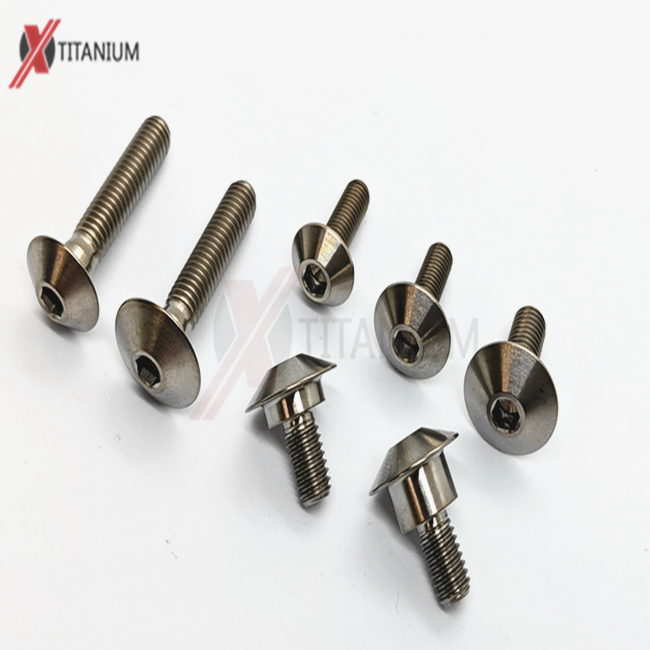
Hex, Torx, button head, flat head etc. This is a normal M5 x 12mm size. We can manufacture various lengths on request. Baoji Chuanglian New Metal Material Co., Ltd is located in Baoji, City of Titanium. We have more than 10 years of expertise in titanium machining and research and our manufacturing is supported by a dozen CNC machine equipment. We have titanium fasteners, rods, wire, plate, tube and flanges. We are also a supplier to the petrochemical, maritime, racing, medical and aerospace areas, which influences how we manage material and dimensions.
How to Install and Choose the Right Bolt?
Installing Without Damaging Threads
First clean the frame insert and cage tab. Apply a thin coat of anti-seize to the thread since titanium may gall, meaning the surfaces will cold weld under pressure. Hand start the bolt to prevent cross threading, then torque down using torque wrench. A lot of bottle cage installations want anything like 4 to 5 Nm. But your frame maker's figure comes first. Avoid impact tools. No matter how tough the Titanium Bike Bottle Cage Bolt is, it may break a carbon boss or strip an insert if it is over-tightened.
Checking Length and Fit
Length matters more than most riders expect. A bolt that is too short grabs only a few threads, and one that is too long can bottom out or press against the inside of the frame. Measure the cage tab thickness, add any washer, and check how deep the frame insert goes. Then confirm the bolt still engages enough thread. The M5 x 12 mm size fits many frames, but a search for "12mm bottle bolts" does not guarantee fit. When in doubt, check the frame manual or send us the details.
A Supplier Checklist for Shops and Brands
If you buy for a shop or a bike brand, ask each supplier these questions before you place an order:
- Material proof: Ask which titanium grade the supplier uses and request a material report. A clear record confirms the bolt is Ti-6Al-4V and not a softer grade, and it helps you answer customer questions or handle a warranty claim with facts instead of guesses.
- Thread and size checks: Ask how the supplier checks the M5 x 0.8 thread and the length against the stated tolerance. A bad thread leads to returns and poor reviews, so a few minutes of gauge checking at the factory can save hours of customer service later.
- Finish consistency: Ask how the supplier controls anodized color from batch to batch, and request samples before a large order. Even color matters for product photos and for riders who match several parts, so compare the sample in daylight and indoor light.
These checks keep surprises low and make repeat orders smoother. At Chuanglian, we inspect each production step from raw material to finished product.
Conclusion
A titanium bike bottle cage bolt is a lighter, rust-resistant fastening for the M5 mounts on most bikes. Grade 5 titanium weighs in at roughly 4.43 g/cm compared to steel’s 7.8 g/cm and titanium's oxide coating is a barrier against perspiration, rain, salt and sports beverages. It has substantially greater strength than aluminium and resists stripping better than it. It is compatible with carbon fibre. Finishes like as anodising provide colour without paint. Correct length, anti-seize, and frame-approved torque still provide good results. Buyers should validate material quality, thread correctness, and colour consistency before to purchase.
FAQ
Do titanium bottle cage bolts need anti-seize?
Yes, a thin layer helps. Titanium can gall under pressure, and anti-seize keeps the threads moving smoothly when you remove the bolt later.
What torque should I use?
Many setups use 4 to 5 Nm, but follow your frame and cage maker's instructions. Carbon frames in particular have clear limits.
Is a titanium bolt safe on a carbon frame?
Yes. Titanium is galvanically compatible with carbon fiber, so it avoids the corrosion that aluminum can cause in wet conditions.
Why choose Grade 5 over Grade 2?
Grade 5 is harder and stronger, so the hex or Torx socket resists rounding during repeated tightening.
Can you make custom colors and sizes?
Yes. M5 x 12 mm is our standard size. We also offer other lengths, custom colors, and several head types on request.
Request a Titanium Bike Bottle Cage Bolt Quote or Sample from Chuanglian
Send your size, color, head type, and quantity to Chuanglian, a Titanium Bike Bottle Cage Bolt supplier and manufacturer in Baoji. Our Grade 5, CNC-machined bolts come in polished, anodized, and nitrided finishes with custom options. Email info@cltifastener.com or djy6580@aliyun.com for a quote or sample.
References
1. ASTM International, ASTM B348/B348M: Standard Specification for Titanium and Titanium Alloy Bars and Billets, 2019
2. Donachie, M. J., Titanium: A Technical Guide, ASM International, 2000
3. Leyens, C. and Peters, M., Titanium and Titanium Alloys: Fundamentals and Applications, Wiley-VCH, 2003
4. Lütjering, G. and Williams, J. C., Titanium, Springer, 2007
5. Boyer, R., Welsch, G., and Collings, E. W., Materials Properties Handbook: Titanium Alloys, ASM International, 1994
6. International Organization for Standardization, ISO 261: ISO General Purpose Metric Screw Threads, General Plan, 1998
Learn about our latest products and discounts through SMS or email