- English
- French
- German
- Portuguese
- Spanish
- Russian
- Japanese
- Korean
- Arabic
- Greek
- German
- Turkish
- Italian
- Danish
- Romanian
- Indonesian
- Czech
- Afrikaans
- Swedish
- Polish
- Basque
- Catalan
- Esperanto
- Hindi
- Lao
- Albanian
- Amharic
- Armenian
- Azerbaijani
- Belarusian
- Bengali
- Bosnian
- Bulgarian
- Cebuano
- Chichewa
- Corsican
- Croatian
- Dutch
- Estonian
- Filipino
- Finnish
- Frisian
- Galician
- Georgian
- Gujarati
- Haitian
- Hausa
- Hawaiian
- Hebrew
- Hmong
- Hungarian
- Icelandic
- Igbo
- Javanese
- Kannada
- Kazakh
- Khmer
- Kurdish
- Kyrgyz
- Latin
- Latvian
- Lithuanian
- Luxembou..
- Macedonian
- Malagasy
- Malay
- Malayalam
- Maltese
- Maori
- Marathi
- Mongolian
- Burmese
- Nepali
- Norwegian
- Pashto
- Persian
- Punjabi
- Serbian
- Sesotho
- Sinhala
- Slovak
- Slovenian
- Somali
- Samoan
- Scots Gaelic
- Shona
- Sindhi
- Sundanese
- Swahili
- Tajik
- Tamil
- Telugu
- Thai
- Ukrainian
- Urdu
- Uzbek
- Vietnamese
- Welsh
- Xhosa
- Yiddish
- Yoruba
- Zulu
What are the different grades of titanium used for motocross fasteners?
Grade 2, Grade 5, and Grade 9 titanium are the main choices for motocross riders and OEM buyers. Grade 23 titanium is a unique option. Most motocross titanium bolts that carry real weight are Grade 5 (Ti-6Al-4V), which has a high strength and a density of about 4.43 g/cm³. Grade 2 is best for covers, guards, and brackets that need to be resistant to corrosion more than they need to be strong. Grade 9 is in the middle and is mostly used for custom work. I talk about each grade, show how titanium, steel, and aluminum compare, and explain how to choose the right grade for each bike location before you ask for quotes.
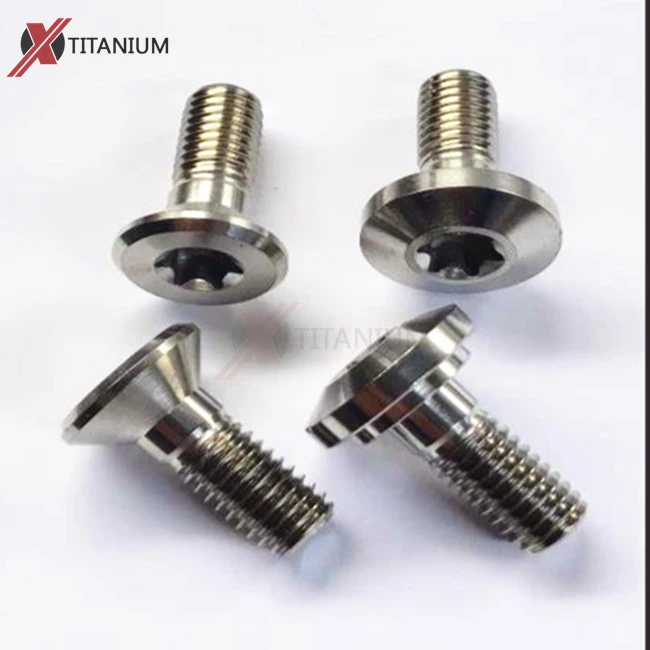
Titanium Grades Commonly Used for Motocross Fasteners
Because each grade is used for a different thing, I'll start with the three you will see most often and then talk about the other grades.
Grade 2 Titanium: The Corrosion-Resistant Option for Lower-Load Hardware
Grade 2 titanium is pure enough for business use. With a minimum tensile strength of 345 MPa and a minimum yield strength of 275 MPa, as set by ASTM B348 for this grade, it is not strong enough to be used as a structural alloy. In exchange, it shapes easily, works reliably with machines, and doesn't rust when exposed to mud, water, or washing chemicals. Most of the time, it's used for low-load applications like engine cover bolts, radiator brackets, skid plate hardware, and bodywork screws. Because it isn't as strong and can't handle fatigue as well, I wouldn't use it instead of steel in high-vibration or safety-related positions. If you want to save weight and keep non-essential parts from rusting, Grade 2 is a good choice. But don't think of it as a performance grade for the chassis.
Grade 5 Titanium: The Performance Grade for Motocross Titanium Bolts
Grade 5, also known as Ti-6Al-4V, is the most common alloy used in performance fasteners. The minimum tensile strength in ASTM B348 is 895 MPa and the minimum yield strength is 828 MPa. These are more than twice the minimums for Grade 2. It weighs about 4.43 grams per cubic centimeter, while steel weighs about 7.85 grams per cubic centimeter. This means that it reduces mass by about 44% per unit volume.
This alloy is used in most motocross titanium bolts for engine hardware, sprocket mounting, clamps, and chassis parts because it has a good balance. The tensile strength of the Gr5 (Ti-6Al-4V) bolts that Chuanglian sells is 930 MPa. On the other hand, strength alone doesn't get you every job. Fasteners for the brakes, axles, suspension, and steering need to be load tested and approved by a qualified engineer or the company that made the part.
Grade 9 and Specialty Grades: Where They Fit
Grade 9 (Ti-3Al-2.5V) is a good middle ground. The minimum tensile strength in ASTM B348 is 620 MPa and the minimum yield strength is 483 MPa. This is stronger than Grade 2 and easier to shape than Grade 5. Stock and lead times can change because it doesn't show up as often in finished fasteners. A minimum tensile strength of 828 MPa is found in Grade 23 (Ti-6Al-4V ELI), which has very low interstitial limits. It's mostly used in tough, well-documented situations, like surgical implants that meet ASTM F136. There are four commercially pure grades, each with a different level of strength. These options need to be custom sourced for most race programs, so I suggest checking for availability and certificates before you lock down a design.
Comparing Grades and Competing Materials
Once you know the grades, you can look at them next to each other and next to the metals they change.
Grade 2 vs Grade 5 vs Grade 9 Titanium Bolts
On paper, these are how the three grades look. With a minimum tensile strength of 345 MPa, Grade 2 is resistant to corrosion and easy to shape. In Grade 9, that goes up to 620 MPa, and in Grade 5, it goes up to 895 MPa. Numbers that show tensile strength only tell part of the story. You can tell if a bolt will hold preload on a bike that shakes at every rpm by its yield strength, fatigue life, shear loading, thread quality, and friction when tightening it. The same care should be taken with a weight claim. Because savings depend on the steel part being replaced, the bolt diameter, length, head style, washers, and washers, I suggest that you weigh some sample parts instead of relying on a general percentage. These checks make sure that the grade choice is based on what engineers really need.
Titanium vs Steel, Stainless Steel, and Aluminum
For motocross titanium bolts, titanium wins because it is lighter and doesn't rust, but steel still deserves its spot. Many OEM axle and brake locations are still steel because steel is sturdy, available, fits specifications, and has predictable behaviour under preload. "Titanium will stretch more than steel under the same stress (about 114 GPa for Ti-6Al-4V compared to 200 GPa for steel) thus engineers need to take this into consideration when designing joints.
Stainless steel is an inexpensive method to produce hardware that doesn 't rust . It weighs a bit more than carbon steel . Aluminium fasteners are light, but not particularly robust and can only be used on bodywork and ornamental items. Grade 5 is typically the best option when performance is worth the price. Grade 2 is preferable for general hardware and steel is used when the OEM demands.
Why Galling and Galvanic Contact Need Attention
Galling is when the surfaces of the threads cold fuse together and seize when you are tightening them. I propose clean threads, an anti-seize compatible with the threads, a reasonable pace of tightening and the proper amount of torque. Anti-seize also increases the friction, thus applying the same OEM steel-bolt torque number might result in an incorrect preload. Ask the person who created the bike or an engineer about its worth. Another thing to worry about is touching aluminium engine casings. Titanium is the more noble metal, thus it may accelerate the corrosion of aluminium threads in the presence of water and muck. That danger may be reduced using thread compound and frequent cleaning during maintenance. These stages should be included in the part specification, not in addition to it.
Matching Titanium Fasteners to Each Motocross Application
Grade choice only works if it fits perfectly on the bike, so this part goes from where it goes to size, finish, and common mistakes.
How to Select the Right Grade for Each Location
The grade of a fastener is based on what it does, not on its brand or color. First, put each spot into one of five groups: safety-critical, high-vibration, cosmetic, or general mechanical. Most of the time, covers, guards, and brackets work well in Grade 2. Grade 5 candidates often include engine hardware, sprocket bolts, clamps, and some chassis fasteners. Chuanglian says that its Gr5 bolts can be used in engine parts like cylinder heads and engine mounts, frame assemblies, suspension parts, and exhaust systems. However, each of these uses still needs to be tested for fit and load. Extra care should be taken with axles and brake parts because a failure creates a danger right away. Before you install anything, make sure you check the OEM dimensions, thread engagement, torque procedure, head geometry, and locking method.
Choosing Size, Head Style, Finish, and Thread
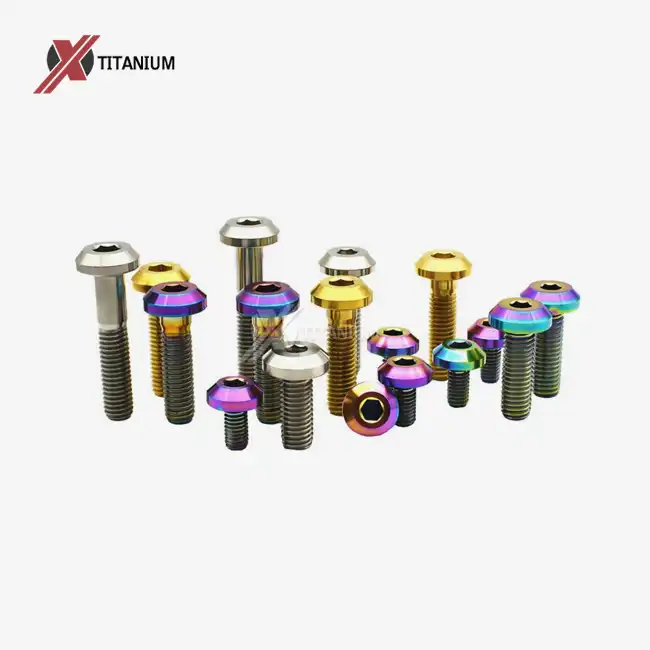
CNC-machined Gr5 bolts are made by Chuanglian in sizes M6, M8, and M10, and other sizes can be made to order. M6 usually works with covers, guards, and brackets. On the other hand, M8 and M10 work with heavier controls and mounts, but it depends on the bike. Different types of heads, such as flange, socket-head, button-head, and hex-head, affect how tools can be used, how much space they have, and how much load they can spread. You can polish, anodize, or nitride the surface, and the finish can be polished, anodized, or matte black. You can get it in gold, blue, green, purple, black, rainbow, and natural titanium. Anodizing adds color to help the team stand out, but it doesn't make the structure stronger. In general, nitriding makes the surface harder and more resistant to wear. Send us the pitch, length, and tolerance needs, and we'll let you know what we can machine.
Common Mistakes Buyers Make
The biggest mistake is thinking that any titanium bolt can be used for racing. How well something works depends on its grade, shape, heat treatment, thread design, and load. If you put Grade 2 where Grade 5 or steel should be, the load and fatigue capacities go down. If you use the steel-bolt torque value without checking the friction, you might get the wrong preload, and if you skip anti-seize, you'll get galling.
A common mistake when buying motocross titanium bolts is choosing based only on color and weight, without seeing a material certificate, dimensional drawing, or batch record. A shiny anodized bolt doesn't tell you anything about the chemistry of the alloy. I think you should get the grade, the mechanical data, and the inspection record in writing before you agree to buy something. These papers show the difference between a reliable fastener and a pretty one.
How to Evaluate a Titanium Bolt Supplier
Engineers, buyers, and quality teams are all involved in getting titanium, so the supplier review needs to meet the needs of all three.
Documents and Inspection Records to Request
Forms should answer all of them since each team looks at different things. Ask for confirmation of the material grade, its chemical make-up, mechanical data, records of dimensional inspections, information on the surface finish, and a certificate of conformity. Because a KTM, Honda CRF, Yamaha YZ, Kawasaki KX, or Suzuki RM-Z may be different, be sure to include the exact model and year of the bike, as well as the fastener location, diameter, pitch, length, head style, and washer needs. Check the thread gage, keep track of batches, package items, set sampling rules, give lead time, and include export documents in the list for OEM and wholesale programs. When you ask these questions, and the supplier answers quickly and in writing, it usually means they have the process discipline to get the same results every time.
What Chuanglian Brings to Titanium Fastener Production
The Baoji Chuanglian New Metal Material Co., Ltd. makes and sells titanium goods from Baoji, which is known as the "City of Titanium." We have been researching and manufacturing titanium for more than ten years, and our products include fasteners, rods, wire, plate, tube, flanges, and machined parts. We use twelve CNC machines to do our machining work, and we check every step of the process, from the raw materials to the finished product. Customers in the petrochemical, marine, racing, medical, and aerospace industries buy our goods. For motocross buyers, that means a supplier who knows how titanium works, can machine to your specifications, and suggests the grade that works best for your needs rather than the lightest or most colorful one.
A Simple Decision Process Before Your First Order
Before your first order, a short sequence lowers your risk. Sort each fastener by how much it can hold and how safe it is. In that case, you can pick Grade 2, Grade 5, Grade 9, or a special alloy. Check the thread engagement, head design, finish, marking, diameter, pitch, and length. Explain how to use torque, anti-seize, thread-locker, and inspect. Then, check the supplier's ability to trace, help with prototypes, capacity, and export experience. For titanium projects, going from samples to production can take a few months. To protect both parties, a pilot order with written test results is recommended. Once you're happy with the sample, it's easy to place more orders, and you only need to check one source for the whole program.
Conclusion
To make motocross titanium bolts, Grade 5 (Ti-6Al-4V) is the best choice because it has a minimum tensile strength of 895 MPa and a density of 4.43 g/cm³, according to ASTM B349. For lower-load covers, guards, and brackets, Grade 2 is better at resisting corrosion and is easier to shape. Grade 9 and specialty grades, on the other hand, are more specific and harder to find. Titanium is stronger than aluminum and lighter than steel, but steel is still the standard when OEM requirements call for it. Care must be taken during installation to avoid galling, galvanic contact with aluminum, and differences in torque. Fit and look are affected by size, head style, and finish, but not alloy strength. Each location is linked to its load by a sound selection, which then checks the material certificates, inspection records, and batch traceability.
FAQ
Q1: Is Grade 5 strong enough for motocross?
A: Yes, for a lot of jobs. ASTM B348 says that Grade 5 must have a minimum tensile strength of 895 MPa, and Chuanglian says that its Gr5 bolts must have a 930 MPa strength. There needs to be a load study and approval from a qualified engineer for the brake, axle, suspension, and steering locations before any steel hardware is swapped out.
Q2: Can titanium replace OEM steel bolts everywhere?
A: No, titanium works well in places that need to be light and resistant to corrosion. However, steel is still the standard for many heavily loaded or safety-critical positions. Before replacing an original fastener, check its size, thread engagement, torque, and load. Also, keep material certificates for each batch on file.
Q3: Does anodizing make a titanium bolt stronger?
A: No, anodizing only adds color to help people recognize a team or brand. The strength comes from the alloy and the way it was machined. Nitriding is used for a different reason because it usually makes the surface harder and more resistant to wear. Find out from your supplier which treatment works best in each area.
Q4: Why do titanium bolts gall?
A: Titanium can cold-weld when it is put under pressure and rubbed together while it is being tightened. Using clean threads, anti-seize that works with them, a moderate speed, and the right amount of torque lower the risk. Because anti-seize changes friction, check with the bike maker to make sure you know what the torque value is.
Request Custom Motocross Titanium Bolts from Chuanglian
Looking for a company that makes motocross titanium bolts? Chuanglian makes Gr5 (Ti-6Al-4V) bolts in M6, M8, M10, and custom sizes. They have been making titanium parts for over ten years and check each step of the process. Email your bike model, number, drawings, and finish to info@cltifastener.com or djy6580@aliyun.com.
References
1. ASTM B348/B348M, Standard Specification for Titanium and Titanium Alloy Bars and Billets, 2019
2. ASTM F136, Standard Specification for Wrought Titanium-6Aluminum-4Vanadium ELI Alloy for Surgical Implant Applications, 2013
3. Titanium: A Technical Guide, 2nd Edition (Matthew J. Donachie, ASM International), 2000
4. Titanium and Titanium Alloys: Fundamentals and Applications (Christoph Leyens and Manfred Peters, Wiley-VCH), 2003
5. Materials Properties Handbook: Titanium Alloys (Rodney Boyer, Gerhard Welsch, and E. W. Collings, ASM International), 1994
6. ASM Handbook, Volume 2: Properties and Selection: Nonferrous Alloys and Special-Purpose Materials (ASM International), 1990
Learn about our latest products and discounts through SMS or email