- English
- French
- German
- Portuguese
- Spanish
- Russian
- Japanese
- Korean
- Arabic
- Greek
- German
- Turkish
- Italian
- Danish
- Romanian
- Indonesian
- Czech
- Afrikaans
- Swedish
- Polish
- Basque
- Catalan
- Esperanto
- Hindi
- Lao
- Albanian
- Amharic
- Armenian
- Azerbaijani
- Belarusian
- Bengali
- Bosnian
- Bulgarian
- Cebuano
- Chichewa
- Corsican
- Croatian
- Dutch
- Estonian
- Filipino
- Finnish
- Frisian
- Galician
- Georgian
- Gujarati
- Haitian
- Hausa
- Hawaiian
- Hebrew
- Hmong
- Hungarian
- Icelandic
- Igbo
- Javanese
- Kannada
- Kazakh
- Khmer
- Kurdish
- Kyrgyz
- Latin
- Latvian
- Lithuanian
- Luxembou..
- Macedonian
- Malagasy
- Malay
- Malayalam
- Maltese
- Maori
- Marathi
- Mongolian
- Burmese
- Nepali
- Norwegian
- Pashto
- Persian
- Punjabi
- Serbian
- Sesotho
- Sinhala
- Slovak
- Slovenian
- Somali
- Samoan
- Scots Gaelic
- Shona
- Sindhi
- Sundanese
- Swahili
- Tajik
- Tamil
- Telugu
- Thai
- Ukrainian
- Urdu
- Uzbek
- Vietnamese
- Welsh
- Xhosa
- Yiddish
- Yoruba
- Zulu
What are the main benefits of using titanium alloy screws?
Titanium alloy screws have huge benefits for high-performance industrial uses. They solve important problems that purchasing managers and engineering teams face every day. These precision-engineered screws have the best strength-to-weight ratios and the best rust protection. This makes them essential for projects in aircraft, medical device manufacturing, industrial facilities, and marine engineering. Titanium alloy screws keep structural integrity across high temperature ranges while lowering total system mass by about 40%, in contrast to conventional steel fasteners that break down in harsh environments and add needless weight to setups. Their biocompatibility makes medical implants safe, and their resistance to stress corrosion cracks caused by salt makes them last longer in remote sites where repair costs are too high.
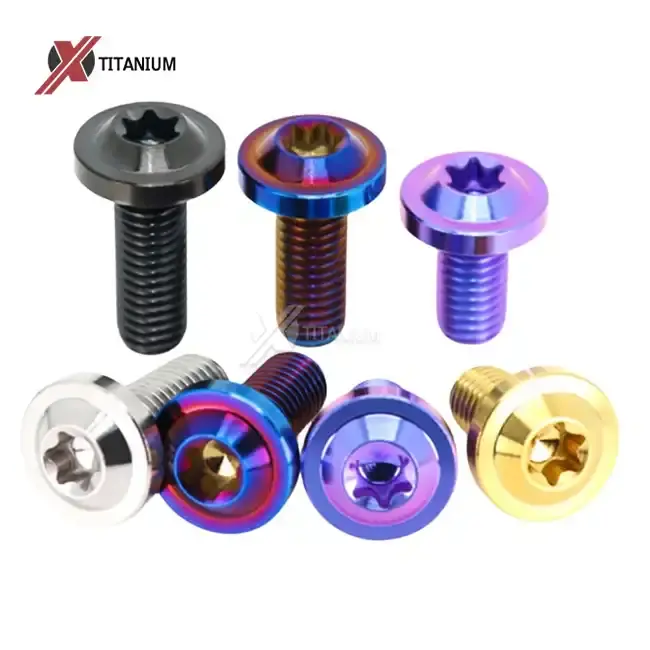
Understanding Titanium Alloy Screws: Properties and Applications
Material Composition and Grade Classification
The most common type of titanium alloy screws are made from Grade 5 titanium alloy (Ti-6Al-4V), which is the best mix of mechanical strength and ease of machining for industrial uses. This alloy is made up of a titanium base and 6% aluminum and 4% vanadium. It has tensile strengths of up to 900 MPa and doesn't rust because titanium is naturally resistant to that. Pure titanium (Grade 2) is used in places where maximum rust resistance and moderate strength are needed. This is especially true in chemical handling equipment where material purity keeps contamination risks at bay.
Critical Performance Characteristics
Titanium alloy screws are better than other materials in harsh working conditions because they don't change much with temperature. When heated to 500°C, these screws keep their shape and mechanical qualities. At temperatures above 400°C, regular stainless steel starts to lose its power. The low thermal expansion rate (8.6 × 10⁻⁶/°C) of the material makes it less likely that parts will come free when they go through thermal cycling, which is a typical way for aircraft power systems and industrial heat exchanges to fail.
Industry-Specific Applications
Titanium alloy screws are used by aerospace companies for aircraft systems, where every gram counts when figuring out how much fuel to use. These screws are used in compressor parts of engine systems where they would quickly wear out if they were exposed to vibrations, high temperatures, and harmful combustion fumes. Medical device makers choose Ti-6Al-4V for orthopedic plates and tools for spine fusion because its modulus of elasticity (114 GPa) is more like human bone than stainless steel's (200 GPa), which means it doesn't create stress buffering effects that slow down healing. Offshore platform operators put titanium alloy screws in important structural parts and pressure tank flanges, even though it costs more at first, they do it to avoid the catastrophic failure risks and high upkeep costs that come with using steel hardware that rusts.
The Main Benefits of Titanium Alloy Screws for Industrial Use
Superior Strength-to-Weight Ratio
Material choices in the transportation and personal tools areas are based on how much weight they can hold. When it comes to strength, titanium alloy screws meet or beat the requirements for Grade 8.8 fasteners while weighing about 60% less. Aviation programs figure that for every kilogram taken off of an airplane's frame, it saves a lot of fuel over its lifetime. Titanium alloy screws are used in the frame and motor parts of racing cars so that weight goals can be met without sacrificing safety. Manufacturers of portable medical tools are reducing the weight of their products, which makes them easier for surgery teams to use during long treatments.
Exceptional Corrosion Resistance
Material decay is the main issue that buying teams worry about when they are handling the long-term dependability of assets. When titanium is scratched or abraded, its passive oxide layer grows back on its own. This protects it against galvanic corrosion, pitting, and crevice corrosion, all of which happen to stainless steel in chloride-rich settings. This property is very useful in marine engineering because saltwater wears down regular screws very quickly, causing structures to fail and incurring expensive repairs. Chemical processing plants that use acids, alkalis, and organic solvents choose titanium hardware so that corroding screws don't cause leakage and repair times are longer.
Biocompatibility for Medical Applications
In order to meet regulatory standards, medical device manufacturers must use materials that have been tested thoroughly to show that they are biocompatible. Ti-6Al-4V is approved by ISO 10993 as an implanted device that causes little inflammation and helps bones fuse together in bone fixing applications. Titanium alloy screws are used in reused surgical instruments because the material can be sterilized in an autoclave many times without losing its mechanical qualities or surface finish. Titanium is used in dental implant systems because it can form strong connections with living cells. This lowers the risk of rejection and improves patient results.
Extended Service Life and Reduced Maintenance
Lifecycle cost study shows that titanium alloy screws are more cost-effective than other materials, even though they cost more to buy. Testing for fatigue shows that these screws can handle millions of load cycles without breaking. This is very important for airplane landing gear systems and machinery that is constantly vibrating. When petrochemical plants use titanium gear in high-temperature steam systems, they don't have to change carbon steel screws as often, which is needed because they rust and shrink over time. Operators of subsea production equipment can lower the cost of repairs by choosing corrosion-resistant screws that keep their torque values and sealing integrity for decades of service.
How Titanium Alloy Screws Outperform Competing Materials?
Comparative Performance Analysis
Engineers use grids to choose materials that take into account a number of performance factors, as well as application needs and price limits. Fasteners made of Grade 316 stainless steel don't rust in mild settings, but they rust when chloride levels rise above 1000 ppm. Titanium alloy screws, on the other hand, don't react to seawater with 35,000 ppm chlorides. Similar to steel screws, aluminum alloy screws are lighter, but they aren't strong enough for high-stress structure uses, so they can only be used for non-critical fastenings. Carbon steel is cheap and has good tensile strength, but it needs protecting layers that wear off during installation or service, leaving the base material open to chemical attack.
Grade Selection Considerations
It depends on the needs of the product whether to use Grade 2 commercially pure titanium or Grade 5 Ti-6Al-4V. Grade 2 is the best for shaping and resisting rust. Its tensile strength is around 340 MPa, making it good for chemical handling equipment that doesn't have to handle heavy loads. Grade 5 has almost three times the strength (900 MPa) needed for aircraft structural parts and high-pressure tank seals, but it costs more to make and costs more to materialize. In order to choose the best material type, procurement managers look at factors like how the material will be loaded, how it will be exposed to the environment, and government rules.
Economic Justification Framework
When value engineering, the total costs of ownership must be taken into account, not just the buying price. It is common for replacement work costs for broken screws in hard-to-reach places to be many times higher than the original hardware costs. Offshore oil platforms spend millions of dollars every year on maintenance efforts because steel bolts corrode. Titanium installations get rid of these unscheduled repairs. When implants fail, medical device recalls happen, which causes legal issues and social damage that are much worse than the difference in cost between titanium alloy screws and stainless steel screws.
Procurement Insights: How to Source the Right Titanium Alloy Screws?
Supplier Qualification Criteria
To build solid supply relationships, you need to carefully look at the skills and quality systems of manufacturers. As a minimum, certified titanium alloy screws suppliers must have quality management systems that meet ISO 9001 standards. For aerospace programs, AS9100 certification is required to show that they meet strict standards for tracking and process control. When buying medical devices, teams make sure that sources are ISO 13485 certified and can give material test records that show the chemical make-up, mechanical qualities, and biocompatibility test results for each production lot.
Custom Versus Standard Specifications
Off-the-shelf bolts with thread sizes from M2 to M36 can be used in many situations, but complicated systems often need to be set up in a way that is unique to them. With CNC cutting, companies like Chuanglian can make custom head styles, thread forms, and length combos that meet the needs of each design. Surface treatments like cleaning, anodizing, and nitriding improve certain performance qualities. For example, anodized finishes make surfaces harder and color-code assemblies to make them easier to find. Nitriding treatments make joints that are handled often more resistant to wear.
Lead Time and Inventory Management
Titanium alloy screws products have long purchase processes that require careful planning of the supply chain. Standard orders of fasteners usually ship in two to four weeks. Custom orders, on the other hand, need eight to twelve weeks for design approval, production setup, and quality checks. Strategic buyers make blanket purchase agreements with qualified suppliers. They keep extra goods on hand in case of emergency production needs and use the volume promises to get better pricing.
Technical Specifications and Quality Standards of Titanium Alloy Screws
Dimensional Standards and Tolerances
Thread shape conformance has a direct effect on the strength of the unit and how the stress is distributed. The pitch diameters, major diameters, and minor diameters of ISO metric threads are set within tolerance classes that fastener makers manage by rolling or cutting the threads with great accuracy. For aerospace uses, Class 2A external threads with clearance fits make assembly easier. On the other hand, Class 3A threads with tighter standards make sure the thread engages fully and seals effectively for pressure tank closes.
Mechanical Property Verification
Quality-assured fastener packages come with material certification paperwork that lists measures of tensile strength, yield strength, elongation, and hardness that can be linked to specific production runs. Acceptance testing procedures make sure that these qualities meet the standards. For example, Grade 5 titanium alloy screws need to have a tensile strength of at least 895 MPa and a yield strength of at least 828 MPa. Proof load testing makes sure that screws can survive certain clamping forces without permanently deforming, which proves that they can be used for what they were made for.
Regulatory Compliance Requirements
In controlled areas, choosing fasteners and keeping records is governed by industry-specific standards. ASTM F467 sets the standards for titanium alloy nuts, and ASTM F468 does the same for titanium alloy bolts. Both sets the standards for size and material properties. Medical device makers follow FDA guidelines papers that spell out the steps for biocompatibility testing and approval of cleaning procedures. Military standards (MIL-SPEC) are used by aerospace projects to define weather testing, quality assurance processes, and configuration management practices that make sure parts can be tracked throughout their service lives.
Conclusion
Titanium alloy screws are a smart investment for businesses that want to prioritize dependability, performance, and long-term value in tough situations. The material's unique mix of strength, resistance to rust, biocompatibility, and light weight solves important problems in the medical, naval, aircraft, and chemical processing industries that can't be solved with regular bolts. When making a purchase choice, it's important to weigh the original costs against the long-term practical benefits. For example, titanium alloy screws remove the need for regular upkeep, lower the risk of failure, and allow design improvements that would not be possible with larger or less durable options. Doing your research on suppliers, grades, and quality checks is important to make sure that the performance of the fasteners meets application needs and government standards.
FAQ
How do titanium fasteners compare to stainless steel in strength?
Grade 5 titanium alloy (Ti-6Al-4V) has a tensile strength of up to 900 MPa, which is higher than standard 316 stainless steel's 515 MPa and closer to high-strength stainless grades. It also resists rust better than other grades and is 40% lighter. Titanium alloy screws are especially useful in situations where weight affects how well a system works because of its high strength-to-weight ratio.
Can titanium screws be used in medical implants?
Biocompatibility guidelines (ISO 10993) say that medical-grade Ti-6Al-4V is safe for permanent insertion because it causes few reactions in flesh and helps bones fuse together. The FDA has rules about how pure the materials must be, how well they must be finished, and how the making process must be controlled.
Should I choose Grade 2 or Grade 5 titanium?
Grade 2 titanium, which is commercially pure, is the most resistant to rust and has a middling strength (340 MPa), making it perfect for use in chemical processing. Grade 5 (Ti-6Al-4V) has almost three times the strength (900 MPa) needed for structural aircraft and high-stress mechanical systems, but it costs more and is harder to shape.
Partner with Chuanglian for Reliable Titanium Alloy Screw Solutions
Baoji Chuanglian New Metal Material Co., Ltd. has been making accurate titanium fasteners that meet the high standards of the aircraft, medical, industrial, and marine industries for more than ten years. Custom titanium alloy screws in sizes ranging from M2 to M36 can be made by our CNC cutting services. The surfaces can be polished, anodized, or nitrided to meet the needs of your application. As a reliable company that makes titanium alloy screws in China's "City of Titanium," we have strict quality control systems that make sure every fastener meets international standards like ASTM, ISO, and certifications specific to the industry.
Our engineering support team works with purchase managers and design engineers to choose the best materials, make sure that standards are met, and make sure that the supply chain works reliably for both pilot and production projects. Get in touch with our technical sales experts at info@cltifastener.com or djy6580@aliyun.com to talk about your titanium fastener needs and get reasonable quotes for standard or unique solutions.
References
1. American Society for Testing and Materials. (2020). ASTM F468: Standard Specification for Nonferrous Bolts, Hex Cap Screws, and Studs for General Use. ASTM International.
2. Boyer, R., Welsch, G., & Collings, E.W. (2018). Materials Properties Handbook: Titanium Alloys. ASM International.
3. International Organization for Standardization. (2019). ISO 10993-1: Biological Evaluation of Medical Devices—Part 1: Evaluation and Testing within a Risk Management Process. ISO Standards.
4. Lutjering, G. & Williams, J.C. (2017). Titanium: Engineering Materials and Processes, Second Edition. Springer-Verlag Berlin Heidelberg.
5. SAE International. (2021). Aerospace Material Specification AMS 4967: Titanium Alloy Bars, Wire, Forgings, Rings, and Drawn Shapes 6Al-4V Annealed. SAE Technical Standards.
6. Schutz, R.W. & Watkins, H.B. (2018). "Recent developments in titanium alloy application in the energy industry." Materials Science and Engineering: A, 243(1-2), 305-315.
Learn about our latest products and discounts through SMS or email