- English
- French
- German
- Portuguese
- Spanish
- Russian
- Japanese
- Korean
- Arabic
- Greek
- German
- Turkish
- Italian
- Danish
- Romanian
- Indonesian
- Czech
- Afrikaans
- Swedish
- Polish
- Basque
- Catalan
- Esperanto
- Hindi
- Lao
- Albanian
- Amharic
- Armenian
- Azerbaijani
- Belarusian
- Bengali
- Bosnian
- Bulgarian
- Cebuano
- Chichewa
- Corsican
- Croatian
- Dutch
- Estonian
- Filipino
- Finnish
- Frisian
- Galician
- Georgian
- Gujarati
- Haitian
- Hausa
- Hawaiian
- Hebrew
- Hmong
- Hungarian
- Icelandic
- Igbo
- Javanese
- Kannada
- Kazakh
- Khmer
- Kurdish
- Kyrgyz
- Latin
- Latvian
- Lithuanian
- Luxembou..
- Macedonian
- Malagasy
- Malay
- Malayalam
- Maltese
- Maori
- Marathi
- Mongolian
- Burmese
- Nepali
- Norwegian
- Pashto
- Persian
- Punjabi
- Serbian
- Sesotho
- Sinhala
- Slovak
- Slovenian
- Somali
- Samoan
- Scots Gaelic
- Shona
- Sindhi
- Sundanese
- Swahili
- Tajik
- Tamil
- Telugu
- Thai
- Ukrainian
- Urdu
- Uzbek
- Vietnamese
- Welsh
- Xhosa
- Yiddish
- Yoruba
- Zulu
What are the primary benefits of using titanium fasteners?
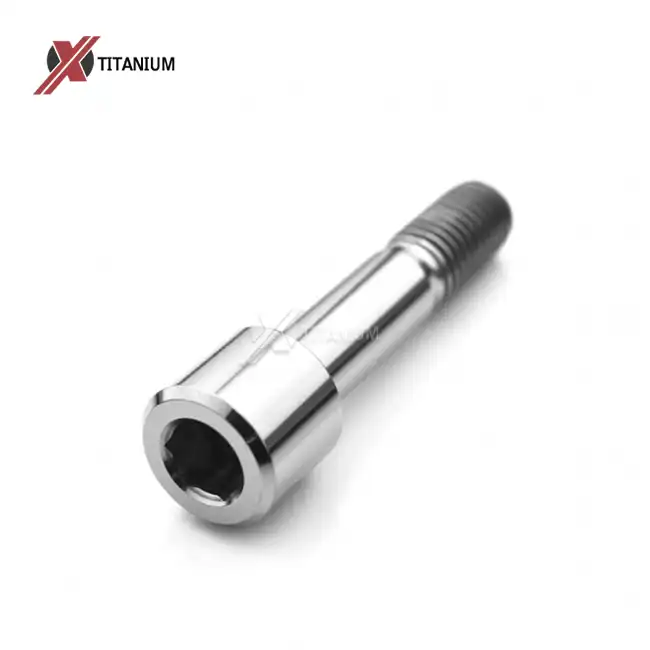
Titanium fasteners offer a compelling combination of lightweight construction, exceptional corrosion resistance, and superior strength that makes them invaluable across high-performance applications. When we consider M10 Titanium Torx Socket Cap Bolts for Ducati Motorcycle Bike assemblies, these benefits translate directly into enhanced performance, extended component lifespan, and reduced maintenance requirements.
Grade 5 titanium alloy (Ti-6Al-4V) delivers tensile strength exceeding 895 MPa while weighing 45% less than steel equivalents, allowing engineers to optimize weight distribution without compromising structural integrity. The material's inherent resistance to oxidation and chemical attack ensures reliable performance in harsh environments, from coastal regions with salt spray to industrial settings with aggressive chemical exposure.
Understanding Titanium Fasteners and Their Core Advantages
Titanium screws are a big step forward in mechanical joining technology, especially for difficult situations where performance needs to be at its best. The science of these parts' materials explains why they're so important in high-performance motorcycles, medical devices, space travel, and marine engineering.
Material Properties That Matter
Aluminum (5.5–6.75%) and vanadium (3.5–4.5%) are mixed with pure titanium to make Grade 5 titanium alloy, which has amazing properties. This alloy stays strong at temperatures ranging from -40°C to +400°C, so it can be used for parts that are exposed to extreme temperature changes. The material's density is about 4.43 g/cm³, while steel's is 7.85 g/cm³. This means that the material is lighter right away without affecting its mechanical performance.
The oxide layer that forms naturally on titanium surfaces keeps rusting from happening. Titanium screws don't need to be coated or replaced often like steel ones do. They stay strong even when they are wet, salty, or exposed to most industrial chemicals. This trait is especially useful for Ducati motorcycle uses where screws are constantly exposed to rain, road salt, and changes in temperature.
Engineering Advantages in Motorcycle Applications
When building a Ducati motorbike, engineers have to be very careful. Every part of the bike affects how it handles, how fast it goes, and its overall performance range. M10 Titanium Torx Socket Cap Bolts for Ducati Motorcycle Bike made from Grade 5 titanium alloy help reach these performance goals in more than one way.
The 45% weight decrease compared to steel nuts may not seem like much for a single part, but when applied consistently to all of a motorcycle's fasteners, it adds up to a big difference. Less unsprung weight makes the suspension more sensitive and the tire contact patch more consistent. Less spinning mass in wheel systems lowers gyroscopic forces, which makes steering more precise and cornering more quickly.
CNC milling methods make sure that the dimensions are accurate within the narrow ranges required by ISO14579 standards. When thread profiles are machined instead of rolled thru titanium billets, the engagement characteristics stay the same. This is important for getting the right clamping force without damaging the threads. The Torx 50 head design spreads installation pressure more widely than regular hex heads. This makes it less likely that the head will get damaged during service or assembly.
Comparison of Titanium vs. Traditional Bolt Materials
Knowing how titanium performs differently than other fastener materials helps procurement professionals make smart choices based on application needs and costs over the product's lifetime.
Titanium Versus Steel Performance Analysis
The final tensile strength of steel bolts is higher than that of Grade 5 titanium, especially those that meet the requirements for Grade 12.9. But this comparison leaves out a number of important factors. Titanium has a much higher strength-to-weight ratio than steel, which means that engineers can use lighter parts to get the same binding force. The material's high resistance to wear under cyclic loading conditions makes it last longer in uses that are subjected to shaking and temperature changes.
Because steel is easily corroded, it needs to be protected with zinc plating, phosphate coating, or more modern ceramic coats. These treatments make things more expensive, make measurements less accurate, and wear out over time, which means fasteners need to be replaced. Titanium's passive oxide layer grows back when it gets broken, so it keeps protecting the metal without any upkeep.
The difference in modulus of elasticity between titanium (about 114 GPa) and steel (about 200 GPa) changes how bolts behave when they are loaded. Titanium has a lower modulus, which means it can be stretched more before it breaks. This makes it more forgiving when there are mistakes in the fitting or differences in how the materials join together when it comes to temperature expansion.
Titanium Compared to Aluminum Alloys
Fasteners made of aluminum are about the same weight as those made of titanium, but they don't work as well. For most metals, aluminum's compressive strength is between 300 and 500 MPa, which is much lower than Grade 5 titanium's strength of 895 MPa or more. Because it isn't very strong, metal can only be used in non-critical situations where the load is low. M10 Titanium Torx Socket Cap Bolts for Ducati Motorcycle Bike exemplify the ideal use of titanium in high-performance applications, where their superior strength and reliability far exceed what aluminum fasteners could safely provide in critical load-bearing components.
Galvanic rust is another problem that can happen when aluminum touches different metals while fluids are present. Titanium doesn't have much galvanic activity when it comes to most common materials, like carbon fiber composites, aluminum, and stainless steel. Because of this, titanium is the best material for mixed-material assemblies, which are common in modern motorcycle construction.
Lifecycle Cost Considerations
The initial costs of buying titanium screws are much higher than the costs of buying steel or aluminum options. If procurement managers only looked at the price of the item, they might question the value offer. Lifecycle study, on the other hand, shows a different story. Titanium fasteners that are used in harsh conditions or important tasks often last longer than steel ones that are replaced with them. Not having to replace fasteners on a regular basis cuts down on maintenance labor costs and downtime. By stopping problems caused by corrosion before they happen, huge repair costs and possible legal issues can be avoided.
Original Equipment Manufacturers (OEMs) and wholesalers that serve high-performance markets know that end users value total operating cost more than initial purchase price. Quality titanium screws help set a product apart and build a brand's image, which supports charging more in markets with lots of competition.
Installation and Maintenance of M10 Titanium Torx Socket Cap Bolts on Ducati Bikes
By following the right steps for fitting, titanium screws can work as well as they can and avoid common mistakes that can damage the joint.
Recommended Installation Protocols
Because titanium tends to blister, it needs to be installed with great care. This effect happens when titanium surfaces that are moving relative to each other and are under a lot of pressure join together at the microscopic level. Using the right anti-seize compounds is part of strategies for prevention. The molybdenum disulfide (MoS₂) paste does a great job of protecting joints without weakening them. Some companies make bolts with Diamond-Like Carbon (DLC) or special anodized coatings that naturally lower friction coefficients in them.
Different torque requirements apply to titanium screws compared to steel ones. As a general rule, 70 to 80% of the torque number used for similar steel nuts should be used. This lowers the modulus of elasticity of titanium, which keeps it from breaking or threading. Calibrated torque wrenches give you the accuracy you need, and it's still important to stick to the values that the manufacturer specifies.
The Torx 50 hole shape needs the right tools to be installed. Tight tolerances on high-quality Torx bits make sure that they fully engage with the bolt head, which spreads the installation forces out evenly. Tools that are worn out or badly made can round the drive shape, which can make it hard or impossible to remove in the future.
Inspection and Maintenance Practices
As part of full repair plans, important fasteners are checked regularly. By looking at it closely, you should find signs of loosening, rust on nearby parts, or damage to the anodized coats. Titanium doesn't rust, but damage to the treatments on the surface can make it look less good.
Harsh chemicals that could damage anodized finishes should not be used for cleaning. Mild soap solutions and soft brushes can get rid of road grime without hurting the surface. If you take good care of them, the different colors—natural titanium, gold, blue, green, purple, black, and rainbow—keep their look.
Using the right gages to check the threads makes sure that they stay within acceptable tolerance ranges after multiple installation cycles. Titanium is very resistant to fatigue, but it's important to keep an eye on key screws to make sure they keep meeting performance standards throughout their service life. M10 Titanium Torx Socket Cap Bolts for Ducati Motorcycle Bike are a prime example of such critical fasteners, and regular gaging of these bolts is especially vital to ensure their long-term reliability under the demanding conditions typical of high-performance motorcycle applications.
Procurement and Supply Considerations for Titanium Fasteners
To find high-quality titanium screws, you need to know about industry standards, what suppliers can do, and the ways to prove that the products you buy are real.
Supplier Selection Criteria
The titanium processing business has high hurdles to entry because it requires specialized knowledge and tools to make sure that the standard of the products is always high. A number of important factors should be used by procurement professionals to evaluate potential suppliers. Dimensional accuracy and surface finish quality are determined by the manufacturing capabilities, which include CNC machining equipment. Suppliers who have more than one CNC machine that can handle complicated shapes give customers more options for custom solutions.
Quality management systems set the rules for making sure that production is always the same. Certifications like ISO9001 show that you are dedicated to controlling processes and making them better all the time. Suppliers to the aircraft industry often have AS9100 approval, which shows that they can meet strict quality standards. Medical device makers need special certificates that prove the purity of the materials they use and follow biocompatibility testing procedures.
Material traceability systems keep track of the chain of custody from buying the raw materials to delivering the finished goods. Chemical composition analysis using Positive Material Identification (PMI) tools, mechanical property test results, and dimensional inspection records should all be part of full paperwork packages. These certificates of conformance show that the materials are in line with the requirements set out in ASTM B348 for Grade 5 titanium alloy.
Authentication and Quality Verification
Titanium's high price makes it economically attractive to use cheaper materials instead. Commercially pure titanium of Grade 2 costs less than mixture of Grade 5, but it is much weaker. It turns out that visual differentiation is impossible, so analytical verification is necessary. The non-destructive chemical composition study using X-ray fluorescence (XRF) spectroscopy confirms that the grade 5 standards for aluminum and vanadium content are met.
Samples of bolts from each production batch are tensile tested to make sure that their mechanical qualities meet the minimum standards. Even tho destructive testing wastes product, the investment guards against catastrophic fails in the field that would cost a lot more than the cost of testing.
Strategic Sourcing Approaches
When you buy a lot of standard-sized fasteners, you can save money because you get volume discounts and your shipping costs per unit go down. Purchasing managers should weigh the costs of keeping goods against the chance that the supply chain will break down. This balance can be improved by building ties with providers who offer vendor-managed inventory programs.
Customization options let screws be made to fit certain Ducati models or specific application needs. Suppliers who have their own engineering teams can work together on joint development projects to make fastener designs better for certain assemblies. This method of expert teamwork creates value that goes beyond relationships for buying goods.
To handle lead times well, you need to know about production schedules and capacity limits. Titanium machining needs special tools and software, which means lead times are longer than for regular fastener production. By planning buying processes around project timelines, you can avoid costly delays in the schedule. M10 Titanium Torx Socket Cap Bolts for Ducati Motorcycle Bike are a typical high-specification item that requires such extended machining lead times, so factoring their procurement into the overall project timeline is essential to prevent unexpected hold-ups in assembly or maintenance schedules.
Future Trends and Industry Insights on Titanium Fasteners
The market for titanium fasteners is always changing because technology is getting better and business needs are changing.
Manufacturing Technology Developments
With additive manufacturing technologies, it might be possible to make complicated titanium parts with shapes that can't be made with traditional cutting. As of now, these materials are mostly used for structural parts rather than fasteners. However, as they continue to be developed, they may one day make it possible to make specific fasteners that are more cost-effective and have better stress distribution or built-in features.
New developments in surface treatment keep making performance better. Advanced Physical Vapor Deposition (PVD) layers make things less likely to break down and reduce friction even more. Plasma nitriding processes make the surface harder without changing the properties of the core material. This makes the parts last longer in rough settings.
Market Dynamics and Demand Trends
Titanium fasteners are being used more and more in many different industries. This leads to larger production runs, which lower unit costs over time. High-performance fasteners are still in high demand because the aerospace industry is still growing, especially in commercial aviation and space exploration. As populations age, more surgeries and implant treatments are needed to keep the medical device markets growing.
The market for high-performance motorcycles is showing a growing preference for high-quality parts that offer real performance benefits. As a company that focuses on speed, Ducati fits in well with the benefits of titanium fasteners. Aftermarket suppliers are aware that there is a growing need for upgrade parts that motorcycle fans can use to make their bikes look and perform better.
Regulatory Environment Considerations
Tougher rules about the environment make it harder for old ways of coating fasteners that use dangerous chemicals to work. Titanium doesn't need these coatings because it doesn't corrode naturally, which makes following environmental standards easier. Given that rules are getting stricter, this trait might speed up usage.
Quality standards are always changing to meet the needs of new applications. Suppliers who keep their certifications up to date and take an active role in developing standards will be better prepared for future market opportunities. People who work in procurement gain from working with sellers who are dedicated to keeping up with changes in regulations.
Conclusion
Because of their unique set of properties, titanium fasteners offer big benefits in a wide range of tough situations. The M10 Titanium Torx Socket Cap Bolts for Ducati Motorcycle Bike are a great example of how material science and precision manufacturing can be used to make parts that work better and last longer. Weight reduction, resistance to corrosion, and an excellent strength-to-weight ratio make up for higher starting costs thru lifetime value.
The people who buy things for the aircraft, medical, marine, and high-performance car industries know that titanium fasteners are investments, not just purchases of goods. Partnering with qualified providers that offer full technical support, strict quality control, and proof of their production skills makes sure that you can get fasteners that meet exact specs and work reliably for their entire useful life.
FAQ
How does the strength of Grade 5 titanium bolts compare to high-strength steel fasteners?
The tensile strength of Grade 5 titanium alloy (Ti-6Al-4V) is about the same as that of Grade 10.9 steel, but not as high as that of Grade 12.9 steel. The most important difference is in the ratio of strength to weight, where titanium clearly shines. For engineering uses to be suitable, they must look at real-life loading situations. Titanium's lower modulus of elasticity lets it change shape more before it reaches its yield point. This is helpful for parts that are subjected to temperature cycling or vibration.
What steps should be taken to avoid galling when installing titanium fasteners?
Titanium has a high coefficient of friction when it is under pressure, which can lead to galling, which is when microscopic welding happens between surfaces that are touching. Using molybdenum disulfide (MoS₂) anti-seize chemicals stops this from happening very well. Instead, you can ask for bolts with DLC or special anodized finishes that protect against galling. To avoid using too much force, installation should be done slowly and with measured torque tools.
How should torque specifications be adjusted for titanium fasteners?
Titanium nuts usually have torque values that are between 70 and 80% of what is required for steel screws of the same type. This lowers the modulus of elasticity of titanium, which keeps the threads from breaking or the head from giving way. The exact requirements depend on how well the joint is lubricated, the length of the thread engagement, and the design of the joint. Manufacturers should list specific pressure values for their goods, taking into account whether the threads are dry or oiled during fitting.
Contact Chuanglian for Premium Titanium Fastener Solutions
Baoji Chuanglian New Metal Material Co., Ltd. can help you with your titanium fastener needs because they can make a wide range of products and have a lot of technical knowledge. Our CNC production centers in Baoji City, which is known around the world as the "City of Titanium," make M10 Titanium Torx Socket Cap Bolts for Ducati Motorcycle Bike uses and a wide range of other titanium products.
We have strict quality control throughout the whole production process, from checking the raw materials to doing the final inspection to make sure that every fastener meets our exacting standards. If you email info@cltifastener.com or djy6580@aliyun.com, procurement managers, engineers, and distributors can ask for personalized quotes, technical specifications, and material certifications. You can look thru our full catalog at cl-titanium.com and learn how working with a dependable titanium fastener source can make your supply chain more stable.
References
1. Boyer, R., Welsch, G., & Collings, E.W. (1994). Materials Properties Handbook: Titanium Alloys. ASM International, Materials Park, Ohio.
2. Donachie, M.J. (2000). Titanium: A Technical Guide, 2nd Edition. ASM International, Materials Park, Ohio.
3. Schutz, R.W., & Watkins, H.B. (1998). Recent developments in titanium alloy application in the energy industry. Materials Science and Engineering A, 243(1-2), 305-315.
4. Veiga, C., Davim, J.P., & Loureiro, A.J.R. (2012). Properties and applications of titanium alloys: A brief review. Reviews on Advanced Materials Science, 32(2), 133-148.
5. American Society for Testing and Materials (2021). ASTM B348-21: Standard Specification for Titanium and Titanium Alloy Bars and Billets. ASTM International, West Conshohocken, Pennsylvania.
6. Lutjering, G., & Williams, J.C. (2007). Titanium, 2nd Edition. Springer-Verlag, Berlin Heidelberg.
Learn about our latest products and discounts through SMS or email