- English
- French
- German
- Portuguese
- Spanish
- Russian
- Japanese
- Korean
- Arabic
- Greek
- German
- Turkish
- Italian
- Danish
- Romanian
- Indonesian
- Czech
- Afrikaans
- Swedish
- Polish
- Basque
- Catalan
- Esperanto
- Hindi
- Lao
- Albanian
- Amharic
- Armenian
- Azerbaijani
- Belarusian
- Bengali
- Bosnian
- Bulgarian
- Cebuano
- Chichewa
- Corsican
- Croatian
- Dutch
- Estonian
- Filipino
- Finnish
- Frisian
- Galician
- Georgian
- Gujarati
- Haitian
- Hausa
- Hawaiian
- Hebrew
- Hmong
- Hungarian
- Icelandic
- Igbo
- Javanese
- Kannada
- Kazakh
- Khmer
- Kurdish
- Kyrgyz
- Latin
- Latvian
- Lithuanian
- Luxembou..
- Macedonian
- Malagasy
- Malay
- Malayalam
- Maltese
- Maori
- Marathi
- Mongolian
- Burmese
- Nepali
- Norwegian
- Pashto
- Persian
- Punjabi
- Serbian
- Sesotho
- Sinhala
- Slovak
- Slovenian
- Somali
- Samoan
- Scots Gaelic
- Shona
- Sindhi
- Sundanese
- Swahili
- Tajik
- Tamil
- Telugu
- Thai
- Ukrainian
- Urdu
- Uzbek
- Vietnamese
- Welsh
- Xhosa
- Yiddish
- Yoruba
- Zulu
What are Titanium Drilled Flat Washers Used For?
Titanium Drilled Flat Washers are special fastener parts that are made to spread tightening loads over larger surface areas while additionally providing superior rust resistance and weight reduction benefits. These precision-machined washers are made from commercially pure titanium or titanium alloys. They have holes put in a way that makes the assembly more flexible, improves air flow, and lowers the total weight of the component. Industries that need to be very durable in harsh conditions, like aircraft, naval engineering, chemical processing, and medical device production, depend on these washers to keep structures together when steel or aluminum options would break too soon.
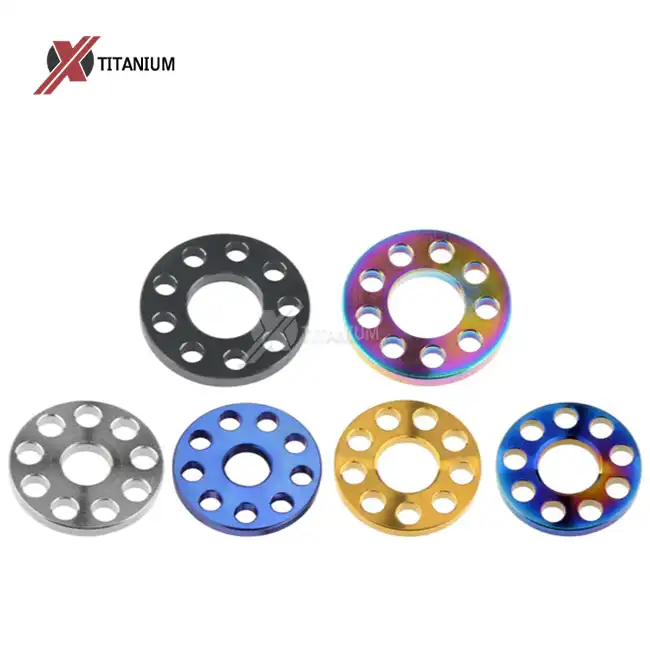
Understanding Titanium Drilled Flat Washers
Titanium Drilled Flat Washers are a complex step forward in fastening technology. They combine the natural benefits of titanium metal with changes to the design that solve specific problems in the industrial world. Most of the time, these parts are made from Grade 2 economically pure titanium or Grade 5 Ti-6Al-4V metal, both of which are known for their aerospace-grade performance. You can tell these washers apart from their solid peers by the precision-machined holes in the drilled design that are used for more than just fastener passing.
Material Properties and Manufacturing Standards
The outstanding performance of these washers comes from the basic properties of titanium. Titanium Drilled Flat Washers make assemblies lighter without lowering their load-bearing ability because they are about 45% stronger than stainless steel. The material keeps its shape at temperatures ranging from very cold (cryogenic) to very hot (600°F), so it can be used in places where thermal cycling is a problem. International standards, such as ASTM B348 for titanium bars and ASTM F467 for titanium fastener specs, are strictly followed during the manufacturing process. This makes sure that all production batches are the same in terms of size and metal quality.
Design Features and Engineering Advantages
In challenging situations, the drilled form is better than solid washers because it has real technical benefits. Pre-machined holes make it easier to find the lightest parts for systems where every gram counts, like in aerospace and car racing. These holes also make it easier for fluids to drain in naval settings, which keeps wetness from building up and starting crevice corrosion.
Additionally, the drilled design makes assembly easier because techs can use alignment pins or witness marks through the holes to make sure that parts are installed correctly. These washers are very useful in complicated assemblies that need to be both performance and efficiency-focused because they have less mass and better usefulness.
Applications of Titanium Drilled Flat Washers Across Industries
Because they are made of titanium, Titanium Drilled Flat Washers have special qualities that make them necessary in many fields where regular materials can't meet performance needs. When buying fastener parts for important systems, procurement teams and engineering departments can make better decisions when they know about these application-specific benefits.
Aerospace and Aviation Applications
Titanium Drilled Flat Washers are used by aircraft makers and sellers of flight parts in situations where safety, weight reduction, and dependability are all important. These washers are used all over the aircraft, but they're most common in composite panel mounts. They keep bolt heads from damaging carbon fiber strands and eliminate the risk of galvanic corrosion. These are used in engine parts in high-temperature areas where different materials need fasteners that can keep their clamping force through repeated heating processes because of differences in thermal expansion.
The strict certification requirements of the flight industry, such as AS9100 quality management standards, perfectly match the traceable production methods that trustworthy titanium sources keep up. Maintenance workers also benefit from the performance of the material because Titanium Drilled Flat Washers don't rust even after years of being exposed to jet fuel, hydraulic fluids, and moisture in the air. This makes sure that important parts stay functional for as long as an airplane is in use.
Marine and Offshore Engineering
Titanium Drilled Flat Washers are important for naval uses because they are very resistant to corrosion in saltwater. Shipbuilders use these parts in places where stainless steel options would quickly break down, like in the hull sections, propulsion systems, and deck gear. Titanium Drilled Flat Washers are used in important structure links and process equipment on offshore oil platforms. If they fail, it could have terrible environmental and financial effects.
They are used in pump units and pipe systems that deal with high-salinity brines at high temperatures in desalination plants. In these situations, the drilled design is especially helpful because the holes keep the stored moisture from making oxygen-depleted zones that could otherwise start localized rusting. Titanium Drilled Flat Washers keep their shape even after years of being submerged in water continuously. This makes it easy to disassemble for repair work without having to deal with seized bolts, which can happen with lower-quality materials.
Chemical Processing and Petrochemical Industries
Chemical processing plants have harsh conditions where equipment has to deal with toxic chemicals, high temperatures, and mechanical stress all at the same time. Titanium Drilled Flat Washers are very important in heat exchanger connections, pressure tank assemblies, and pipeline flanges that deal with acids, alkalis, and chlorinated chemicals that are bad for metals. In petrochemical plants, they are used in reactor tanks and catalyst systems where degradation of the washer could make the product less pure or the catalyst less effective.
The material's inactive oxide layer heals itself when it gets broken, protecting against corrosion and making parts last much longer than with other materials. Process engineers like that these washers don't change size when the temperature changes. This keeps the seal compressed and stops fugitive leaks at flanged connections, which is important for worker safety and environmental compliance.
Medical Device Manufacturing
Because titanium is pure and biocompatible, Titanium Drilled Flat Washers can be used in medical settings where the contact between the material and human flesh or bodily fluids needs to be carefully managed. Because titanium can survive high temperatures in autoclaves without breaking down, surgical instrument makers use it in reusable tool assemblies that go through many rounds of sterilization. Implantable device makers use them in orthopedic parts like spine implants and external fixation systems because they are light and won't rust, which means they will work well for a long time inside the body.
Medical equipment makers use them in MRI-compatible devices because titanium isn't magnetic, so it doesn't interact with magnetic fields. Medical manufacturing has strict documentation needs, such as being able to fully track all materials and getting FDA-approved, which is in line with the quality systems that well-known titanium providers use as standard.
Titanium Drilled Flat Washers vs Alternative Materials: Making the Right Choice
Choosing the right washer material takes a thorough analysis of performance needs, environmental factors, and prices over the product's entire life. Titanium parts are more expensive to buy at first than parts made of other materials, but when you look at upkeep costs, repair costs, and what happens when they fail, Titanium Drilled Flat Washers often end up being the better choice.
Comparative Material Performance
The most common option is stainless steel washers, which are less expensive and offer good corrosion protection. However, pitting and crevice rust can still happen in chloride-rich settings, which makes stainless steel less useful for chemical and marine uses. Aluminum washers are lighter than other materials, but they aren't strong enough for high-stress situations and can rust when they're paired with different metals in electrical areas.
While nylon and polymer washers can help with electrical protection, they can't handle the wide range of temperatures or heavy loads that titanium does every day. Titanium's high strength-to-weight ratio is especially useful in flight systems, where every pound of weight loss saves fuel over the life of an airplane, which could more than make up for the higher material costs within a few months of use.
Drilled vs Solid Washer Configurations
In addition to choosing the right materials, buying teams must also decide whether drilled or solid Titanium Drilled Flat Washers will work better for their needs. Solid titanium washers have the most bearing surface area and a slightly better load distribution, which makes them better for very high-stress situations where weight is not important. When weight reduction, drainage, or assembly line are important, drilled designs are the best choice.
Depending on the hole size and washer size, the weight difference is usually between 15 and 30 percent. This is a big difference in systems with hundreds of Titanium Drilled Flat Washers. Even though titanium is naturally resistant to corrosion, the benefits of ventilation are especially useful in tight systems where moisture buildup could cause corrosion. The price difference between the two layouts is still not very big because the extra work that needs to be done for drilling is balanced out by the saves in material that come from taking out volume.
Procurement Considerations and Supply Chain Factors
Lead times for Titanium Drilled Flat Washers depend a lot on how complicated the specifications are, how many are needed, and how well the provider can meet those needs. Standard sizes that meet established measurement standards (DIN, ANSI, or ISO) usually ship within two to four weeks from reputable sources who keep stock on hand. Lead times may go up to 6 to 12 weeks for custom configurations that need specific hole patterns, special sizes, or specific metal grades. This is especially true for smaller amounts that need dedicated production runs. Minimum order numbers vary on the supplier's production powers, but for normal sizes, they are usually between 100 and 1,000 pieces.
For custom specifications, the minimums are higher because of the costs of setting up the order. When you buy more than 5,000 pieces, volume pricing structures often offer 15–25% price cuts. This makes consolidating purchases across multiple projects a smart financial move. Instead of looking for the cheapest unit price, it's better to build relationships with qualified suppliers who can provide full material certification, dimensional inspection reports, and reliable delivery performance. This is because problems in the supply chain or with quality can cost a lot more than the savings you might think.
How to Procure Titanium Drilled Flat Washers for Your Business?
To successfully buy Titanium Drilled Flat Washers, you need to pay equal attention to technical specs, seller qualification, and logistics. Because industrial purchasing choices involve more than one area, procurement managers have to deal with issues like quality control, engineering needs, and budgetary limitations all at the same time.
Supplier Qualification and Certification Requirements
Checking that providers have the right quality management certifications for your industry is the first step in finding approved ones. Customers in the aerospace industry should give more weight to providers that have AS9100 certification, which shows that they follow quality standards that are special to aerospace and go beyond ISO 9001. Companies that make medical devices need providers that are certified by ISO 13485 and have an established FDA register, if needed.
Buyers of chemicals and petrochemicals benefit when sellers keep pressure tank parts ASME certified. Aside from official certifications, you should also check the supplier's ability to track materials, with documentation lines that go from mill certificates for raw materials to inspection reports for final products. Before committing to production orders, ask for samples of normal certification packages to check how thorough the paperwork is. Technical support skills are also an important qualification factor, especially for unique uses where help with choosing materials or improving designs is needed in addition to just supplying parts.
Customization Options and Technical Specifications
Standard Titanium Drilled Flat Washers measurements follow well-known patterns, but many uses can benefit from being customized to get better performance or make the building process easier. Customization requests often include specific hole diameter and positioning to match assembly features, exact thickness needs to ensure accurate spacing in stacked setups, and surface finish requirements that range from "as machined" to "polished" or "passivated." When you give specific custom requirements, you should include detailed models that clearly show dimensional limits and list which features are important and which are reference dimensions.
Choosing the right material grade affects both performance and cost. For example, Grade 2 commercially pure titanium is less expensive and has better corrosion protection, while Grade 5 Ti-6Al-4V is stronger and better for high-stress uses. When you first talk about number needs, be honest, because production planning is very different for prototype amounts of less than 100 pieces and production volumes of more than 10,000 pieces. Suppliers who work together can often suggest changes to the design that make making easier without affecting the functionality. This can save money and time by cutting down on wait times and costs.
Logistics and International Trade Considerations
Total landed costs are affected by how well U.S. buyers who buy from foreign sources understand customs classifications and import taxes. Titanium Drilled Flat Washers usually come under HTS code 8108.90. The duty rates change depending on the country of origin and the trade deals that are in place. When deciding between domestic and foreign supply choices, you should think about the costs of customs brokerage fees, international shipping, and possible delays at ports of entry.
Pay attention to the packaging rules, especially for precision parts that could lose their accuracy in size or finish if they get damaged during shipping. Ask for packing methods that keep parts from touching each other, letting moisture in, and causing physical damage. Also, ask for clear labels that make the customs clearing and internal receiving processes easier. Letters of credit or staged payments tied to output goals are common ways to pay for things internationally. These are different from the net-30 or net-60 terms used in domestic contracts. Building ties with suppliers who know what the U.S. market wants in terms of quick contact, correct paperwork, and reliable delivery cuts down on problems that arise during ongoing procurement.
Best Practices for Using Titanium Drilled Flat Washers
The performance benefits of Titanium Drilled Flat Washers are at their best when they are installed and maintained correctly. Engineering teams and repair workers should know about material-specific issues that are different from how steel gear is usually handled.
Installation Guidelines and Torque Specifications
Titanium has special friction properties that need to be taken into account when installing fasteners to avoid galling, which is a type of sticky wear that can happen between titanium surfaces when they are under a lot of pressure. Avoid using copper-based anti-seize compounds on bolt threads and bearing surfaces because they can cause galvanic reactions. Instead, use anti-seize compounds made for titanium uses. Because titanium has a different elastic modulus than steel, torque requirements for Titanium Drilled Flat Washers are usually 10-15% lower than those for steel hardware of the same type.
The exact numbers rely on the size and grade of the fastener. For tightening, use torque tools that have been calibrated and follow the steps spelled out in the assembly instructions. This is especially important for flanged joints where even gasket compression is needed to make sure the seal works right. The Titanium Drilled Flat Washers' drilled holes should stay clear, since their usefulness depends on having holes that can drain and let air flow through them. When putting the parts together, make sure that the washers sit flat against the joining surfaces and don't cock or bind. If they don't, uneven loading can cause stress concentrations that weaken the joint.
Maintenance and Inspection Procedures
Titanium Drilled Flat Washers should be inspected regularly for signs of mechanical deformation, surface damage, or corrosion. Corrosion is still rare in properly described uses, though. If you see signs of the Titanium Drilled Flat Washers going into softer base materials, that means the clamping loads are too high or the washer width is too small for the job. At regular maintenance times, use torque verification to check the fastener's ability to hold its preload. If any links become loose due to vibration or temperature cycling, retighten them.
Use mild soaps and clean water to clean Titanium Drilled Flat Washers. Don't use rough cleaning methods that could scratch surfaces and make stress rust start points. In marine settings, rinsing with fresh water on a regular basis gets rid of salt layers that could eventually trap water and cause rust in certain areas. Systematically write down what was found during the check, keeping track of individual parts in important assemblies to look for trends that could mean there are problems with the design or that the operational conditions are higher than what was originally planned.
Replacement Criteria and Lifecycle Management
Set clear guidelines for change that are based on conditions that can be measured instead of random time periods. No matter how long they've been used, replace Titanium Drilled Flat Washers that have obvious distortion, cracks, or major surface damage. Any washer that has come open enough to let the joint move should be changed because work-hardening from repeated loading may have damaged the material's properties.
When used in places with high temperatures, checking the dimensions on a regular basis can show creep damage that means the part needs to be replaced before it stops working. Keep an inventory of spare parts for important uses, adjusting the amount of stock based on past usage and the time it takes to get parts from reliable sources. For parts that need to be taken apart every so often, you might want to use component rotation methods that spread out service exposure across your available inventory. This will help you get the most out of your parts' lifetime while still leaving some safety gaps.
Conclusion
When it comes to tough industrial uses where regular materials don't work, Titanium Drilled Flat Washers do a great job. Because they don't rust, are strong for their weight, and can be designed in a variety of ways, they are specified in the aircraft, marine, chemical processing, and medical device making industries. To do a good job of buying, you need to carefully screen suppliers, pay close attention to technical requirements, and know how transportation affects both total cost and delivery reliability.
For these parts to give their full lifecycle value, they need to be installed correctly and maintained in a planned way. Titanium Drilled Flat Washers have been used successfully in industry for decades, making them a tried-and-true solution for engineering teams and buying professionals who want to improve the performance of assemblies while keeping costs low over time. Spending money on good parts from approved sources pays off because they need less upkeep, are serviced more often, and don't break down early, which can disrupt operations and put people's safety at risk.
FAQ
What advantages do titanium drilled flat washers offer over stainless steel alternatives?
In chloride-rich settings where stainless steel develops pitting and crevice corrosion, Titanium Drilled Flat Washers offer better corrosion protection. Compared to steel, they cut the weight of the assembly by about 45% while keeping the same level of strength. The material doesn't break down when exposed to a wider range of chemicals and can handle higher temperatures. Titanium has higher starting costs, but lower lifetime costs because it lasts longer and needs to be replaced less often.
Can these washers withstand high-temperature applications?
At temperatures up to 600°F, Titanium Drilled Flat Washers keep their mechanical features and shape, which is more than most kinds of stainless steel can do. They work consistently even after being heated and cooled many times without deforming or changing in a way that makes the binding force weaker. Titanium can be used in applications that need frigid temperatures because it stays flexible at very low temperatures, when many other materials break.
What are typical lead times for custom orders?
Standard setups usually ship between two and four weeks from providers who keep stock. Lead times can go up to 6 to 12 weeks based on the production queue and the amount ordered if the customer specifies specific sizes, hole patterns, or material grades. Project delays can be avoided by building relationships with qualified providers and planning procurement timelines around these facts. Orders in bulk may be able to get faster arrival times.
Partner With Chuanglian for Your Titanium Drilled Flat Washer Needs
Baoji Chuanglian New Metal Material Co., Ltd. has been making precise titanium parts for difficult businesses around the world for more than ten years. As a provider of Titanium Drilled Flat Washers based in Baoji City, which is known around the world as the "City of Titanium," we have strict quality control measures in place at every stage of production, such as ISO certifications and strict inspection processes. With our advanced CNC cutting and dedicated technical support team, we can turn your specs into parts that meet the strictest dimensional and metallurgical standards.
We know how hard it is for companies in the aerospace, marine, chemical processing, and medical device industries to get the supplies they need. That's why we offer flexible customization options, open communication, and reliable delivery plans that help you meet your project deadlines. Our team provides consistent quality backed by full certification packages, whether you need a small number of prototypes for testing or a lot of production amounts with full material tracking documentation. You can email our technical experts at info@cltifastener.com or djy6580@aliyun.com to talk about your needs for Titanium Drilled Flat Washers, get detailed quotes, or find out how our production knowledge can help you make the best parts for your needs.
References
1. American Society for Testing and Materials. (2021). ASTM F467: Standard Specification for Nonferrous Nuts for General Use. West Conshohocken, PA: ASTM International.
2. Boyer, R., Welsch, G., & Collings, E.W. (2019). Materials Properties Handbook: Titanium Alloys. Materials Park, OH: ASM International.
3. Donachie, M.J. (2020). Titanium: A Technical Guide, 3rd Edition. Materials Park, OH: ASM International.
4. International Organization for Standardization. (2022). ISO 7093: Plain Washers—Large Series—Product Grade A. Geneva: ISO Standards.
5. Lutjering, G. & Williams, J.C. (2018). Titanium: Engineering Materials and Processes, 2nd Edition. Berlin: Springer-Verlag.
6. Schutz, R.W. & Thomas, D.E. (2021). Corrosion of Titanium and Titanium Alloys in Industrial Applications. In Corrosion: Materials (Vol. 13B, pp. 252-299). Materials Park, OH: ASM International Handbook Committee.
Learn about our latest products and discounts through SMS or email