- English
- French
- German
- Portuguese
- Spanish
- Russian
- Japanese
- Korean
- Arabic
- Greek
- German
- Turkish
- Italian
- Danish
- Romanian
- Indonesian
- Czech
- Afrikaans
- Swedish
- Polish
- Basque
- Catalan
- Esperanto
- Hindi
- Lao
- Albanian
- Amharic
- Armenian
- Azerbaijani
- Belarusian
- Bengali
- Bosnian
- Bulgarian
- Cebuano
- Chichewa
- Corsican
- Croatian
- Dutch
- Estonian
- Filipino
- Finnish
- Frisian
- Galician
- Georgian
- Gujarati
- Haitian
- Hausa
- Hawaiian
- Hebrew
- Hmong
- Hungarian
- Icelandic
- Igbo
- Javanese
- Kannada
- Kazakh
- Khmer
- Kurdish
- Kyrgyz
- Latin
- Latvian
- Lithuanian
- Luxembou..
- Macedonian
- Malagasy
- Malay
- Malayalam
- Maltese
- Maori
- Marathi
- Mongolian
- Burmese
- Nepali
- Norwegian
- Pashto
- Persian
- Punjabi
- Serbian
- Sesotho
- Sinhala
- Slovak
- Slovenian
- Somali
- Samoan
- Scots Gaelic
- Shona
- Sindhi
- Sundanese
- Swahili
- Tajik
- Tamil
- Telugu
- Thai
- Ukrainian
- Urdu
- Uzbek
- Vietnamese
- Welsh
- Xhosa
- Yiddish
- Yoruba
- Zulu
What is a titanium anode plate used for?
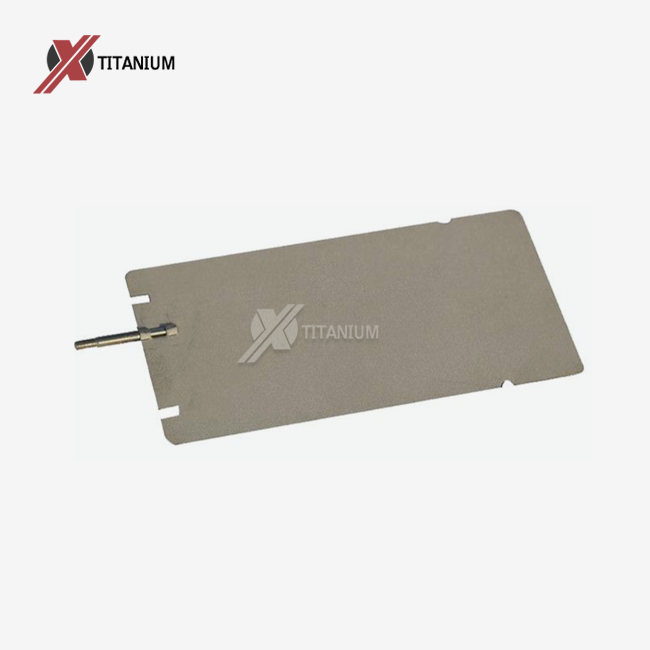
When talking about solid electrochemical solutions for tough industrial settings, titanium anode plates stand out as one of the best options. A titanium anode plate is a very pure titanium base that is covered with electrocatalytic metal oxides like Platinum (Pt), Ru-Ir, or MMO. These oxides are meant to make it easier for electrons to move during electrochemical processes. These dimensionally stable anodes (DSAs) are mostly used in electroplating, water treatment, cathodic protection, and electrolytic production. They solve important operating problems like electrolyte contamination, high energy use, and having to change equipment often. Because they don't rust and last a long time, they are essential in the petrochemical, naval, and high-end industrial industries.
Understanding Titanium Anode Plates: Definition and Core Functions
Material Composition and Structure
A titanium anode plate is made up of a base made of commercially pure titanium, usually ASTM B265 Grade 1 or Grade 2. When you mix their high mechanical strength with their high rust resistance, you get a stable base that lets the system last longer. To get the right mechanical properties and surface features, the base goes through a series of precise production steps, such as cold rolling, hot rolling, annealing, and pickling.
The electrocatalytic layer on the surface of these plates is what makes them different from plain titanium sheets. Advanced heat decomposition or electrodeposition methods attach layers of valuable metal oxides to the titanium surface in a way that can't be removed. For chlorine evolution, common coating formulas are Ru-Ir mixtures, Iridium-Tantalum mixtures for oxygen evolution, and Pt coats for specific uses. Coatings are usually between 2 and 10 micrometers thick, and their thickness is carefully set to balance how well they work as catalysts with how long they last.
Electrochemical Working Principles
Helping oxidation processes happen on the electrode surface while keeping the structure strong is what these anodes do for a living. When electricity flows through the electrolyte solution, electrons are freed at the anode surface through oxidation. The noble metal oxide layer greatly lowers the overpotential needed for these processes, which is the extra voltage that is needed above the thermodynamic minimum. When compared to traditional anode materials, well-designed systems use 10–20% less power, which means that this drop directly saves energy.
Key Performance Characteristics
Due to their dimensional stability, these sensors will always have the same distance between them throughout their useful life. The gap between the anode and cathode gets bigger as time goes on with traditional graphite anodes. This makes the electrical resistance higher and the energy use higher as well. Titanium-based anodes completely get rid of this issue, and their performance stays the same from the time they are installed until the end of their stated service life, which can be anywhere from 2 to 10 years depending on how they are used.
A good titanium anode's skills are based on a number of scientific factors. Specifications for current density usually cover a range of 100 to 2000 amps per square meter, which covers both low-intensity uses and high-throughput industrial processes. It can work in temperatures ranging from -10°C to 80°C, which is most industrial electrochemical settings. Because the layer is chemically stable, it can be used in a lot of different pH levels, from very acidic copper electrowinning solutions to alkaline chlor-alkali electrolytes.
Material testing procedures make sure that the quality of each output batch is the same. Testing for hardness makes sure that the heat treatment and covering stick well. Bending studies show that the base is flexible and the coating is flexible when mechanical force is applied. Hydrostatic testing proves that the structure is strong enough for use in pressure vessels. The main thing that procurement teams worry about is accuracy across multiple orders and building long-term ties with suppliers. These strict quality control measures help them do that.
Primary Applications of Titanium Anode Plates Across Industries
Water Treatment and Purification Systems
Municipal water treatment plants and industry wastewater treatment plants are two of the main places where titanium anode plates are used. In electrochlorination systems, these anodes turn salty water straight into chlorine or hypochlorite. This disinfects the area without the dangers of moving and storing chlorine gas. The method effectively gets rid of pathogens in drinking water systems, cooling towers, and swimming pools.
Titanium anodes are used in electrocoagulation to break up particles in suspension and contaminants that are dissolved in wastewater streams. The electrochemical oxidation method breaks down persistent organic toxins that can't be treated biologically. This makes these systems very useful for treating effluent from the chemical, textile, and pharmaceutical industries. In electrodialysis systems used in desalination plants, titanium anodes are used because they don't rust in salty settings and keep working well for a long time.
Electroplating and Metal Finishing Operations
For precise electroplating to work, the anodes must distribute current evenly and keep the electrolyte's chemistry fixed. These properties are exactly what copper, nickel, zinc, and valuable metal plating processes need from titanium substrate anodes that have been covered with the right catalytic layers. PCB factories need these anodes to make sure they can keep the tight size limits needed for modern electronics. In these cases, even small changes in the thickness of the metal can affect how well the circuit works.
Big-format titanium anodes that can handle high current levels over big surface areas are used in continuous galvanizing lines for making steel sheets. The physical stability stops hot spots or uneven covering thickness from forming, which would lead to quality problems in the final product. Manufacturers of automotive parts like the longer service life because it means they don't have to stop production as often to change the anodes. This directly improves the total efficiency measures of the equipment.
Cathodic Protection Systems
Seawater and soil conditions are always a threat to marine buildings like offshore platforms, pipes, and storage tanks. Using titanium anodes in impressed current cathodic protection (ICCP) systems stops rust reliably and for a long time. Because the anodes don't break down easily when exposed to salt, they work great in seawater situations where regular steel anodes would fail quickly.
Pipeline owners like how predictable the performance is because it makes planning repairs and keeping up with regulations easier. Because the electrical properties are fixed, the safety current needs will stay the same for the whole system's design life. This means that the rectifier doesn't need to be adjusted very often. Because poisonous anode consumption products don't pollute the land or groundwater around storage tank farms that hold chemicals or petroleum products, they are safer for the environment.
Electrolytic Production Processes
Titanium anodes are used in the electrolytic processes of chemical factories that make chlorine, caustic soda, hydrogen, and other metal compounds. Most chlor-alkali plants that used membrane or diaphragm cell technology have switched to dimensionally stable anodes because they use less energy. The lower cell voltage has a direct effect on the economy of production, since energy is a big part of the cost of doing business.
Hydrometallurgical operations that use electrowinning to get copper, nickel, cobalt, and other non-ferrous metals rely on titanium anodes to keep lead poisoning from happening, which was a problem with older lead-alloy anode technology. Getting rid of anode sludge lowers the cost of product cleaning and the amount of upkeep that needs to be done. It also helps meet stricter environmental rules about heavy metal emissions.
Comparing Titanium Anode Plates with Alternative Solutions
Performance Against Graphite Anodes
Traditional graphite anodes are cheap to buy, but they have a lot of problems that titanium-based options don't have. Graphite loss rates depend on the current density and the make-up of the solution, but on average, erosion is between a few kilograms and tens of kilograms per ton of output. Because they keep using them, they need to be replaced often, which means that the materials and work needed to change the anode cost money over time.
When used normally, titanium anode plates with the right coats don't lose much of their strength, so they don't need to be replaced for years at a time. The dimensional stability keeps the electrode shape constant, which stops the cell voltage from slowly rising as graphite anodes wear away. For medium to high current density uses, the higher original investment is usually recouped within the first year of operation thanks to energy savings.
When it comes to the environment, titanium options are becoming more and more popular. When graphite is used, carbon particles are released into the air. These particles contaminate fluids and goods, which means they need to be cleaned and filtered more. This source of contamination is gone because there is no consumable anode material. This simplifies the process chemistry and makes the end product purer, which is very important for medicinal, food-grade, and electronics uses.
Evaluation of Different Coating Technologies
The covering formula has a big effect on how well the anode works in different electrochemical settings. Ru-Ir coatings work really well for chlorine generation because they have the best mix of catalytic activity and coating stability in electrolytes that contain chloride. These mixtures are most often used in chlor-alkali, electrochlorination, and saltwater electrolytic processes that make chlorine or hypochlorite.
When used in acidic settings, Iridium-Tantalum oxide coatings work better for oxygen evolution processes. Electrowinning processes that get copper, nickel, or cobalt out of sulfuric acid liquids need these layers to make sure they last as long as possible. The tantalum oxide part makes the coating more stable when it has to work continuously at a high current in acidic solutions, which are harsh circumstances.
Pt coatings are the most expensive choice for materials, but they offer the best corrosion protection and catalytic activity for certain uses. The extra cost is justified by the need for product purity and operating dependability in laboratory electrical research, pharmaceutical synthesis, and some medical device manufacturing processes. By knowing these differences, buying teams can perfectly match coating technology to the needs of the product, achieving the best possible cost-performance balance.
How to Choose and Procure the Right Titanium Anode Plate?
Defining Technical Requirements
The choosing process starts with a careful analysis of the features of your electrochemical system. The operating current density tells you how much titanium anode plate surface area you need for your process. The right coating recipe is based on the electrolyte makeup, which includes pH, temperature, and chemical components. Whether the process is continuous or intermittent changes how thermal cycle is handled and how well the coating sticks.
The physical measurements must fit the shape of your cell or tank and give enough space for the current to flow evenly. Standard plate forms are useful for many things, but custom shapes often work better with the machinery that is already in place. Mesh layouts have more surface area per unit volume, which is good for small setups or designs that need to be very efficient. For mounting holes and electrical connections to work with existing buswork and support structures, your engineering team and the provider need to work together.
Quality licenses and paperwork that shows where materials came from protect against low-quality materials that could make operations less reliable. The standards for titanium grades, methods for checking the makeup of coatings, and testing processes for performance should all be included in the specifications. In addition to general quality management systems, providers must show that they follow industry-specific certification schemes like AS9100 or ISO 13485 for aircraft, medical, or other highly regulated uses.
Evaluating Supplier Capabilities
Beyond product specs, choosing the right seller has a big effect on the long-term success of a project. The ability of a provider to manufacture things determines whether they can regularly meet the technical needs of your application. Whether it's thermal decomposition, electrodeposition, or a different way, the technology used to apply the coating affects how regular it is, how well it sticks, and how long it lasts. Batch-to-batch accuracy is usually better in places that use advanced process controls and automatic coating systems.
When putting titanium anodes to use in new applications or making current systems work better, technical help becomes very important. Suppliers who know a lot about electrochemical engineering can give advice that is relevant to an application, help with system design factors, and fix performance problems. This consultative method works especially well for complicated setups with lots of electrochemical processes or tough working conditions.
Quality assurance systems provide confidence in long-term supply relationships. Suppliers who use thorough testing methods, such as rapid life testing, coating adhesion verification, and electrical performance validation, show that they are dedicated to providing consistent product quality. Material tracking systems keep track of where the raw materials come from, how they are processed, and the results of inspections for each batch of production. This way, if there are any performance problems during service, the root cause can be found.
Cost Considerations and Total Ownership Analysis
Unit price comparisons show you the starting costs, but total cost of ownership analysis gives you a more true picture of the economy. The initial investment includes not only the cost of the anode itself, but also the cost of installation, electrical hookups, and any changes to the system that are needed to make it work with the anode. Because they are stable in size and last a long time, they don't need to be replaced as often as edible options. This saves money on materials over time and keeps production running while replacements are being made.
Improvements in energy efficiency save money on operations for the whole life of the anode. Good catalytic coatings have lower overpotential, which directly means they use less energy, which is usually the biggest cost of running electrochemical processes. Figuring out how much money you'll save on energy each year by looking at how much your system uses, how long it runs, and the cost of electricity in your area helps you get approval for a major investment.
Maintenance costs go down in two ways: direct work saves come from not having to change anodes as often or at all, and indirect benefits come from the process being more stable. Stable cell voltage is maintained by electrode shape that stays the same. This makes process control easier and reduces the need to make frequent parameter changes. Getting rid of the waste products that come from the anode lowers the pollution of the electrolyte, which increases the life of the solution and lowers the cost of replacing chemicals.
Maintenance Tips and Maximizing Titanium Anode Plate Lifespan
Routine Inspection Protocols
Setting up regular check plans keeps small problems from getting worse and turning into major failures that stop production or need emergency replacements. Damage to the coating, mechanical wear, or deterioration of the fastening tools can be seen visually before they affect the electrochemical performance. Finding discoloration, surface roughening, or areas of uncovered base can help you spot covering degradation early on.
Electrical resistance readings show how well the layer is holding up over time. Gradual rises in cell voltage at a steady current suggest that the covering is wearing away or getting dirty, which stops the catalyst from working properly. By comparing readings from different anodes in the same system, units that aren't working well can be found and fixed. Keeping track of these data provides a performance standard that helps with planning replacements and predictive maintenance.
Operating Parameter Optimization
By keeping the current density within the manufacturer's guidelines, you can keep the layer from failing too soon due to too much heat or electrochemical stress. Operating well below the rated current density wastes the investment in the titanium anode plate, and operating above the values speeds up decline and shortens the service life. Controlling the temperature keeps the coating from coming apart from the pressures of thermal cycling. This is especially important for processes that start up and shut down often.
Taking care of the electrolyte makes the anode last longer and improves the system's general performance. Keeping the pH levels in the right range stops coatings from breaking down faster in very acidic or basic situations. Controlling contaminants gets rid of species that damage catalytic sites or encourage localized rusting. By checking the electrolyte makeup on a regular basis, you can find drift from the ideal parameters before they start to show signs of performance degradation.
Troubleshooting Common Issues
Scale layers and organic fouling that build up during normal function can be removed by physical cleaning. Cleaning methods that are specific to the electrolyte keep the catalytic layer from getting damaged and get rid of contaminants effectively. Mineral scales that build up in hard water can be removed by acidic treatments. Cleaners that are alkaline get rid of biological films in systems that treat wastewater. Chemical cleaning can be paired with mechanical methods like soft brushes or low-pressure water jets that don't damage the covering surface.
Even current distribution across the anode surface stops burning in certain areas, which can lead to failure starting points. Even current flow can be achieved by making sure the electrodes are spaced correctly, the liquid flows well, and the electrical contact resistance is checked. During operation, thermal imaging finds hot spots that need to be looked into and fixed before they cause lasting damage.
A rise in voltage at a steady current is often a sign of a covering failing, a dirty surface, or a problem with the electrical contact. Systematic study can tell the difference between these reasons, which helps with taking the right correction action. Localized damage to the covering is usually caused by mechanical contact, thermal shock, or mistakes in the manufacturing process. Small damaged parts may keep working for a long time without changing how well the whole system works. Abnormalities in gas evolution, such as too many bubbles, an odd gas makeup, or less gas output, show changes in electrochemical performance. These signs could mean that the coating is wearing off, the electrolyte is contaminated, or there are problems with how the current is being distributed. Electrochemical diagnostic methods, such as cyclic voltammetry and electrochemical impedance spectroscopy, give a full picture of the anode's health and performance, which helps with choices about whether to keep it working or replace it.
Conclusion
Titanium anode plates are an advanced technology that has been used for a long time and has been shown to work well in a wide range of industry electrochemical settings. Because they are stable in size, work well as catalysts, don't rust, and last longer than other anode materials, they have clear benefits over others. When you make a purchase decision after a thorough technical review that looks at application-specific needs, coating technology choice, supplier skills, and total cost of ownership, you get the best results that combine the initial investment with long-term practical benefits. As environmental rules get stricter and energy costs keep making manufacturing less affordable, process engineers and operations managers in charge of electrochemical production systems will value the efficiency and dependability benefits of improved anode technology even more.
FAQ
Q1: What determines the service life of a titanium anode plate?
A: Service life is mostly determined by the weather, working current intensity, coating thickness, and electrolyte makeup. Titanium anode plates usually work effectively for 2 to 10 years if they are used in the best circumstances and according to the manufacturer's instructions. Higher current levels speed up the breakdown of coatings, as do strong electrolytes, especially those that aren't in the right pH range. Extreme temperatures and heat cycling add to the stress.
Q2: Can titanium anodes be customized for specific applications?
A: Of course. Options for customization include board sizes, coating types, current density values, and fixing arrangements. Teams in charge of buying things should give specific details about the cell geometry, electrolyte chemistry, working settings, and any other needs that may come up. Engineers and experienced makers work together to make sure that the anode design is optimized for each specific application. This keeps costs low while still meeting performance standards.
Q3: How do coating types affect performance in different environments?
A: The choice of coating has a huge effect on speed and durability. Ru-Ir mixtures work really well in places where chlorine is released. Combinations of iridium and tantalum work well for oxygen generation in acidic situations. Pt finishes offer the highest level of security for specific uses. This is a very important design choice because matching the coating chemistry to the solution and reaction type will ensure the best catalytic efficiency and longest service life.
Partner with Chuanglian for Superior Titanium Anode Solutions
Baoji Chuanglian New Metal Material Co., Ltd. has more than ten years of experience making titanium products that meet the exact needs of the electrolytic process industries. From choosing the raw materials to the final review, our full quality control system makes sure that every titanium anode plate source provides consistent performance even in the most difficult operating conditions. We make anodes with high-purity Grade 1 and Grade 2 titanium plates and Ru-Ir, Pt, and MMO coatings that are carefully put to meet the needs of your application.
Our production options include unique sizes, current densities ranging from 100 to 2000 A/m², and covering thicknesses that are best for expected service lives of 2 to 10 years. Pickling, acid cleaning, and sandblasting are some of the advanced surface treatment methods used to get substrates ready for better coating bonding. Before they are shipped, they are put through strict testing routines to make sure they are hard, flexible, and have good electrochemical performance. We are located in Baoji City, which is known around the world as the "City of Titanium." This gives us access to a wide range of materials and allows us to do a wide range of cutting tasks using multiple CNC machines and other specialized processing equipment.
Procurement teams and process engineers can use technical advice services to choose the best anode designs for electroplating, water treatment, cathodic protection, and electrolytic production. Our dedication to making sure quality comes first, along with certifications that meet foreign standards, gives long-term business partnerships the trust they need. Get in touch with our technical team at info@cltifastener.com or djy6580@aliyun.com to talk about your unique needs and get full technical advice for your electrochemical system applications.
References
1. Trasatti, S., "Electrocatalysis: Understanding the Success of DSA," Electrochimica Acta, Vol. 45, Issue 15-16, pp. 2377-2385, 2000.
2. Chen, G., "Electrochemical Technologies in Wastewater Treatment," Separation and Purification Technology, Vol. 38, Issue 1, pp. 11-41, 2004.
3. Comninellis, C. and Vercesi, G.P., "Characterization of DSA-Type Oxygen Evolving Electrodes: Choice of a Coating," Journal of Applied Electrochemistry, Vol. 21, Issue 4, pp. 335-345, 1991.
4. Kuhn, A.T. and Chan, C.Y., "pH Changes at Near-Electrode Surfaces," Journal of Applied Electrochemistry, Vol. 13, Issue 2, pp. 189-207, 1983.
5. Schmuki, P., "From Bacon to Barriers: A Review on the Passivity of Metals and Alloys," Journal of Solid State Electrochemistry, Vol. 6, Issue 3, pp. 145-164, 2002.
6. Panizza, M. and Cerisola, G., "Application of Diamond Electrodes to Electrochemical Processes," Electrochimica Acta, Vol. 51, Issue 2, pp. 191-199, 2005.
Learn about our latest products and discounts through SMS or email