- English
- French
- German
- Portuguese
- Spanish
- Russian
- Japanese
- Korean
- Arabic
- Greek
- German
- Turkish
- Italian
- Danish
- Romanian
- Indonesian
- Czech
- Afrikaans
- Swedish
- Polish
- Basque
- Catalan
- Esperanto
- Hindi
- Lao
- Albanian
- Amharic
- Armenian
- Azerbaijani
- Belarusian
- Bengali
- Bosnian
- Bulgarian
- Cebuano
- Chichewa
- Corsican
- Croatian
- Dutch
- Estonian
- Filipino
- Finnish
- Frisian
- Galician
- Georgian
- Gujarati
- Haitian
- Hausa
- Hawaiian
- Hebrew
- Hmong
- Hungarian
- Icelandic
- Igbo
- Javanese
- Kannada
- Kazakh
- Khmer
- Kurdish
- Kyrgyz
- Latin
- Latvian
- Lithuanian
- Luxembou..
- Macedonian
- Malagasy
- Malay
- Malayalam
- Maltese
- Maori
- Marathi
- Mongolian
- Burmese
- Nepali
- Norwegian
- Pashto
- Persian
- Punjabi
- Serbian
- Sesotho
- Sinhala
- Slovak
- Slovenian
- Somali
- Samoan
- Scots Gaelic
- Shona
- Sindhi
- Sundanese
- Swahili
- Tajik
- Tamil
- Telugu
- Thai
- Ukrainian
- Urdu
- Uzbek
- Vietnamese
- Welsh
- Xhosa
- Yiddish
- Yoruba
- Zulu
What material is used for spring washers?
Spring washers serve as critical fastening components in industrial assemblies, designed to maintain tension and prevent loosening under dynamic loads and vibration. These essential hardware elements are manufactured from various materials, with selection depending on specific application requirements and environmental conditions. Common materials include carbon steel, stainless steel, copper, brass, and specialized alloys like titanium. Among these options, titanium spring washers have emerged as premium solutions for demanding applications requiring exceptional performance characteristics. The choice of material directly impacts durability, corrosion resistance, weight considerations, and overall system reliability in industrial settings.
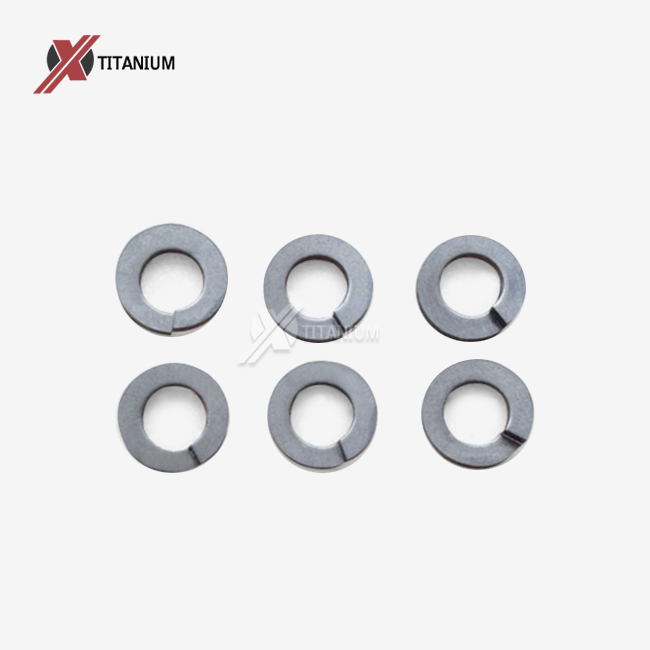
Understanding Spring Washer Materials: General Overview
Spring washers represent a diverse category of fastening solutions manufactured from multiple material types, each offering distinct advantages based on application requirements. The selection process involves careful consideration of mechanical properties, environmental factors, and cost-effectiveness to ensure optimal performance in specific industrial contexts.
Traditional Material Options
For general-purpose uses, carbon steel and stainless steel types are common spring washer materials. As long as the climate is normal, carbon steel is strong and inexpensive, while types of stainless steel like 304 and 316 are better at resisting corrosion. Copper and brass versions work great in places that need good heat and electrical conductivity, like in electrical systems and naval settings where galvanic compatibility is important.
Advanced Material Considerations
In expansion to standard choices, special metals and progressed materials unravel certain issues in the mechanical world. High-strength steels, stainless steels that have been reinforced by precipitation, and titanium amalgams made for cruel conditions are a few of these materials. A few of the most critical things that go into choosing a fabric are its energetic quality, adaptability, resistance to erosion, resistance to tall temperatures, weight, and common cost-effectiveness. Engineers require to see at all of these qualities in detail to make beyond any doubt that the machine works at its best in distinctive work environment settings and climate conditions.
Why Titanium Is a Superior Material for Spring Washers?
Titanium is an excellent material for spring washer uses in demanding industry areas because it has unique properties that make it the best choice. Because of its unique set of qualities, titanium is very useful in places where other materials don't work or are limited.
Exceptional Strength-to-Weight Characteristics
Titanium has an amazing strength-to-weight ratio that makes it much better than common materials like copper and steel. Titanium has a mass about 45% lower than steel but the same level of strength, so it can be used to make structures much lighter without affecting their mechanical performance. For aerospace uses, where every gram counts for saving fuel and improving speed, this trait is especially useful.
Superior Corrosion Resistance Properties
Titanium is very resistant to corrosion, which makes parts last a lot longer in harsh settings like chemical processing plants and naval systems. Unlike stainless steel, which can rust in chloride conditions and develop pitting and fissure corrosion, titanium stays strong even when exposed to harsh chemicals and saltwater. Because of this resistance, key assemblies need less upkeep and can go longer between service intervals.
High-Temperature Performance Capabilities
Titanium's functional stability stays the same at high temperatures, which makes it useful in a wide range of industries. The material stays strong at temperatures where other materials start to break down. This makes it good for high-performance car uses, chemical processing equipment, and exhaust systems. These temperature resistance features make sure that the spring action and holding force stay the same even when the temperature changes.
Comparing Titanium Spring Washers with Other Common Materials
Knowing the differences in how different materials work lets you make smart decisions about what to buy and how to choose the best parts for your needs. A thorough comparison shows the clear pros and cons of each material choice in different working conditions.
Titanium Versus Stainless Steel Performance
Testing titanium spring washers against stainless steel ones shows that titanium is better at resisting rust and is lighter, but it costs more at first. When used for normal tasks, stainless steel is strong and inexpensive, but it might not work as well in harsh settings with chlorides or high temperatures. Steel has a higher elastic stiffness, which changes the way springs work and needs to be taken into account during the planning process.
Copper and Brass Comparison Analysis
Copper and brass screws are great at conducting heat and electricity, but they are not as strong or resistant to rust as titanium. For some uses, these materials work well when they need to be galvanic compatible or have good thermal transfer qualities, but titanium is the best when it comes to tough mechanical conditions. A lot of what goes into the choice relies on what the product needs, especially when protection to corrosion and mechanical stress are important.
Cost-Benefit Analysis Considerations
The choice of material comes down to weighing the original costs against the long-term benefits in performance and the amount of upkeep that needs to be done. Although titanium costs more up front, its longer service life, lower upkeep needs, and better performance often make it worth the investment in important situations where failure would have big consequences or costs.
Applications and Industry Use Cases of Titanium Spring Washers
Titanium spring screws are widely used in many industries where regular materials aren't up to the task at hand. The usefulness and efficiency advantages of titanium in real-life situations are shown by these uses.
Aerospace and Aviation Applications
In important assemblies where weight reduction and dependability are of utmost importance, the aircraft industry frequently uses titanium spring washers. These parts keep the right clamping force on engine bearings, control surfaces, and structural links. They also help the car use less fuel by reducing weight. Because titanium isn't magnetic, it doesn't mess up critical guidance and avionics devices either.
Marine and Offshore Engineering
Marine settings are very difficult because of the saltwater, changing pressures, and acidic conditions that break down most connections very quickly. Titanium spring washers are very resistant to galvanic rust and keep their mechanical qualities when used underwater. These parts are very important for building offshore platforms, marine vehicle systems, and desalination equipment. If they break, there are big safety and financial risks.
Chemical and Petrochemical Industries
In places where chemicals are processed, workers are exposed to strong acids, bases, and toxic substances that break down common fastener materials. Titanium spring washers keep their integrity in these harsh conditions, making sure that seals are maintained properly and that dangerous leaks don't happen in pipeline links and pressure tanks. The inert nature of the material keeps sensitive chemistry processes from getting messed up while still offering reliable mechanical performance.
High-Performance Automotive and Racing
For racing purposes, parts need to be able to handle a lot of pressure, temperature changes, and mechanical stress while still being as light as possible. Titanium spring washers work great in places where regular materials wear out, like in exhaust lines, brake parts, and suspension systems. Lowering the vehicle's weight helps it move and perform better, which is important in competition settings.
Procuring Titanium Spring Washers: What B2B Buyers Need to Know?
To successfully find and buy high-quality titanium spring washers, you need to know what the provider can do, what the quality standards are, and what the technical requirements are so that the washers work perfectly in tough situations. To build solid supply ties, B2B buyers have to look at a number of factors.
Supplier Qualification Criteria
To find reliable providers, you need to look at their certifications, manufacturing skills, and quality control methods. Important certifications include AS9100 for aircraft uses, ISO 9001 for general quality management, and standards specific to the target market's business. Suppliers should show that they can do CNC cutting, have systems for tracking materials, and have a lot of testing facilities to make sure that the product meets standards and performs well.
Technical Specifications and Customization
Understanding the various specifications helps you choose the best product for each purpose. Some important factors are the grade chosen (usually Grade 2 for the best corrosion protection or Grade 5 Ti-6Al-4V for extra strength), the limits for size and shape, the surface treatments, and the load qualities. Customization choices include different sizes, surface finishes like polishing and anodizing, and special treatments to fit the needs of each application.
Quality Assurance and Testing
Suppliers you can trust give you full material approvals, dimensional records, and performance testing data to make sure your products are compliant. Chemical makeup analysis, mechanical property verification, and dimensional inspection records should all be part of the testing procedure. Sample evaluation programs let buyers check the performance features of a product before placing a full production order. This lowers the risk of buying something and makes sure the part fits the needs.
Conclusion
Material selection for spring washers has a big effect on how well and reliably an assembly works, as well as on the costs of running it in many different industry settings. Traditional materials like carbon steel and stainless steel work well for most tasks, but titanium spring washers are better for harsh settings that need high-temperature performance, excellent rust resistance, and weight optimization. Titanium is highly valuable in high-performance, chemical processing, aircraft, and marine uses because it has a unique set of qualities that make it useful in these areas. Titanium has higher starting costs, but its longer service life, lower upkeep needs, and better performance often make it worth the investment in critical uses where performance and dependability are very important.
FAQ
Can titanium spring washers replace stainless steel washers directly?
It is possible to change something physically, but because titanium has a lower elastic modulus than steel, engineering issues need to be taken into account. Because springs have different properties, designs may need to be changed or grades may need to be changed to get the same binding forces and spring action performance.
Why choose Grade 5 Ti-6Al-4V over Grade 2 for spring applications?
Grade 5 titanium has better yield strength and spring memory, which are both important for how well spring washers work. Even though Grade 2 titanium is very resistant to corrosion, it is not strong enough for demanding spring uses and may permanently weaken when under heavy loads.
What temperature limitations apply to titanium spring washers?
Grade 5 titanium spring washers perform reliably up to 400°C (750°F) while maintaining mechanical properties and spring characteristics. Beyond this temperature range, the material becomes less stiff and the stress relaxes, which could make the closing less effective and the structure less stable.
How can galling issues be prevented during installation?
Titanium tends to hurt when it is being installed, especially in threaded apps. Some ways to stop this from happening are to fix the surface with anodization, use special lubricants like molybdenum disulfide, and make sure you follow the right fitting steps to keep the surface from getting damaged and make sure it works well.
Partner with Chuanglian for Premium Titanium Spring Washer Solutions
Chuanglian is an expert at making high-performance titanium spring washers that are designed for tough industrial uses. Our modern CNC cutting and thorough quality control systems make sure that the quality of our products always meets the highest standards in the industry. We are in Baoji City, which is known as the "City of Titanium," and have been handling titanium for over ten years. We can provide unique solutions that include Grade 5 Ti-6Al-4V parts with different finishes and surface treatments. Our team can help you with scientific questions and reliable supply chain solutions whether you need aerospace-grade fasteners, marine-resistant systems, or chemical processing parts. Email our engineering experts at info@cltifastener.com or djy6580@aliyun.com to talk about your titanium spring washer needs and see what it's like to work with a reputable titanium spring washer maker.
References
1. "Titanium: Physical Metallurgy, Processing, and Applications," ASM International Handbook Committee, Materials Park, Ohio, 2015.
2. "Fastener Technology International: Spring Washer Performance Standards and Material Selection Guidelines," Industrial Fasteners Institute Publication, 2019.
3. "Corrosion Resistance of Titanium Alloys in Marine Environments," NACE International Standards Publication, Houston, Texas, 2018.
4. "Aerospace Fastener Material Requirements and Testing Protocols," Society of Automotive Engineers International Standard AS9100, 2020.
5. "High-Temperature Material Performance in Chemical Processing Applications," American Institute of Chemical Engineers Process Safety Guidelines, New York, 2017.
6. "Weight Optimization Strategies in Automotive Racing Applications Using Advanced Materials," Society of Automotive Engineers Technical Paper Series, Detroit, Michigan, 2021.
Learn about our latest products and discounts through SMS or email