- English
- French
- German
- Portuguese
- Spanish
- Russian
- Japanese
- Korean
- Arabic
- Greek
- German
- Turkish
- Italian
- Danish
- Romanian
- Indonesian
- Czech
- Afrikaans
- Swedish
- Polish
- Basque
- Catalan
- Esperanto
- Hindi
- Lao
- Albanian
- Amharic
- Armenian
- Azerbaijani
- Belarusian
- Bengali
- Bosnian
- Bulgarian
- Cebuano
- Chichewa
- Corsican
- Croatian
- Dutch
- Estonian
- Filipino
- Finnish
- Frisian
- Galician
- Georgian
- Gujarati
- Haitian
- Hausa
- Hawaiian
- Hebrew
- Hmong
- Hungarian
- Icelandic
- Igbo
- Javanese
- Kannada
- Kazakh
- Khmer
- Kurdish
- Kyrgyz
- Latin
- Latvian
- Lithuanian
- Luxembou..
- Macedonian
- Malagasy
- Malay
- Malayalam
- Maltese
- Maori
- Marathi
- Mongolian
- Burmese
- Nepali
- Norwegian
- Pashto
- Persian
- Punjabi
- Serbian
- Sesotho
- Sinhala
- Slovak
- Slovenian
- Somali
- Samoan
- Scots Gaelic
- Shona
- Sindhi
- Sundanese
- Swahili
- Tajik
- Tamil
- Telugu
- Thai
- Ukrainian
- Urdu
- Uzbek
- Vietnamese
- Welsh
- Xhosa
- Yiddish
- Yoruba
- Zulu
Will titanium screws set off a metal detector?
Titanium Bicycle Screws do trigger metal detectors, even though they aren't made of iron. Iron and steel are better at conducting electricity than titanium. However, security scanners can still find titanium screws because they are metal and have a density of 4.43 g/cm³. The screw size, how well the monitor is calibrated, and the security settings all affect how sensitive it is. These things are important for procurement workers to know when they are picking titanium parts for uses that need security clearance or sensitive detection methods.
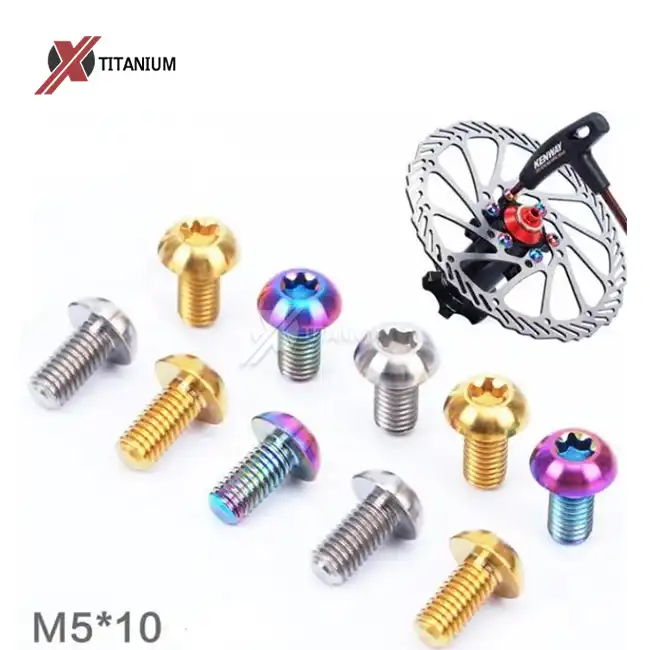
Understanding Titanium Screws and Metal Detection
Today's metal detectors use electromagnetic waves to find different types of metals, like titanium alloys that are used to make fine tools. If you want to know what will happen when you use titanium parts in safe places, you should know how these systems work.
Composition and Properties of Titanium Fasteners
Most titanium bike bolts are made of Ti-6Al-4V (Grade 5) metal, which is 90% titanium, 6% aluminum, and 4% vanadium. This material is very strong mechanically. Its tensile strength is between 895 and 1000 MPa, and its yield strength is around 828 MPa. The mass of the material is 4.43 g/cm³, which makes it lighter than steel pieces but harder.
How the monitor was made has a big impact on how accurate it is. High-end titanium screws use thread rolling technology instead of cutting. This keeps the grain structure of the cloth and makes it up to 30% more resistant to wear. The top layer becomes thicker after this cold-working method, which may influence how electromagnetic waves behave in tracking systems. In applications involving Titanium Bicycle Screws, this change can affect signal interaction and surface conductivity, making it important to consider material processing methods when precision tracking or electronic compatibility is required.
Metal Detector Technology and Titanium Response
Metal detectors use electromagnetic waves to find things that carry electricity. Titanium doesn't conduct energy as well as ferrous metals, but because it is a metal, it still leaves electromagnetic clues that can be found. Most security systems divide metals into two groups: ferrous, which is magnetic, and non-ferrous, which is not magnetic. Titanium does not contain iron.
A lot of things affect how sensitive the device is, like the size of the fastener, the frequency settings, and the tuning factors. Metal items bigger than certain sizes, usually things that weigh a few grams or more, can be found on the screens that people walk through at airports and government offices. Industrial metal detectors, which are used to check the quality of goods being made, have levels that are even more precise.
Real-World Detection Scenarios
Professional tests done in controlled environments have shown that titanium screws always set off tracking systems when there are enough of them around. When set to the normal levels of sensitivity, most commercial security scanners can pick up signals from a single 8-gram M6 titanium bolt.
But the chance of being found changes a lot based on where you are. When many small titanium screws are spread out in a piece, they may create electromagnetic fingerprints that are too strong to be picked up, even if none of the screws would normally set off an alarm.
Benefits and Key Features of Titanium Bicycle Screws for Industrial Use
When it comes to performance, titanium screws are better than metal ones. There are many reasons why they should be used in tough industrial areas, such as the fact that they are stronger and lighter. These benefits are even more important when buying professionals think about how much they will save in the long run and how reliable the operation will be.
Mechanical Performance Advantages
Titanium Bicycle Screws are better than other choices when it comes to strength-to-weight. Because it is elastically stiff, the material is better at damping shocks than steel. This lowers wear stress when the material is loaded and emptied many times. This quality is particularly helpful in airplanes and cars, where parts' reliability directly affects safety margins.
It doesn't rust, which is another great thing about it. Titanium naturally makes an oxide film that keeps it safe from damage from the outside for all time. Titanium stays in good shape for a long time, even in harsh chemical or sea settings, while coated steel screws may lose their coatings over time.
The substance works with live things, so it can be used in medical tools that need to be completely clean and not hurt them. Biocompatibility guidelines set by the FDA for titanium fasteners used in surgery tools or implanted devices are met without the need for any extra surface treatments.
Customization and Manufacturing Capabilities
Modern methods for preparing titanium give users a lot of options for making it fit their needs. With Physical Vapor Deposition (PVD) covering methods, you can add pretty colors like gold, rainbow, or black to the material without changing its structure or making it much thicker. The natural resistance to rust of the material is kept while these surface treatments make it easier to spot a brand.
These thread specs can meet the needs of many other standards, like ASTM B348; DIN 912; and ISO 7380. Custom thread forms and head configurations are made to fit the needs of each assembly while still getting the best performance from the material.
It is possible to make sure that the measurements are always right across production runs with the CNC tools we have now. Quality control systems use statistical process control to make sure that standards are followed to the letter. This is very important for uses that need exact fit and function characteristics.
Procurement Insights: How to Source Titanium Bicycle Screws Efficiently?
If you want to buy titanium screws, you need to know a lot about the market, what providers can do, and how to make sure the goods are good. When you work with titanium, you need to think about some things that you don't have to when you look for screws in other ways.
Supplier Evaluation and Qualification Criteria
The first step in a good source review is to see what the seller can make and how well they meet quality standards. Check out providers whose quality management systems are certified to ISO 9001 and also have other certifications, such as AS9100 for use in aircraft or ISO 13485 for medical products. The licenses show that methods for quality control and keeping track of things have been around for a long time and are needed for important tasks.
The quality of the product and how regularly it is given are directly linked to the skills of the tools used to make it. Suppliers with modern CNC cutting machines and automatic testing systems put a lot of emphasis on making sure their products are precise. When you use thread rolling tools instead of cut-thread tools, you can get better wear protection.
How stable the supply line is can be seen by how clear it is where the raw materials come from. There are trustworthy suppliers who work with well-known titanium mills and provide material papers that describe the metal's chemical make-up, mechanical properties, and how it can be tracked. This paperwork is a must for apps that need to meet legal requirements and be qualified in some way.
Cost Analysis and Value Considerations
The cost of the raw ingredients, how hard the process is, and how many are bought all affect the price of titanium pins. Even though titanium costs more up front than steel or metal alternatives, it is often chosen over those materials because it lasts longer and needs less maintenance.
Shopping in bulk can save you a lot of money when you need to buy a lot of something. There are many sellers who use tiered pricing to reward customers who buy in bulk and keep track of their stock. By setting up planned releases on blanket buy orders, you can keep prices fixed and make sure that materials arrive on time for production plans.
When you buy something from another country, the cost of shipping can add to the total cost. Titanium is very valuable for how heavy it is, so air freight is a cheap way to get it to where it needs to go quickly. While ocean freight is more expensive, it is a good choice for building up your expected inventory.
Maintenance, Longevity, and Practical Considerations for Titanium Screws
When titanium screws are put and cared for properly, they work better than when they aren't. Problems with common applications are also avoided. If you know what a material needs, you can make sure it lasts as long as possible and avoid costly failures in the field.
Installation Best Practices and Galling Prevention
Ti alloy is very slippery, so it needs to be put together in a certain way to keep it from galling or cold welding. To put titanium screws into aluminum or titanium threaded holes, you need to use good copper paste or chemicals that stop the screws from seizing up. These lubricants make it easier to take things apart after they are put together because they reduce friction.
To ensure proper torque factors, it is important to keep in mind that titanium is less flexible than steel. To keep things from stretching too much, it's important to follow the manufacturer's torque recommendations. For M5 bolts, these are generally between 4 and 6 Nm. When calibrated torque tools are used, they make sure that the right amount of preload is put on the object without going too far.
Thread contact estimates are very important for getting the most work done. Titanium is tougher than softer materials, so threads don't go as deep into it. To be safe, though, you can be sure that the shear strength reserves are enough if you do the math right.
Performance Monitoring and Replacement Indicators
Routine checks help find patterns of wear and damage so that repairs can be made before they become necessary. One early sign of danger is checking the surface for damage, rust, or warping. Titanium Bicycle Screws keep their look for as long as they are useful, which makes it very important to change how they look.
When you keep an eye on torque retention, you can see trends of tightening that could mean there are issues with the fitting or that parts are wearing out. Re-torquing plans rely on how often they need to be done and the weather, but because titanium is less likely to wear out, they usually need to be done less often than with steel choices.
When checking dimensions with precise measuring tools, wear patterns can be found before they start to affect function. Breakdowns don't happen out of the blue with this method, and it works with predictive repair plans to keep things going as smoothly as possible.
Conclusion
Titanium bike screws do set off metal detectors since they are metal and not magnets. When procurement workers know about this spotting trait, they can make better choices about which parts to use in applications that need to be secure. Titanium Bicycle Screws work better because they are strong for their weight, don't rust, and last a long time. This means that they are often worth using even if they could be found. If you want to get the most out of the system's performance and service life, you need to choose the right provider, install it correctly, and keep up with its maintenance plans.
FAQ
Will titanium screws consistently trigger all types of metal detectors?
Yes, titanium screws reliably activate most modern metal detection systems, including walk-through security scanners and industrial quality control equipment. The detection occurs because titanium, while non-magnetic, still conducts electricity and generates electromagnetic signatures detectable by contemporary scanning technology.
How do Gr5 titanium bicycle screws compare to stainless steel in strength?
Gr5 titanium screws exceed 316 stainless steel and Grade 8.8 steel in strength while maintaining superior strength-to-weight ratios. They exhibit slightly lower ultimate tensile strength than Grade 12.9 carbon steel but provide significantly better corrosion resistance and weight savings for demanding applications.
What installation precautions prevent galling with titanium fasteners?
Mandatory use of high-quality copper paste or anti-seize compounds prevents galling between titanium and aluminum or titanium threaded interfaces. Additionally, adhering to specified torque values using calibrated torque wrenches prevents over-tightening that can cause material damage or thread seizure.
Why choose rolled threads over cut threads for titanium bicycle screws?
Rolled threads preserve the material's grain structure by flowing rather than cutting the titanium, increasing fatigue resistance by up to 30%. This manufacturing method proves critical for cycling applications involving cyclic loading and vibration, where thread integrity directly impacts safety and performance.
Can titanium bicycle screws replace steel fasteners in all applications?
Titanium Bicycle Screws are useful for many things, like fixing frames, brake wheels, and engine parts. But if you want to use a high-impact suspension pivot, you might need steel wheels from a certain manufacturer that are designed to handle a certain amount of stress and load.
Partner with Chuanglian for Premium Titanium Bicycle Screws
Baoji Chuanglian New Metal Material Co., Ltd. has many titanium bicycle screws that are made to meet industry standards and are ready to meet your needs for precise bolts. We can always give high-quality parts because we have worked with titanium for more than ten years, use modern CNC machines, and have strict quality control procedures. Our expert team can help you with anything, whether you need a lot for production or just the right amount for a special use. They can help and give you advice on an individual level. You can email us at info@cltifastener.com or djy6580@aliyun.com to talk about your Titanium Bicycle Screws needs.
References
1. American Society for Testing and Materials. "Standard Specification for Titanium and Titanium Alloy Bars and Billets." ASTM B348-19.
2. Donachie, Matthew J. "Titanium: A Technical Guide, 2nd Edition." ASM International Materials Park, Ohio, 2000.
3. International Organization for Standardization. "Metallic Materials - Tensile Testing - Part 1: Method of Test at Room Temperature." ISO 6892-1:2019.
4. Lutjering, Gerd and James C. Williams. "Titanium: Engineering Materials and Processes." Springer-Verlag Berlin Heidelberg, 2003.
5. Peters, Manfred, et al. "Titanium Alloys for Aerospace Applications." Advanced Engineering Materials, Volume 5, Issue 6, 2003.
6. Rack, Henry J. and Qudrat-Ullah, H. "Titanium Alloys in Total Joint Replacement - A Materials Science Perspective." Biomaterials, Volume 27, Issue 7, 2006.
Learn about our latest products and discounts through SMS or email