- English
- French
- German
- Portuguese
- Spanish
- Russian
- Japanese
- Korean
- Arabic
- Greek
- German
- Turkish
- Italian
- Danish
- Romanian
- Indonesian
- Czech
- Afrikaans
- Swedish
- Polish
- Basque
- Catalan
- Esperanto
- Hindi
- Lao
- Albanian
- Amharic
- Armenian
- Azerbaijani
- Belarusian
- Bengali
- Bosnian
- Bulgarian
- Cebuano
- Chichewa
- Corsican
- Croatian
- Dutch
- Estonian
- Filipino
- Finnish
- Frisian
- Galician
- Georgian
- Gujarati
- Haitian
- Hausa
- Hawaiian
- Hebrew
- Hmong
- Hungarian
- Icelandic
- Igbo
- Javanese
- Kannada
- Kazakh
- Khmer
- Kurdish
- Kyrgyz
- Latin
- Latvian
- Lithuanian
- Luxembou..
- Macedonian
- Malagasy
- Malay
- Malayalam
- Maltese
- Maori
- Marathi
- Mongolian
- Burmese
- Nepali
- Norwegian
- Pashto
- Persian
- Punjabi
- Serbian
- Sesotho
- Sinhala
- Slovak
- Slovenian
- Somali
- Samoan
- Scots Gaelic
- Shona
- Sindhi
- Sundanese
- Swahili
- Tajik
- Tamil
- Telugu
- Thai
- Ukrainian
- Urdu
- Uzbek
- Vietnamese
- Welsh
- Xhosa
- Yiddish
- Yoruba
- Zulu
Where can I buy platinized titanium anodes for water treatment systems?
Finding a reputable source for high-quality electrolytic parts can have a big effect on how well and how long your water treatment system works. Platinized titanium anodes for water treatment systems can be bought from industrial material specialists, direct makers with a history of working with titanium, and trusted B2B shopping sites. In China's "City of Titanium," Baoji Chuanglian New Metal Material Co., Ltd. and other manufacturers offer custom-engineered solutions that are backed by strict quality control and international approvals. You can also find these parts at trade shows, professional groups, and well-known wholesalers that work in the petrochemical, naval engineering, and environmental fields. The key is to work with suppliers who can show they have scientific knowledge, keep production methods that can be tracked, and offer full help after the sale.
Understanding Platinized Titanium Anodes in Water Treatment Systems
Electrochemical water treatment has changed the way that businesses clean up wastewater, remove contaminants, and desalinate water. The platinized titanium anode is one of the most important parts of these devices.
What Makes Platinized Titanium Anodes Unique?
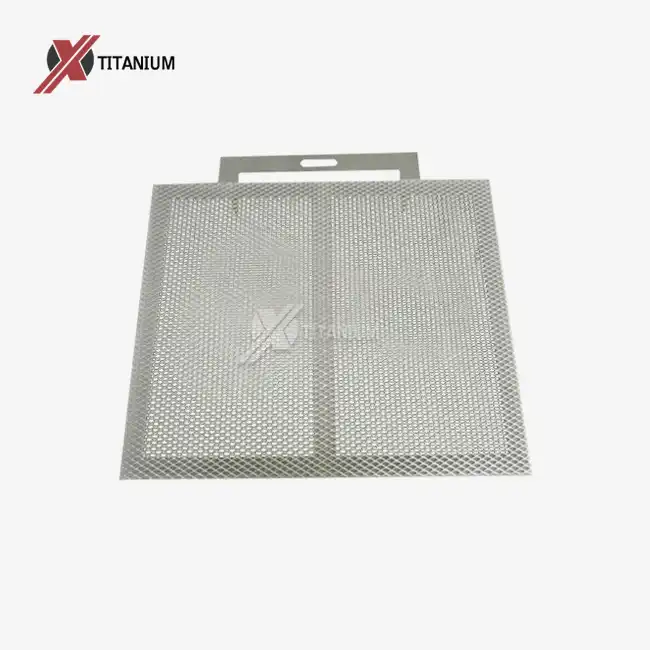
The anodes are made up of a very pure titanium base (usually ASTM Grade 1 or Grade 2) covered in a very thin layer of platinum (2 to 15 microns). Through the formation of a protected oxide layer, the titanium base gives the structure great strength and natural resistance to erosion. The platinum layer, on the other hand, has better electrocatalytic activity and greatly reduces the overpotential needed for electrochemical processes.
This combination fixes problems that water treatment companies keep having. Traditional graphite anodes break down quickly and add bits to the ions. Alternatives based on lead produce harmful sludge that needs to be disposed of in an expensive way. Even though solid platinum conductors work, they are too expensive to buy. Platinized titanium anodes are the best choice because they combine long-lasting performance with low cost.
Operating Principles and Manufacturing Excellence
The first step in making something is carefully preparing the titanium base by cold rolling, hot rolling, and heating it. Surface processes like pickling and acid cleaning make sure that the conditions are perfect for joining. Precision electroplating or heat decomposition are used to apply platinum. This makes a smooth, non-porous covering that covers the whole electrode surface.
To make sure the structure is solid, each anode goes through a full set of quality tests, including hardness checks, bending checks, and hydraulic pressure checks. Current density ranges from 1 to 100 A/dm², which makes it flexible for a wide range of treatment uses. The anodes keep their shape even when they are continuously used at temperatures up to 800°C. This makes sure that the electrode gap lengths stay the same over the course of their useful life.
Core Industrial Applications
These anodes are used in different ways by water treatment plants. They are used by municipal wastewater treatment plants to break down organic compounds and kill pathogens. Desalination plants depend on their high resistance to rust in saltwater to make chlorine and keep fouling from growing. Industrial process water systems use how well they work as catalysts to get rid of heavy metals and destroy cyanide.
Furthermore, these anodes are very important in electroplating, marine building cathodic protection systems, and the electrochemical synthesis processes used in pharmaceutical production. Because titanium has a high strength-to-weight ratio, these parts are very light. This makes them easier to place in complicated system designs while still performing well in harsh operating conditions.
Comparing Platinized Titanium Anodes with Other Anode Types
Choosing the right anode material has a direct effect on how well the system works, how often it needs to be maintained, and the total cost of ownership. Understanding the performance features of the different options helps procurement workers make smart choices that meet their unique business needs regarding platinized titanium anodes.
Material Performance Analysis
Even though graphite anodes are cheaper at first, they wear away quickly in harsh solutions. Carbon particles that are released during operation pollute treatment tubs, so they need to be filtered often and the anodes need to be replaced before they wear out. Because their dimensions aren't stable, the current flows unevenly, which leads to uneven treatment results.
Lead and lead-alloy anodes have been used for a long time in many electrochemical processes because they are easy to get and don't cost much. During operation, however, they produce lead dioxide sludge, which makes it hard to get rid of and increases the risk of heavy metal pollution in cleaned water streams. Regulatory forces are making it harder to use them in uses that are bad for the environment.
Mixed-metal oxide (MMO) anodes are a middle ground. They use ruthenium, iridium, or tantalum oxides as catalysts to coat titanium surfaces. They are reasonably electrochemically efficient and keep their shape, but their layer longevity is usually not as good as platinum's in high-current-density situations. MMO anodes work best when chlorine is evolved, but they don't work as well when oxygen is evolved or when organic matter is oxidized.
Long-Term Economic Considerations
When compared to other options, platinized titanium anodes require a bigger initial investment. Lifecycle cost study, on the other hand, shows that they are more cost-effective. If you take good care of your platinized titanium anode, it can work well for 10 to 15 years. On the other hand, graphite anodes may need to be replaced every 12 to 18 months.
Calculations of energy efficiency show that platinum has better catalytic activity than other materials, which means it lowers voltage by 15 to 30 percent. Because less power is being used, big practical savings are made, especially in industrial uses that run all the time. Getting rid of anode sludge lowers the cost of filters and the time needed to clean the system.
Application-Specific Selection Criteria
The chemical makeup, temperature ranges, and current density needs of water treatment settings are very different. Chlor-alkali production and seawater electrolysis like platinum surfaces because they are good at getting rid of chlorine and don't rust in saltwater. The ability of platinum to make hydroxyl radicals helps with the cleanup of organic wastewater by oxidizing persistent organic pollution.
Platinized titanium anode design is especially useful for systems that work at very high temperatures or pH levels. While the platinum layer stays stable across the whole pH range, the titanium base keeps its tensile strength at temperatures where other materials would break down.
How to Choose a Reliable Supplier for Platinized Titanium Anodes?
Choosing the right manufacturer is important for both the instant success of the purchase and the long-term supply of operating reliability and expert assistance regarding platinized titanium anodes.
Essential Certifications and Standards Compliance
Making sure that foreign material standards are followed is the first step in quality assurance. Manufacturers with a good reputation keep their ISO 9001 certification, which shows that they use organized quality management practices. AS9100 certification, which shows advanced process controls and traceability standards, is usually held by companies that work with aircraft and defense uses.
In order to meet the requirements, material makeup testing must be done. As required by ASTM B265, suppliers should show mill test certificates that prove the titanium grade specs. Measurements of the thickness of the platinum coating, which are usually confirmed by X-ray fluorescence analysis, make sure that the coating meets the requirements. Ask for proof that tests were done to see how regular the coating is and how strong the bonding is.
Different applications have different rules that must be followed for each business. Companies that make medical devices need providers that have biocompatibility certifications and can make things in clean rooms. NACE International corrosion engineering guidelines may be needed for chemical processing uses. RoHS compliance and conflict mineral statements are becoming more and more important for environmental uses.
Manufacturing Capabilities and Customization Options
Configurations for water cleaning systems don't usually match normal off-the-shelf sizes. Check to see if possible sources can make unique geometries like mesh patterns, tubular designs, and complicated three-dimensional shapes. Advanced fabrication skills let you get the best current spread for your unique reactor design.
Assessing production potential is a good way to make sure that the supply chain works well. Companies that have CNC machining centers, specialized welding systems, and electroplating lines just for handling titanium show that they are committed to the product category. Ask about normal wait times for everything from making a sample to making a lot of them. Making titanium parts usually takes 8 to 12 weeks, based on how complicated the order is.
The ability to provide technical help sets special sellers apart from commodity vendors. Look for companies that hire metallurgical engineers and electrical experts who can give you advice based on your specific needs. Besides just supplying the product, being able to do finite element analysis for current distribution modeling or suggest changes to the coating thickness based on your working factors adds a lot of value.
Commercial Terms and Supply Chain Considerations
Different providers have very different minimum order amounts. Some makers will accept prototype numbers of 1 to 5 pieces for testing, while others want at least 50 to 100 units to be committed to. Clarify MOQ needs early on in the seller review process to keep expectations from being misaligned.
The way these parts are priced reflects how custom they are. Unit costs go down a lot as the number of orders goes up. Usually, between test sizes and production orders, unit costs go down 20–40%. Ask for thorough quotes that list the prices of the materials, the specs for the coating, and any special processing needs. If a price is much lower than the market average, it's usually a sign that the quality of the materials has been weakened or that the coating isn't strong enough.
When buying things from other countries, you should give logistics and shipping trustworthiness a lot of thought. Manufacturers who have done a lot of exporting before provide a lot of paperwork, like business bills, packing lists, and certificates of origin. Having established links with freight forwarders who specialize in industrial materials makes it easier to get these fine parts through customs and make sure they are handled correctly.
For special orders, payment terms usually include a 30% to 50% deposit, with the rest due when the job is done or when shipping papers are presented. Letters of credit protect both parties when they start working with a new source. Quality hold-back clauses, which keep 5–10% of payment until the performance is verified in the field, protect buyers while showing fair business terms.
Maintenance Tips and Lifespan Optimization for Platinized Titanium Anodes
To get the most out of your investment, you need to set up routine maintenance procedures and operating tracking systems for platinized titanium anodes.
Routine Cleaning and Inspection Procedures
Scale growth and surface pollution make electrochemistry less effective over time. Set up cleaning plans that take into account the nature of your water and how it is used. Most commercial uses are better off with checks every three months and cleaning as needed.
To keep the platinum layer in good shape, cleaning should only use gentle ways. Mild acid solutions, like those with 5–10% hydrochloric or sulfuric acid, can clear calcium carbonate and metal oxide layers without hurting the platinum layer. Ultrasonic cleaning gets rid of all contaminants from mesh patterns and areas that aren't visible. Do not use wire brushes or motorized scrapers on the valuable metal coating because they can damage it.
Visual analysis shows early warning signs of covering wear. Platinum layers have a unique silver-gray color that is spread out evenly on the surface. Patterns of darkening or coloring may show where the layer is wearing away or where contaminants are building up. The exposed titanium base looks darker and needs instant attention because continuing to operate will speed up the delamination of the coating.
Operational Parameters and Performance Monitoring
Working within certain levels of current density stops coatings from failing too soon. When you go over the highest suggested current densities, which are usually 100 A/dm² for water treatment uses, you get too much heat and electrochemical breakdown happens faster. Set up reliable systems to check the current and set up methods for automatic shutdown if parameters change out of accepted ranges.
Insights into performance trends can be gained from watching voltage. Gradual voltage rises over time are a sign that the layer is wearing off or scale is building up, which needs to be fixed. Unexpected voltage jumps could mean that there are problems with the electrical connections or that a covering is failing in one area, which needs to be checked right away.
Electrolyte chemistry control has a direct effect on how long an anode lasts. Keep the pH levels within the ranges suggested and don't add any contaminants that could harm the platinum catalyst. Heavy metals, some chemical substances, and fluoride ions can weaken the activity of catalysts. Protect the parts of your electrochemical system by using the right preparation steps.
Extending Service Life Through Best Practices
The startup and stop processes have a big effect on how long a layer lasts. If the anodes aren't fully submerged in the solution, don't apply full current to them because dry operation causes warming in one area. Set up steady current ramping when the system first starts up, and give it 5 to 10 minutes to reach working conditions. In the same way, slowly lower the current during the stop process.
For extra anodes and seasonal operations, the way they are stored is important. Keep anodes away from acidic atmospheres and in clean, dry places. Keep the surfaces of silver from getting damaged by handling and storing them. When parts are stored correctly, the coating stays intact and the parts are ready to use right away when they are released.
Proactive repair planning is helped by good documentation practices. Keep thorough service logs that record working hours, current numbers, cleaning dates, and inspection findings. This past data lets us look at trends and plan repair ahead of time, which keeps things from breaking down at crucial times for production.
How and Where to Buy Platinized Titanium Anodes Online for Industrial Water Treatment?
Digital sourcing platforms have changed how industrial buyers find specialized parts. They give buyers access to global makers like never before, but they also require buyers to do more research before buying platinized titanium anodes.
Navigating B2B Procurement Platforms
A lot of sellers sell platinized titanium anodes on big industrial markets like Alibaba, Made-in-China, and Global Sources. You can get access to manufacturer portfolios, basic specs, and early price details on these sites. But because there are so many choices, it's important to be very careful when choosing between real producers and trading companies that can't do direct production.
Verified seller marks and transaction history data are early signs of a supplier's trustworthiness. Look for manufacturers that have been on the platform for more than one year, have transaction records that are full, and have had third-party facility checks. Customer reviews can help you figure out how reliable a delivery service is and how good the product is, but they shouldn't be used instead of your own due diligence process.
Most of the time, technical information on direct maker websites is more complete than that on marketplace ads. On their business websites, companies like Baoji Chuanglian New Metal Material Co., Ltd. keep detailed information about their products, how they are made, and quality approval paperwork. When it comes to technical help and customization, talking directly with makers is usually more quick than using marketplace messaging systems.
Preparing for Successful Procurement
Specifications that are clear help avoid confusion and make sure that the parts you receive meet your system's needs. Write down the grade of base material needed, the thickness of the platinum coating that needs to be used, the preferred surface finish, and any tests or licensing needs that are unique. Include details about the working conditions, such as the ranges of current density, the makeup of the electrolyte, and the temperature, so that makers can suggest the right designs.
Ordering samples is a smart way to make sure everything works before committing to large-scale production. Most makers will make samples upon request, but they will charge more per unit and the process usually takes 3 to 5 weeks. When you evaluate a sample, you should check its dimensions, measure the thickness of the layer, and if possible, test its performance for a short time in its real-world setting.
Verification of certification keeps you safe from fake or low-quality products. Ask for copies of the mill test certificates, the coating analysis results, and any quality system licenses that are needed. Third-party material verification through independent testing labs is a good idea for important uses, especially when getting to know new sources.
Pricing Expectations and Commercial Terms
The price of a platinized titanium anode depends on the size of the material, the width of the platinum, and the number of items ordered. The price of a single sample anode can range from $200 to $800, based on its size and coating requirements. When between 50 and 100 pieces are made, unit costs usually drop to $100 to $400. Costs may go down even more for very big orders or shapes that aren't complicated.
Platinum is the main cost driver, so coating width has a direct effect on price. A 5-micron coating uses a lot less valuable metal than a 15-micron layer, which changes unit costs in the same way. Compare the thickness of the covering to how long you think it will last. Thicker coats last longer, but they cost more to buy at first.
Lead times are longer for these parts because they are custom made. Standard configurations will take 4 to 6 weeks, while complicated geometries or big orders will take 8 to 12 weeks. You may be able to pay more for rush production choices, but quality upkeep should never be ignored in order to meet tight delivery dates.
When buying something from another country, you usually have to put down a deposit and then pay the rest when the goods are delivered or when the shipping paperwork is approved. If you buy from the same company more than once, they may be willing to give you better terms. When figuring out the total landing cost, you need to include the freight costs. Depending on the location, proper packing and foreign shipping can add 10–20% to FOB prices.
Conclusion
To find good platinized titanium anodes, you need to carefully evaluate suppliers, communicate clear specifications, and know the technical factors that affect long-term performance. When compared to traditional electrode materials, these advanced electrochemical components have a longer operating life, use less energy, and require less upkeep, which means they are big investments that pay off considerably.
A successful buying process weighs the short-term costs against the long-term benefits. Working with well-known companies that offer full expert support, strict quality control, and years of experience in the field lowers supply chain risks and makes sure that parts meet your exact performance needs. If you choose the right provider, do regular upkeep, and follow best practices for operation, your electrochemical water treatment system will work well and be reliable for many years to come.
FAQ
Q1: What factors influence the pricing of platinum-coated titanium anodes?
A: The price is mostly based on the width of the platinum coating, the size of the material, the number of items ordered, and how complicated the customization is. Most of the prices of parts are based on the price of platinum as a valuable metal, which means that coats that are thicker command proportionally higher prices. When the board is bigger, it needs more base material and covering area. Order numbers have a big effect on unit economics. For example, runs of 50 to 100 pieces usually cost 40 to 60 percent less per unit than prototype amounts. There are extra costs for custom shapes, special surface processes, or faster delivery for platinized titanium anodes.
Q2: How long do these anodes last in water treatment applications?
A: Service life depends on how it is used, how dense the current is, and how well it is maintained. Anodes that are properly maintained and work within certain limits can usually do their job well for 10 to 15 years in municipal water treatment uses. 7 to 10 years may be possible in industrial settings with more harsh chemicals or higher current levels. The longer something lasts, the thicker the coating. For example, a 10-micron platinum layer usually lasts twice as long as a 5-micron coating. Regular inspections and repair keep things from breaking down too quickly, which greatly extends their useful life.
Q3: Can platinum-coated titanium anodes be customized for specific applications?
A: Manufacturers with a good reputation let you make a lot of changes, such as changing the paint thickness and surface finish, the dimensions, and the graphic shapes. Custom mesh shapes are the best way to spread current in certain types of reactors. Some flow-through uses work well with tubular shapes. Manufacturers can change the thickness of platinum based on how long it is expected to last and how it will be used. Talk to technical staff about your unique application needs to make sure you get the best anode design for your water treatment system.
Partner with Chuanglian for Premium Platinized Titanium Anode Solutions
For your most difficult electrical needs, Baoji Chuanglian New Metal Material Co., Ltd. has more than ten years of experience in handling titanium and making things out of rare metals. Our full range of production services, from preparing the substrate to applying a precise platinum coating, ensures the accuracy of measurements and regularity of the coating, which are essential for long-term performance. At every step of production, we follow strict quality control procedures. Before being shipped, each platinized titanium anode is hardness tested, the thickness of the coating is checked, and its performance is confirmed.
We are located in China's famous "City of Titanium," and we use cutting-edge CNC machines and our knowledge of materials science to create unique solutions that meet your exact needs. Our team offers quick technical support, low prices, and international quality standards, whether you need a small number of prototypes for proof testing or a large number of production units for ongoing operations. Large companies around the world trust us to provide them with platinized titanium anodes in the aircraft, chemical processing, marine engineering, and environmental sectors.
To talk about your water treatment anode needs, please email our engineering team at info@cltifastener.com or djy6580@aliyun.com right away. You can find full information about the products they sell, how they are made, and technical tools that will help you make your buying choice at cl-titanium.com.
References
1. Chen, G. "Electrochemical Technologies in Wastewater Treatment." Environmental Science & Technology, 2019, Vol. 38, pp. 47-92.
2. International Titanium Association. "Titanium in Electrochemical Applications: Material Selection and Performance Optimization." Technical Report, 2021.
3. Martinez, R. and Stevens, K. "Comparative Life-Cycle Analysis of Electrode Materials for Industrial Water Treatment." Journal of Environmental Engineering, 2020, Vol. 146, No. 4.
4. National Association of Corrosion Engineers. "Corrosion Resistance of Platinum Group Metal Coatings in Electrochemical Systems." NACE Technical Publication, 2018.
5. Thompson, J. "Dimensionally Stable Anodes: Evolution and Industrial Applications." Electrochemistry Communications, 2022, Vol. 134, pp. 107-125.
6. Water Environment Federation. "Advanced Oxidation Processes for Water and Wastewater Treatment: Technology Assessment." Technical Practice Committee Report, 2020.
Learn about our latest products and discounts through SMS or email