- English
- French
- German
- Portuguese
- Spanish
- Russian
- Japanese
- Korean
- Arabic
- Greek
- German
- Turkish
- Italian
- Danish
- Romanian
- Indonesian
- Czech
- Afrikaans
- Swedish
- Polish
- Basque
- Catalan
- Esperanto
- Hindi
- Lao
- Albanian
- Amharic
- Armenian
- Azerbaijani
- Belarusian
- Bengali
- Bosnian
- Bulgarian
- Cebuano
- Chichewa
- Corsican
- Croatian
- Dutch
- Estonian
- Filipino
- Finnish
- Frisian
- Galician
- Georgian
- Gujarati
- Haitian
- Hausa
- Hawaiian
- Hebrew
- Hmong
- Hungarian
- Icelandic
- Igbo
- Javanese
- Kannada
- Kazakh
- Khmer
- Kurdish
- Kyrgyz
- Latin
- Latvian
- Lithuanian
- Luxembou..
- Macedonian
- Malagasy
- Malay
- Malayalam
- Maltese
- Maori
- Marathi
- Mongolian
- Burmese
- Nepali
- Norwegian
- Pashto
- Persian
- Punjabi
- Serbian
- Sesotho
- Sinhala
- Slovak
- Slovenian
- Somali
- Samoan
- Scots Gaelic
- Shona
- Sindhi
- Sundanese
- Swahili
- Tajik
- Tamil
- Telugu
- Thai
- Ukrainian
- Urdu
- Uzbek
- Vietnamese
- Welsh
- Xhosa
- Yiddish
- Yoruba
- Zulu
Why Choose a Gr5 Titanium Brake Caliper Pad Pin for Track Use?
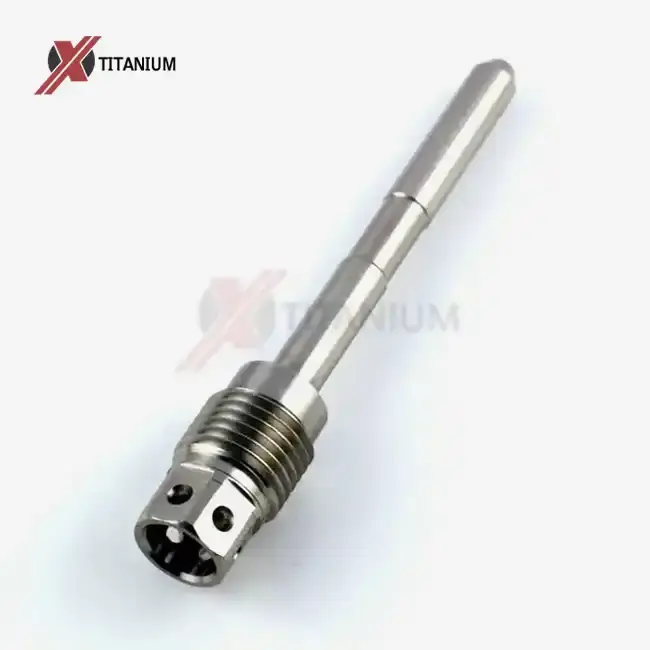
When brake performance is the difference between a podium finish and a catastrophic failure, every component in your caliper assembly demands scrutiny. A Gr5 titanium brake caliper pad pin — machined from Ti-6Al-4V aerospace alloy — delivers a tensile strength of ≥895 MPa while weighing 45% less than a comparable steel pin. It resists brake fluid, road salts, and thermal cycling without seizing inside the caliper bore. For aftermarket brake brands and OEM procurement teams sourcing high-performance fasteners, this single upgrade eliminates seized pins, reduces unsprung mass, and extends service intervals considerably.
Understanding Gr5 Titanium Brake Caliper Pad Pins
What Makes Ti-6Al-4V the Right Alloy?
About 90% of Ti-6Al-4V is titanium, 6% is aluminum, and 4% is vanadium. This mix creates a two-phase microstructure that balances tensile strength and fracture hardness. Neither Grade 2 commercially pure titanium nor 304 stainless steel can match these qualities at the same time. Grade 2 titanium is resistant to rust, but it breaks at about 275 MPa, which means it can't handle dynamic shear loads inside a caliper. Even though stainless steel is stronger, it weighs almost twice as much and corrodes faster than aluminum caliper bodies. Ti-6Al-4V solves both problems without any problems.
How It Compares to Common Alternatives?
When purchasing teams look at Gr5 titanium brake caliper pad pin materials, they always look at three things: weight, toughness, and lifecycle cost. This is how the things stack up:
- Grade 2 Titanium: Excellent resistance to corrosion, but the yield strength (about 275 MPa) is too low for high-cycle braking loads on the track. Not suggested for memory tasks that are safety-critical.
- 304/316 Stainless Steel: Strong enough, but its density of about 7.9 g/cm³ adds weight that isn't needed, and it corrodes aluminum calipers through galvanic action, which causes pin seizure over two to three seasons.
- Aluminum: Aluminum pins are light and strong, but they are too soft. The surface galls when the pad moves over and over, which makes them useless in race situations.
It is unique that Ti-6Al-4V is in a group by itself. With a density of 4.43 g/cm³, it is 45% lighter than steel and has the same yield strength (≥828 MPa) as Grade 10.9 steel screws. No other material can match this mix for the same price-to-performance ratio.
Performance Advantages of Gr5 Titanium Caliper Pins on the Track
Thermal Barrier Effect Under Racing Conditions
During endurance races, brake parts often get hotter than 500°C. Steel pins fiercely conduct heat (steel has a thermal conductivity of about 50 W/m·K), which speeds up the melting of brake fluid and raises the risk of fade. Gr5 titanium brake caliper pad pins only move 6.7 W/m·K of heat, so they act as a useful thermal barrier between the glowing pad compound and the caliper fluid circuit. Just because of this property, Ti-6Al-4V pins are a must-have for racing teams that use high-friction compounds for long periods of time.
Corrosion Immunity and Anti-Seize Behavior
A layer of rust forms on steel pins that causes them to grow inside the caliper hole. This is sometimes known as "rust jacking." When this happens over time, the pin gets so stuck that digging is needed to take the caliper apart, which damages the body of the caliper. A passive oxide film made of Ti-6Al-4V protects against brake fluid (DOT 3, 4, and 5.1), road salts, and harsh wheel cleaners. Every time the pin needs to be serviced, it slides out smoothly, which is very important for techs who are in charge of multiple SKU fleets for Brembo, Nissin, and Tokico caliper platforms.
Reduced Unsprung Mass and Brake Modulation
Less unsprung weight makes the suspension respond more quickly. Even though each pad pin is only a few grams, when added to a four-caliper system with titanium banjo bolts and caliper mounting gear, they make it much faster for the suspension to recover from bumps in the track. Riders and drivers say that the straight variation of the brakes is better when the hardware is switched from steel to titanium across the whole caliper assembly. When pins are finished with a nitrided or DLC surface treatment, the friction coefficient at the pad-to-pin interface is even lower. This makes it easier for the pads to retract and lowers the drag that remains between the braking zones.
Installation and Maintenance Best Practices
Fitment, Torque, and Anti-Galling Protocol
The performance advantage these Gr5 titanium brake caliper pad pins offer is kept when they are installed correctly. Chuanglian makes pad pins with H8/f7 clearance fit specs, which means they fit smoothly into Brembo M4, M50, Nissin, and Tokico caliper bores without needing to be modified. Titanium can galle under high contact pressure, so put a small layer of ceramic anti-seize paste on the pin head before inserting it. Do not use copper-based compounds. Apply the OEM-recommended torque when tightening threaded-head variants, then lower it by 10–15% to account for the oiled state and keep the threads from stripping.
Chuanglian pins don't cut their threads; they roll them instead. Rolling the grain structure instead of cutting it makes threads about 30% stronger over time than cut threads. This is a quality standard that can't be skipped for safety-critical retention hardware.
Routine Inspection and Cleaning
Every time you change the pads, take the pins off and look for scratches on the base that are deeper than 0.2 mm. Use rubbing alcohol and a cloth that doesn't have lint to clean. Stay away from wire brushes because they leave marks on the surface and cause stress to build up. Instead of being used again, pins that have obvious scoring at the caliper hole contact zone should be thrown away and changed. Titanium doesn't rust between service intervals, so inspection by sight only takes seconds instead of the hard scraping that steel pins need.
Making a Rational Procurement Decision
Total Cost of Ownership vs. Upfront Price
When aftermarket brake brands look for Gr5 titanium brake caliper pad pins, they have to do a simple cost-benefit analysis. Steel OEM pins are cheaper per unit, but they have hidden costs: stuck pins ruin caliper bodies, and customers who have gear that has rusted out file warranty claims. Ti-6Al-4V pins cost more per unit, but they get rid of those problems further down the line. The cost per service period goes down a lot over the course of a two- to three-year product span.
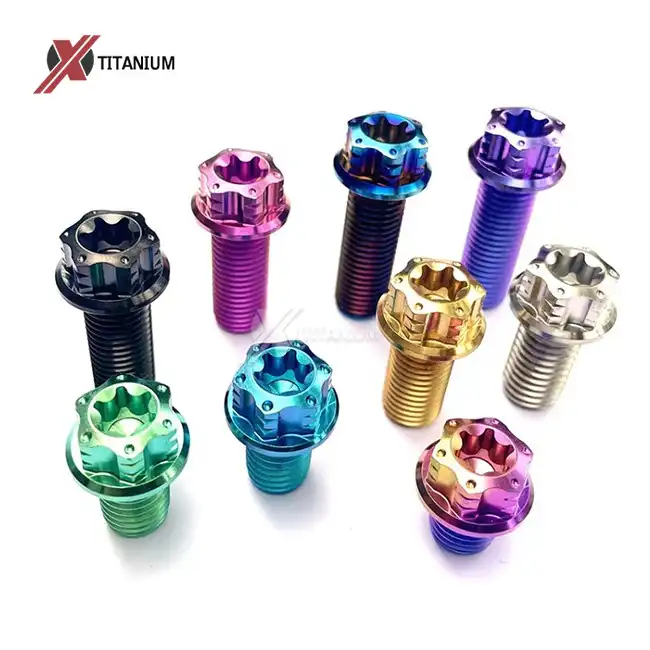
When purchasing managers put together titanium brake upgrade kits with pad pins, titanium banjo bolts, and titanium caliper mounting bolts, they make a lot more money per kit than when they sell steel versions of the same parts. Titanium hardware is priced higher in the aftermarket, which fits with the buying habits of performance riders who are willing to pay extra for upgrades that they can see and feel. These pins come in colorful anodized, blue, green, purple, black, and natural Ti finishes. They can be used to improve functionality or just look better.
OEM and Custom Specification Options
Chuanglian lets OEMs change the diameter, length, head geometry (such as clip groove, cotter pin hole, and threaded head), surface treatment (such as polishing, anodizing, and nitriding), and private label packaging. MOQ starts at 500 pieces per standard, which works for aftermarket brands that have to handle dozens of different caliper fitments. Each batch comes with an XRF composition approval and a full dimensional inspection report. This meets the safety and tracking needs of B2B buyers in the US, UK, Germany, Japan, and Australia.
Conclusion
Gr5 titanium brake caliper pad pins fix all the problems that steel OEM hardware has, like seizure, galvanic corrosion, poor thermal conductivity, and extra weight, without affecting the strength of the structure. Ti-6Al-4V pad pins are the technically sound and business-smart choice for aftermarket companies making high-end brake update kits and for sourcing teams needing traceable, precisely machined parts. Because they are CNC-machined for precise dimensions, have rolled threads, and can have different surface processes, these parts should be at the very top of any brake parts list.
FAQ
Q1: Does titanium cause galvanic corrosion against aluminum caliper bodies?
A: When it comes to electrochemistry, the difference between titanium and aluminum is not as big as the difference between steel and aluminum. When brake fluid is present, steel corrodes aluminum very quickly, but titanium does not. Using ceramic anti-seize paste during fitting gets rid of any remaining galvanic risk even more.
Q2: Are these pins compatible with Brembo, Nissin, and Tokico calipers?
A: Yes, Chuanglian manufactures Gr5 titanium brake caliper pad pins that fit the hole sizes and head shapes of all the major caliper platforms. During the sample request phase, procurement teams should send a caliper model list or engineering drawing to confirm the sizes.
Q3: What kind of repair do Ti-6Al-4V pad pins need?
A: Check and clean every time you change the pads. Over time, the pins don't rust, so checking takes a lot less time than with steel gear. Any pin with a shank score deeper than 0.2 mm should be replaced.
Q4: Why are rolled threads specified rather than cut threads?
A: Rolled threads keep the titanium's grain continuity, making their fatigue strength about 30% higher than cut threads. This is an important difference for brake retention hardware that has to deal with high-cycle vibration loads on the track.
Partner with Chuanglian for Premium Titanium Brake Hardware
Since more than ten years ago, Chuanglian has been making fine titanium screws and machined parts in Baoji, which is known as China's titanium production hub. As a reliable provider of Gr5 titanium brake caliper pad pins, we offer low MOQs starting at 500 pieces, full OEM customization, XRF material certification, and quick technical support for purchasing teams all over the world. Email us at info@cltifastener.com, djy6580@aliyun.com to get samples or talk about bulk pricing.
References
1. Boyer, R. R. (1996). An overview on the use of titanium in the aerospace industry. Materials Science and Engineering: A, 213(1–2), 103–114.
2. Donachie, M. J. (2000). Titanium: A Technical Guide (2nd ed.). ASM International.
3. Rack, H. J., & Qazi, J. I. (2006). Titanium alloys for biomedical applications. Materials Science and Engineering: C, 26(8), 1269–1277.
4. Peters, M., Kumpfert, J., Ward, C. H., & Leyens, C. (2003). Titanium alloys for aerospace applications. Advanced Engineering Materials, 5(6), 419–427.
5. Schumacher, R. (2011). Brake system thermal management in motorsport: Material selection for high-cycle caliper hardware. SAE International Journal of Passenger Cars – Mechanical Systems, 4(1), 215–223.
6. Lütjering, G., & Williams, J. C. (2007). Titanium (2nd ed.). Springer.
Learn about our latest products and discounts through SMS or email