- English
- French
- German
- Portuguese
- Spanish
- Russian
- Japanese
- Korean
- Arabic
- Greek
- German
- Turkish
- Italian
- Danish
- Romanian
- Indonesian
- Czech
- Afrikaans
- Swedish
- Polish
- Basque
- Catalan
- Esperanto
- Hindi
- Lao
- Albanian
- Amharic
- Armenian
- Azerbaijani
- Belarusian
- Bengali
- Bosnian
- Bulgarian
- Cebuano
- Chichewa
- Corsican
- Croatian
- Dutch
- Estonian
- Filipino
- Finnish
- Frisian
- Galician
- Georgian
- Gujarati
- Haitian
- Hausa
- Hawaiian
- Hebrew
- Hmong
- Hungarian
- Icelandic
- Igbo
- Javanese
- Kannada
- Kazakh
- Khmer
- Kurdish
- Kyrgyz
- Latin
- Latvian
- Lithuanian
- Luxembou..
- Macedonian
- Malagasy
- Malay
- Malayalam
- Maltese
- Maori
- Marathi
- Mongolian
- Burmese
- Nepali
- Norwegian
- Pashto
- Persian
- Punjabi
- Serbian
- Sesotho
- Sinhala
- Slovak
- Slovenian
- Somali
- Samoan
- Scots Gaelic
- Shona
- Sindhi
- Sundanese
- Swahili
- Tajik
- Tamil
- Telugu
- Thai
- Ukrainian
- Urdu
- Uzbek
- Vietnamese
- Welsh
- Xhosa
- Yiddish
- Yoruba
- Zulu
Why Choose Grade 5 Titanium M5 Bolts for Bicycle Brake Systems
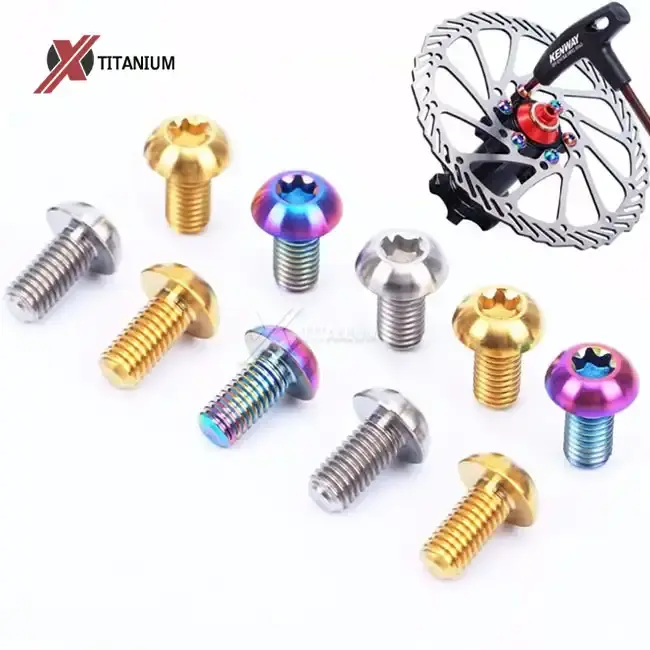
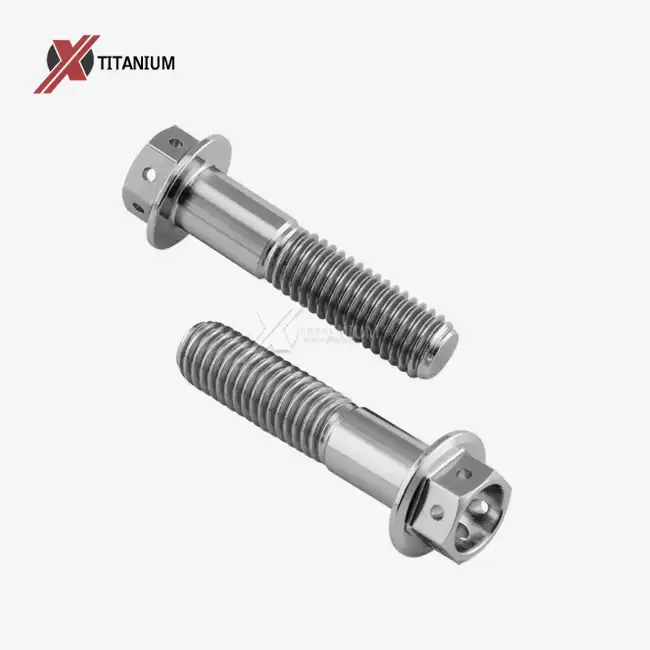
When it comes to brake system safety, the fastener you choose matters more than most riders realize. Grade 5 titanium brake bicycle bolts M5 deliver an engineered advantage that standard steel or aluminum bolts simply cannot match. Manufactured from Ti-6Al-4V alloy — the same aerospace-grade material used in jet turbine components — these M5 bolts combine a tensile strength of 950 MPa with a mass roughly 40% lighter than equivalent steel hardware. For brands and procurement teams sourcing safety-critical brake components, that combination of structural integrity and weight reduction defines a measurable competitive edge.
Understanding Grade 5 Titanium M5 Bolts for Bicycle Brake Systems
What Ti-6Al-4V Actually Means for a Brake Bolt?
The designation "Grade 5" refers to the Ti-6Al-4V alloy, which is made up of 90% titanium, 6% aluminum, and 4% vanadium. With this particular ratio, an inactive oxide layer forms on the surface of the bolt that protects it from rust, acidic sweat, road salt, and alkaline cleaning without adding any coating. Because grade 5 titanium brake bicycle bolts M5 are naturally resistant to rust, they last longer between service visits and have fewer warranty claims. This is because they are exposed to heat from the brakes, vibrations, and moisture from the outside all at the same time.
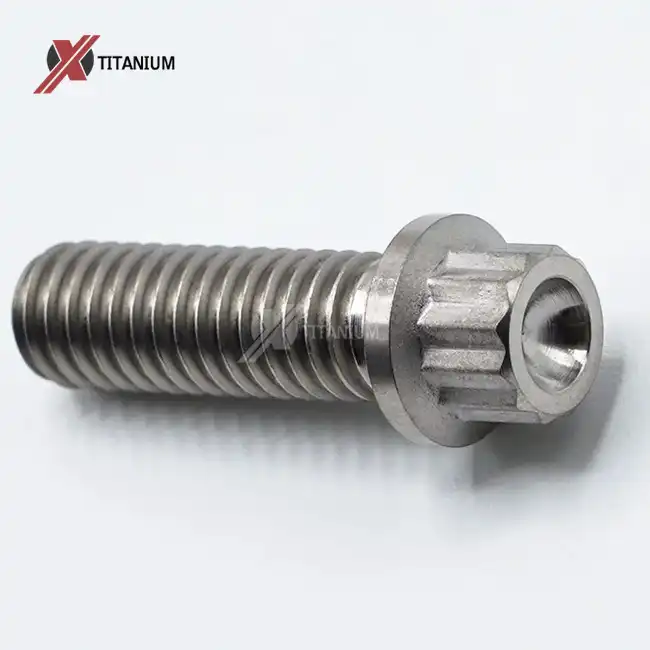
These bolts have a 6g thread tolerance class and an M5×0.8 thread pitch, which means they meet ISO 4762 and DIN 912 standards for size. Lengths range from 10 mm to 20 mm for standard disc brake caliper and post-mount uses. For non-standard builds, lengths up to 50 mm can be made to order. There are hex socket and Torx head styles, and the tolerances are CNC-machined to make sure that the seating torque is always the same.
Chemical and Mechanical Profile at a Glance
| Property | Value |
|---|---|
| Tensile Strength | 950 MPa |
| Yield Strength | 880 MPa |
| Elongation | 10% |
| Hardness | Rockwell C35 |
| Weight vs. Steel | ~40% lighter |
These numbers are not just marketing guesses; they are based on ASTM B348 Grade 5 material certification standards, which can be checked by looking at the mill test records that reliable sources send with every batch.
Performance Advantages of Grade 5 Titanium M5 Bolts Compared to Alternatives
When choosing brake hardware, there is a real trade-off between cost, weight, safety margin, and how long the hardware will last. When it comes to efficiency, grade 5 titanium brake bicycle bolts M5 are better than other options in the following ways:
- Against steel M5 bolts: A steel M5 bolt weighs about 3 g, while a titanium one weighs about 1.7 g. With six rotor bolts per wheel and four caliper mounting bolts, a full disc brake groupset can save up to 25–30 g of rotating and static mass. After one or two seasons of wet riding, steel also corrodes at the points where the brakes meet the frame. This makes the threads seize up and need to be removed destructively.
- Against aluminum M5 bolts: Aluminum saves about the same amount of weight as titanium, but its tensile strength is only 310–380 MPa, which is much lower than Grade 5 titanium's 880 MPa yield strength. Aluminum brake bolts have been known to break when the vehicle is slowed down quickly, so they shouldn't be used to connect safety-critical calipers.
- Against stainless steel M5 bolts: Stainless does a good job of resisting corrosion, but it's heavier than titanium and doesn't last longer. When Grade 5 titanium bolts with rolled threads are put through multiple brake vibration cycles, they show significantly better fatigue resistance. This is because the thread shape is pressed instead of cut, which keeps the grain flow lines.
These benefits make it possible for brands of brake accessories that sell on Amazon or through specialty distributors to make their products stand out. Riders see the value, and the anodized color choices — natural titanium, gold, blue, green, purple, black, and rainbow — help with branding and offer upsells without needing any extra parts.
How to Select and Procure Grade 5 Titanium M5 Bolts for Bicycle Brake Systems?
Specification Checklist Before You Order
Before you can choose the right bolt, you need to make sure of three things: the thread standard (M5×0.8), the material approval (Ti-6Al-4V / ASTM B348 Grade 5), and the way the thread was made (rolled, not cut). Besides these, procurement teams should also check:
- Length match: Standard IS and post-mount calipers need 10–16 mm, while direct-mount adaptors may need 18–20 mm. Before committing to a large order, ask for length samples.
- Surface treatment: When titanium is used on aluminum threads, galling can happen. Anodizing adds a hard oxide layer that makes the interfaces less likely to gall. Choose Type II anodizing for color and Type III for extra strength if the job calls for it.
- Anti-galling protocol: Make sure the supplier suggests and, if possible, includes a copper-based anti-seize compound or a titanium thread preparation product. Galling is the main way that grade 5 titanium brake bicycle bolts M5 fail in metal frames in the field.
Sourcing and MOQ Considerations
MOQ flexibility has a direct effect on cash flow for small brands and online sellers. A reliable Grade 5 titanium M5 bolt provider should be able to handle mixed-color orders starting at 500 to 1,000 pieces per SKU. They should also be able to provide batch-level spectrochemical analysis and go/no-go gauge records upon request. Safety-critical fasteners must go through a 100% thread screening process; this is the very least level of quality control that a responsible brand should require before putting brake fasteners on the market.
Best Practices for Installing and Maintaining Grade 5 Titanium M5 Bolts on Bicycle Brakes
Torque, Anti-Seize, and Thread-Lock Protocol
Even though the grade 5 titanium brake bicycle bolts M5 can handle more than 10 Nm of torque before breaking, the aluminum caliper boss or frame thread insert usually stops it from being useful at 5–7 Nm. Always follow the torque specs given by the caliper maker; the titanium bolt won't be the weak link. Before putting the screws in, spread a thin layer of copper anti-seize paste over the threads. If vibration is a known problem, adding a small amount of medium-strength thread-locking compound to the last two threads makes them safer without stopping them from being taken off in the future.
Inspection and Reuse Guidelines
Grade 5 titanium is very good at keeping its shape. When bolts are taken out without over-torquing them, they can be used more than once. This is better than aluminum fasteners, which bend when they are tightened over and over again. During regular brake service, look at the threads to see if they are galling or deforming. Use isopropyl alcohol to clean the bolt shanks, then re-apply anti-seize and torque to the required level. Any bolt with visible thread distortion should be replaced, no matter what material it is made of.
Strategic Benefits of Using Grade 5 Titanium M5 Bolts in B2B Procurement
Finding grade 5 titanium brake bicycle bolts M5 isn't just a technical choice; it also makes sense from a business point of view. Because of corrosion-driven seizure, brake caliper bolts need to be replaced every two to three years. This adds to the cost of labor and parts that titanium doesn't have. The longer service life of Grade 5 titanium fasteners lowers the total cost of ownership over the life of a product, which is something that both end users and brand owners who care about warranties can agree on.
Titanium can also be recycled. When brands try to appeal to people who are interested in sustainable riding, using titanium screws in brake kits backs up that story with facts instead of just marketing claims. The market for titanium fasteners is growing at the same time that the use of performance bikes and e-bikes is growing. Purchasing teams that build trusting relationships with suppliers can now avoid the price changes and lead-time problems that happen with standard steel hardware.
Conclusion
At the same mass, grade 5 titanium brake bicycle bolts M5 are the only fasteners that offer the perfect balance of safety, weight performance, and rust resistance. Stocking Ti-6Al-4V caliper bolts is both technically and commercially necessary for companies that make brake parts and online stores that serve performance-oriented cyclists. The specs can be checked, the weight savings can be measured, and the material itself doesn't rust; it's not just a coating that can chip or wear off.
FAQ
Q1: Do I need anti-seize compound with titanium M5 brake bolts?
A: Yes, you have to do it. Under stress, titanium galls against aluminum and steel. This is a process that is sometimes called "cold welding." Before installation, prepare all threads with a copper-based anti-seize paste or a titanium thread prep compound. This also makes sure that the reading on your torque wrench shows the real clamp force and not just thread friction.
Q2: What torque should I use for M5 caliper mounting bolts?
A: The bolt can handle more than 10 Nm of torque, but the caliper or frame interface limits the torque that can be used. Always follow the written specifications from the caliper's maker.
Q3: Is Grade 5 titanium necessary, or will Grade 2 work?
A: Grade 2 commercially pure titanium has a tensile strength of about 345 MPa, which is dangerously below what a disc brake caliper fixing point needs. For structural brake fasteners, Grade 5 is the lowest level of quality that is acceptable.
Q4: Can these bolts be reused after removal?
A: Yes. As long as they weren't over-torqued, Grade 5 titanium bolts will keep their mechanical properties after being installed more than once. Before using again, look at the threads and reapply the anti-seize substance.
Q5: What colors are available, and does anodizing affect strength?
A: Natural titanium, gold, blue, green, purple, black, and rainbow are the colors that are available. Type II anodizing doesn't change the tensile or yield strength much, but it does make the surface harder, which lowers the risk of galling.
Request a Sample from Chuanglian — Your Trusted Grade 5 Titanium Brake Bolt Supplier
Chuanglian manufactures grade 5 titanium brake bicycle bolts M5 with full material certification, 100% thread inspection, and anodized color customization from our facility in Baoji — China's recognized titanium manufacturing hub. Whether you need mixed-color trial samples or monthly bulk replenishment, our team is ready to support your sourcing timeline. Reach us directly at info@cltifastener.com or djy6580@aliyun.com to discuss specifications, MOQ, and pricing.
References
1. Donachie, M. J. Titanium: A Technical Guide. ASM International, 2000.
2. Boyer, R., Welsch, G., & Collings, E. W. Materials Properties Handbook: Titanium Alloys. ASM International, 1994.
3. ASTM B348: Standard Specification for Titanium and Titanium Alloy Bars and Billets. ASTM International, 2021.
4. Chandler, H. Hardness Testing. ASM International, 1999.
5. Cycling Industry News: Global Bicycle Components Market Report. Cycling Industry News, 2023.
6. Lütjering, G., & Williams, J. C. Titanium: Engineering Materials and Processes. Springer, 2007.
Learn about our latest products and discounts through SMS or email