- English
- French
- German
- Portuguese
- Spanish
- Russian
- Japanese
- Korean
- Arabic
- Greek
- German
- Turkish
- Italian
- Danish
- Romanian
- Indonesian
- Czech
- Afrikaans
- Swedish
- Polish
- Basque
- Catalan
- Esperanto
- Hindi
- Lao
- Albanian
- Amharic
- Armenian
- Azerbaijani
- Belarusian
- Bengali
- Bosnian
- Bulgarian
- Cebuano
- Chichewa
- Corsican
- Croatian
- Dutch
- Estonian
- Filipino
- Finnish
- Frisian
- Galician
- Georgian
- Gujarati
- Haitian
- Hausa
- Hawaiian
- Hebrew
- Hmong
- Hungarian
- Icelandic
- Igbo
- Javanese
- Kannada
- Kazakh
- Khmer
- Kurdish
- Kyrgyz
- Latin
- Latvian
- Lithuanian
- Luxembou..
- Macedonian
- Malagasy
- Malay
- Malayalam
- Maltese
- Maori
- Marathi
- Mongolian
- Burmese
- Nepali
- Norwegian
- Pashto
- Persian
- Punjabi
- Serbian
- Sesotho
- Sinhala
- Slovak
- Slovenian
- Somali
- Samoan
- Scots Gaelic
- Shona
- Sindhi
- Sundanese
- Swahili
- Tajik
- Tamil
- Telugu
- Thai
- Ukrainian
- Urdu
- Uzbek
- Vietnamese
- Welsh
- Xhosa
- Yiddish
- Yoruba
- Zulu
Why Titanium Jam Nuts Outperform Steel in Vibration
When engineers need to solve important fastening problems in places with a lot of shaking, the material they choose can make or break the process. These days, China titanium jam nuts are the best option because they can withstand vibrations better than steel nuts can. These specialized screws offer unmatched performance in challenging situations where regular steel nuts fail under dynamic stress conditions. This is made possible by advanced metallurgy and precise manufacturing.
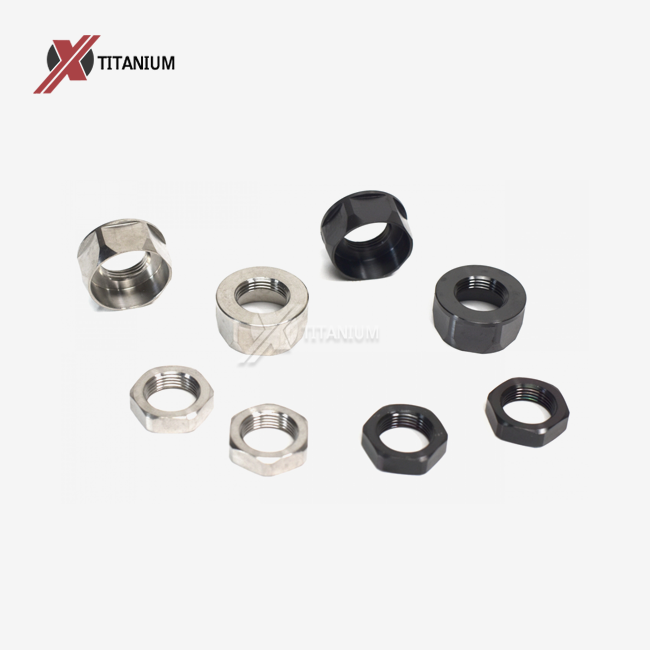
Understanding the Problem with Steel Jam Nuts in Vibration-Prone Environments
When used in situations with a lot of shaking, traditional steel jam nuts have a lot of problems. This makes things very hard for engineering teams to do. When these common bolts are loaded and unloaded quickly, they gradually become less tight. This is mostly because of the way steel materials wear down over time. Vibrational forces cause cyclic stress patterns that weaken the mechanical ties between threaded parts over time. This causes torque loss and, eventually, the link to break.
Material Fatigue and Performance Degradation
When steel bolts are put through repeated stress cycles, like those that happen in machinery that vibrates, the material can wear down. When steel is subjected to prolonged vibrational stress, the crystalline structure changes on a microscopic level. This causes cracks to start and spread throughout the bolt body. This process speeds up in places where changes in temperature make the stress effects worse, making conditions that quickly weaken bolt integrity.
Steel parts don't work well in motion uses in large part because of how their surfaces are made. Wear patterns and micro-fractures on steel surfaces make it so that connecting parts have less useful contact area. These rough spots on the surface form stress collection points that, under dynamic loading conditions, become places where failures start.
Corrosion Challenges in Harsh Environments
Steel jam nuts don't work as well when they're exposed to the elements, especially in sea, chemical processing, and outdoor settings. Steel is naturally prone to oxidation, which causes extra weakening processes that speed up failure rates in corrosive environments. When rust products build up between threaded surfaces, they make rough conditions that make the link even less strong when it is exposed to vibrations.
When steel bolts come into contact with metals that are not the same in vibrating systems, the galvanic corrosion effect is especially bad. These electrochemical processes make localized corrosion cells that quickly lose their ability to hold things together, which means they need to be replaced sooner and require more upkeep.
These restrictions on steel fasteners mean that buying teams that are in charge of important tools will have to pay a lot more to run their businesses. When fasteners fail, they cause equipment to stop working, which throws off production plans and leads to more repair needs. Because vibration-related breakdowns can happen at any time, it's hard to plan preventative maintenance. Instead, reactive maintenance methods are often used, which significantly raises running costs.
Why Titanium Jam Nuts Excel in Vibration Resistance?
Titanium alloys have unique qualities that make them better than other fastener materials. This is why titanium jam nuts work so well in settings with a lot of vibration. Titanium's unique crystalline structure makes it more resistant to fatigue. This means that these screws can survive millions of stress cycles without breaking down in the way that steel parts do.
Superior Material Properties and Composition
The two most common types of titanium metals used to make high-performance jam nuts are Grade 2 and Grade 5. Each has its own benefits for different uses. Grade 2 titanium is made up of commercially pure titanium and has good resistance to corrosion and middling strength, making it useful for use in marine and chemical processing uses. When aluminum and vanadium are added to grade 5 titanium, it makes it stronger, which makes it perfect for high-stress car and aerospace uses.
Titanium metals have a much higher strength-to-weight ratio than steel. This means that engineers can get the same or better fastening performance while lowering the total weight of the unit. This trait is especially useful in aerospace uses where lowering weight has a direct effect on fuel economy and payload capability. The lower mass also lowers inertial forces during vibrations, which helps make the link more stable.
Advanced Manufacturing Techniques in China
Chinese makers have come up with complex ways to make things that make the best use of the natural benefits of titanium materials. Advanced heat treatment methods carefully control the microstructure of titanium jam nuts, making them more resistant to wear and stable in their dimensions. These methods of heat processing make grain structures that are more regular, which better distributes stress during vibrational loading.
Chinese providers use precision cutting to make sure that the dimensions and surface finish are very accurate. Computer-controlled industrial equipment makes threaded shapes with tolerances that make it easier for two parts to fit together. This method of precise making spreads the load across threaded surfaces as evenly as possible, lowering stress levels that could lead to fatigue failures.
Quality control systems are used in all of China's factories. These systems include thorough testing methods that check the features of materials and make sure they meet specifications. Some of the strict inspection steps are checking the mechanical properties, analyzing the chemical makeup, and judging the quality of the surface. Because these quality systems provide written traceability, procurement teams can keep detailed records for important uses that need material approval.
Titanium jam nuts regularly work better than steel alternatives, as shown by scientific study. When put under the same amount of dynamic pressure, titanium screws keep their preload forces for a much longer time than steel parts tested in the lab under controlled vibrational conditions. Field studies in aircraft and automobile uses back up these lab results, showing that when titanium fasteners are used instead of steel ones, service intervals are stretched and repair needs are decreased.
Comprehensive Comparison: China Titanium Jam Nuts vs Steel and Other Materials
When you carefully compare titanium jam nuts to other fastener materials across a number of different evaluation factors, it becomes clear that they work better. These comparisons look at things like mechanical qualities, resistance to the environment, lifetime costs, and operating performance traits that have a direct effect on purchasing choices.
Mechanical Performance Analysis
When compared to regular steel bolts, titanium jam nuts have better tensile strength and yield qualities while still being much less dense. This mixture lets engineers choose smaller fastener sizes that can still hold the same amount of weight, which can help cut down on weight and make better use of room. Titanium metals' high elastic modulus makes them very flexible under dynamic loading conditions. This means that bolts can bend with the structure without getting too much stress, which could cause them to break.
Testing titanium parts under normal settings shows that they have a much longer fatigue life than steel options. Based on research, Grade 5 titanium screws can handle ten times more stress cycles than steel parts of the same size and shape before they break. For important uses, this longer fatigue life directly means fewer repair times and lower lifecycle costs.
Environmental Resistance Comparison
Corrosion resistance is one of the main reasons why titanium jam nuts are better than steel and other metals. Titanium's natural oxide layer protects it very well from chemical attack in high-temperature, chemical processing, and saltwater settings. While steel screws need protection coatings, titanium parts don't need any extra surface treatments to stay corrosion-resistant over their entire service life.
Titanium metals are stable at high and low temperatures, which means they can work reliably in temperature ranges that would damage steel bolts. Grade 5 titanium keeps its mechanical qualities even at high temperatures, where steel parts would lose a lot of their power. This temperature stability is very important in aircraft and automobile uses where changing temperatures puts extra stress on the connections between fasteners.
Economic Considerations and Lifecycle Value
Although titanium jam nuts cost more up front than steel ones, they are much more cost-effective in the long run, as shown by full lifecycle cost studies. Because titanium fasteners last longer and need less upkeep, they save a lot of money over the normal operating times of industrial uses. When procurement teams select titanium fasteners for important uses, they need less inventory, can make repair schedules easier, and can make equipment more reliable.
Through improved production methods and effective supply chain management, China's industrial skills make high-quality titanium screws more affordable. Chinese sources offer reasonable pricing that makes titanium fasteners economically possible for uses where steel alternatives were previously the only option. Advanced manufacturing technology and low-cost production make it possible for global buying teams to get high-quality binding solutions without having to pay a lot more.
Procurement Guide for Titanium Jam Nuts from China
To successfully buy titanium jam nuts, you need to know a lot about how to check the quality of the nuts, how to evaluate suppliers, and how to place orders that are specific to Chinese manufacturing. Professionals in procurement have to figure out how to meet certification standards, build relationships with suppliers, and put in place quality assurance processes that make sure products always work well.
Quality Verification and Certification Requirements
Verification of the titanium material's makeup is an important part of the buying process, especially for medical and aircraft uses that require very specific materials. Genuine sellers give full material certificates that show the chemical makeup, mechanical properties, and production history of the goods they sell. International standards like ASTM B348 for titanium bars and AMS specs for aircraft uses should be used as references in these certificates.
Audits of suppliers' certifications are necessary to make sure that manufacturing skills and quality control systems are working properly. Chinese companies with a good reputation keep certifications like AS9100 for aerospace uses, ISO9001 for general quality management, and industry-specific certifications that are needed for particular uses. These licenses show that you are committed to quality standards and give you peace of mind that the production process will be consistent.
Supplier Assessment and Selection Criteria
When judging Chinese providers of titanium fasteners, you should look at their production skills, quality control systems, and export logistics. Companies that have been around for a while usually keep up-to-date CNC machines that can make precision threaded parts with tight limits on size. When figuring out how much production a company can do, they should look at both its current skills and its ability to grow in order to meet rising demand.
Technical help is what sets elite providers apart from commodity makers, especially when unique specs or engineering advice are needed. The biggest Chinese providers have expert teams that can help with application advice, material selection, and custom design options. During the product creation and troubleshooting stages, these technical tools are very helpful.
Ordering Process and Logistics Considerations
Different Chinese suppliers have very different minimum order numbers for titanium jam nuts. These can be anything from small amounts for prototypes to big production runs. Many sellers are happy to give samples so that you can see how well they work before committing to large orders. Knowing the minimum order requirements and how prices work helps you plan your purchases and keep track of your goods more efficiently.
The lead time for making titanium fasteners is usually between two and six weeks, but it depends on the specs and the amount that needs to be made. Chinese makers usually keep standard sizes in stock, since making items to specific requirements takes more time. Setting clear contact and delivery schedules makes sure that the buying process goes smoothly and that deliveries are made on time.
Chinese suppliers often offer flexible payment options, such as letter of credit, wire transfer, and choices to pay in installments for big orders. A lot of companies offer sample evaluation programs that let you test how well they work before you agree to full payment. Long-term relationships with suppliers are more likely to work out if you know about all of your payment choices and make the right financial plans.
Conclusion
Titanium jam nuts are the best way to fasten things together in places where vibration is a problem because they work better than steel options. Because they are highly resistant to wear, corrosion, and have the best strength-to-weight ratios, these screws are important for harsh industrial settings. Chinese companies have made a name for themselves as dependable sources of high-quality titanium screws. They offer low prices and advanced production skills that meet the needs of buyers around the world. Titanium jam nuts are a smart investment for businesses that want to improve the dependability and efficiency of their tools because they have been shown to improve performance and save money in the long run.
FAQ
Q1: What grades of titanium are commonly used for jam nuts?
A: Most of the time, Grade 2 and Grade 5 titanium are the most commonly used materials for jam nuts. Grade 2 is good at resisting corrosion and is moderately strong, making it ideal for use in naval and chemical processing settings. Grade 5 has better strength qualities and is great for high-stress automotive and aerospace uses that need better mechanical performance.
Q2: How do titanium jam nuts compare to steel alternatives in corrosive environments?
A: When corrosion is present, titanium jam nuts perform much better than steel bolts. Titanium surfaces make a natural oxide layer that protects them from chemical attack. This stops galvanic corrosion, which is a problem that steel bolts have in mixed-metal systems. This resistance to rust keeps fasteners in good shape for long periods of time without the need for protected coatings or other treatments.
Q3: Can Chinese manufacturers provide custom specifications for titanium jam nuts?
A: The biggest Chinese companies that make titanium fasteners can also make a wide range of unique products, such as ones with special threading, changed dimensions, or material standards for certain uses. These suppliers can usually make prototypes in small amounts for testing reasons, and they can increase production to meet market needs while still upholding strict quality standards throughout the whole process.
Q4: What torque specifications apply to titanium jam nuts?
A: Because of the way the material works and how it rubs against other things, titanium jam nuts need about 70–80% of the torque values of steel bolts of the same size. The right way to put something includes using an anti-seize powder to stop galling and gradually tightening the screws so that they don't get hit. For the best fitting results, use titanium-specific torque charts based on thread width and pitch.
Q5: Are titanium jam nuts suitable for reuse in critical applications?
A: Titanium jam nuts can usually be used again as long as the threads are not damaged or deformed. Titanium materials are better at resisting wear, so they can be installed more than once without breaking down like steel screws do. But important safety apps should have rules for checking threads and replacing them based on how they've been used and how much stress they've been under.
Partner with Chuanglian for Premium China Titanium Jam Nuts Manufacturing
We at Chuanglian offer top-notch vibration-resistant fastening solutions thanks to our advanced titanium manufacturing facilities in Baoji, China's famous "City of Titanium." Our wide range of products includes precision-engineered jam nuts made from Grade 2 and Grade 5 titanium alloys that meet strict international standards such as AS9100 and ISO9001 certifications. We have over ten years of experience cutting titanium and a full quality control system that checks every step of the production process. This means that we can guarantee steady performance for even the most difficult jobs. Our cutting-edge CNC machines and skilled technical staff can help you find the best fastening solutions by giving you unique specs and engineering support. Get in touch with our knowledgeable staff at info@cltifastener.com or djy6580@aliyun.com to talk about your needs and find out why top makers choose Chuanglian as their reliable China titanium jam nuts source.
References
1. Boyer, R.R., Welsch, G., and Collings, E.W. "Materials Properties Handbook: Titanium Alloys." ASM International Materials Park, Ohio, 1994.
2. Lutjering, G. and Williams, J.C. "Titanium: Engineering Materials and Processes." Springer-Verlag Berlin Heidelberg, 2007.
3. Peters, M., Kumpfert, J., Ward, C.H., and Leyens, C. "Titanium Alloys for Aerospace Applications." Advanced Engineering Materials, Vol. 5, No. 6, 2003.
4. Donachie, Matthew J. "Titanium: A Technical Guide, Second Edition." ASM International Materials Park, Ohio, 2000.
5. Campbell, F.C. "Manufacturing Technology for Aerospace Structural Materials." Elsevier Science & Technology Books, 2006.
6. American Society for Testing and Materials. "ASTM B348: Standard Specification for Titanium and Titanium Alloy Bars and Billets." ASTM International West Conshohocken, Pennsylvania, 2019.
Learn about our latest products and discounts through SMS or email