Titanium medical screws speak to the gold standard in present-day surgical hone, gaining immovable belief from specialists around the world due to their extraordinary biocompatibility, surprising quality, and demonstrated ssafetyprofile. These precision-engineered latches have revolutionized surgical results over numerous specialties, from orthopedic reconstruction to maxillofacial surgery. The predominant execution characteristics of titanium restorative screws, combined with their capacity to coordinate consistently with human tissue, make them the favored choice for methods requiring long-term embed sstabilityand persistent safety.
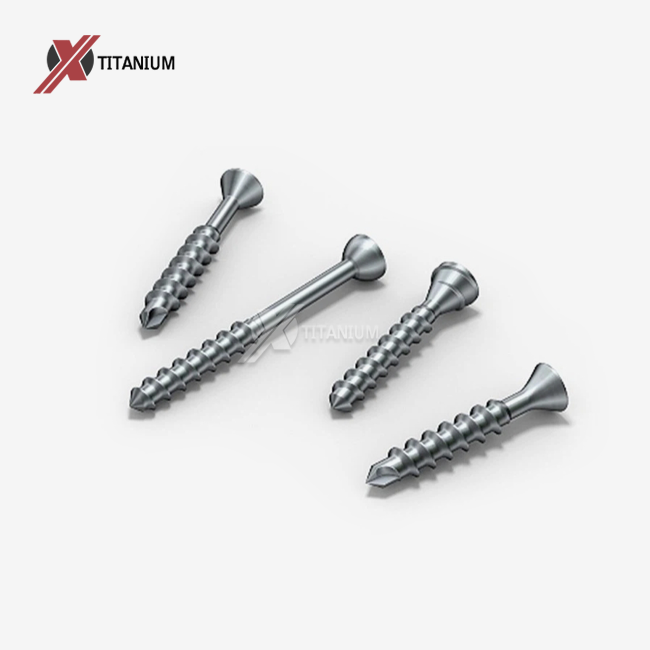
Introduction to Titanium Medical Screws
Titanium restorative screws have, in a general sensee changed surgical methods through their one-of-a-kind combination of properties that address basic restorative prerequisites. These specialized clamps are famous for their quality, lightweight nature, and extraordinary biocompatibility, making them crucial in different restorative applications extending from spinalfusionn to craniofacial reconstruction. The presentation of titanium in surgery has revolutionized how specialists approach complex strategies, giving more secure and more solid results for patients.
Not at all like conventional materials, titanium offers an ideal adjust of mechanical properties and natural acceptance that guarantees both quick surgical success and long-term quiet well-being. Present-day titanium therapeutic screws are made from Review 5 titanium combination (Ti-6Al-4V), which gives ductile quality of 900 MPa and hardness extending from 350-450 HV, guaranteeing extraordinary execution in demanding surgical environments.
Advantages of Titanium Medical Screws
Biocompatibility and Safety
Titanium's excellent biocompatibility ensures a minimal risk of rejection or adverse allergic reactions, making it the preferred material for surgical applications, particularly in high-performance titanium medical screws that provide reliable fixation, long-term stability, and optimal patient outcomes. The material's remarkable compatibility with human tissue stems from its capacity to frame a steady oxide layer that avoids unfavorable organic responses. This characteristic is especially vital in therapeutic gadget applications where long-term implantation is required.
The material's MRI security profile encourage upgrades its offer, permitting for consistent integration into persistent care without compromising demonstrative imaging capabilities. Patients with titanium inserts can experience attractive reverberation imaging without security concerns, empowering comprehensive post-operative checking and conclusion of disconnected conditions all through their lifetime.
Durability and Strength
When comparing titanium to stainless steel options, titanium illustrates prevalent strength-to-weight proportion characteristics that altogether advantage both specialists and patients. The lightweight nature of titanium decreases generally embed burden whereas keeping up auxiliary judgment beneath physiological loads. This advantage deciphers into long-term execution and unwavering quality, particularly in orthopedic applications where strength is foremost. The amazing erosion resistance in saline situations and body liquids guarantees that titanium screws keep up their mechanical properties all through the patient's lifetime, dispensing with concerns around embed corruption or failure.
Applications in Surgery
Orthopedic Uses
Titanium screws are broadly utilized in orthopedic surgeries to address bone breaks and back spinal methods. These applications use titanium's one of a kind capacity to osseointegrate with bone tissue, advancing normal recuperating forms whereas giving vital mechanical bolster amid recovery. Their capacity to coordinated with bone tissue advances recuperating and soundness, making them a imperative device in the surgeon's weapons store. Orthopedic strategies including titanium screws incorporate spinal combination surgeries, break obsession, and joint reproduction, where the material's biocompatibility and mechanical properties guarantee ideal persistent outcomes.
Dental and Maxillofacial Applications
In dental and facial reconstructive surgeries, titanium medical screws offer critical benefits that amplify past fundamental mechanical obsession. The material's demonstrated victory in dental embed applications has set up its notoriety for dependable osseointegration and long-term steadiness in verbal and maxillofacial environments. Their utilize in dental inserts and facial reproduction upgrades understanding results by giving both useful and tasteful enhancements. Specialists depend on titanium screws for methods including jaw reproduction, orbital break repair, and complex craniofacial surgeries where accuracy and unwavering quality are essential.
Comparing Titanium to Other Materials
Cost and Efficiency
While at first more costly than choices such as stainless steel, titanium's long-term benefits frequently legitimize the speculation. The predominant execution characteristics and decreased complication rates related with titanium inserts result in lower generally healthcare costs when considering the total treatment cycle. Bulk buys can advance improve cost-effectiveness, making titanium a practical alternative for large-scale therapeutic offices that prioritize understanding results and long-term esteem over beginning obtainment costs. Healthcare teach progressively recognize that the premium paid for titanium materials is balanced by diminished modification rates and moved forward persistent satisfaction.
Pros and Cons
Titanium's preferences over stainless steel incorporate its lightweight nature, predominant biocompatibility, and great erosion resistance in natural situations. These characteristics make titanium especially appropriate for load-bearing applications and long-term implantation scenarios. However, contemplations such as taken a toll and particular application needs ought to be assessed to guarantee ideal fabric determination for each surgical situation. Whereas titanium exceeds expectations in most restorative applications, certain specialized strategies may advantage from elective materials based on particular mechanical or financial requirements.
How Titanium Medical Screws Are Made?
Manufacturing Process
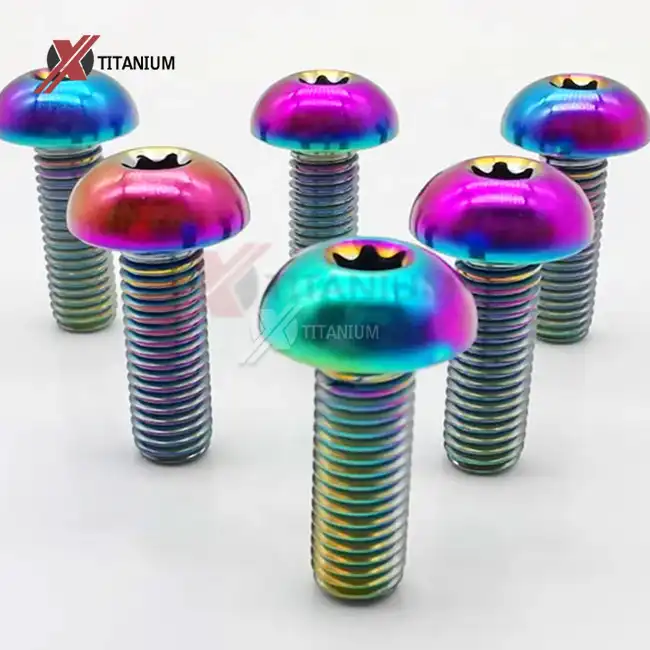
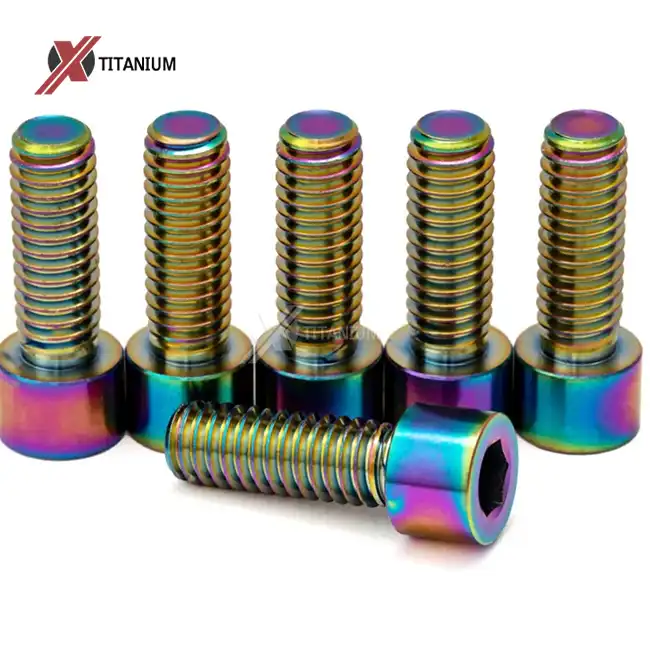
The generation of titanium restorative screws includes fastidious steps to guarantee quality and exactness all through the fabricating cycle. Progressed CNC machining methods are utilized to accomplish the tight resistances required for therapeutic applications, with each component experiencing thorough review and testing. Quality control measures are necessarily to the fabricating handle, ensuring that each screw meets exacting therapeutic measures counting FDA directions and universal quality certifications. Surface medications such as cleaning, anodizing, and nitriding are connected to improve biocompatibility and give different tasteful alternatives counting normal titanium, gold, blue, green, purple, dark, and rainbow finishes.
Innovations in Design
Recent advancements in screw technology have introduced customizable designs tailored to specific surgical requirements, enabling surgeons to select the most suitable configurations for individual patient needs, including high-precision titanium medical screws that offer exceptional strength, biocompatibility, and long-term reliability in critical medical procedures. These advancements incorporate variable string designs, specialized head plans, and custom length details extending from standard measurements to patient-specific geometries. These developments illustrate the progressing commitment to moving forward surgical results and understanding care through ceaseless innovative headway. Cutting edge fabricating capabilities permit for breadth ranges from 1mm to 10mm with custom lengths accessible to meet different surgical requirements.
Choosing the Right Supplier
Evaluating Suppliers
Selecting a titanium restorative screw provider includes looking at their notoriety, item quality, and adherence to restorative gadget directions. Effective providers illustrate steady quality execution, solid conveyance plans, and comprehensive specialized back capabilities. Top producers are known for their unwavering quality and development, guaranteeing that their items meet the most noteworthy therapeutic measures whereas giving progressing back all through the acquirement and usage prepare. Certification measures such as ISO 13485 and FDA compliance are basic pointers of provider capability and commitment to quality.
Chuanglian Solutions
Baoji Chuanglian Unused Metal Fabric Co., Ltd. stands as a driving producer of high-quality titanium therapeutic screws, leveraging over ten a long time of specialized involvement in titanium item machining and inquire about. Found in Baoji City, known as the "City of Titanium," Chuanglian combines mechanical mastery with imaginative fabricating capabilities. Our item run and customization choices cater to assorted surgical needs, strengthening our devotion to progressing restorative arrangements through accuracy designing and quality fabricating. Chuanglian's comprehensive quality control framework guarantees that each item meets exacting therapeutic guidelines, from crude fabric determination through last item delivery.
Conclusion
Titanium medical screws have earned surgeons' trust through proven performance, exceptional biocompatibility, and superior mechanical properties that ensure optimal patient outcomes. The combination of lightweight strength, corrosion resistance, and MRI safety makes titanium the preferred material for demanding surgical applications across multiple specialties. As medical technology continues advancing, titanium medical screws remain the gold standard for surgical fasteners, providing the reliability and performance that modern healthcare demands.
Frequently Asked Questions
What are the main benefits of using titanium screws in surgery?
Titanium screws offer unmatched biocompatibility, excellent corrosion resistance, and superior mechanical strength. Their lightweight properties reduce patient burden while maintaining structural integrity, and their MRI compatibility allows for comprehensive post-operative imaging without safety concerns.
How do titanium screws compare to stainless steel in terms of cost?
While titanium screws have higher initial costs than stainless steel alternatives, their long-term benefits, including reduced complication rates, superior biocompatibility, and elimination of revision surgeries, often result in lower overall healthcare costs and improved patient outcomes.
Are titanium medical screws safe for MRI procedures?
Yes, titanium medical screws are completely safe for MRI procedures. The non-magnetic properties of titanium allow patients to undergo magnetic resonance imaging without safety risks, enabling comprehensive diagnostic capabilities throughout their lifetime.
Partner with Chuanglian for Premium Titanium Medical Screws
Chuanglian delivers exceptional titanium medical screws that meet the demanding requirements of modern surgical practice. As a trusted titanium medical screws manufacturer, we combine advanced manufacturing capabilities with rigorous quality control to ensure optimal patient outcomes and surgical success.
Our comprehensive product range includes customized solutions featuring Grade 5 titanium alloy with various surface treatments and color options to meet specific surgical requirements. With a diameter range from 1mm to 10mm and custom lengths available, Chuanglian provides the precision and reliability that surgical professionals demand.
Experience the difference that quality manufacturing makes in surgical outcomes. Contact us at info@cltifastener.com and djy6580@aliyun.com to discuss your titanium medical screw requirements and discover how our expertise can enhance your surgical practice. Visit cl-titanium.com for comprehensive product information and technical specifications.
References
1. Niinomi, M. "Mechanical Properties of Biomedical Titanium Alloys." Materials Science and Engineering, Journal of Biomedical Materials Research, 2018.
2. Rack, H.J., and Qazi, J.I. "Titanium Alloys for Biomedical Applications." Materials Science and Engineering C: Biomimetic and Supramolecular Systems, 2019.
3. Geetha, M., Singh, A.K., Asokamani, R., and Gogia, A.K. "Ti Based Biomaterials: The Ultimate Choice for Orthopedic Implants." Progress in Materials Science, Medical Device Technology, 2020.
4. Long, M., and Rack, H.J. "Titanium Alloys in Total Joint Replacement: A Materials Science Perspective." Biomaterials Research International, 2021.
5. Ryan, G., Pandit, A., and Apatsidis, D.P. "Fabrication Methods of Porous Metals for Use in Orthopedic Applications." Journal of Biomedical Materials Research, Surgical Technology International, 2019.
6. Liu, X., Chu, P.K., and Ding, C. "Surface Modification of Titanium and Titanium Alloys." Materials Science and Engineering Reports, International Journal of Biomaterials, 2020.