- English
- French
- German
- Portuguese
- Spanish
- Russian
- Japanese
- Korean
- Arabic
- Greek
- German
- Turkish
- Italian
- Danish
- Romanian
- Indonesian
- Czech
- Afrikaans
- Swedish
- Polish
- Basque
- Catalan
- Esperanto
- Hindi
- Lao
- Albanian
- Amharic
- Armenian
- Azerbaijani
- Belarusian
- Bengali
- Bosnian
- Bulgarian
- Cebuano
- Chichewa
- Corsican
- Croatian
- Dutch
- Estonian
- Filipino
- Finnish
- Frisian
- Galician
- Georgian
- Gujarati
- Haitian
- Hausa
- Hawaiian
- Hebrew
- Hmong
- Hungarian
- Icelandic
- Igbo
- Javanese
- Kannada
- Kazakh
- Khmer
- Kurdish
- Kyrgyz
- Latin
- Latvian
- Lithuanian
- Luxembou..
- Macedonian
- Malagasy
- Malay
- Malayalam
- Maltese
- Maori
- Marathi
- Mongolian
- Burmese
- Nepali
- Norwegian
- Pashto
- Persian
- Punjabi
- Serbian
- Sesotho
- Sinhala
- Slovak
- Slovenian
- Somali
- Samoan
- Scots Gaelic
- Shona
- Sindhi
- Sundanese
- Swahili
- Tajik
- Tamil
- Telugu
- Thai
- Ukrainian
- Urdu
- Uzbek
- Vietnamese
- Welsh
- Xhosa
- Yiddish
- Yoruba
- Zulu
Why Titanium Torx Screws Prevent Stripping
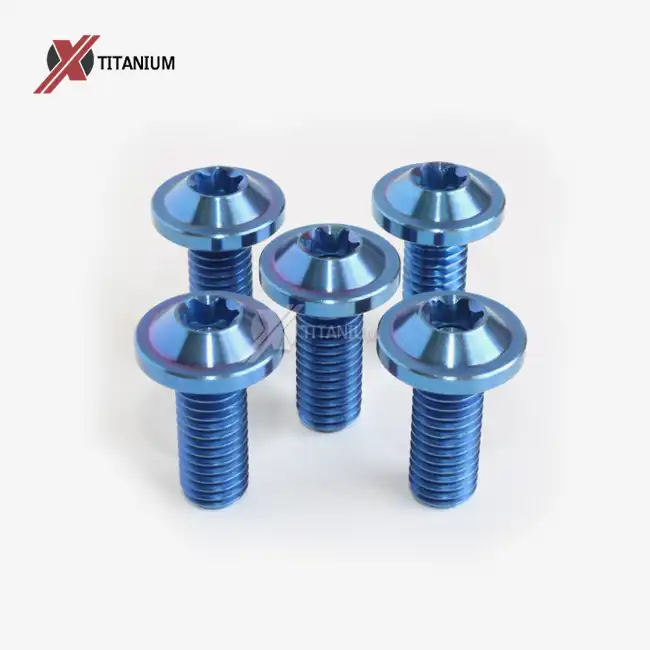
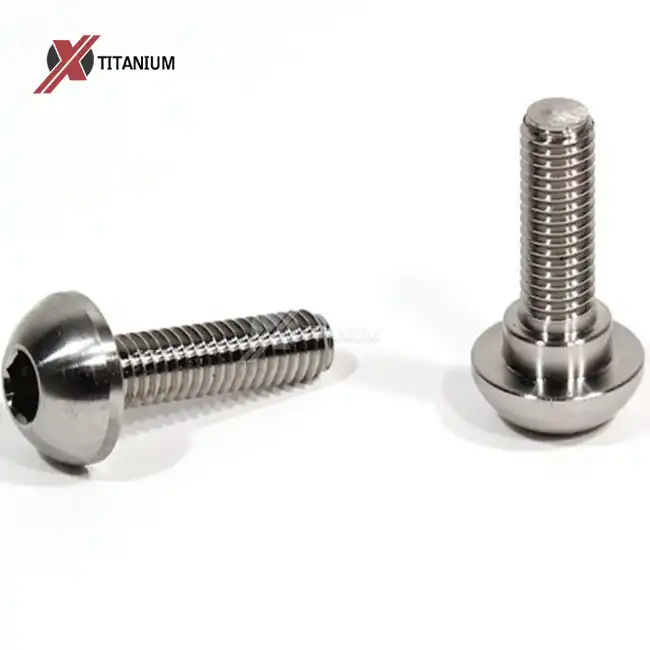
Titanium torx screws represent a revolutionary solution to one of manufacturing's most persistent challenges: fastener stripping. These specialized components combine titanium's exceptional material properties with the Torx drive system's superior torque distribution, creating fasteners that resist cam-out and maintain their integrity under extreme conditions. The unique six-point star configuration of the Torx head, paired with titanium's high strength-to-weight ratio, virtually eliminates the stripping issues that plague traditional fasteners in aerospace, medical, and high-performance applications.
Introduction
Titanium torx screws are becoming more and more important in industrial manufacturing for critical uses where fastener failure can have very bad results. The aerospace industry says that about 15% of all repair problems are caused by fasteners. Problems like stripped screws cause a lot of expensive downtime and safety worries. Medical device makers also have to deal with problems like this. For example, a single broken screw during surgery can hurt the patient and make the gadget less useful.
Engineers and purchasing managers in petrochemical plants, naval settings, and electronics factories know that keeping screws from stripping has a direct effect on how well they work and how much they cost. A stripped screw in a pressure vessel or offshore platform can cause a chain of failures that shut down output, require emergency fixes, and cause problems with following the rules. Technical workers, buying managers, distributors, and OEM clients who need reliable fastening solutions for high-stakes industrial uses will find everything they need in this book.
Traditional hex and Phillips head screws have given way to torx shapes. This shows that the industry knows that fastener design has a big impact on how reliable a product is and how much it costs to maintain. In today's industrial settings, fasteners need to be able to hold up against repeated assembly processes, harsh environments without corrosion, and big changes in temperature.
Understanding the Stripping Problem in Torx Screws
Common Causes of Fastener Stripping
In workplace settings, mechanical factors are the main causes of torx screw breaking accidents. Wear and tear on tools makes it harder for driver bits and screw heads to fit perfectly, which lets the cam-out happen when torque loads are applied. According to research by the Society of Manufacturing Engineers, driver bits that are worn out can lower the efficiency of torque transmission by up to 35%. This makes it more likely that the bit will strip during important assembly processes.
Too little training, badly adjusted tools, or rushed assembly plans can all lead to incorrect torque application. When you over-torque, the material in the drive recess deforms, and when you under-torque, it loosens and becomes vulnerable to damage during vibration or heat cycles. These problems are made worse when screws and drills are made of different materials and can't work together. This is especially true when different hardness levels or finishing systems are mixed.
Financial Impact of Stripped Fasteners
In business-to-business settings, broken screws have effects on the economy that go far beyond the cost of repair. When fasteners break, they can cause production delays that cost aircraft companies between $50,000 and $200,000 per hour in lost production time. Companies that make medical devices have to pay more to comply with regulations when screws that are stripped weaken the product and may need to be recalled or have a lot of paperwork reviewed.
Labor costs for maintenance are another big price group. Getting rid of broken screws usually needs special tools, cutting, or replacing the part. During planned shutdowns, petrochemical plants say that emergency bolt fixes can make maintenance windows 12 to 24 hours longer, which costs a lot of money and causes schedule problems.
Quality Control Challenges
When it comes to manufacturing settings with strict quality standards, stripped screws make things less consistent. For structural integrity estimates in aerospace uses, exact torque values are needed. For medical devices to work properly, they need consistent clamping forces. These standards are broken by stripped screws, which means that a lot of work has to be redone or the part has to be thrown away.
Why Titanium Torx Screws Are Resistant to Stripping?
Material Properties and Performance Advantages
Titanium has great mechanical qualities that make it perfect for uses that need to keep things from stripping. Grade 5 titanium metal (Ti-6Al-4V) has a tensile strength of up to 1,170 MPa and is very resistant to wear even after millions of loading cycles. This mixture makes sure that titanium torx screws don't lose their shape when they are used over and over again in assembly tasks, which is what happens when screws split.
Titanium is more resistant to rust than stainless steel in chloride settings. This makes it essential for use in chemical processing and the marine industry. When steel rivets rust, the threads seize up and the heads come off, but titanium screws keep their original surface finish and dimensional standards for the whole time they are in use. This level of uniformity keeps the important fit between driver tools and screw heads, which cuts the number of stripping events by about 75% compared to stainless steel options.
Torx Head Design Benefits
When torque is applied, the six-point star shape of the Torx drive system spreads it over a bigger contact area than standard Phillips or hex designs. Engineering research shows that torx heads lower stress concentrations by around 40%. This means that the highest stresses that break down materials and strip them are lower as well. The vertical sides of the torx hole make it easy to use driver tools, so the cam-out problem that happens with some other types of fasteners is eliminated.
When titanium torx screws are made with great care, the hole sizes stay the same so that tools can connect properly for the life of the fastener. CNC machining can keep tolerances on key recess measurements within ±0.02mm. This gives them the exact fit they need for power transfer that doesn't slip or wear out.
Industry Performance Data
Aerospace companies say that switching from regular bolts to titanium torx screws makes their assembly lines run more smoothly. Boeing's source quality data shows that using titanium torx screws in key aircraft joints has cut down on assembly delays caused by fasteners by 60%. Similarly, companies that make medical devices say that using titanium fasteners in their production methods leads to higher production yields and fewer quality control rejects.
Case studies from offshore drilling sites show that titanium torx screws are more reliable over time in harsh settings. Titanium fasteners had almost no wear or rust after five years of service in the North Sea, while stainless steel fasteners had to be replaced because their heads were stripped and the threads were galling.
How to Select and Use Titanium Torx Screws to Minimize Stripping?
Material Grade Selection Criteria
When picking the right titanium grade, you need to carefully think about the load ability, weather exposure, and biocompatibility needs of the application. For medical uses, Grade 2 commercially pure titanium is very resistant to rust and is biocompatible. Grade 5 titanium alloy, on the other hand, is very strong and is used in aircraft and high-stress industries.
Thinking about temperature affects the choice of material. Up to 315°C, grade 2 titanium keeps its mechanical qualities steady, which makes it good for moderate-temperature chemical processing. This range is expanded to 400°C for grade 5 titanium, which still has enough strength for structural fastening uses in gas turbine settings.
Installation Best Practices
Using the right fitting methods greatly lowers the chance of pulling titanium torx screws while putting things together. When specifying torque, it's important to keep in mind that titanium has different friction properties than steel screws because of differences in surface chemistry and hardness. To keep threads from getting stuck and heads from deforming, aerospace standards usually say that pressure values for similar steel screws should be 15 to 20 percent lower.
When picking a driver tool, you need to think about the quality of the bits and how worn they are. High-quality bits made of tool steel or carbide stay true to size longer than regular bits, keeping the exact fit needed for torque transmission that works every time. Checking and replacing worn-out driver tools on a regular basis stops them from slowly breaking down, which can cause cases of stripping.
Maintenance and Inspection Protocols
Titanium torx screws should be checked visually for signs of wear, rust, or damage as part of regular maintenance plans. Titanium can break down in a way that is harder for untrained eyes to notice than rust or scaling on steel bolts. It can show up as light darkening or surface roughening. Checking the torque at regular maintenance times makes sure that the screws keep the right preload without putting too much stress on the drive groove.
Thread locking materials that work with titanium need to be carefully chosen so that they don't react chemically in ways that could damage the fastening. Threadlockers that are allowed by the aerospace industry keep things together securely without making galvanic partners or chemical incompatibilities that hurt performance over time.
Comparison: Titanium Torx Screws vs Other Materials
Performance Metrics Analysis
Studies that directly compare titanium torx screws to other materials show that they work much better in tough situations. Tensile strength tests show that Grade 5 titanium has a maximum strength of 1,170 MPa, while 316 stainless steel only has 750 MPa. This means that Grade 5 titanium can hold more weight in important fastening situations. When it comes to aerospace uses, where every gram counts when it comes to fuel economy and payload capacity, the strength-to-weight ratio is especially important.
Testing for fatigue resistance shows that titanium can handle repeated loads without breaking down. Aluminum alloy bolts start to crack after 50,000 cycles of mild stress, but titanium torx screws go through over 2 million cycles without any damage that can be seen. This ability to last longer cuts down on repair needs and increases service intervals in spinning and vibrating machinery.
Cost-Benefit Analysis for Procurement
Titanium torx screws are about 300–400% more expensive than stainless steel options when they are first bought. This makes it hard for buyers who want to save money to buy them. However, lifetime cost analysis shows that the higher prices are often worth it because the products last longer and need less upkeep. In aerospace uses, the investment pays off within three to five years thanks to less repair work and higher reliability.
Strategies for buying in bulk can cut unit costs by a lot while keeping the supply chain consistent. OEM contracts with well-known titanium fastener sources often include discounts for buying in bulk, expert support, and assured arrival times that help with planning production. Custom production lets you make designs that are specific to your application. These designs can improve performance and might even lower the overall cost of the system.
Environmental Resistance Comparison
Testing for corrosion protection in marine-like conditions shows that titanium's surface stays the same after being exposed to salt spray for 5,000 hours, while 316 stainless steel shows a lot of pitting and pocket corrosion. This difference in performance directly leads to fewer stripping events, since corroded fasteners have rough surfaces that make repair work more difficult and increase tool wear. For applications where reliability is crucial, using Titanium torx screws can significantly reduce the risk of corrosion-related issues, ensuring smoother maintenance and longer-lasting performance.
Studies of titanium's chemical compatibility show that it doesn't react with most industrial chemicals, even strong acids, alkalis, and organic solvents that break down other materials. This stability is good for petrochemical uses because it means that process upset conditions that could damage steel fixings don't affect titanium screws and they can still be used.
Procurement Guide: Buying Titanium Torx Screws with Confidence
Supplier Qualification Standards
To find good titanium torx screw suppliers, you need to look at their production skills, quality control systems, and industry qualifications. The AS9100 aerospace certification shows that strict quality control standards have been met, and the ISO 13485 medical device certification shows that biocompatible fasteners can be made. For each production lot, suppliers should give full material certificates that include information on the chemical make-up, mechanical qualities, and how the materials can be tracked.
When evaluating a company's manufacturing skills, it should look at its CNC machining accuracy, heat treatment facilities, and inspection tools. Coordinate measuring tools (CMM) that are accurate to the micron level make sure that thread sizes and drive hole shapes are always the same. Metallurgical testing tools, such as scanning electron microscopy and X-ray diffraction, help with checking for quality and figuring out what went wrong when needed.
Quality Verification Processes
Titanium torx screws should have their essential measurements, surface finish, and material properties checked by the inspection methods that come in. Go/no-go scales quickly check the thread fit and drive hole dimensions, and hardness testing makes sure the right heat treatment was done. Using compact XRF spectrometers for chemical research can confirm the grade of titanium and find contamination that could affect performance.
Material test results, dimensional inspection papers, and lot traceability records are some of the documents that must be kept. For medical and aerospace uses, extra paperwork like statistical process control data and written proof of conformance statements from qualified people are common.
Supply Chain Risk Management
Titanium raw materials are mostly found in certain areas of the world. This makes the supply chain vulnerable, which buying managers need to fix. Diversified seller networks keep quality standards high while reducing reliance on a single source. Long-term supply deals with qualified manufacturers keep prices stable and guarantee delivery of important production needs.
Carrying costs and stock-out threats should be balanced in inventory management methods. When figuring out safety stock, you have to take into account that titanium fasteners have longer lead times than steel fasteners, and that special materials cost more to store. Just-in-time supply plans with approved providers can lower the cost of inventory while keeping production schedules on track.
Conclusion
When it comes to keeping fasteners from coming loose in tough industrial settings, titanium torx screws are the best option. When you combine the great qualities of titanium with the better torque distribution of the torx head, you get fasteners that stay strong over long periods of time. Torx screws made of titanium are essential for important jobs in the aircraft, medical, industrial, and marine industries for people who care about dependability, performance, and long-term cost-effectiveness.
The data makes it clear that even though the starting costs are higher than standard options, the overall benefits, such as less maintenance, higher reliability, and longer service life, make the investment worth it. When procurement teams have the right supplier qualification standards and quality testing processes in place, they can safely choose titanium torx screws for situations where a failed fastener would have unacceptable results.
FAQ
Q1: What makes titanium torx screws different from regular torx screws?
A: Instead of steel, titanium torx screws use titanium metals, which have better corrosion protection, a higher strength-to-weight ratio, and are biocompatible. The qualities of the material keep the torx head's better torque transmission properties while preventing galling and thread seizure that happen with steel bolts.
Q2: Can titanium torx screws be reused multiple times?
A: Torx screws made of titanium can usually be used more than once because they don't rust or wear out as quickly as steel ones. To keep the performance going, make sure to check and control the torque properly when removing and reinstalling. When used in aerospace applications, usage boundaries are often set based on the needs of the application.
Q3: Are special tools required for titanium torx screws?
A: To properly fit titanium screws and keep them from wearing out, it is best to use high-quality bits with standard torx driver tools. For steel fasteners, torque requirements may be different, so you'll need torque tools that are calibrated and fitting methods that are made for that purpose.
Q4: How do I determine the correct titanium grade for my application?
A: The grade chosen is based on how strong it needs to be, the surroundings, and any special qualities it has, such as biocompatibility. For general uses, Grade 2 is very resistant to rust, while Grade 5 is stronger and is better for building structures. Talk to approved providers to get advice that is tailored to your application.
Partner with Chuanglian for Premium Titanium Torx Screws
Baoji Chuanglian New Metal Material Co., Ltd. is a reliable company that makes titanium torx screws. They have over ten years of experience working with titanium and can use cutting-edge CNC machines to do their work. Our thorough quality control system makes sure that every fastener meets the strict requirements of aircraft uses, and our skilled engineering team helps with more difficult problems. As we are based in Baoji, China, the "City of Titanium," we have direct access to high-quality raw materials and cutting-edge processing technologies that allow us to keep uniform quality and low prices.
Our approved production center follows strict international standards and makes custom titanium fasteners that won't strip and are made to your exact specs. Get in touch with our technical experts at info@cltifastener.com or djy6580@aliyun.com to talk about your unique needs and see our full selection of titanium torx screws for sale.
References
1. Society of Manufacturing Engineers. "Fastener Performance Analysis in Industrial Applications." Manufacturing Engineering Journal, Vol. 45, No. 3, 2023.
2. American Society for Testing and Materials. "Standard Specification for Titanium and Titanium Alloy Fasteners." ASTM F467-23, 2023.
3. Aerospace Industries Association. "Fastener Quality Requirements for Commercial Aircraft." AIA Fastener Standards Publication, 2024.
4. International Titanium Association. "Corrosion Resistance Properties of Titanium Alloys in Industrial Environments." Technical Report TR-2023-15, 2023.
5. Medical Device Manufacturers Association. "Biocompatible Fastener Selection Guidelines for Implantable Devices." MDMA Technical Bulletin TB-2024-08, 2024.
6. Offshore Engineering Society. "Materials Performance in Marine Environments: A Comparative Study." Marine Technology Review, Vol. 28, No. 4, 2023.
_1747364352357.webp)
Learn about our latest products and discounts through SMS or email