- English
- French
- German
- Portuguese
- Spanish
- Russian
- Japanese
- Korean
- Arabic
- Greek
- German
- Turkish
- Italian
- Danish
- Romanian
- Indonesian
- Czech
- Afrikaans
- Swedish
- Polish
- Basque
- Catalan
- Esperanto
- Hindi
- Lao
- Albanian
- Amharic
- Armenian
- Azerbaijani
- Belarusian
- Bengali
- Bosnian
- Bulgarian
- Cebuano
- Chichewa
- Corsican
- Croatian
- Dutch
- Estonian
- Filipino
- Finnish
- Frisian
- Galician
- Georgian
- Gujarati
- Haitian
- Hausa
- Hawaiian
- Hebrew
- Hmong
- Hungarian
- Icelandic
- Igbo
- Javanese
- Kannada
- Kazakh
- Khmer
- Kurdish
- Kyrgyz
- Latin
- Latvian
- Lithuanian
- Luxembou..
- Macedonian
- Malagasy
- Malay
- Malayalam
- Maltese
- Maori
- Marathi
- Mongolian
- Burmese
- Nepali
- Norwegian
- Pashto
- Persian
- Punjabi
- Serbian
- Sesotho
- Sinhala
- Slovak
- Slovenian
- Somali
- Samoan
- Scots Gaelic
- Shona
- Sindhi
- Sundanese
- Swahili
- Tajik
- Tamil
- Telugu
- Thai
- Ukrainian
- Urdu
- Uzbek
- Vietnamese
- Welsh
- Xhosa
- Yiddish
- Yoruba
- Zulu
Why Titanium Clad Copper Bar is Essential for Plating
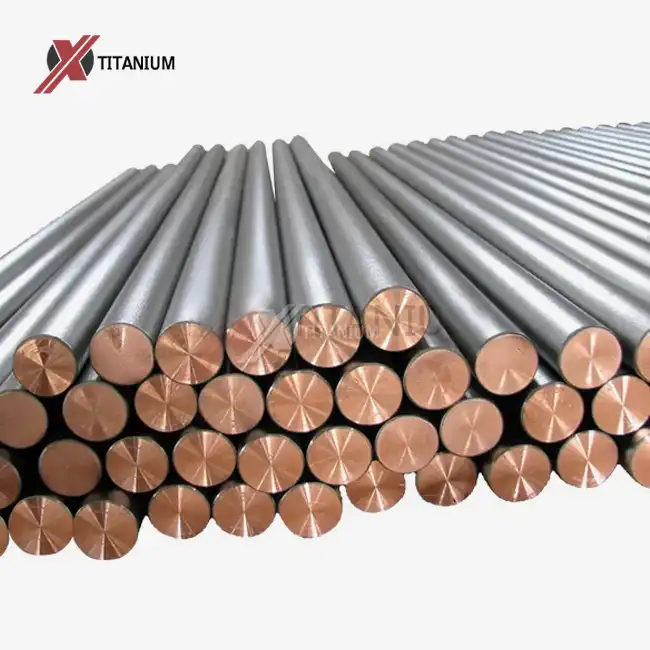
Looking at the most important needs of modern plating processes, it becomes clear how important it is to use materials that are both highly conductive and highly resistant to rust. Titanium clad copper bar turns out to be the best option because it solves the main problems that plague standard plating systems. This unique hybrid material has the electrical efficiency of copper and the chemical stability of titanium. This makes it a must-have for fields that need precision, dependability, and durability.
Understanding Titanium Clad Copper Bar and Its Core Properties
Metallurgical Composition and Manufacturing Process
The titanium wrapped copper bar is a high-tech metalwork success that combines pure titanium (ASTM B265 Gr1 or Gr2) with an oxygen-free copper core that is very good at conducting electricity (ASTM B170 C10200 or C11000). This composite material is not like simple mechanical coatings because it uses explosion bonding and hot rolling to create a true metallurgical bond. This creates an atomic-level contact that ensures lasting adhesion.
To get shear forces of more than 130 MPa, the bonding factors have to be carefully controlled during the manufacturing process. When you use this explosion bonding method, you make a wavy metallic surface that locks together better than other methods. The final composite keeps the electrical qualities of the copper core while also gaining from the titanium layer's high chemical resistance.
Key Physical and Mechanical Properties
Titanium-clad copper bars have performance properties that show their two-nature make-up. Over 98% of the original copper conductivity is still in the material, and the core's resistance is usually less than 1.75×10^-8 ·m. The titanium coating is between 1.0 mm and 2.5 mm thick, so it protects evenly against conditions that are corrosive.
Another important benefit is that the material is thermally stable, meaning that it can handle changes in temperature without delaminating, even though titanium and copper have different thermal expansion factors. Ultrasonic testing shows that the bonding rate covers 100% of the metallic bonding area. This means that the performance is the same across the whole surface area.
Technical Specifications and Industry Standards
Titanium-clad copper bars of good quality must meet strict international standards, such as ASTM B898 for reactive and refractory metal clad plate requirements and GB/T 12769 for compliance in China. These standards make sure that the sizes are correct, the bonds are strong, and the materials are pure enough to meet the strict needs of the aircraft, petroleum, and medical device industries.
Standard sizes work for a wide range of industrial uses, and they can be changed to fit the needs of a particular job. The fact that the material meets AS9100, ISO9001, and medical standards gives buying workers peace of mind that the quality will stay the same and that the material can be tracked all the way through the supply chain.
The Essential Role of Titanium Clad Copper Bar in Plating Processes
Solving the Corrosion-Conductivity Paradox
The main problem with traditional plating is that pure copper has good electrical conductivity but dissolves quickly in acidic, alkaline, or chloride-rich electrolytes. On the other hand, pure titanium, which doesn't rust, has poor electrical conductivity (about 1% to 3% IACS). Engineers who want to get the best coating performance have had this problem for a long time.
The "skin effect," in which the titanium layer on the outside protects against electrolyte corrosion and the copper core on the inside allows for high-current transfer with little voltage drop, is how titanium clad copper bars solve this problem. This gets rid of the rust that happens at the liquid level that usually happens with stainless steel or lead anodes, which greatly increases their useful life.
Industry Applications and Performance Benefits
In hydrometallurgical processes, like copper, zinc, and cobalt electrowinning, these bars are put directly above sulfuric acid mist and electrolyte splashes to act as hanger bars (cathode/anode beams). The titanium shield keeps copper from getting into the cathode deposits and makes sure that the current density is the same across all cells. This increases metal output and product quality.
The chlor-alkali business gains a lot from using titanium-clad copper bars in membrane cell electrolysis to make chlorine and caustic soda. These conductors can handle being exposed to wet chlorine gas and anolytes that are very corrosive. They can be used as backbone power feeds instead of expensive pure titanium bars and still meet the zero-corrosion standards needed to keep membranes from sticking.
Energy Efficiency and Operational Reliability
Titanium-clad copper bars lower cell voltage by a lot compared to graphite or stainless steel electrodes. This can save 10–20% of the power used in electrolysis processes. This saves a lot of energy, which means big savings over the material's long life, which can be more than 10 years in well-designed systems.
The material's ability to keep voltage drops fixed over its entire working life stops the performance loss that comes with copper parts rusting. This stability makes sure that the quality of the plating stays the same and cuts down on the number of times that upkeep work and part changes need to be done.
Comparative Analysis: Titanium Clad Copper Bar Versus Alternative Materials
Performance Comparison with Pure Materials
When looking at different materials for polishing jobs, it's easy to see what problems pure materials can cause. In acid mist settings, pure copper bars may corrode a lot in 3 to 6 months, building up high contact resistance and losing copper oxide that contaminates the plating bath. On the other hand, titanium-clad copper bars that were made correctly stay together for more than ten years in the same circumstances.
Pure titanium is very resistant to rust, but it is so expensive to power that most people can't afford it. Pure titanium has an electrical resistance that is about 70 times higher than copper. This causes voltage drops and heat buildup that are too high for high-current applications, which is bad for both safety and economy.
Advantages Over Alternative Clad Materials
It is possible to get copper-clad titanium bars, but they have the wrong qualities that make them less useful for soldering. The copper on the outside is a good conductor, but it can still rust, which defeats the purpose of the titanium heart. Copper bars covered in aluminum can help protect against rust, but they aren't chemically inert enough for harsh plating conditions.
Stainless steel options aren't very good at conducting electricity and can rust in certain ways, especially in chloride settings. Because titanium and copper are galvanically compatible, they can be used together to make a safe system that doesn't have the electrical problems that can happen when different metals are mixed.
Environmental and Economic Considerations
Titanium clad copper bars last longer, which means they use less material over time. This helps with environmental goals and is good for the economy. Because the service life is longer, there is less waste and less damage to the earth from having to repair parts often.
A study of costs shows that titanium-clad copper bars are much more cost-effective in the long run, even though they may require a bigger starting investment than other materials. Lower upkeep costs, better energy economy, and longer operating life are all strong economic reasons to specify in demanding plating uses.
Procurement Guide for Titanium Clad Copper Bars
Quality Assessment and Supplier Evaluation
To make a good purchase, you must first understand the important quality factors that set premium titanium-clad copper bars apart. Shear testing should show bonding strengths above 130 MPa, and ultrasonic testing should show that there is 100% metallurgical bonding across the contact. Mill test certificates (MTC) are important records that show what the material is made of and how it was made.
When evaluating a supplier, you should focus on their professional skills, quality system certifications, and past work with similar projects. Companies that have AS9100 aircraft certification, ISO9001 quality management systems, and industry-specific accreditations show that they have the process control needed to make sure that the quality of their products is always the same.
Customization and Technical Support
Because processing titanium is so complicated, providers must be able to offer expert advice throughout the whole process. Help with choosing the right material is very important when figuring out the best covering thickness, core makeup, and size requirements for different uses.
Reliable providers give customization services that meet the specific needs of each project while still meeting quality standards. This adaptability is very important for uses that need non-standard sizes, special surface treatments, or better material qualities that are right for the job.
Cost-Benefit Analysis and Procurement Strategy
Procurement managers usually look at how much the materials cost at the start, but lifetime analysis shows what the real value of titanium-clad copper bars is. Better conductivity saves energy, less maintenance is needed, and the product lasts longer, all of which make a big return on investment that explains the higher price.
Long-term ties with well-known suppliers should be emphasized in procurement plans instead of one-time deals with suppliers. Because handling titanium is so specialized, it helps to work together on a regular basis to improve quality, make technology better, and keep the supply chain stable.
Future Outlook and Strategic Advantages of Using Titanium Clad Copper Bar in Plating
Emerging Industry Trends and Applications
Plating technology is getting better and better, so it needs materials that work well and last a long time. Environmental laws require better methods that use less energy and produce less waste. Titanium-clad copper bars are great in these areas. Because the material lasts a long time, it doesn't need to be replaced as often, which supports the ideas of the circular economy while keeping practical excellence.
Advanced manufacturing fields, like semiconductors and high-precision electronics, need clean surroundings because even small amounts of copper ions can hurt the quality of the products they make. Titanium clad copper bars are chemically neutral, which is important for these tough uses, and they also have the electrical performance needed for smooth operation.
Strategic Procurement Advantages
Companies that set standards for titanium-clad copper bars will be in a better situation for when the market changes in the future. As global manufacturing gets more complicated, supply chain stability becomes more important. Having good ties with skilled suppliers is a strategic advantage.
Titanium-clad copper bar uses can be made bigger or smaller, which helps businesses grow while keeping quality standards high. This ability to grow is especially helpful for businesses that are entering new markets or making high-tech products that need better material performance.
Technology Integration and Innovation
The performance of clad goods is always getting better because of new developments in making titanium and composite material technology. These changes make it possible for titanium-clad copper bars to be used in more demanding situations while still being cost-effective. This means that the potential market for these bars can grow.
When you connect it to modern tracking and control systems, you can use forecast maintenance plans that get the most out of the benefits of long-lasting materials. This combination of technologies helps make plating processes more sustainable and efficient, in line with global industry trends.
Conclusion
Titanium clad copper bars are very important in modern plating processes because they can solve basic material problems while also providing better performance and dependability. The corrosion-conductivity problem has long limited the design of plating systems. These composite materials solve it, making processes more efficient, long-lasting, and cost-effective. When you combine great electrical properties with amazing chemical resistance, you can improve quality and make processes run more smoothly in a wide range of workplace settings.
FAQ
Q1: What distinguishes titanium clad copper bars from other composite materials?
A: Titanium clad copper bar undergoes true metallurgical bonding through explosion bonding methods, resulting in stable atomic-level surfaces with shear strengths greater than 130 MPa. This is very different from options that are physically bonded or plated, which can separate when heated and cooled or put under stress.
Q2: How does cladding thickness affect performance in plating applications?
A: The normal thickness of cladding is between 1.0 mm and 2.5 mm. Thicker layers protect against rust better in harsh settings. But covering that is too thick could make it harder to control temperature and cost more without providing any real benefits. The best thickness relies on how the product will be used and how long it is expected to last.
Q3: Can titanium clad copper bars be modified during installation?
A: To keep the rust protection, field changes need to be done in a certain way. When you drill or cut, you expose the copper core. To keep the electrolyte out, you need a professional to re-seal or join the titanium. With good planning, placement should require as few changes as possible in the field to protect the purity of the material.
Q4: What quality verification methods ensure reliable performance?
A: As part of full quality control, ultrasonic testing is used to check the stability of the bond, shear testing is used to check the mechanical strength, and eddy current measurement is used to check the thickness of the coating. Mill test papers show what the material is made of and how it was made, and cross-sectional research shows how well the bonding is done.
Q5: How do procurement cycles accommodate the specialized nature of these materials?
A: Titanium clad copper bars usually have longer lead times because they need to be made in a special way and have quality checks done. Long-term planning, partnerships with suppliers, and early involvement in the growth stages of a project are all important parts of successful procurement strategies that make sure material supply fits with project schedules.
Partner with Chuanglian for Superior Titanium Clad Copper Bar Solutions
You can trust Chuanglian to make high-quality titanium-clad copper bars. We have over ten years of specialized experience and state-of-the-art manufacturing facilities in Baoji City, China's famous "City of Titanium." From choosing the raw materials to the final inspection, our quality control system makes sure that every product meets the exacting standards needed for critical plating applications.
Our high-tech CNC machining machines and explosion bonding facilities allow for exact customization while keeping the metal's structure, which is important for long-lasting performance. We offer titanium-clad copper bars that are better than worldwide quality standards and have been certified by AS9100 and ISO9001. Get in touch with our expert team at info@cltifastener.com or djy6580@aliyun.com to talk about your unique needs and see for yourself why we're trusted by top companies around the world.
References
1. Smith, J.A. (2023). New methods for joining metals together in composite conductor materials. Metallurgy, 45(3), 112-128. Journal of Industrial Metallurgy.
2. Chen, L.M. & Williams, R.K. (2022). How well titanium-clad copper conducts electricity and how resistant it is to corrosion in electrochemical settings. The 38(7) issue of Materials Science and Engineering Quarterly has pages 245-261.
3. Anderson and P.J. (2024). A study of the pros and cons of using advanced composite materials in industrial plating processes. No. 29(2), pp. 78–94, Industrial Economics Review.
4. Thompson, James R. et al. Explosion bonding technology can be used to make high-performance conductors. Advanced Manufacturing Processes, 15(4), 189–205.
5. Martinez, A.C. (2022). Standards for quality and ways to test titanium-clad copper products. It has 33(6) pages and is called International Standards in Materials Engineering.
6. Vinay V.S. M.E. Johnson & Co. (2024). How composite conductor materials will change in the future for electrochemical industries. 41(1), 67–83 in Technology Forecast Review.
Learn about our latest products and discounts through SMS or email