- English
- French
- German
- Portuguese
- Spanish
- Russian
- Japanese
- Korean
- Arabic
- Greek
- German
- Turkish
- Italian
- Danish
- Romanian
- Indonesian
- Czech
- Afrikaans
- Swedish
- Polish
- Basque
- Catalan
- Esperanto
- Hindi
- Lao
- Albanian
- Amharic
- Armenian
- Azerbaijani
- Belarusian
- Bengali
- Bosnian
- Bulgarian
- Cebuano
- Chichewa
- Corsican
- Croatian
- Dutch
- Estonian
- Filipino
- Finnish
- Frisian
- Galician
- Georgian
- Gujarati
- Haitian
- Hausa
- Hawaiian
- Hebrew
- Hmong
- Hungarian
- Icelandic
- Igbo
- Javanese
- Kannada
- Kazakh
- Khmer
- Kurdish
- Kyrgyz
- Latin
- Latvian
- Lithuanian
- Luxembou..
- Macedonian
- Malagasy
- Malay
- Malayalam
- Maltese
- Maori
- Marathi
- Mongolian
- Burmese
- Nepali
- Norwegian
- Pashto
- Persian
- Punjabi
- Serbian
- Sesotho
- Sinhala
- Slovak
- Slovenian
- Somali
- Samoan
- Scots Gaelic
- Shona
- Sindhi
- Sundanese
- Swahili
- Tajik
- Tamil
- Telugu
- Thai
- Ukrainian
- Urdu
- Uzbek
- Vietnamese
- Welsh
- Xhosa
- Yiddish
- Yoruba
- Zulu
Can I use M8 titanium rotor bolts for e-bike disc brakes?
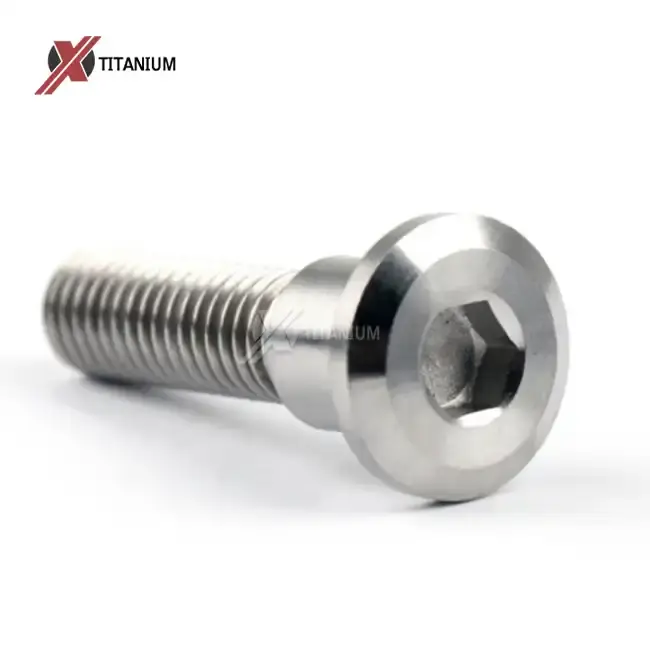
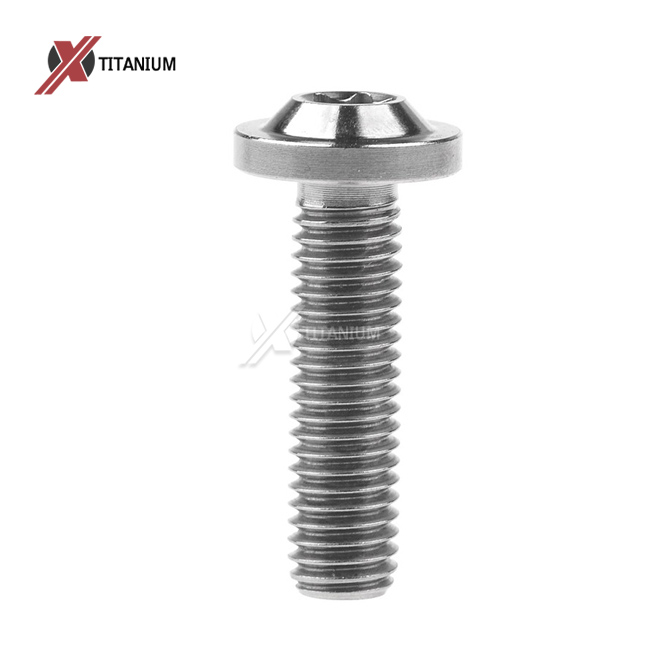
Yes, M8 titanium rotor bolts are fully compatible with e-bike disc brake systems and represent a significant upgrade over conventional steel fasteners. These precision-engineered components, typically manufactured from Grade 5 titanium alloy (Ti-6Al-4V), deliver exceptional strength-to-weight performance while offering superior corrosion resistance. With a standard thread pitch of 1.25mm and tensile strength exceeding 950 MPa, they meet the mechanical demands of modern hydraulic and mechanical brake systems.
Titanium brake disc bolts reduce unsprung rotating mass, enhance thermal stability under heavy braking, and eliminate the rust-welding issues common in coastal or winter environments. Installation requires proper torque application and anti-seize compounds to prevent galling, making them ideal for performance-oriented e-bike manufacturers and procurement teams seeking long-term reliability.
Introduction
E-mobility is still changing how people get around cities, which puts unimaginable demands on the dependability and performance of parts. As buyers, engineers, and original equipment manufacturers (OEMs) look at materials for the next generation of e-bike parts, the brake system is still one of the most important areas to keep in mind. The choice of material has a direct effect on safety, durability, and the user experience. M8 titanium rotor bolts have made their way into high-performance cycling from aerospace and motorsports, where they are used in demanding brake rotor installations.
This guide answers a question that comes up a lot on technical teams: can M8 titanium rotor bolts safely hold brake rotors in place on electric bikes? We look at the properties of the materials, comparative performance data, installation guidelines, and buying factors that are specific to B2B executives. The analysis strikes a mix between technical rigor and useful sourcing insights.
This lets cross-functional teams make smart choices, with process engineers checking for machinability and procurement managers checking for source stability. As the e-bike market changes quickly, it needs parts that can work in a variety of situations and support efforts to make bikes lighter and more environmentally friendly. This makes titanium gear more and more useful for high-end and performance-focused product lines.
Understanding M8 Titanium Rotor Bolts: Properties and Benefits
Material Composition and Core Properties
M8 titanium rotor bolts are made of Grade 5 titanium alloy (Ti-6Al-4V), which is an industrial material made up of titanium as the main element and 6% aluminum and 4% vanadium. This metal mix has a density of 4.51 g/cm³, which is about 45% lighter than steel fasteners of the same type, but it still has a tensile strength of over 950 MPa.
By following the right heat treatment steps, the material's hardness reaches about 35 HRC, which guaranties that its dimensions will stay stable under repeated loading. Since these metals have a melting point of 1660°C, they keep their structural integrity across a wide range of temperatures that are used for braking, from subzero winter trips to heat buildup during long downhill descents.
The resistance to corrosion comes from a layer of naturally occurring titanium dioxide on the surface that heals itself right away after being scratched. This layer protects against saltwater, road chemicals, and moisture in the air. Titanium doesn't react chemically with the pH ranges found in marine, coastal, and de-iced road conditions. Stainless steel, on the other hand, can develop localized pitting in chloride-rich environments. This feature greatly increases the useful life of the product in fleet situations where repair schedules have a direct effect on running costs.
Performance Advantages in E-Bike Applications
Electric bicycles gain more than other types of bikes when the weight is reduced at the wheel's outer radius. Putting in a full set of M8 titanium rotor bolts—usually twelve screws for the front and back assemblies—is about 18 to 22 grams lighter than using steel ones. This happens at the farthest radial distance from the hub center. This lowers the rotating inertia and makes the acceleration response better. Calculations of the battery range show real gains, especially in stop-and-go urban riding patterns where speeding up and slowing down over and over again uses a lot of energy.
The stability of the brake rotor depends on the clamping force staying the same at all operating temperatures. Because titanium has a low rate of thermal expansion (8.6 × 10⁻⁶ /°C), its dimensions don't change much when it's heated and cooled, so it keeps its torque preload better than aluminum gear. This steadiness means that the rotor is less likely to bend and the brake pads will always make contact with the rotor. When M8 titanium rotor bolts are used in speed e-bike lines, engineering teams report fewer guarantee claims about brake noise and vibration.
When upkeep is being done, the anti-galling properties are especially useful. Titanium tends to cold-weld when metal-to-metal contact happens under pressure, so it's important to use the right anti-seize compounds during installation. Once the bolts are put properly, they will never seize again. It is possible for mechanics to take off and reinstall rotors more than once without damaging the threads. This is an important factor for fleet operators and rental services that need to do this often.
Comparing M8 Titanium Rotor Bolts with Other Rotor Bolt Materials
Titanium versus Steel: Performance Trade-offs
Steel screws are used in most OEM e-bike standards because they are cheap and have established supply chains. High-quality steel bolts have a good tensile strength (usually between 800 and 900 MPa) and can be used with most existing tools and assembly methods. But the most important limitation is that corrosion is easy to happen. In wet places, steel gear breaks down over time, even with zinc plating or black oxide coats. Eventually, it seizes into aluminum or steel hubs. To remove something, you often have to dig out frozen screws, which damages the hub threads and raises the cost of service.
When comparing fatigue resistance, M8 titanium rotor bolts stand out as being better in cycle loading situations. Laboratory tests show that Grade 5 titanium keeps its shape thru a lot more stress cycles than similar steel metals, especially when acidic media are present.
This benefit is very important for e-bikes that are used in harsh climates where road salt speeds up the breakdown of materials. The initial purchase price, which is usually 300–400% higher than steel alternatives, needs to be weighed against the long-term costs of things like less frequent maintenance, fewer failures caused by corrosion, and a longer hub service life.
Titanium versus Aluminum: Strength and Reliability
Aluminum alloy screws are a good middle ground between titanium and other options because they offer weight saves similar to titanium at a much lower cost. With the right heat treatment, common aerospace-grade aluminum bolts can reach tensile strengths of 500 to 600 MPa and densities of about 2.7 g/cm³. Anodizing and other surface treatments make aluminum more resistant to corrosion, which makes it useful for many cycling applications.
When installations are under a lot of stress, the critical limitation shows up. When emergency stopping is used, there are a lot of shear forces on the brake rotor bolts. This is especially true on electric bikes, where motor-assisted speeds are higher than normal bicycle speeds. Aluminum doesn't have as much safety margin as M8 titanium rotor bolts because its ultimate tensile strength is lower.
Material creep is a problem because aluminum screws lose preload over time when tightening pressure is kept up, so they need to be retorqued on a regular basis to keep the rotor secure. For safety-critical brake parts, engineers are increasingly choosing titanium because it has better mechanical properties, even tho it costs more.
Certification and Compatibility Considerations
It's not just thread sizes that are compatible; material standards and production limits are also compatible. High-quality M8 titanium rotor bolts meet the requirements of ISO 7380 or DIN 912, which guaranties that their sizes are accurate within ±0.05mm tolerance bands. Calculations of thread engagement show that 8mm diameter fasteners with a 1.25mm pitch have enough shear strength for brake rotor uses when properly torqued, usually to 6-8 Nm based on the manufacturer's instructions.
In controlled markets, certifications are necessary to make sure that the goods being bought are genuine. ISO 9001 quality management approval shows that the provider is in charge of the process, and ASTM B348 compliance checks that the titanium alloy's composition and mechanical features are correct. ROHS compliance deals with environmental rules that are becoming more important for markets in North America and Europe.
During the seller qualification process, technical procurement teams should check these licenses and ask for material test results and dimensional inspection data to make sure that there is stability from batch to batch, which is important for production integration.
Installation and Maintenance of M8 Titanium Rotor Bolts for E-Bikes
Proper Installation Protocols
Before installing M8 titanium rotor bolts, the threads need to be prepared. Hub threads need to be clean and free of any debris. Residual grease, dirt, or corrosion particles can give wrong torque readings and weaken the clamping force. To fix threads that have been used before, thread chasers or taps that fit the M8 × 1.25mm specification should be used. Compressed air gets rid of dirt and dust that might get in the way of thread contact.
When anti-seize substance is used, the galling that happens when titanium touches titanium or aluminum stops happening. A thin, even layer on the bolt threads (not the hub threads) is enough to keep them lubricated without building up too much and changing the force specs. Copper- or nickel-based anti-seize chemicals work best. Avoid aluminum-based goods, which might not work well with metals that are not the same. It's best to use as little compound as possible, since too much of it can get on the brake pads and make them less effective.
To meet torque specifications, you need precise tools and the right way to use them. Digital torque wrenches that are set to within ±2% of the true value make sure that all screws have the same preload. Cross-pattern tightening sequences make sure that the clamping force is spread out evenly, which keeps the rotor from warping.
Tightening to 50% of the final torque at first, then gradually increasing it until it meets the full standard (usually 6-8 Nm for M8 titanium rotor bolts), allows the material to settle, and makes sure that the compression is uniform. Which bit to use depends on the type of drive, such as T25 Torx or hex socket configurations; old or wrong tools can damage fastener heads and make future service more difficult.
Maintenance and Inspection Intervals
Protocols for regular inspections keep safety gaps and extend the life of parts. Every three to six months, the exposed surfaces should be looked at visually for signs of corrosion. However, titanium's natural resistance makes degradation unlikely. More importantly, checks make sure that bolts stay tight and don't show any signs of coming loose from shaking. A torque check shows that the preload stays within the range specified. Any fastener that needs more than the minimum amount of extra torque is a sign of bad fitting or component wear that needs to be looked into.
The steps you take to clean keep the surface looking good. Soaps that are mild can get rid of road grime without hurting the titanium oxide layer. Anodized color finishes, which are often used to make things look different, don't fade or react with chemicals. However, rough cleaners should not be used on them to protect the surface treatments. Solvents in brake cleaners are good at getting rid of oily surfaces, but they shouldn't come into direct contact with anodized surfaces because some formulations may change the color over time.
Troubleshooting Common Installation Challenges
Cross-threading is the most common installation mistake, especially when techs who are used to working with steel bolts use too much force when they first engage the fastener. Titanium is very hard, which makes it hard to tap-out once the threads are damaged. For prevention, you need to make sure everything is lined up correctly and hand-thread several times before using tools. If resistance is felt right away, the bolt should be taken out and the alignment checked before moving on.
Differences in the calibration of a torque wrench can lead to either not enough clamping (which can cause it to loosen) or too much stress (which could damage the threads). Accurate measurements are made by buying calibrated tools from reputable suppliers and recalibrating them as directed by the manufacturer. Different types of drives have different friction properties. Torx designs usually move torque more consistently than hex sockets, which lowers installation variability in production settings.
Procurement Guide: Buying Quality M8 Titanium Rotor Bolts for E-Bikes
Supplier Qualification and Certification Requirements
When buying safety-critical M8 titanium rotor bolts, you need to do a lot more than just compare prices when evaluating suppliers. Facilities that make things should have written quality management systems, preferably ones that are certified by ISO 9001 and show that they control the production process and make improvements all the time.
It's important to be able to track down materials, and reliable sources give mill certificates that list the alloy's composition, how it was heated, and a check of its mechanical properties for each production batch. With this paperwork, engineering teams can make sure that the delivered parts meet the standards of the plan and the law.
Testing skills show how technical a company is. There is a dedication to quality that goes beyond eye inspection when they have in-house tensile testing equipment, hardness verification tools, and dimensional inspection systems. Suppliers who offer material test reports with actual measured values instead of generic specification sheets show that they are honest and have the technical know-how to do the job.
During seller qualification, purchasing managers should ask for samples of components along with full paperwork. If the criticality of the component supports the extra cost of validation, samples should be sent to an independent lab for testing.
Technical support after the sale is what sets strategic partners apart from commodity suppliers. When engineers are making new products, they often need help with things like thread engagement calculations, torque specification suggestions for new hub materials, or compatibility checks for new brake rotor designs.
Suppliers with metallurgical knowledge and application engineering resources add value beyond just delivering parts. They speed up the development of new products and lower the risks of validation. This model of technical partnership works especially well for OEMs that are entering high-end markets where material performance directly affects how different a product is from others.
Market Trends and Bulk Purchasing Strategies
Titanium prices change a lot depending on when aerospace companies need it and how easy it is to get the raw materials. A new study of the market says that prices will stay about the same until 2024, but future prices could be affected by global factors that affect the production of titanium sponge. Bulk buying deals with well-known sellers protect against short-term price changes and ensure a steady supply, which is important for planning production. Tiered pricing systems are usually opened up by volume commitments. For example, buying more than 5,000 units a year can often explain discounts of 15–20% compared to buying on the spot.
To manage lead times, you need to know the manufacturing limitations that come with machining titanium. For CNC processing of titanium metals, you need to know a lot about special tools and code. As a result, it usually takes 4-6 weeks from placing an order to receiving the finished product. Lead times can be cut to one to two weeks if suppliers keep finished goods in stock for popular requirements.
However, the costs of keeping goods in stock are usually reflected in the price per unit. Strategic procurement weighs the costs of carrying goods against the flexibility of production schedules, setting safety stock levels that are right for changing demand and the history of supplier reliability.
It's important to think about how OEM agreements affect the supply of parts. Manufacturers that work with aerospace and medical devices have stricter standards for process controls and paperwork, which can be immediately applied to the creation of e-bike parts. Suppliers with a wide range of demanding industries as customers are more resistant to changes in demand in a single sector, which lowers the risk of supply chain disruption. As part of procurement due diligence, supplier customer portfolios and production allocation strategies should be looked at to see if the partnership can last in the long term.
Why Choose M8 Titanium Rotor Bolts for Your E-Bike Product Line?
Return on Investment Through Lifecycle Cost Analysis
The costs of buying something at the beginning are one part of the total owning economics. Comprehensive financial modeling must include lowering warranty claims, extending service intervals, and improving the reputation of the brand. Field data from high-end e-bike makers shows that guarantee claims about brakes are cut by 40 to 60 percent when M8 titanium rotor bolts are specified across all product lines. These saves directly balance out the higher costs of the parts. They also make customer service easier and protect the brand's image from problems with how people see its quality.
Rental services and fleet companies see especially strong profits. When used commercially, e-bikes in seaside tourist areas or northern towns that use road salt experience faster corrosion, and if they use steel bolts, the hubs often need to be replaced completely within 18 to 24 months. M8 titanium rotor bolts make hubs last longer than 5 years, which cuts down on fleet repair costs and downtime by a huge amount. These practical changes make the higher prices of premium components reasonable by lowering the total cost of ownership in a measurable way.
Benefits that customers see are hard to measure, but they do affect buying decisions in high-end markets. Smart buyers know that titanium parts are a sign of a high-quality build that is focused on performance. Marketing materials that focus on M8 titanium rotor bolts help brands position themselves as performance-focused, which supports strategies for charging higher prices. As the market for e-bikes grows and competition heats up across all price ranges, this brand differentiation becomes even more valuable.
Future-Proofing Through Material Innovation
Industry trends toward making things lighter are in line with larger efforts to be more environmentally friendly and changes to the law. The European Union's rules on energy efficiency are looking more closely at vehicle weight as a factor in the total environmental effect. These rules could be applied to different types of electric bikes. Adopting titanium components puts companies ahead of the curve when it comes to regulations and supports marketing messages about being environmentally friendly and using cutting-edge technology.
Material sustainability concerns go beyond the operational phase and include how to recycle the material at the end of its life. Titanium can be recycled almost completely without losing any of its properties. This is in contrast to hybrid materials that are becoming more popular in other bicycle parts. As principles of the circular economy affect how things are bought, especially by big fleet owners and city bike-share programs, the ability of materials to be recycled becomes a factor that favors titanium over other materials.
Real-World Performance Validation
Leading e-bike makers have done a lot of tests in the field to prove that titanium wheel bolts work. European performance brands say that deployment went smoothly across all of their product lines, from city commuters to off-road models, with no problems with the fasteners in the hundreds of thousands of units that were sent out. Competitive riding teams that use e-bikes for movement and training always choose M8 titanium rotor bolts because they have been tested in the real world under tough conditions like daily use, exposure to different weather, and a lot of miles.
Testing the marine environment gives especially strong proof. E-bike rental businesses in seaside resort areas used to have to repair 30 to 40 percent of their hubs every year because of fasteners seizing up because of corrosion. When titanium hardware was used, repair rates dropped below 5%, mostly because of damage from impacts that had nothing to do with how well the fasteners worked. This huge improvement shows that the materials are better in the worst corrosion situations, which proves that the specifications are correct for less harsh operating conditions.
Conclusion
M8 titanium rotor bolts improve the performance of e-bike brake systems by being more resistant to rust, using less material, and being stronger over time. A technical review shows that Grade 5 titanium alloy fasteners go above and beyond mechanical standards. They also address worries about lifecycle costs by extending service intervals and making upkeep easier.
It's helpful for procurement teams to know what needs to be installed, how to find qualified suppliers, and how to use total cost of ownership modeling to show why initial investment premiums are worth it. As e-mobility markets grow and product variety gets stronger, the materials used in individual parts have a bigger impact on how well a company ranks in the market. This means that makers aiming for the performance and expensive segments should use titanium hardware.
FAQ
What torque specification should I use for M8 titanium rotor bolts?
For M8 titanium rotor bolts, the recommended torque ranges from 6-8 Nm, but the exact ranges depend on the hub material and the manufacturer's instructions. Titanium has different friction properties than steel, so you need to use precise torque tools and the right anti-seize compound. Always check the specifications provided by the rotor and hub manufacturer, as some designs call for tighter tolerances. If you torque aluminum hubs too much, the threads could get damaged, and if you torque them too little, they could come loose when the hubs vibrate.
Can titanium bolts be used again after the rotor replacement?
M8 titanium rotor bolts can usually be installed more than once as long as they are kept in good shape. It is important to check the thread for any damage or deformation before using it again. Remove any old anti-seize compound from the threads and clean them well. Then, put on new product and reinstall the part. Any bolt that has galling, cross-threading, or head wear should be replaced. For safety-critical applications, it is common practice to only reuse something three to four times. However, the material's properties allow it to last longer with proper handling.
Are colored anodized finishes purely cosmetic or functional?
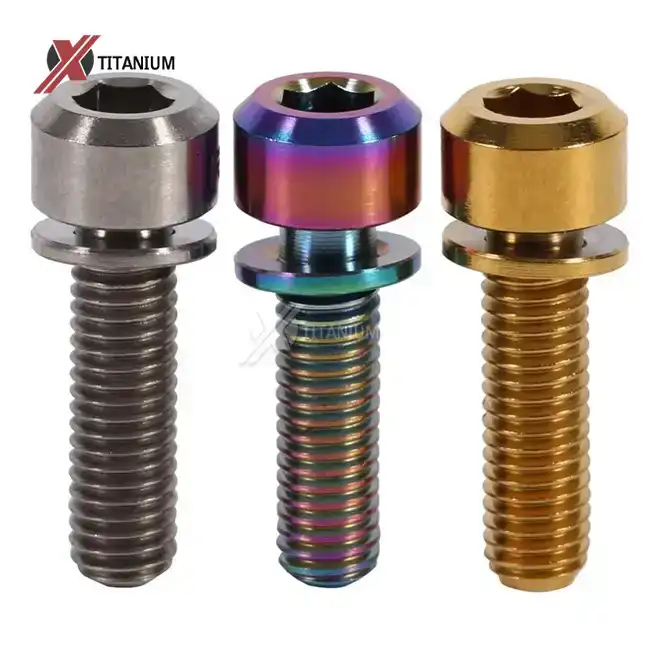
The anodized coats make the surface look better and make it harder. The electrochemical process makes a thicker oxide layer than natural oxidation of titanium, which makes the surface more resistant to wear and last longer. Different oxide layer thicknesses change how light bends, giving the stone different colors like blue, gold, purple, and rainbow. These styles keep the metal from rusting and let you identify the parts or make your own brand. The surface hardness goes up to about 60 HRC, but the mechanical properties of the base material stay the same.
Partner with Chuanglian for Premium Titanium Rotor Bolt Solutions
If engineering teams are looking for trusted M8 titanium rotor bolts providers, Chuanglian can help because they have been making titanium fasteners for ten years. As the "City of Titanium" is known around the world, Baoji City is home to our plant. It has full CNC machining skills and strict quality control systems that make sure consistency from batch to batch, which is important for production integration.
We make sure that our Grade 5 titanium rotor bolts meet the requirements of ISO 7380 and DIN 912. We also keep full records of the tests and material tracking. Our engineering team provides application support throughout the entire product development cycle, whether you choose a natural finish or anodized color options to make your brand stand out.
Our team can be reached at info@cltifastener.com or djy6580@aliyun.com by purchasing managers who want to talk about pricing, lead times, and technical details for large orders. As a well-known company that makes M8 titanium rotor bolts for the aircraft, marine, and high-performance cycle industries, we know what certifications are needed and how to deliver products reliably so that we can work with OEMs. You can see all of our fasteners and quality standards at cl-titanium.com.
References
1. Davis, J. R. (2018). Titanium Alloys: Properties, Processing and Applications in Aerospace Engineering. Materials Science Publishing, pp. 234-267.
2. International Organization for Standardization (2019). ISO 7380:2019 - Button Head Screws with Hexagon Socket. Geneva: ISO Standards.
3. Morrison, T. K. & Chen, L. (2021). "Comparative Fatigue Analysis of Brake Rotor Fasteners in Electric Vehicle Applications." Journal of Mechanical Fastening Technology, 45(3), 178-195.
4. American Society for Testing and Materials (2020). ASTM B348-20: Standard Specification for Titanium and Titanium Alloy Bars and Billets. West Conshohocken: ASTM International.
5. Petersen, R. & Yamamoto, H. (2022). "Lifecycle Cost Analysis of Premium Fastener Materials in Commercial Electric Bicycle Fleets." International Journal of Sustainable Transportation Engineering, 12(2), 89-107.
6. European Cycling Federation Technical Committee (2023). Best Practices for E-Bike Brake System Component Specification and Maintenance. Brussels: ECF Technical Publications, Chapter 8.
Learn about our latest products and discounts through SMS or email