- English
- French
- German
- Portuguese
- Spanish
- Russian
- Japanese
- Korean
- Arabic
- Greek
- German
- Turkish
- Italian
- Danish
- Romanian
- Indonesian
- Czech
- Afrikaans
- Swedish
- Polish
- Basque
- Catalan
- Esperanto
- Hindi
- Lao
- Albanian
- Amharic
- Armenian
- Azerbaijani
- Belarusian
- Bengali
- Bosnian
- Bulgarian
- Cebuano
- Chichewa
- Corsican
- Croatian
- Dutch
- Estonian
- Filipino
- Finnish
- Frisian
- Galician
- Georgian
- Gujarati
- Haitian
- Hausa
- Hawaiian
- Hebrew
- Hmong
- Hungarian
- Icelandic
- Igbo
- Javanese
- Kannada
- Kazakh
- Khmer
- Kurdish
- Kyrgyz
- Latin
- Latvian
- Lithuanian
- Luxembou..
- Macedonian
- Malagasy
- Malay
- Malayalam
- Maltese
- Maori
- Marathi
- Mongolian
- Burmese
- Nepali
- Norwegian
- Pashto
- Persian
- Punjabi
- Serbian
- Sesotho
- Sinhala
- Slovak
- Slovenian
- Somali
- Samoan
- Scots Gaelic
- Shona
- Sindhi
- Sundanese
- Swahili
- Tajik
- Tamil
- Telugu
- Thai
- Ukrainian
- Urdu
- Uzbek
- Vietnamese
- Welsh
- Xhosa
- Yiddish
- Yoruba
- Zulu
Comparison of different materials for motorcycle front brake caliper bolts
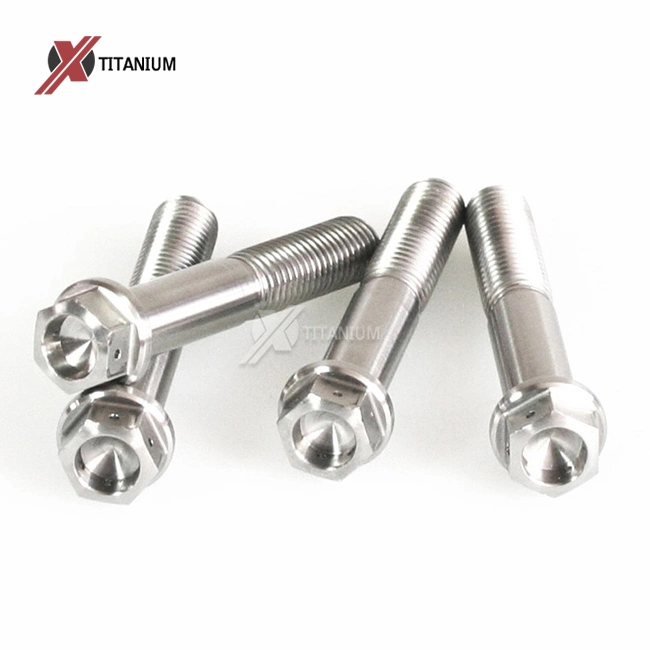
When evaluating materials for motorcycle front brake caliper bolts, the decision extends beyond simple cost considerations to encompass performance, safety, and long-term reliability. Steel remains the traditional choice, offering proven tensile strength and affordability. Aluminum alloys provide weight savings but compromise structural integrity under high-stress braking conditions. Titanium M10 front caliper bolts SV650 bridge this gap by offering a superior strength-to-weight ratio, corrosion resistance, and fatigue performance, making them an attractive upgrade for riders seeking both reduced unsprung mass and lasting durability, though their higher cost must be weighed against the specific demands of track or aggressive street use.
Titanium alloys, particularly Grade 5 Ti-6Al-4V, emerge as the optimal solution for demanding applications. For motorcycles like the Suzuki SV650, titanium m10 front caliper bolts sv650 deliver exceptional corrosion resistance, reduce unsprung weight by approximately 20%, and maintain tensile strength exceeding 900 MPa—meeting the rigorous demands of both competitive racing and all-weather commuting environments.
Introduction
The front brake caliper bolt is an important safety part of motorcycle brake systems. It affects how well the bike stops, how confident the rider is, and how much control the bike has overall. The M10 bolt holds the caliper assembly to the Suzuki SV650's fork leg. The SV650 is a popular base for riding on the street, racing on the track, and long-distance touring. It can handle strong compression and rotational forces when it needs to stop quickly. Material selection significantly affects longevity, weight distribution, corrosion behavior, and maintenance intervals.
People who work in business-to-business buying with motorcycle manufacturers, fleet operators, custom builders, and aftermarket sellers need to compare the total cost of ownership to the performance needs of their clients. It's important to know the mechanical properties, environmental resistance, and application-specific benefits of steel, aluminum, and titanium m10 front caliper bolts sv650 so you can make smart sourcing decisions that meet operational needs, safety standards, and customer expectations in a wide range of riding conditions and regulatory environments.
Material Overview of Motorcycle Front Brake Caliper Bolts
Front brake caliper nuts for motorcycles are mostly made of three types of metal. Each has its own technical qualities and trade-offs that affect which one to buy.
Steel Alloys: Carbon and Stainless Variants
Standards set by ISO 898-1 say that bolts made of carbon steel grade 8.8 or 10.9 can withstand tensile loads of up to 1040 MPa. These screws have a good clamping power and a consistent torque-tension relationship, and they don't cost too much. Since they can do this, they are the OEM standard for low-cost production runs. Because they contain chromium, types 304 and 316 stainless steel are very resistant to rust. This makes them good for places near the water or in the winter where rusting is a problem. Carbon steel is very dense, at 7.85 g/cm³.
This means that it adds a lot of unsprung mass, which changes how fast the suspension moves. Because standard carbon steel rusts easily, it needs to be protected with coats or inspected more often, which adds to the cost of upkeep over its lifetime. You need to be careful when applying pressure to stainless steel because it can gall when it's being put, even tho it doesn't rust. In steady load settings, both types of steel have been shown to work well. However, they are larger and more likely to break down in the environment, which can make them less reliable in the long run.
Aluminum Alloys: Lightweight Alternatives
Most aluminum fasteners are made from 6061-T6 or 7075-T6 metal, which makes them over 60% lighter than steel ones. By lowering the amount of unsprung mass, this immediately makes control dynamics better. It is possible to measure that the suspension and handling work better when the density is about 2.70 g/cm³. A natural oxide layer forms on top of these alloys, which makes them very resistant to corrosion. That means you don't have to worry about rust in wet or coastal places.
Tensile strength for 7075-T6 is usually around 570 MPa, which is not enough for a brake system. Critical limits show up when there is a lot of stress. Because aluminum has a lower wear resistance and elastic modulus, it can be dangerous when it is loaded and drained quickly, like when you brake hard. When standard torque limits are used, thread loss is more likely to happen. This means that less force is needed to tighten, which makes the joint weaker. While aluminum screws are useful in some cases, they aren't strong enough to be used to fix brake calipers, where a broken part could directly affect a rider's safety.
Titanium Alloys: High-Performance Solution
Titanium Grade 5 (Ti-6Al-4V) is the standard metal used in aircraft for safety-critical fasteners. It's very resistant to the weather and has a great strength-to-weight ratio. This metal mix is 90% titanium, 6% aluminum, and 4% vanadium. The strongest it can be pulled apart is between 900 and 1050 MPa, and it only weighs 4.43 g/cm³. In other words, it's just as strong as Grade 10.9 steel but 45% lighter. It builds up a stable layer of titanium dioxide on the surface, which keeps it from rusting in places where protective coatings aren't used, like when it's exposed to salt spray, chemicals, or changes in temperature.
An operating temperature range of -150°C to +400°C can handle big changes in the weather. Titanium doesn't react with living things or chemicals, so when it's mixed with aluminum fork parts, it stops galvanic rusting. This is a big benefit over stainless steel when different metals are put together. Titanium is a very expensive material that needs to be extracted and cut in very complicated ways. This item is a good choice because it works well, is light, and doesn't need to be replaced often because of rust.
Titanium M10 Front Caliper Bolts for SV650: Technical Specifications and Benefits
Titanium m10 front caliper bolts sv650 made just for the SV650 platform are the right size and made of the right material to work with all Gen 1, Gen 2, and Gen 3 models.
Dimensional and Thread Specifications
The fine pitch of these screws is 1.25 mm, which is the same as what Suzuki OEM says should be used on the surfaces where the front brake calipers are mounted. The standard length is 30 mm, but different lengths can be made to fit brake caliper setups that aren't stock or fork leg shapes that have been changed. When threads touch, the ISO 5832-2 and ASTM B348 standards are used. When you roll threads instead of cutting them, the grain structure stays better, which makes them last longer. Installing parts that have hex flange heads or socket caps is easier because there isn't much room between the brake bracket and the fork leg.
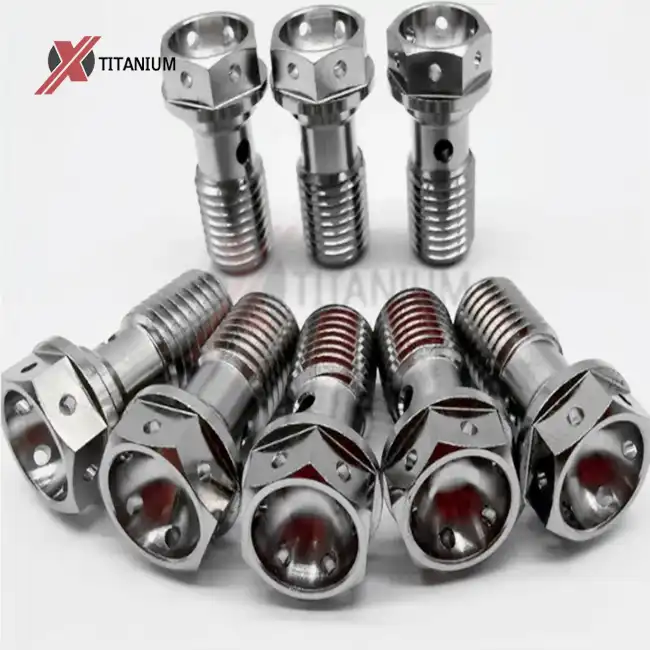
There are different kinds of drilled heads that can be used to place safety wires (lockwires), which meets the technical requirements for racing and gives mechanical retention redundancy against vibration and loosening. Thread class 6g tolerance makes sure that the threads on the fork legs fit properly and don't come loose or get stuck while they're being put together.
Material Composition and Mechanical Properties
The titanium used to make these bolts is called Ti-6Al-4V, and it meets the standards of ASTM B348 Grade 5. Tensile strength at break is at least 900 MPa, yield strength is around 880 MPa, and shear strength is 600 MPa. It is between Rockwell B 36 and 40 hard, which means it doesn't break down easily but is still flexible enough for controlled failure modes. Using a solution and letting the metal age makes the grain stable, so the mechanical properties stay the same from one production batch to the next. As part of material approval, mill test records are kept that show the chemical make-up and the results of mechanical tests.
These reports help meet the requirements for being able to track tools for quality control. RoHS compliance and ISO 9001:2015 certification show that the product is safe for the climate and that the production process is under control. A 20% drop in weight compared to steel versions directly lowers unsprung mass. This makes the suspension more responsive and improves stability when turning, which are important for both racing on the track and going fast on the street.
Corrosion Resistance and Environmental Performance
Titanium's passive oxide layer forms back up right away when the surface is damaged, protecting against corrosion better than stainless steel in places with a lot of chloride. ASTM B117 says that testing with salt spray after 1000 hours or more of exposure shows that there is no corrosion. In seaside areas or places where road salt is used in the winter, steel screws often get stuck. This means that they won't get stuck. Because it doesn't rust, it lasts longer between services and costs less to do maintenance. So, buying managers can plan for longer periods between replacements and less stock.
Materials don't break down during normal maintenance because they are chemically resistant to brake fluid, wheel oil, and common cleaners. When temperatures stay stable across the working range, thermal cycling from repeated hard stopping doesn't cause strength loss or changes to the structure. This makes sure that the clamping force stays the same for the whole machine.
Installation and Maintenance Protocols
Anti-seize powder must be put on the threads and bearing surfaces to make sure they fit right. Because titanium has a high friction coefficient, this keeps it from galling when power is put on it. When working with OEM steel torque specs, you should usually be careful and lower the numbers by 10 to 15 percent to account for how lubricants affect things and the fact that titanium has a lower elastic modulus. Making sure there is enough shear strength means that the thread engagement should go at least 1.5 inches around the bolt.
Once in a while, you should re-torque the bolts to make sure they stay tight. This is especially important in the first few months after installation. It means the fastener wasn't put in correctly and needs to be replaced if you see thread damage or surface cutting. Light soap solutions or isopropyl alcohol are used to clean instead of rough tools that could damage the metal layer. These steps will help parts last longer and make sure the brakes always work well, which will keep people safe.
Comparative Analysis: Titanium vs. Steel vs. Aluminum for SV650 Front Caliper Bolts
You can see that different types of materials work differently and have different total cost effects when you compare them in an unbiased way. This can change how you buy things.
Strength and Fatigue Resistance
The tensile strength of Grade 5 titanium is about the same as that of Grade 10.9 steel. It also doesn't wear out as quickly when loaded and removed many times, which is common in brake uses. According to stress-life curves, titanium is better than other metals in situations where it is used a lot. It can withstand more than 50% of its final tensile strength. Better steel bolts have about the same static strength, but they are more likely to get wear cracks at the thread roots. This is especially true if the surface is weakened by rust pitting. The 570 MPa tensile strength of 7075-T6 aluminum metal isn't strong enough for brake calipers.
There needs to be more than that for emergency braking loads. The thread contact strength calculations show that aluminum will give under normal twisting conditions. This makes it more likely that the caliper will come loose and poses a threat to its retention. Titanium m10 front caliper bolts sv650 are both very strong and very light, so it is the only material that can make structures lighter and more reliable without giving up either strength or weight.
Corrosion Behavior and Environmental Durability
Long-term exposure testing checks how well a substance works in situations that are like riding a motorcycle. In tests with 2000 hours of fast salt spray, titanium doesn't show any rust. However, carbon steel does show a lot of oxidation within 48 hours, even with coatings that protect it. Even tho stainless steel 316 has some protection, it can still rust in places where water builds up at the thread surfaces. Galvanic attack can damage aluminum alloys even tho the oxide layer protects them from uniform rust. This can happen when they are joined with metals that are not the same.
When titanium is put into aluminum fork legs, the aluminum legs slow down the flow of galvanic current. Stainless steel, on the other hand, makes aluminum rust faster where it hits steel. There are steel nuts that break so quickly that coastal riders and winter tourists have to get new ones every year. But titanium fasteners make sure that the structure stays strong for a long time. You need to know how often the bolts need to be changed and how much it costs each time when you figure out the total cost. Squeezed steel nuts can cost more to fix because they damage the wheel legs or strip the threads. This doesn't happen with titanium, tho, because it doesn't rust.
Weight Impact on Performance
As soon as you get rid of unsprung mass, the suspension works better, the bike handles better, and the rider doesn't get as tired when riding in different conditions. Four titanium caliper bolts save about 60 grams per wheel. This may not seem like a lot, but you can tell by how the suspension handles. In racing, every chance to cut down on weight that affects parts that aren't sprung is used. This is because lighter mass lets suspension systems keep tires in contact with the road even when it's not flat. They will like how better it feels to turn and how the forks don't bend as much when stopping.
Aluminum saves more weight, but it leaves safety gaps that aren't good for brake systems. Many places where fasteners are found are made of steel, which has a smaller density. This makes the car harder to move, especially when turning quickly or going on a track. It's important to weigh the benefits of easier handling against the higher costs of the materials when deciding what to buy for performance-based uses. Keep in mind that titanium is the only metal that can lose weight without losing strength.
Total Cost of Ownership Analysis
On the surface, steel screws seem like a better deal. A set of carbon steel bolts costs about $2 to $5, while a set of stainless steel bolts costs about $8 to $15. You can't use aluminum nuts on brakes because they aren't safe. They cost between $10 and $20. Titanium is a pricey metal that is hard to work with, so each set of screws costs between $40 and $80. The costs of owning something change over the course of its life. For instance, steel nuts need to be changed every one to three years in places where they are corrosive.
This costs an extra $10 to $50 a year on top of the maintenance work that needs to be done. It costs more to fix the threads or replace parts when nuts get stuck. Titanium installation only needs to be done once, so it doesn't need to be done again and again for the 5–10 years that most people own their motorcycles. Fleet owners and racing teams can save money by not having to plan as much inventory and upkeep.
Custom makers who work with high-end clients say that titanium standards are fair because they help them stand out and show customers how valuable they are. B2B procurement managers shouldn't just look at the price of the first part. They should also model the total ownership costs, which should include how often the parts need to be changed, how much it costs to people to do the work, and how much it costs for the system to be down.
Market Solutions and Supplier Insights for Titanium M10 Caliper Bolts SV650
Titanium m10 front caliper bolts sv650 that work with SV650s are sold by aftermarket providers, specialized makers, and lines of distribution that reach many customers.
Manufacturer Categories and Quality Differentiation
Businesses can meet their buying needs with the help of aerospace-certified companies like Baoji Chuanglian New Metal Material Co., Ltd. that offer ISO 9001:2015 quality systems, ASTM B348 material compliance, and batch traceability. All of these providers' CNC machines, testing equipment for materials, and technical help for special needs are kept in-house. Aftermarket speed experts specialize in motorcycles and sell pre-built kits that come with tools for installing them and torque specs that are specific to well-known models.
Quality varies depending on things like whether the material is certified, whether the dimensions are controlled, and whether the thread is rolled or cut. Titanium that is sold by OEMs usually comes from well-known mills that have worked with aircraft in the past. In this way, the mechanical features of every batch of goods are kept the same. People who buy from other businesses should check material certificates, ask for test results on samples, and see how well sellers handle quality before they approve vendor lists. Based on where the manufacturer is based, lead times and logistics prices will be different. ASEAN manufacturers can offer lower prices for large orders that need more time to be planned, while US suppliers can quickly fill orders.
Procurement Channels and Volume Considerations
Direct relationships with manufacturers are good for large-scale uses that need custom specs, engineering teamwork, or their own brand. Sometimes you need to buy at least 100 to 500 sets to get a good price, and when you buy 1000 or more, the price goes down. Large industrial distributors keep standard setups on hand so that small lots can be used to make samples or small production runs. People and small businesses can buy things on e-commerce sites, but they don't usually have the paperwork and big savings that businesses need to buy from other businesses.
It's easier to judge suppliers at trade shows and industry exhibitions. Titanium fastener experts and buyers can meet at events like the AIMExpo and the Progressive International Motorcycle Show. Lead times for buying things range from two to four weeks for common items to eight to twelve weeks for custom items that need to find materials and set up tools. Customs forms, import taxes, and combining freight to save money are some of the things you need to think about when you ship things across international borders. People who want to get the best deals and keep the supply chain stable should get in touch with more than one reliable source.
Customer Feedback and Application Validation
Titanium brake nuts have been shown to make the suspension feel better and cut down on the time race teams have to spend fixing cars. These performance gains have been proven in a number of tournaments. Custom builders say that costs need to go up because it makes buyers happy and gives them a chance to stand out. Fleet managers keep track of how many replacements they have to make because of corrosion in coastal and winter service areas. This shows that the benefits to lifecycle costs are clear. People can confirm their fitting experiences, torque specs, and long-term dependability in a range of riding situations thru technical groups and rider communities.
Titanium works better with aluminum fork surfaces than stainless steel, as shown by case studies of Brembo brake retrofits. A lack of quality from cheap titanium sources shows how important it is to check the certification of the material and the supplier, and this principle directly applies to specific parts such as titanium m10 front caliper bolts sv650, where material integrity is critical for shear strength and thread engagement. B2B procurement teams should look at what customers have to say, get references from people who have worked on similar projects, and set up pilot projects before making big purchases or long-term supply deals.
How to Choose the Right Front Caliper Bolts for SV650: Decision-Making Guide
Structured review systems help people who buy things for businesses match the fastener specs to the needs of the job and the company's goals.
Dimensional Verification and Compatibility Confirmation
Checking the thread size is the first and most important thing to do. There is a difference between M10×1.25 fine pitch threading and M10×1.50 coarse pitch threading that is used in some aftermarket caliper setups. If you pick the wrong pitch, the fork leg threads will break as soon as they are put in place. This will cost a lot to fix and put your safety at risk. Length standards need to take into account that OEM and aftermarket parts have different thicknesses of caliper brackets. If there isn't enough touch, the shear strength is weak, and if there is too much length, it can mess up the interior fork systems.
Picking the right head style can help you work around the tool's entry issues. If the gaps between the hex flanges are small, they work well. On the other hand, socket caps let you use more torque thru Allen key connections. There are technical rules that say safety wires used in racing must have drilled heads. When you buy titanium m10 front caliper bolts sv650, you should be given OEM part numbers, dimensional models with tolerance callouts, and the option to do a test fit to make sure it fits before making big orders.
Application-Specific Performance Requirements
It's very important in track racing to keep the weight down and the vibrations at bay. Titanium meets these needs because it helps the car move better and can be used with safety lines. When used for street speed, the pros and cons of weight and cost must be weighed. People who want to save money use stainless steel, while people who want to build something fancy use titanium. When going in all kinds of weather along the coast or in the winter, rust resistance is the most important thing. Titanium's resistance is much better than steel's breakdown patterns.
Because titanium is strong and doesn't need to be serviced as often, touring bikes can go a long way in a variety of conditions. Titanium looks good with a natural metal finish or a PVD coating that comes in gold, black, or rainbow colors. This is shown by high-quality custom restoration projects. If you are in charge of a fleet that rents or trains vehicles, you should focus on lowering the overall cost of ownership and making maintenance simpler over the course of the vehicle's lifetime.
Supplier Evaluation Criteria
Quality marks such as ISO 9001:2015, AS9100 for aircraft uses, or medical device registrations show that the company can prove that the manufacturing process is stable. Paperwork like batch codes, mill test certificates, and chain of custody certificates make it possible to keep track of materials. This helps keep an eye on quality and keep track of who is responsible for what. Along with parts, technical support that can help with torque specs, fitting issues, and special application engineering is very helpful. A guarantee lowers the risk and builds source trust by covering flaws in the material, measures that don't match up, or early failure.
To plan production and make the best use of inventory, you need to know the lead times and be able to see the whole supply chain. Payment terms, prices that are based on volume, and minimum order amounts should all match how you buy things and handle your cash flow. Where a seller is located affects how fast they can meet urgent needs, how much freight costs, and how well they follow customs rules.
Installation Best Practices Verification
To find the right torque value, you need to look at how the grease works, the material's features, and the joint's shape. In the case of titanium, the torque values need to be dropped by 10-15% compared to steel values when anti-seize chemicals are used. The thread engagement depth should be at least 1.5 inches deeper than the bolt diameter to make sure there is enough shear plane area. Be careful not to make any quick turns when you put a safety wire thru a drilled head. This could cause stress to build up.
This is the first service checkup, which happens every 100 to 500 miles. It makes sure that the memory can handle changes in pressure and temperature that happen in real life. As a buyer, you should get safe installation instructions, recommended torque ranges, and maintenance schedules in the paperwork that you buy. Technician teams can't use bad fitting methods that hurt the part's performance or cause guarantee claims if they have the right training.
Conclusion
Picking the right material for motorcycle front brake caliper nuts can have a big impact on how safe they are, how well they work, and how much they cost over their whole life. A cheap way to solve problems where weight and rust are not big issues is to use steel alloys. Aluminum is not strong enough to be used in places where the safety of the brake system is important. Steels made of Titanium Grade 5 are the best because they are strong for their weight, don't rust, and last a long time.
Titanium m10 front caliper bolts sv650 are worth the extra cost for Suzuki SV650 uses that need M10 specs because they make the bike more stable, handle better, and don't need to be serviced as often. These perks come in handy when racing, going along the coast, or driving a lot of miles. When a business buys something from another business, they should look at the total cost of ownership, check the quality systems of the suppliers, and make sure that the material needs match the performance needs and customer value propositions.
FAQ
What torque specification should I use for titanium M10 front caliper bolts?
It's not the same way to torque steel M10 bolts as it is to torque titanium m10 front caliper bolts sv650. If anti-seize compound is used to stop galling, it lowers the friction coefficients. To make up for this, OEM steel specifications should be lowered by about 10 to 15 percent. For the SV650, the standard range is 25 to 30 Nm, but the exact number will rely on the lubricant used and what the maker suggests. As you slowly move closer to torque, watch the bolt stretch to make sure the tightening force is just right. Don't let go of the fastener.
Can titanium bolts be reused after removal?
If you use grade 5 titanium nuts the right way, they will keep the structure strong thru multiple installation rounds. The thread should be checked for damage, galling, or deformation before it is used again. Clean the threads really well, use fresh anti-seize powder, and be sure to use the right amount of pressure. When new fasteners are used in racing, they often have to be put in according to strict rules, no matter what the state is. There should be rules about reuse that balance safety margins and component prices based on how important the application is and how simple it is to check.
How does titanium compare to stainless steel for corrosion resistance?
Titanium is better at keeping its shape in all conditions that are important for bikes. There is no degradation after 2000 hours or more of salt spray testing, but the stainless steel starts to rust where the threads meet. When titanium's inactive oxide layer breaks, it immediately puts itself back together to protect itself. Titanium is better than stainless steel because it doesn't rust when iron and steel come together, which can happen when you ride at the beach or in the winter.
Source Premium Titanium M10 Front Caliper Bolts from Chuanglian
Baoji Chuanglian New Metal Material Co., Ltd. makes titanium fasteners that are strong enough for use in aircraft and meet the exact requirements of high-performance motorbike uses. Our titanium m10 front caliper bolts sv650 are CNC machined from certified Ti-6Al-4V Grade 5 material that meets ASTM B348 and ISO 5832-2 standards. The bolts come with full documentation that shows where they came from. We have worked with titanium for more than ten years and have quality processes that are approved by ISO 9001:2015.
There are many uses for the thread lengths, surface treatments (like polishing, anodizing, and nitriding), and end colors (natural, gold, blue, black, and rainbow) that we offer. We are in Baoji City, which is known all over the world as the "City of Titanium." As a company that only makes titanium m10 front caliper bolts sv650, we help businesses buy titanium by giving them good bulk prices, technical help, and fast shipping all over the world. Our expert team can be reached at info@cltifastener.com or djy6580@aliyun.com to talk about your specific needs. You can also visit cl-titanium.com to see full product specs.
References
1. American Society for Testing and Materials. (2019). ASTM B348: Standard Specification for Titanium and Titanium Alloy Bars and Billets. West Conshohocken, PA: ASTM International.
2. Boyer, R., Welsch, G., & Collings, E.W. (2021). Materials Properties Handbook: Titanium Alloys. Materials Park, OH: ASM International.
3. International Organization for Standardization. (2020). ISO 898-1: Mechanical Properties of Fasteners Made of Carbon Steel and Alloy Steel. Geneva: ISO.
4. Leyens, C., & Peters, M. (2018). Titanium and Titanium Alloys: Fundamentals and Applications. Weinheim: Wiley-VCH.
5. Society of Automotive Engineers. (2022). AMS 4928: Titanium Alloy Bars, Wire, and Rings 6Al-4V Solution Treated and Aged. Warrendale, PA: SAE International.
6. Donachie, M.J. (2020). Titanium: A Technical Guide (3rd Edition). Materials Park, OH: ASM International.
Learn about our latest products and discounts through SMS or email