- English
- French
- German
- Portuguese
- Spanish
- Russian
- Japanese
- Korean
- Arabic
- Greek
- German
- Turkish
- Italian
- Danish
- Romanian
- Indonesian
- Czech
- Afrikaans
- Swedish
- Polish
- Basque
- Catalan
- Esperanto
- Hindi
- Lao
- Albanian
- Amharic
- Armenian
- Azerbaijani
- Belarusian
- Bengali
- Bosnian
- Bulgarian
- Cebuano
- Chichewa
- Corsican
- Croatian
- Dutch
- Estonian
- Filipino
- Finnish
- Frisian
- Galician
- Georgian
- Gujarati
- Haitian
- Hausa
- Hawaiian
- Hebrew
- Hmong
- Hungarian
- Icelandic
- Igbo
- Javanese
- Kannada
- Kazakh
- Khmer
- Kurdish
- Kyrgyz
- Latin
- Latvian
- Lithuanian
- Luxembou..
- Macedonian
- Malagasy
- Malay
- Malayalam
- Maltese
- Maori
- Marathi
- Mongolian
- Burmese
- Nepali
- Norwegian
- Pashto
- Persian
- Punjabi
- Serbian
- Sesotho
- Sinhala
- Slovak
- Slovenian
- Somali
- Samoan
- Scots Gaelic
- Shona
- Sindhi
- Sundanese
- Swahili
- Tajik
- Tamil
- Telugu
- Thai
- Ukrainian
- Urdu
- Uzbek
- Vietnamese
- Welsh
- Xhosa
- Yiddish
- Yoruba
- Zulu
How to Order Custom Titanium Washers
You need to be very clear about your technical needs and find a seller with a history of making high-quality goods and quality certifications before you can order homemade titanium washers. In this step, you need to specify the type of material (like Grade 2 or Grade 5), the width you need, any special surface finishing needs, and any testing needs. Customized Thickened Titanium Washers are not the same as off-the-shelf parts because they are made to meet specific needs for weight, load distribution, and weatherproofing in tough conditions. If you buy from a factory-direct company that knows how to make parts for chemical processing, aircraft, marine, or medical uses, you can speed up the buying process and be sure that you can track the raw materials all the way to the finished product. To make a good order, you need to be able to talk to your supplier's support team clearly, share technical papers, and work together.
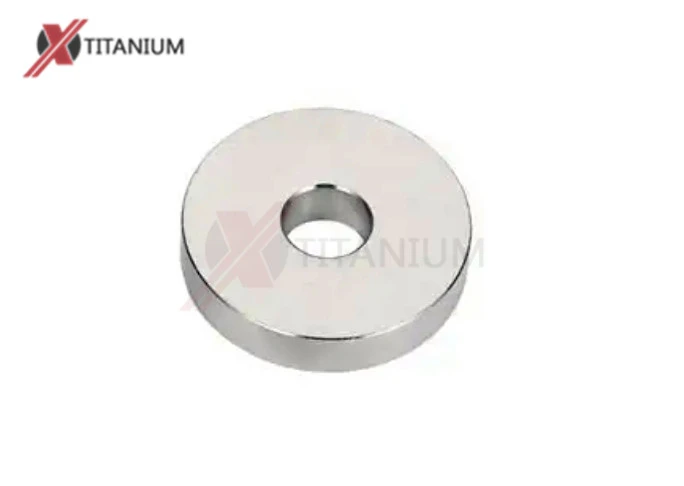
Understanding Customized Thickened Titanium Washers
Customized Thickened Titanium Washers that are custom made for each job are a type of fixing part that isn't available in most stores. When these parts are made, the thickness of the material is greater than what is normally measured by DIN or ISO. In tough working conditions, this makes them better at supporting weight and keeping their shape.
Why Thickness Matters in Titanium Washers?
If you want to know how well a washer spreads tightening loads across a joint, thickness is more than just a number. When force is put on them, bigger models keep bolt heads from crushing composite laminates in aircraft systems. Marine engineers count on them to keep the integrity of flange sealing in places like the ocean, where corrosion and changing pressures make it hard for normal fastening systems to work. The material's extra mass acts as a stress cushion, making it less likely that the base will bend or break early from wear.
Material Grades and Their Performance Profiles
The two types of titanium used to make most titanium washers are Grade 2 economically pure titanium and Grade 5 alpha-beta metal Ti-6Al-4V. Because it doesn't rust and isn't too strong (its tensile strength is about 345 MPa), Grade 2 is still the best choice for chemical processing equipment and medical tools where biocompatibility is very important. Grade 5 has a density of 4.43 g/cm³ and a tensile strength of over 895 MPa. It is strong enough for airplane engine mounts and high-performance race suspension systems. There is a solid oxide film on both types that shields them from chloride attack and oxidizing acids. This makes them much better in tough conditions than stainless steel.
Industry Applications Driving Demand
Aerospace companies put thicker titanium washers in airplane systems that are made to order to stop galvanic corrosion when carbon fiber parts are attached to metal structures. Due to the high saltiness, pressure differences, and temperature changes, other materials would break down in months in underground flange connections on offshore oil sites. This is why these washers are used. Because the washer has a low modulus of elasticity (about 113 GPa), it can bend a little when it's filled while still maintaining a steady clamping force as the body's temperature changes normally. This is why medical device companies use them in embedded fixation systems. Titanium doesn't rust in pits or crevices, which is why chemical plants use it in valve systems that are near strong acids.
Buying teams can better understand why a thicker, custom-engineered part cost more than regular screws when they know these use cases. The money spent is worth it because the equipment lasts longer, needs less maintenance, and doesn't break down in terrible ways.
How to Specify and Order Custom Titanium Washers?
Before you can order Customized Thickened Titanium Washers, both your engineering team and the supplier's technical staff need to be clear and willing to work together. If this step isn't clear, it can cause changes that cost a lot of money, production delays, and parts that don't fit right when they're put together.
Defining Core Dimensional Parameters
Make a list of your product's exact width, outer diameter (OD), and inner diameter (ID). Put in tolerance bands, like OD ±0.05 mm or ID ±0.02 mm, mainly if the nut needs to fit into shafts or holes that have been made very exactly. For things like chamfered edges, countersunk shapes, or spherical contact surfaces, you need very detailed cross-sectional models. It is faster and less likely for mistakes to happen when you send CAD files in STEP or IGES format.
Selecting the Appropriate Titanium Grade
Which grade to use will depend on the mechanical and weather forces your system will have to deal with. If your product is regularly exposed to seawater or acidic condensates but doesn't go through a lot of mechanical stress, Grade 2 is a good value for money when it comes to rust protection. High-temperature turbine parts, race chassis hard points, and military gear often use Grade 5. This is because it stays stronger at high temps (up to 400°C). Feel free to talk to the metallurgists at your source about different weather and load events to make sure the materials are right.
Specifying Surface Finish and Treatments
The finish on the surface changes both how well it works and how much it costs. One finish (Ra 3.2) is enough for many commercial uses. But smooth surfaces (Ra 0.4) are needed in areas that handle food or medicine to stop germs from growing and make cleaning easy. Some parts can be helped by passivation processes that change the natural oxide layer for the better or anodizing processes that make the surface stronger. Make it clear whether the washer needs to be approved to ASTM B265 for mill goods or ASTM F136 for implants used in surgery. These rules say how to keep track of materials and write about them in material test reports (MTRs).
Communicating Quantity and Delivery Expectations
For most handmade titanium washers, the minimum order quantity (MOQ) is between 50 and 500 pieces. However, this can change depending on how difficult the design is and how well the seller can handle processing in batches. When you order less, setup costs are higher per unit, but they go down as you buy more. First test models can be made in two to four weeks, and production runs can last anywhere from six to ten weeks, based on how hard the machine work is and how many checks need to be done. If you tell the seller when you need something, they can figure out how long they need to send it and how much power they need.
With good specifications, you can turn your vague wants into a plan that can be made. Getting things right at this point is what makes the difference between annoying iterations and price increases and great buying results.
Making the Right Supplier Choice for Custom Titanium Washers
Picking the right provider is very important for both the safety of your whole supply chain and the quality of your Customized Thickened Titanium Washers. Titanium cutting is a very competitive field. Good makers are set apart from those who just sell parts by their scientific know-how, high-tech tools, and quality control systems.
Prioritizing Factory-Direct Manufacturers
Going straight to sources instead of going through agents has a lot of benefits. With factory-direct sources, you can see more of the making process. This means you can check the quality of the goods as they are being made. You can talk to tech teams that can help you make your plans better. For instance, they can suggest changes to the standards that make cutting go faster without changing how it works. They also know how to cut titanium with a CNC machine or a laser. It's also easier to talk to people when you don't have to deal with the delays and wrong information that come with having multiple supply lines.
Evaluating Certifications and Quality Systems
The first step in strong quality assurance is getting approval from a third party. If a seller is approved by AS9100, it means they meet the safety rules for the aircraft industry. There are strict process controls and tracking rules in these guidelines. Most manufacturing companies have to follow ISO 9001, and businesses that make medical products have to follow ISO 13485. Make sure that your most recent certificates cover both cutting titanium and making screws. Check to see what kinds of inspection tools the service provider has, like coordinate measuring machines (CMMs), spectrometers to check the material, and tension testing gear. These are the tools that give us the info in material test findings.
Assessing Customization Flexibility and Technical Support
Providers' technical depth can be judged by how willing and able they are to meet unique needs. Can they make versions that are less than 0.5 mm thick or in odd shapes like round washers without losing their ability to stay stable in their sizes? Could they send an expert to do finite element analysis (FEA) to make sure that the way the loads are spread out in your setup is correct? Technical help goes above and beyond what was quoted. The best partners work together to make design-for-manufacturability changes that lower costs without lowering performance. They also offer different materials when needed and give tips on how to use the product.
Understanding Lead Times and Supply Chain Stability
Companies that regularly give stand out from those that don't. Ask people you might want to work with where they get their raw products. Do they keep extras of common types of titanium on hand, or do they only buy them when they need them? What are the plans if there are delays in production at a big mill? If a supplier works with more than one titanium maker and gets materials from a number of different places, that shows that their supply lines are strong. Find out how they plan their production schedule and ask if they can handle short-term orders quickly. It's very helpful to be able to adapt to projects that move quickly without warning.
Inquiry Strategies for Accurate Quotations
An in-depth request for quote (RFQ) makes the evaluation process go faster. Include detailed drawings, names of materials, breakdowns of numbers, and reasons why the work should be accepted. Ask if the price should only cover making the item or also cover material certificates, third-party testing, and sending the item to a different country. You should get prices that are very specific and break down the costs of the supplies, labor, and inspections. This helps you find places where you can save money and compare prices. For example, find out what the different price levels are for different order amounts to understand how the dealer sets their prices and choose the best order amount for your budget.
This process takes some time, but it's worth it because it keeps your company from having to deal with costly delays, bad quality, and image damage when parts break in the field.
Pricing, Lead Times, and Procurement Logistics
Getting Customized Thickened Titanium Washers can be expensive and time-consuming. Knowing these things will help you make smart decisions and stick to your budget. Titanium costs more than most materials and needs to be made in a certain way, which changes how its prices work compared to other types of screws.
Factors Influencing Pricing
Cost is based on how good the material is. Grade 2 titanium typically costs less per kilogram than Grade 5 titanium because of differences in the alloying elements and the trouble of making it. Since the screw is thicker, it needs more material. A screw that is twice as thick needs twice as much raw stock. Cutting takes longer when there are a lot of customization options. For example, chamfers, counterbores, or tight specs need more CNC operations and tool changes, which costs more in labor and equipment. The price of each unit changes a lot when you buy a lot of them. Say you buy 100 washers at $8 each. When you buy 1,000 washers, the price might drop to $4.50 each because the fixed costs of setting up the washers are spread out over more parts.
Lifecycle Cost Justification
When you buy them, titanium washers cost more than steel or aluminum washers, but after a long time of use, they are often worth the extra money. Tin doesn't rust, so in tough environments, it doesn't need to be changed very often. This cuts down on hours worked and costs. It's cheaper to move because it's not very thick, and it saves fuel over the life of the product when used in airplanes or cars. A steel washer might cost 80 cents in the navy, but it needs to be changed every 18 months. On the other hand, a titanium screw might work exactly for ten years, which would save you a lot of money over the product's life.
Navigating Lead Times and MOQs
Getting supplies, setting up the CNC, cutting models, and checking the sizes are all part of the testing phase, which usually lasts for two to three weeks. It takes between six and twelve weeks to make something, but this depends on how big the order is and how much the shop can handle. MOQs, or minimum order numbers, are a way to make production more efficient while still giving customers some freedom. Low MOQs make each unit more expensive, but they make it cheaper to keep stock for projects where demand isn't clear. Tell your sellers the truth about your project plan so that the installation goals and the production schedule match up. This way, you can escape both high rush fees and having to hold on to goods for a long time.
Building Strategic Supplier Partnerships
If you've known someone for a long time, you can get extra care that people who are just buying things can't get. Preferred customers can book first when space is limited, are notified early when the prices of raw materials change, and don't have to go through multiple quoting rounds to restock. Suppliers will do more to understand what your application needs and will suggest ways to make things better and point out any design issues before they reach the shop floor. Sellers can guess how much money they will make by committing to more than one project or signing a longer contract term. This usually means better prices and more focused expert resources.
When you plan your purchases carefully, getting titanium washers changes from a series of separate deals to a way to gain a competitive edge through a stable supply chain and combined new ideas.
Ensuring Optimal Performance and Longevity
To get the most out of Customized Thickened Titanium Washers, you need to do more than just buy them. It also talks about how they are put in place, how they are kept up, and how their quality is checked. Titanium has unique qualities that mean even the best part will break quickly if it is handled or put together wrong.
Corrosion Resistance and Environmental Durability
If titanium gets broken, its passive oxide film grows back on its own, keeping it safe from chemical attack. This makes custom washers better than stainless steel in places with a lot of chloride, like saltwater, de-icing salts, and chlorine processing, where other materials break down quickly because of pitting and pocket rust. But steel rusts very quickly when it comes into contact with acidic substances like sulfuric or nitric acid. Maintenance teams can go longer without checking on things because they know these environmental benefits will help them last longer and cost less to replace when they break.
Installation Best Practices
It is known that titanium is not very springy, which means that screws made of it change shape when they are loaded. In other words, they keep their clamping force better than hard steel screws when the temperature changes. Tin, on the other hand, gets rough quickly when rubbed hard against itself or other metals. To keep the threads from galling while the bolt is being put, use anti-seize products. Nickel or copper-based ones work best. Even though titanium is strong, it is more likely to forever bend past its break points because it has a smaller modulus. Be careful not to twist it too much. For the bolt assembly, make sure that the torque wrenches are set up according to the technical specs. To get the right setup on important parts, use torque-angle ways.
Quality Control and Traceability
Material test certificates (MTCs) show what chemicals are in a product, how it works, and how it was heated in the past. They are the written records of making sure the grade is good. Each set of custom washers should have an MTC that can be tracked back to the mill product to make sure they meet ASTM standards. The parts that were made meet the limits that were shown on the plans, as shown in dimensional inspection reports. Ask for certificates of compliance (CoCs) that show the OD, ID, thickness, and surface finish numbers that were checked. Third-party testing by approved labs adds an extra level of security for medical or flight uses. This makes people feel better about the part's reliability.
Supplier Quality Audits
Regular on-site audits are a way for purchasing teams to make sure that sellers stick to the quality systems and manufacturing controls they say they do. It is important to check that CNC machines are regularly calibrated and that raw materials are kept in a way that keeps them sorted and labeled correctly. Inspection records should also be looked at to see if they show statistical process control. Audits also help you get to know the quality team of your seller better. This makes it easier to talk about ways to improve the process and deal with problems before they reach your site, rather than after the fact.
These steps work together to make sure that the features that make special bigger titanium washers better at their job are used and last a long time. Your cash will be safe, and your business will keep going.
Conclusion
To get custom titanium screws, you need a well-thought-out plan that hits a balance between being technically correct and building smart relationships with suppliers. You need to be very clear about your size, material, and surroundings needs before you can start. Next, pick a factory-direct maker that has certifications and a history of successfully cutting titanium. Titanium's worth as a material that doesn't rust, saves weight, and makes things last longer is added to the cost of the materials and the work that goes into making them.
For example, when ordering Customized Thickened Titanium Washers, quality control is very strict, and it includes keeping track of the materials, measuring things, and checking the provider to make sure that each washer is made exactly the way you need it. Instead of seeing procurement as a simple transaction, your team should see it as a joint engineering process that helps them get parts that improve assembly performance, lower lifetime costs, and support long-term operating efficiency.
FAQ
Q1: What is the typical MOQ for custom titanium washers?
A: Most of the time, the minimum order number is between 50 and 500 pieces. This depends on how hard the cutting is and how much it costs to set up. If the specs are common and the shape is simple, the MOQ may be smaller, between 50 and 100 units. For more complicated designs that need special tools or more than one way to machine them, the MOQ may go up to 300 to 500 units. If you tell providers ahead of time how much you need, they can help you figure out the best batch sizes to save money and keep track of your goods.
Q2: How do I choose between thickened and standard washers?
A: Choose based on the load, the environment, and how long you need it to last. Thick washers work best when there are high binding forces, composite surfaces that are easily damaged by compression, or systems that are subjected to shaking and temperature changes. Standard-thickness washers work well when there isn't much stress, the surfaces are strong and made of metal, and the shapes of the parts are limited by weight or space. A load study or talking to your seller's tech team can help you figure out which design will work best for your business.
Q3: Are titanium washers cost-effective compared to steel or aluminum?
A: When you first buy them, titanium washers are often three to five times more expensive than stainless steel washers of the same size. However, they last longer and work better in places where rust or weight is a problem. Steel washers rust in salt water or chemicals, so they need to be changed often, which costs money. Tin is stronger and can handle higher temperatures better than aluminum, so it can't be used in settings with a lot of stress. Titanium's higher price tag is often worth it when you look at how often something needs to be changed, how long it takes to fix, and how stable it is in terms of performance. This is especially true in medical, aircraft, and underwater uses.
Partner with Chuanglian for Your Custom Titanium Washer Needs
Baoji Chuanglian New Metal Material Co., Ltd. has been working with titanium for over ten years and can share that knowledge with the people who buy from you. Based in China's "City of Titanium," we make Customized Thickened Titanium Washers to order. Our plant is vertically integrated, with CNC machines and full inspection tools that make sure measures are correct and materials can be tracked from raw materials to finished parts. Having AS9100 and ISO 9001 certifications shows that we care about making systems that are strong enough to be used on airplanes.
Our professional staff works closely with your engineers to make sure that plans are the best they can be in terms of performance and ease of production. If you need approved parts for medical implants, underwater flanges, or flight systems, we can get them to you quickly and at a fair price. Email us at info@cltifastener.com or djy6580@aliyun.com to tell us what you need and get a full price. You can also find out how our factory-direct model saves you money while still maintaining the best quality.
References
1. Boyer, R., Welsch, G., and Collings, E. W. (1994). Materials Properties Handbook: Titanium Alloys. ASM International, Materials Park, Ohio.
2. Donachie, M. J. (2000). Titanium: A Technical Guide, 2nd Edition. ASM International, Materials Park, Ohio.
3. Schutz, R. W. and Watkins, H. B. (1998). "Recent developments in titanium alloy application in the energy industry." Materials Science and Engineering: A, 243(1-2), 305-315.
4. Venkatesh, B. D., Chen, D. L., and Bhole, S. D. (2009). "Effect of heat treatment on mechanical properties of Ti–6Al–4V ELI alloy." Materials Science and Engineering: A, 506(1-2), 117-124.
5. American Society for Testing and Materials (ASTM). (2020). ASTM B265-20: Standard Specification for Titanium and Titanium Alloy Strip, Sheet, and Plate. ASTM International, West Conshohocken, Pennsylvania.
6. Peters, M., Kumpfert, J., Ward, C. H., and Leyens, C. (2003). "Titanium alloys for aerospace applications." Advanced Engineering Materials, 5(6), 419-427.
Learn about our latest products and discounts through SMS or email