It has become more important for Middle Eastern businesses in the aerospace, petrochemical, and medical device sectors to get high-quality titanium shoulder bolts from China. This complete guide helps you choose trustworthy Chinese suppliers, understand material specs, and make sure you follow international standards. As China's titanium processing skills improve quickly, Middle Eastern consumers may get cheap solutions that don't compromise on quality or accuracy for their important uses.
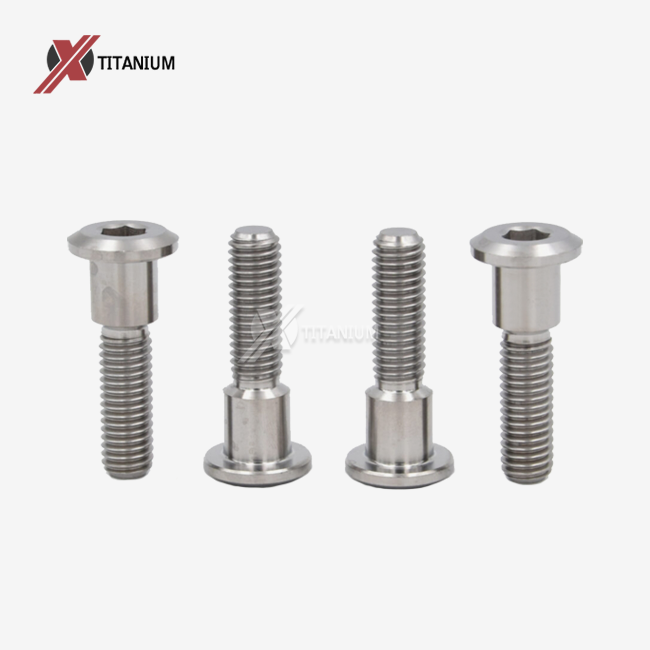
Understanding Titanium Shoulder Bolt Applications in Middle East Industries
Fastening solutions must work very well in the Middle East's industrial environment. Titanium shoulder fasteners work well in the area's hard weather since they are the best at resisting corrosion from sea air, high temperatures, and chemicals. These parts are very important to aerospace producers in the UAE and Saudi Arabia because they help make airplane structures lighter, which makes them more fuel efficient.
Petrochemical plants in the Gulf area use grade 5 titanium shoulder bolts in pressure vessels. The Ti-6Al-4V alloy has a composition that makes it stronger mechanically while yet being able to work well with harsh processing fluids. Medical device makers in places like Jordan and Lebanon use medical-grade titanium shoulder screws for surgical tools and implanted devices because titanium is biocompatible.
Titanium's great resistance to saltwater makes it useful for marine engineering projects, especially offshore platforms and desalination facilities. These titanium shoulder bolts are light, which means they put less stress on the structure as a whole and last for decades without needing any maintenance. The automobile industry is using these fasteners more and more in high-performance cars where they need to be both precise and strong.
Material Specifications and Grade Selection
To choose the right titanium grades, you need to know what the application needs. Grade 2 pure titanium is great for chemical processing equipment since it doesn't rust and can be shaped easily. However, aerospace applications for titanium shoulder bolts usually call for Grade 5 (Ti-6Al-4V) since it is stronger for its weight and works better at higher temperatures.
The mechanical characteristics are directly affected by the composition of the titanium alloy. Grade 5 titanium has around 6% aluminum and 4% vanadium in it. This gives it tensile strengths of more than 895 MPa and makes it very resistant to fatigue. This combination is very important for cyclic loading applications that are widespread in rotating equipment and structural joints.
Custom titanium shoulder bolts may have certain heat treatments added to them to make their qualities better. Solution treating and aging processes make things stronger, while stress reduction therapies make things more stable in size. More and more Chinese companies are offering these specialized processing skills, which makes it possible to make custom solutions for specific Middle Eastern uses.
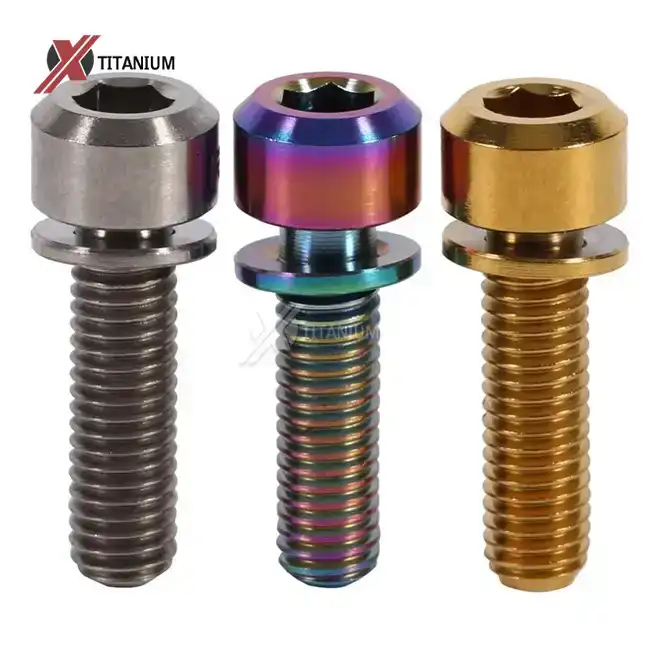
Surface treatments have a big effect on how long a performance lasts. Anodizing procedures generate oxide layers that preserve the surface and allow for color labeling to help with assembly. Nitriding makes the surface harder, which is good for things that wear down quickly. Polished surfaces lower stress concentration points, which is very important for installations that are sensitive to fatigue.
Quality Standards and Certification Requirements
Middle Eastern consumers need to make sure that Chinese suppliers have strict quality control procedures in place. AS9100 certification shows that the quality standards for aerospace are being met, while ISO 9001 makes sure that the production procedures are always the same. ISO 13485 certification is needed for medical uses to make sure that biocompatibility and traceability criteria are met.
Material certifications should provide information on the whole chemical makeup, the verification of mechanical properties, and the examination of dimensions. Reputable Chinese producers provide thorough traceability paperwork that connects finished goods to the places where the raw materials came from. This paperwork is very important for following the rules and passing quality audits.
Third-party testing labs may confirm important qualities on their own. Tensile testing, hardness measures, and microstructural analysis all show that the material meets its standards. Corrosion testing in simulated service situations confirms long-term performance predictions for harsh Middle Eastern climates.
To check the accuracy of titanium shoulder bolts, you need to be able to do sophisticated inspections. Chinese vendors that buy coordinate measuring devices and optical inspection systems show that they care about dimensional correctness. Using statistical process control makes sure that the quality is the same in all manufacturing batches.
Supply Chain Considerations for Middle Eastern Buyers
When buying from China, logistics planning has a big effect on the total cost of ownership. For common configurations, lead times are usually between 4 and 8 weeks. For unique designs of titanium shoulder bolts, lead times might be between 8 and 12 weeks. Strategic inventory planning helps keep these long durations in check while keeping carrying costs low.
The cost of shipping depends a lot on how many items you purchase and how you want them sent. Air freight gets things to you quickly, but it raises the cost of each item by a lot. Ocean freight is a cheap way to ship big goods, but it may take 3 to 4 weeks to get to most Middle Eastern locations.
Import rules say that you need to pay close attention to the paperwork you need. Using Harmonized System codes to classify goods correctly makes it easier for customs to clear them. Some Middle Eastern nations have special quality certification standards that Chinese vendors must meet before they may do business there.
Changes in the value of the Chinese yuan compared to other regional currencies might make prices less stable. Long-term contracts with pricing mechanisms assist control these risks and make sure that costs are predictable for project planning. Payment arrangements usually benefit purchasers who have a history of making good purchases.
Technical Support and Engineering Collaboration
Partnerships that work well go beyond just buying and selling things. Top Chinese manufacturers provide full technical assistance, such as advice on choosing materials, suggestions for optimizing designs, and testing techniques that are customized to each application. This partnership is especially useful for customers in the Middle East who are making new items or using applications they aren't acquainted with.
CAD modeling features make it possible to quickly create prototypes and check designs. Chinese vendors with powerful manufacturing simulation software can guess how well something will work before it is made. This capacity lowers the expenses of development and speeds up the time it takes to get important ideas to market.
Shoulder bolts made of titanium Different providers have quite different CNC machining capabilities. Advanced producers use multi-axis machining centers with specific tools to work with titanium. The quality of the surface finish and the accuracy of the dimensions depend on the right cutting settings and tool choice.
When difficulties happen, application engineering support may help with failure analysis. Chinese manufacturers with a lot of experience have metallurgical labs that can look into service issues and suggest ways to fix them. This help is really useful for projects that aim to make things better all the time.
Cost Analysis and Value Engineering
Total cost analysis extends beyond initial purchase prices. Chinese titanium shoulder bolts manufacturers often provide significant cost advantages compared to Western suppliers, particularly for custom configurations requiring extensive machining operations. Labor cost differentials enable competitive pricing while maintaining quality standards.
Volume pricing tiers provide big savings to those who purchase a lot of items. But buyers in the Middle East need to weigh the number of orders against the price of keeping inventory and the danger of it becoming obsolete. Just-in-time delivery methods assist maintain this balance while keeping costs down.
Working closely with Chinese suppliers opens up value engineering options. Different designs or ways of making things could lower prices without hurting performance. Standardization efforts may take advantage of economies of scale across many applications.
Even though the initial prices are greater, life cycle cost analysis frequently favors better-grade titanium. Superior corrosion resistance and mechanical qualities greatly lengthen the life of a part, lowering the costs of maintenance and replacement throughout the life of the part.
Supplier Evaluation and Selection Criteria
To properly evaluate a supplier, you need to look at a lot of different factors in a methodical way. Audits of manufacturing capacities should check the capabilities of the equipment, the application of quality procedures, and the technical skills of the workers. Site visits provide you useful information about how things work and how well the cultures fit together.
Reference checks with current clients show how well a provider has done in the past and how reliable they are. Buyers from the Middle East should ask about delivery performance, quality consistency, and how quickly technical help responds. Long-term collaborations necessitate providers that can adapt to changing consumer requirements.
Checking a supplier's financial stability helps make sure they can stay in business for the long term. Credit reports, trade references, and publicly accessible financial information may all give you an idea of how healthy a supplier's finances are. This assessment is especially crucial for key parts where a supplier's failure might cause problems with operations.
In competitive marketplaces, the capacity to innovate is becoming more and more important for suppliers. Chinese businesses that put money into research & development, sophisticated processing technologies, and application engineering skills are more valuable in the long run than commodity providers who just care about price competitiveness.
Future Trends and Market Developments
Additive manufacturing technology are changing how titanium parts are made. More and more Chinese vendors are offering 3D printing services for complicated shapes that can't be made with regular machining. This technique makes it possible to quickly make prototypes and small batches of specific designs.
Industry 4.0 makes it easier to manage quality and keep track of things. Smart manufacturing systems can keep an eye on processes in real time and plan maintenance ahead of time. These improvements make things more consistent and lower the cost of manufacturing.
Concerns about the environment encourage changes in the titanium supply chain. More and more Chinese companies are starting to use recycling programs and energy-efficient processing technology. These efforts are in line with the Middle East's aspirations for sustainability and may help save expenses.
Digital cooperation technologies make it easy for Middle Eastern customers and Chinese suppliers to talk to one other. Cloud-based project management tools, virtual reality design reviews, and real-time quality monitoring systems get over geographical obstacles and make projects run more smoothly.
Conclusion
By following rigorous supplier assessment procedures and setting clear performance expectations, Middle Eastern firms may make good use of China's sophisticated titanium processing capabilities. Chinese suppliers provide a lot of value to smart purchasers since they have lower prices, better technology, and larger industrial scales. To be successful, you need to do your homework, communicate well, and build long-term partnerships. Middle Eastern firms may get world-class titanium shoulder bolt solutions that work in the most demanding situations and lower the total cost of ownership if they choose the right suppliers and manage their relationships well.
Partner with Chuanglian for Premium Titanium Shoulder Bolts Solutions
Chuanglian delivers world-class titanium shoulder bolts manufacturing excellence from Baoji, China's renowned "City of Titanium." Our comprehensive capabilities span Grade 2 and Grade 5 titanium alloys with custom CNC machining, advanced surface treatments, and rigorous quality control. Ready to transform your supply chain with reliable, high-performance titanium fastening solutions? Contact us at info@cltifastener.com or djy6580@aliyun.com today.
References
1. Materials Science and Engineering: An Introduction, 10th Edition, by William D. Callister Jr. and David G. Rethwisch, John Wiley & Sons, 2018
2. Titanium: A Technical Guide, 2nd Edition, by Matthew J. Donachie Jr., ASM International, 2000
3. Aerospace Materials and Material Technologies, Volume 1: Aerospace Materials, edited by N. Eswara Prasad and Raghavendra J. Wanhill, Springer, 2017
4. Handbook of Titanium for Medical Applications, edited by Yoshimitsu Okazaki, Bentham Science Publishers, 2019
5. Corrosion of Titanium and Titanium Alloys, by R.W. Schutz, in Metals Handbook, 9th Edition, Volume 13, ASM International, 1987
6. Manufacturing Processes for Engineering Materials, 6th Edition, by Serope Kalpakjian and Steven R. Schmid, Pearson Education, 2016