- English
- French
- German
- Portuguese
- Spanish
- Russian
- Japanese
- Korean
- Arabic
- Greek
- German
- Turkish
- Italian
- Danish
- Romanian
- Indonesian
- Czech
- Afrikaans
- Swedish
- Polish
- Basque
- Catalan
- Esperanto
- Hindi
- Lao
- Albanian
- Amharic
- Armenian
- Azerbaijani
- Belarusian
- Bengali
- Bosnian
- Bulgarian
- Cebuano
- Chichewa
- Corsican
- Croatian
- Dutch
- Estonian
- Filipino
- Finnish
- Frisian
- Galician
- Georgian
- Gujarati
- Haitian
- Hausa
- Hawaiian
- Hebrew
- Hmong
- Hungarian
- Icelandic
- Igbo
- Javanese
- Kannada
- Kazakh
- Khmer
- Kurdish
- Kyrgyz
- Latin
- Latvian
- Lithuanian
- Luxembou..
- Macedonian
- Malagasy
- Malay
- Malayalam
- Maltese
- Maori
- Marathi
- Mongolian
- Burmese
- Nepali
- Norwegian
- Pashto
- Persian
- Punjabi
- Serbian
- Sesotho
- Sinhala
- Slovak
- Slovenian
- Somali
- Samoan
- Scots Gaelic
- Shona
- Sindhi
- Sundanese
- Swahili
- Tajik
- Tamil
- Telugu
- Thai
- Ukrainian
- Urdu
- Uzbek
- Vietnamese
- Welsh
- Xhosa
- Yiddish
- Yoruba
- Zulu
OEM Titanium Motorcycle Bolts: Cost vs Performance
When evaluating Titanium Motorcycle Bolts against traditional fastener alternatives, the cost-performance equation reveals compelling advantages for high-performance applications. These precision-engineered fasteners deliver exceptional strength-to-weight ratios while maintaining superior corrosion resistance, making them invaluable for racing teams, motorcycle manufacturers, and performance enthusiasts. The initial investment in OEM titanium fasteners translates to reduced maintenance costs, enhanced reliability, and improved operational efficiency across demanding environments. While steel bolts may offer lower upfront costs, titanium's longevity and performance characteristics often justify the premium pricing through extended service life and reduced replacement frequency.
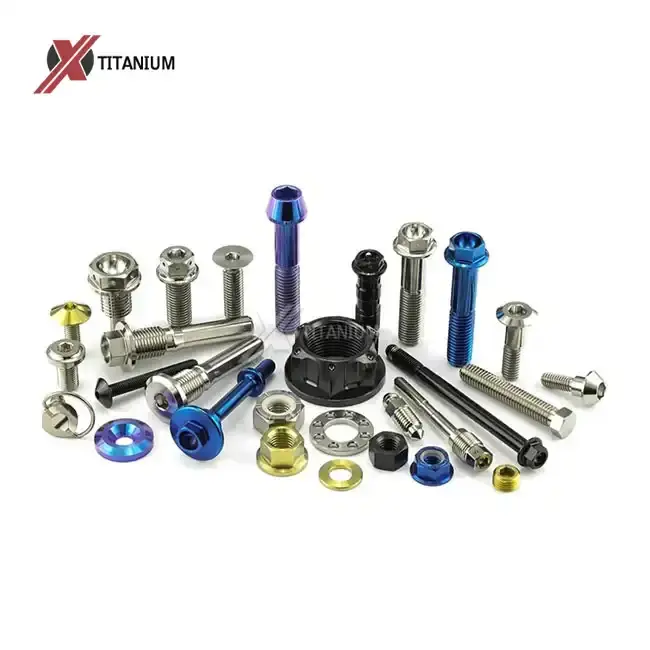
Understanding Titanium Motorcycle Bolts and Their Advantages
When comparing Titanium Motorcycle Bolts to other types of fasteners, the cost-performance math shows that they are clearly better for high-performance uses. These precision-engineered fasteners have great strength-to-weight ratios and are very resistant to corrosion. This makes them very useful for race teams, motorbike makers, and people who just like performance. When you buy OEM titanium fasteners at first, you'll save money on upkeep, get more reliable products, and work more efficiently in tough settings. Even though steel bolts may be cheaper at first, titanium's superior performance and durability often make up for the higher price by extending the bolts' useful life and lowering the number of times they need to be replaced.
Titanium Motorcycle Bolts are a game-changer in fastening technology because they are made of the cutting-edge Ti-6Al-4V (Grade 5) titanium metal. These precision-machined parts replace standard steel fasteners in many important motorbike systems. They make the bikes lighter without sacrificing their strength. The aerospace-grade material has the same tensile strength as Grade 10.9 steel, but it weighs about 45% less than steel screws of the same type.
Material Properties and Manufacturing Excellence
To make the product, aerospace-grade titanium alloy is first heated and mixed with 6% aluminum and 4% vanadium to get the best tensile qualities. This unique mix keeps the material's natural resistance to corrosion while ensuring uniform performance in harsh circumstances. Advanced CNC machining methods make thread shapes and head designs that are very accurate and meet strict OEM requirements.
During the whole production process, quality control methods check the accuracy of the dimensions, the finish on the surface, and the integrity of the material. Each bolt is carefully checked to make sure it meets worldwide standards and OEM requirements. The resultant fasteners have very high fatigue resistance, which is important for uses that involve repeated loads and vibrations like those found in motorbike settings.
Performance Benefits in Critical Applications
Titanium Motorcycle Bolts are great in three main areas that have a direct effect on how well and reliably a motorbike works. Getting rid of a lot of weight can make the handling much better, especially for parts that don't have springs, like brake blades and wheel systems. Less rotational inertia improves the response of the suspension and the speed of turning, benefits that performance-oriented riders instantly notice.
Corrosion protection is very important in tough working conditions where road salt, wetness, and temperature changes make regular fasteners difficult to use. Unlike steel options that rust and eventually seize, titanium stays strong forever if it is put correctly and with the right anti-seize compounds.
Because it has a higher strength-to-weight ratio, engineers can specify smaller fastener sizes without lowering safety gaps. This makes designs smaller and saves even more weight. This feature is especially useful in situations where room limitations make it hard to choose the right size clip.
Cost vs Performance: Evaluating Titanium Bolts Against Alternatives
When looking at the economics of OEM titanium fasteners, you need to look at a lot more than just the original buy price. Even though titanium bolts are more expensive than stainless steel, aluminum, or chrome-plated bolts, their long-term value makes them a better choice for uses that need to work well.
Initial Investment Analysis
Traditional steel screws usually cost 60–75% less than titanium parts that do the same job. This obvious cost savings makes people who are watching their budgets decide to buy these parts. However, this comparison leaves out important factors that affect overall ownership costs, such as how often something needs to be replaced, how much upkeep it needs, and how well it works.
Titanium fasteners are stronger than stainless steel ones when it comes to strength-to-weight, so stainless steel fasteners often need bigger sizes to get the same load values. Aluminum bolts are lighter than other materials, but they aren't very strong, which limits the things they can be used for. Chrome-plated steel looks nice and is more resistant to rust, but the extra thickness of the covering makes it harder to get the right fit.
Long-term Value Assessment
The very high longevity of titanium means that it needs to be replaced and maintained less often. Racing teams say that titanium fasteners last longer than three seasons in the most extreme conditions, while steel parts of the same size need to be replaced every year or more often. This longer repair period cuts down on work costs, inventory needs, and the time that could be lost when fasteners break.
Performance benefits add to the economic benefits by making the car more fuel-efficient, better to drive, and wearing out parts less quickly. Titanium bolts reduce the weight of a vehicle, which makes it more fuel-efficient overall. This is especially helpful for fleet owners who have to keep track of the fuel costs for many units. The increased dependability cuts down on unplanned repair events that throw off plans and raise the total cost of ownership.
Return on Investment Calculations
A quantitative study of titanium fastener ROI needs to take into account a number of cost factors, such as the cost of the fasteners themselves, the cost of fitting, how often they need to be replaced, and their performance benefits. The most impressive results can be seen in racing, where titanium's low weight leads to faster lap times and other benefits that earn bigger prizes and more sponsorship money.
Commercial fleet apps get a return on investment (ROI) by lowering the cost of upkeep and making vehicles more reliable. The longer replacement times cut down on work costs and get rid of the need for emergency fixes when fasteners fail or corrode. Within 18 to 24 months of implementation, these practical gains usually make the higher price worth it.
Selecting the Right OEM Titanium Motorcycle Bolts for Your Needs
To choose the right fasteners, you need to know a lot about the application needs, the material requirements, and the supplier's abilities. Because titanium types, surface processes, and manufacturing standards are so complicated, they need to be carefully looked at to make sure they work well and are reliable.
Application-Specific Requirements
Different motorbike systems put different demands on the performance qualities of fasteners. For brake rotor uses, shear strength and heat resistance are very important. This means that bolts need to be able to survive high thermal cycling without losing their shape or strength. For engine uses, it's important to have low vibration and precise torque retention to keep vital joints in good shape for long periods of time.
Because they are constantly being loaded and unloaded, suspension parts need to be very resistant to wear. In a dynamic stress situation like this, fasteners need to be very good at stopping cracks from spreading so that rapid failures don't happen and put riders at risk. Titanium's chemical resistance is very helpful for keeping parts removable during repair times because they are exposed to both high temperatures and corrosive gases in exhaust systems.
Supplier Evaluation Criteria
To find trusted suppliers, you need to look at their manufacturing skills, quality control methods, and expert help resources. Companies that have been around for a while have testing centers and licensing programs that make sure their products, such as Titanium Motorcycle Bolts, work in a wide range of situations. AS9100 aircraft standards are part of quality management systems, and they show that a company is committed to consistent manufacturing processes and meeting tracking requirements.
Superior providers stand out from others by offering technical support that can help with application advice, installation suggestions, and troubleshooting. Manufacturers with a lot of experience provide thorough torque specs, anti-seize suggestions, and installation instructions that improve the performance of fasteners and stop common installation mistakes.
Businesses that need regular shipping times and product availability need to make sure their supply chains are stable. Reliable providers make sure they have enough inventory and production capacity to meet the needs of both prototype development and large-scale production without lowering quality or missing deadlines.
Customization and Volume Considerations
Customized fastener designs that improve performance while lowering costs through efficient manufacturing methods often work best for high-volume uses. Customizing the shape of the head, the threads, and the surface can improve usefulness while speeding up the building process. For yearly commitment contracts, volume pricing models usually offer big cost cuts.
To support design evaluation and testing programs, prototype development needs suppliers who can make small amounts of products quickly. Iterative design changes can be made with flexible production that doesn't require big investments in tools or minimum order limits that slow down product development schedules.
Installation and Maintenance Tips for Titanium Motorcycle Bolts
When titanium fasteners are installed correctly, they work better and are less likely to have problems that could affect their safety and effectiveness. Technicians can get the best joint quality and service life by understanding titanium's unique properties.
Critical Installation Procedures
Due to its tendency to galling, titanium must be installed with high-quality anti-seize chemicals. Copper-based or ceramic anti-seize mixtures work well to lubricate and stop cold welding between surfaces that are joining. The amount used must be controlled so that there isn't too much substance that could change the accuracy of the force or contaminate nearby parts.
For titanium screws, torque specs are usually based on what the OEM recommends, with possible changes made to help with anti-seize effects. Anti-seize solutions lubricate threads to reduce friction, which could mean that 10-15% less pressure is needed to keep the fastener from being over-stressed. Calibrated torque tools make sure that the right amount of force is applied every time and that damage doesn't happen from applying too much force.
Carefully cleaning the contact surfaces and checking for damage or contamination that could affect the quality of the installation are all parts of thread preparation. To stop cross-threading, you need to carefully set and start by hand before using pressure tools. When fitting is rushed, thread damage can happen, which weakens the joint and makes it impossible to use the fastener again.
Maintenance and Inspection Protocols
Scheduling regular inspections lets you find possible problems early, before they become fails. By looking at it, you should be able to see signs of rust, wear, or loosening that mean upkeep is needed. Paying extra attention to high-stress areas like brake parts guarantees continued safety and effectiveness.
Cleaning methods use the right chemicals and methods to keep the surface's structure while getting rid of contaminants. Abrasive cleaning methods or chemicals that don't work well together can damage protective surface treatments or create stress concentration places that shorten the life of fasteners. Using the right solvents to clean gently keeps the look and function at their best.
Schedules for preventative replacements based on service hours or operating cycles make sure that important applications stay reliable. Extreme operating conditions mean that parts need to be replaced more often in racing applications, while normal operating conditions may allow parts to last longer in street applications.
Making the Decision: Is Investing in OEM Titanium Motorcycle Bolts Worth It?
Whether to buy OEM titanium screws relies on the needs of the product, the level of performance needed, and the total cost of ownership. Value propositions change across market segments, which affects choices about what to buy.
Market Segment Analysis
Racing uses regularly show clear value from investing in Titanium Motorcycle Bolts by improving performance and giving them a competitive edge. The lower weight directly leads to faster lap times, and the higher dependability cuts down on costly breakdowns during competitions. Professional race teams all use titanium screws, even though they are more expensive, because they work better than other materials.
High-performance street uses benefit from better handling and longer durability, especially for riders who care more about performance than cost. Fans of motorcycles often think that titanium upgrades are good purchases because they make the bike look better and perform better while also requiring less upkeep over time.
To explain the high cost of premium fasteners for commercial fleet uses, a careful cost-benefit study is needed. Fleet managers who are in charge of high-mileage vehicles in harsh settings often see a positive return on investment (ROI) because the vehicles are more reliable and require less upkeep. However, uses that need to replace vehicles often might not get enough service life to make the original investment worth it.
Strategic Supplier Relationships
Long-term relationships with suppliers offer benefits beyond lower transaction costs. These include better technical support, faster shipping times, and chances to work together on product development. When providers have established ties with customers, they can better understand the needs of each application and come up with custom solutions that improve performance while keeping costs low.
Consistent partnerships with suppliers that allow for thorough testing and validation processes are good for quality assurance programs. When suppliers know exactly what is needed, it lowers the risk of poor quality and speeds up the buying process by using standard specs and approval processes.
Innovations can happen when buyers and sellers work together and suppliers spend money on new materials and manufacturing methods. Getting better goods and technologies early can give you a competitive edge and help your product creation succeed.
Conclusion
Genuine OEM Titanium Motorcycle Bolts offer great value for money in situations where efficiency, dependability, and long-term cost-effectiveness are important. Even though they cost more to buy at first, the benefits of less weight, resistance to rust, and longer service life often make up for the higher price by making operations more efficient and reducing the need for upkeep. There are always clear performance benefits in racing applications, but to get the best investment returns in business applications, you need to carefully look at the working conditions and replacement cycles.
FAQ
Are titanium bolts stronger than steel alternatives?
Tensile strength of Grade 5 titanium is about the same as that of Grade 10.9 steel, but it is about 45% lighter. Titanium, on the other hand, is not stronger than Grade 12.9 steel, so choosing the right grade is very important for high-stress uses like main engine parts.
Do titanium bolts require special installation procedures?
To keep titanium screws from galling during fitting, anti-seize compound must be used. Copper-based or ceramic anti-seize formulas of high quality provide necessary lubrication while stopping cold welding between connecting surfaces. The lubricating effects of anti-seize chemicals depend on how much force is applied correctly.
Can OEM torque specifications be used with titanium bolts?
Grade 5 titanium can usually handle normal OEM torque requirements well. But anti-seize lubrication might need a 10-15% pressure decrease to keep the fastener from being over-stressed. Calibrated torque tools make sure that the right amount of force is applied every time and that damage doesn't happen from applying too much force.
How can I identify quality titanium bolt construction?
Premium titanium bolts have heads that are hot-forged, which improves the grain flow and strength compared to polished options. The undersides of forged heads are smooth, while the undersides of machined heads may have tool lines that can be seen. Material certificates and traceability paperwork are given by good makers.
Will colored titanium bolts maintain their appearance?
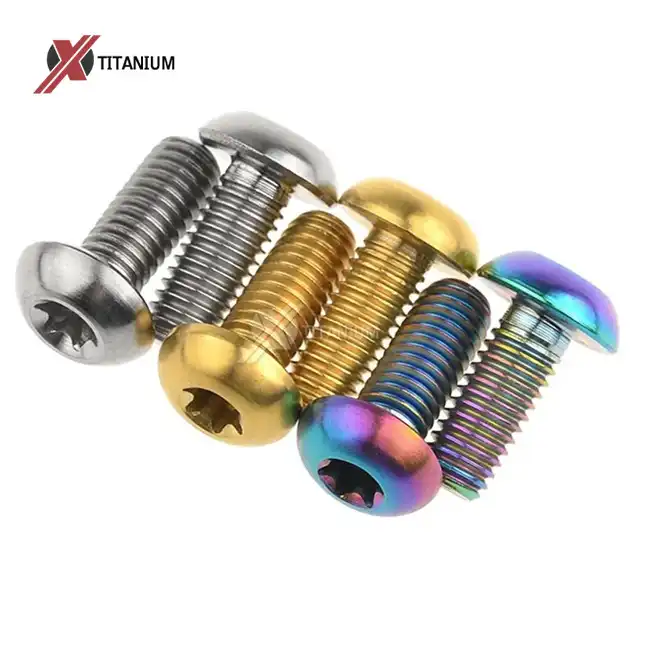
When compared to regular anodizing methods, PVD (Physical Vapor Deposition) coats keep colors better. PVD treatments don't fade even when exposed to UV light and high temperatures, which makes them perfect for high-wear situations where keeping the look is important.
What maintenance do titanium bolts require?
Visual checks done on a regular basis find possible problems before they become failures. Cleaning gently with the right solvents keeps the best look and protects surface treatments. Schedules for preventative replacements based on service conditions make sure that important applications stay reliable.
Partner with Chuanglian for Premium Titanium Motorcycle Bolts
Chuanglian is a reliable Titanium Motorcycle Bolts manufacturer. They have over ten years of experience handling titanium and have strict quality control systems in place. Our cutting-edge CNC machining tools and strict quality control procedures make sure that we always give aerospace-grade fasteners that meet the strictest performance standards. Because our plant is in Baoji City, which is known around the world as the 'City of Titanium,' we have direct access to high-quality raw materials and specialized production know-how.
Our experienced engineering team offers full technical support throughout the whole buying process, from coming up with the initial specifications to helping with installation and suggesting regular upkeep. Get in touch with our experts at info@cltifastener.com or djy6580@aliyun.com to talk about your needs and find out how our high-quality titanium fasteners can improve the speed and dependability of your motorcycle.
References
1. American Society for Testing and Materials. "Standard Specification for Titanium and Titanium Alloy Bars and Billets." ASTM B348-19. West Conshohocken: ASTM International, 2019.
2. Boyer, R.R. "A Brief Look at Titanium's Use in the Aerospace Business." Materials Science and Engineering: A, vol. 213, no. 1-2, 1996, pp. 103–114.
3. Donachie, Matthew J. In 2000, ASM International Materials Park in Ohio published the second version of "Titanium: A Technical Guide."
4. Lee, Gerd, and James C. Williams. 2007. Springer-Verlag Berlin Heidelberg published the second version of "Titanium Engineering Materials and Processes."
5. Peters, M., et al. "Titanium Alloys for Aerospace Applications." Advanced Engineering Materials, no. 5, no. 6, 2003, pp. 419–427.
6. Welsch, Gerhard, et al. "Materials Properties Handbook: Titanium Alloys." Written by Welsch, Gerhard, et al. and published by the ASM International Materials Information Society in 1994.
Learn about our latest products and discounts through SMS or email