- English
- French
- German
- Portuguese
- Spanish
- Russian
- Japanese
- Korean
- Arabic
- Greek
- German
- Turkish
- Italian
- Danish
- Romanian
- Indonesian
- Czech
- Afrikaans
- Swedish
- Polish
- Basque
- Catalan
- Esperanto
- Hindi
- Lao
- Albanian
- Amharic
- Armenian
- Azerbaijani
- Belarusian
- Bengali
- Bosnian
- Bulgarian
- Cebuano
- Chichewa
- Corsican
- Croatian
- Dutch
- Estonian
- Filipino
- Finnish
- Frisian
- Galician
- Georgian
- Gujarati
- Haitian
- Hausa
- Hawaiian
- Hebrew
- Hmong
- Hungarian
- Icelandic
- Igbo
- Javanese
- Kannada
- Kazakh
- Khmer
- Kurdish
- Kyrgyz
- Latin
- Latvian
- Lithuanian
- Luxembou..
- Macedonian
- Malagasy
- Malay
- Malayalam
- Maltese
- Maori
- Marathi
- Mongolian
- Burmese
- Nepali
- Norwegian
- Pashto
- Persian
- Punjabi
- Serbian
- Sesotho
- Sinhala
- Slovak
- Slovenian
- Somali
- Samoan
- Scots Gaelic
- Shona
- Sindhi
- Sundanese
- Swahili
- Tajik
- Tamil
- Telugu
- Thai
- Ukrainian
- Urdu
- Uzbek
- Vietnamese
- Welsh
- Xhosa
- Yiddish
- Yoruba
- Zulu
What makes a titanium screw superior for bicycle applications?
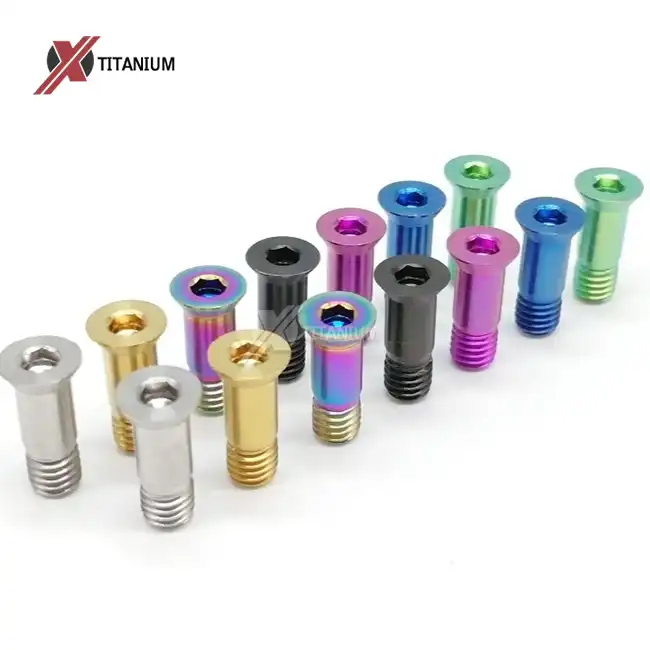
When evaluating high-performance bicycle components, the Rear Derailleur Titanium Screw stands out as a critical fastener that directly influences drivetrain reliability and longevity. Titanium screws offer approximately 40% weight reduction compared to steel equivalents while maintaining superior mechanical strength, corrosion resistance, and fatigue performance.
These fasteners are manufactured from aerospace-grade Ti6Al4V (Grade 5) titanium alloy, providing exceptional durability in harsh cycling conditions—from muddy cyclocross courses to salt-laden coastal environments. Their resistance to galvanic corrosion when paired with carbon fiber or aluminum components makes them indispensable for professional racing teams and high-end manufacturers seeking marginal performance gains and extended service intervals.
Understanding Titanium Screws in Rear Derailleurs
The Role of Titanium Fasteners in Drivetrain Performance
When you change gears, the chain tension changes, and the rear derailleurs are exposed to dirt and other things in the surroundings, they are always under mechanical stress. Standard steel screws add extra weight to the rotating assembly and can rust and seize up. Aluminum alternatives give up strength to be lighter, and they often break when torque loads are applied. Rear Derailleur Titanium Screws fill in this gap in performance by being stronger and lighter than either of the other two materials.
Our Rear Derailleur Titanium Screws are CNC-machined to have thread accuracy of ±0.02mm, which makes sure they fit perfectly with derailleur cages and pulley wheel assemblies. This accuracy keeps the threads from stripping, which can happen when soft materials touch hardened steel parts. Polishing makes the surface rough (Ra = 0.8–3.2μm), which lowers friction during installation and keeps dirt from building up during use.
Addressing Installation Challenges and Performance Concerns
Concerns are often raised by procurement managers and engineering teams about titanium's image for being sensitive to threads. Titanium is not as flexible as stainless steel, but if you follow the right installation steps, you won't have to worry about stripping. We suggest using torque wrenches that are compatible with titanium and are adjusted according to the manufacturer's instructions.
For derailleur uses, the range of torque should be between 2 and 5 Nm. Titanium-specific anti-seize chemicals stop galling, which happens when similar metals stick together under pressure. Our technical support team gives installation teams detailed torque specs for each product variant so they can confidently put parts together without damaging the threads. The material's natural oxide layer forms as soon as it comes into contact with air, making a shield against rust that steel can't match.
Material Properties That Define Reliability
When heated to temperatures between -40°C and +400°C, Grade 5 titanium alloy performs very well, keeping its shape when steel and aluminum would soften and break. This thermal stability is very important for riders who are moving between regions or racing in very rough weather. Because it doesn't react with saltwater or chloride solutions, the alloy can't be replaced in seaside cycle settings where normal fasteners rust in months.
Standards set by the petrochemical industry for the purity of titanium materials apply to our production processes. This makes sure that the stability from batch to batch that buying teams need for long-term supply relationships is maintained. Before being shipped, each production run goes thru mechanical testing and checking to make sure the right materials are used.
Material Performance Comparison – Titanium vs Alternatives
Mechanical Strength and Fatigue Resistance Analysis
Our nails are made of the Ti6Al4V metal, which has a tensile strength of about 900 MPa and a density of only 4.43 g/cm³, which is about half that of stainless steel. The strength of this mix is higher than that of both 316 stainless steel and 7075 aluminum alloy. In tests that simulate thousands of gear shifts, cycle loads, Rear Derailleur Titanium Screws show better fatigue resistance with less thread wear than aluminum screws, which tend to get micro-cracks from repeated stress.
Even tho steel bolts are strong at first, over time they get damaged by corrosion that makes the thread contact weaker. When procurement teams look at the total cost of ownership, they need to keep in mind that titanium has a longer service life than most other materials, often two to three times longer. This means that it costs more to buy at first, but it pays for itself in lower upkeep costs and guarantee claims over time.
Corrosion Resistance in Real-World Cycling Conditions
Cyclocross racers and gravel riders often bathe their drivetrains in rough mud slurries that contain salt, sand, and organic acids. In these conditions, steel screws quickly rust on the outside, so they need to be replaced often to keep the threads from seizing up during regular maintenance. Aluminum oxidizes quickly when it comes into contact with other metals, especially when it's wet.
Our Rear Derailleur Titanium Screws don't rust because they form an inactive film that heals itself when they get scratched or worn down. Marine engineering uses titanium to work well in chloride-rich environments, like the ones cyclists face near the coast or on roads that have been treated with deicing salts in the winter. Professional bicycle teams have done technical tests that show titanium fasteners can still be removed even after being exposed to harsh contaminants for a whole season. This means that there is less downtime for bearing service and component improvements.
Weight Optimization and Rotational Mass Benefits
Weight reduction is very important in competitive riding, especially for parts that are far from the bike's center of mass. Because they are so far from the bottom bracket axis, rear derailleur assemblies are a great place to focus on reducing weight. Changing six standard steel bolts to Rear Derailleur Titanium Screws saves about 15 to 20 grams, which is a big difference when added to other lightweight parts.
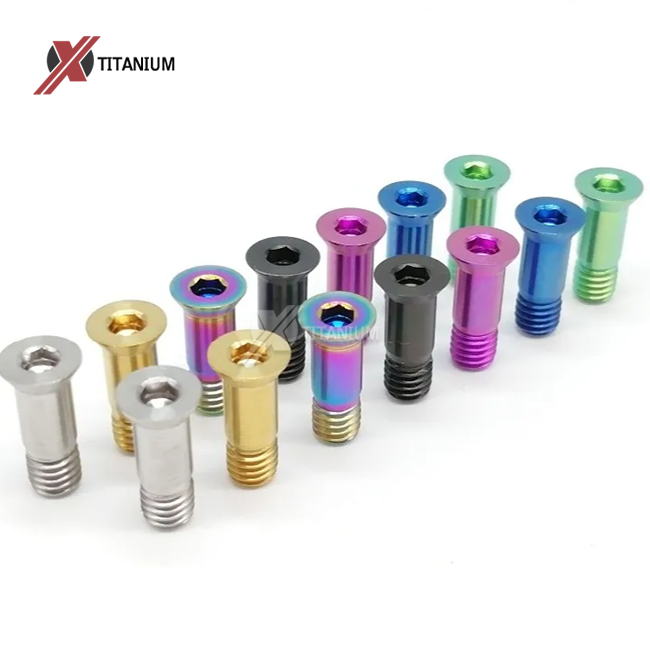
Less rotational friction means better acceleration response, which is good for weight-focused builds for time trials and climbing stages. When professional teams buy in bulk for their whole squad, these small gains are spread out over dozens of bikes. With our range of surface treatments, such as anodizing in colors from natural titanium to rainbow finishes, manufacturers can save weight without affecting the look of their brands or the way parts are identified.
Installation and Maintenance of Titanium Rear Derailleur Screws
Step-by-Step Installation Protocols for Technical Teams
Before installing something correctly, each part must be checked to make sure that the threads are compatible and that there is no damage to the gear bars or pulley wheel assemblies that was there before. Isopropyl alcohol should be used to clean all mating surfaces to get rid of manufacturing oils and other contaminants that could change torque readings. Put a thin layer of titanium-safe anti-seize compound on just the first three threads (never the whole shaft) to keep the torque application accurate and stop galling.
Before using torque tools, thread Rear Derailleur Titanium Screws by hand until they are finger-tight to make sure they are in the right place. Set the torque wrench to the number recommended by the manufacturer. For jockey wheel assemblies, this is usually 3–4 Nm and for derailleur mounting bolts, it's usually 4–5 Nm. Do not use impact drivers or pneumatic tools that can instantly go over the yield strength. Our technical information includes connection grids that show how the screw sizes compare to those used by Shimano, SRAM, and Campagnolo derailleurs.
Maintenance Protocols That Extend Component Lifespan
Titanium is very durable, but that doesn't mean it doesn't need to be maintained. It just means that checks can be done much more often. We suggest checking for thread wear every three months and looking for strange discolorations that could mean galvanic interaction with metals that are not the same. When you do maintenance on the drivetrain, use mild detergent solutions to clean the Rear Derailleur Titanium Screws.
Do not use harsh alkaline cleaners or wire brushes, as they could damage the passive oxide layer. Our polishing process gives the surface a smooth finish that repels dirt and grime better than steel, so it needs less harsh cleaning methods. Every year or after a crash, check the torque numbers because frame flex during crashes can change the preload on fasteners. Our customer service team gives replacement schedules based on the type of use. For example, professional racing uses usually need replacements every 12 to 18 months, while recreational use can go up to 3 to 5 years.
Quality Assurance and Technical Support Integration
When procurement managers are looking for suppliers, they look for ones with quality systems that can be checked and quick expert help. Our factory follows strict quality control rules that keep track of each batch from the time the raw materials are checked to the time they are inspected for quality. Every production lot is checked for measurement accuracy with thread gages, and any variations are found before the shipment with statistical process control. Material certificates come with bulk orders and list the alloy's composition and mechanical properties so that the customer can keep track of its quality.
We have technical support staff who are knowledgeable about putting together derailleurs. They can help with problems during installation, suggest torque levels for specific uses, and do failure analyzes when problems happen in the field. This complete support system lowers the risk of buying and speeds up the resolution of problems, which are both very important for OEM makers who have to meet tight production schedules.
Procurement Guide: Selecting and Buying Titanium Rear Derailleur Screws
Evaluating Supplier Capabilities and Product Specifications
When choosing a titanium bolt provider, business-to-business buyers need to look at more than just the unit price. Material traceability is a basic requirement. Make sure that sources give you mill certificates that list the alloy's composition and heat treatment settings. To make sure that precision gear parts can work with the thread, the accuracy requirements should be at least ±0.02mm. Surface treatments like anodizing and nitriding increase their usefulness. For example, anodized layers make the metal harder and use color coding to make it easier to find in an assembly.
Processes used in manufacturing are very important. CNC machining produces better threads than cold-forming, which can leave behind leftover strains. Before committing to large orders, buyers should ask for sample batches to check the dimensions and test the installation. Our plant in Baoji City, which is known around the world as the "City of Titanium," gives us direct access to raw materials and processing equipment that isn't available in areas that aren't specialized.
Understanding Pricing Structures and Volume Strategies
The cost of raw materials, the difficulty of machining, and the money spent on quality control all affect the price of titanium fasteners. Even tho they cost three to five times as much per unit as steel alternatives, lifecycle analysis shows that they are a much better investment because they last longer between repairs and have less warranty risk. When you buy more than 1,000 units, volume price structures usually give you big savings. The discounts get even bigger when you buy 5,000 or 10,000 units.
When OEM makers add Rear Derailleur Titanium Screws to their production lines, they can use consignment inventory deals to keep supplies steady while reducing the amount of working capital they need. Teams in charge of buying things should work out multi-year deals that lock in prices and make sure that capacity is allocated correctly during busy manufacturing times. Our sales team sets prices based on the total value of the relationship. They do this by taking into account things like technical support needs, custom packaging requirements, and just-in-time shipping plans that help customers lower the cost of keeping inventory on hand.
Sourcing Channels and Certification Requirements
Professional bicycle makers usually get their parts from well-known sales routes or direct relationships with other manufacturers that have been checked out by industry standards. We keep our quality systems in line with international standards, but in the bicycle industry, testing and field validation are more important than aerospace-specific certifications. Buyers should give more weight to suppliers who have recorded their manufacturing processes, have systems for tracking products, and are ready to give technical specs as long as the buyer agrees not to share them with anyone else.
Trade shows and industry groups are great places to meet other people in your field and find specialized suppliers who know a lot about titanium. Our export experience in the petrochemical, medical, and aerospace industries shows that we can make things that go above and beyond what the bicycle industry needs. This gives buyers confidence in our ability to meet high quality standards and increase production to keep up with rising demand.
Why Titanium Screws Are the Preferred Choice for B2B Bicycle Applications
Performance Validation Through Industry Adoption
Major companies that make bicycle parts have slowly started using titanium fasteners in all of their high-end products. This is because field data shows that these screws fail less often and users have good things to say about how reliable they are over time. Professional racing teams that work in harsh situations provide real-world proof that can't fully be matched by lab tests. Cyclocross mechanics say that Rear Derailleur Titanium Screws can still be removed for bearing service even after several muddy race weekends.
This is a huge benefit compared to steel screws, which get stuck and need to be taken out destructively. Manufacturers of mountain bike parts that make oversized pulley wheel systems use titanium hardware to match the high-end positioning of ceramic bearing upgrades. They know that the quality of the fasteners can't take away from the better performance of upgraded drivetrain components.
Emerging Innovations in Titanium Component Technology
Advances in material science keep making titanium more useful in the bicycle manufacturing process. Hollow-shaft fastener designs reduce weight even more while keeping the structure strong. They are made for uses that care about weight because every gram can give a competitive edge. Nitriding processes raise the surface hardness to HRC 60+, making it more resistant to wear in high-friction situations without affecting titanium's natural ability to resist rust.
Color-anodizing technologies have both useful benefits, like color-coding for assembly labeling, and attractive differences that make brands easier to recognize. Instead of adapting aerospace materials, our research and development work is mainly focused on expanding the temperature ranges where they work well and creating custom alloy compositions that work best for cycling applications.
Brand Reputation Enhancement Through Premium Components
Bicycle OEMs and companies that make parts know that Rear Derailleur Titanium Screws show quality loyalty to picky customers and distributors. More and more, high-end builds have titanium gear that can be seen. This is a clear sign of attention to detail and a desire to spend money on the best materials. This view goes beyond consumer markets and into business-to-business relationships. Procurement managers choose which suppliers to work with based on how committed they are to quality and new ideas.
Distributors who carry titanium-enhanced parts set their products apart in crowded markets and can charge higher prices, which increases their profit margins. Because we can make things, we can mark and brand them in any way our partners want. This way, partners can strengthen their brand thru small details on the parts that enthusiast customers notice and appreciate.
Conclusion
Rear Derailleur Titanium Screws are great for bicycle applications because they have high strength-to-weight ratios, are highly resistant to corrosion, and last longer, which lowers the total cost of ownership. The Ti6Al4V alloy we use in our CNC-machined fasteners has better mechanical qualities than steel and aluminum options in the tough conditions that racers and leisure cyclists face.
When you follow the right installation and upkeep steps, you can get the most out of these speed benefits and not have to worry about thread sensitivity. Buying teams can get more reliable drivetrains and better brand reputations by working with specialized manufacturers that offer traceable materials, technical support, and quality systems that make sure they always have a steady supply of precision parts.
FAQ
Do titanium screws strip easily during installation?
Rear Derailleur Titanium Screws can split if they are placed incorrectly, mostly because the material is more flexible than hardened steel. This happens when too much torque is used or tools that aren't meant to work together are used. It is important to pay close attention to torque specs because steel screwdrivers and titanium threads have different levels of mechanical resistance.
There are no risks of stripping when you use measured torque tools, titanium-compatible anti-seize compounds, and follow the fitting instructions provided by the maker. Precision CNC machining on our products keeps thread quality within ±0.02mm, ensuring proper engagement that prevents cross-threading and damage during assembly as long as they are treated properly.
Why use titanium screws instead of steel or aluminum alternatives?
Rear Derailleur Titanium Screws last a lot longer than steel or aluminum screws, keeping their power and performance for years longer. The material doesn't wear down when loaded and unloaded many times, and it can handle temperatures from -40°C to +400°C without losing its shape. Resistance to corrosion is especially useful in places with saltwater, chloride, and harsh weather, since steel rusts and metal oxidizes in these circumstances. Because it is 40% lighter than steel, it can be used in competitive bicycle uses in important ways. Because of these qualities, titanium is the best material when you want long-lasting dependability, low maintenance, and the lightest possible weight.
Are titanium bolts as strong as steel bolts for high-stress applications?
Titanium fasteners are very strong compared to their weight because they have a high strength-to-weight ratio. It is possible for Grade 5 titanium metal to be two to four times stronger than stainless steel when compared weights. Because the material is flexible and has a high melting point, it can be used in situations where temperatures are high, like in some riding settings.
Titanium can stand up to saltwater and most chloride solutions, but strong acids like sulfuric or hydrochloric acid damage the inactive oxide layer that protects the metal. Titanium is stronger than steel when used in normal weather conditions for bicycle derailleur uses. It also gives better corrosion protection than steel.
Partner with Chuanglian for Precision Titanium Fastener Solutions
Baoji Chuanglian New Metal Material Co., Ltd. has been CNC-machining titanium for more than ten years and has a wide range of quality control systems that meet the needs of companies that make and sell bicycle parts. As a specialized Rear Derailleur Titanium Screw maker in China's famous "City of Titanium," we have direct access to high-quality raw materials and advanced CNC machining tools that can give your projects the thread accuracy and surface finish quality they need.
Our engineering team can help you with the whole buying process, from evaluating samples to producing large amounts. They can give you expert advice on choosing materials and following fitting instructions. You can talk to our team about your unique needs by emailing us at info@cltifastener.com or djy6580@aliyun.com. You can also ask for product specs, material certificates, and prices for your next project.
References
1. Donachie, M.J. (2000). Titanium: A Technical Guide, 2nd Edition. ASM International, Materials Park, Ohio.
2. Boyer, R., Welsch, G., and Collings, E.W. (1994). Materials Properties Handbook: Titanium Alloys. ASM International, Materials Park, Ohio.
3. Lutjering, G. and Williams, J.C. (2007). Titanium, 2nd Edition. Springer-Verlag, Berlin, Germany.
4. Schutz, R.W. and Watkins, H.B. (1998). "Recent Developments in Titanium Alloy Application in the Energy Industry." Materials Science and Engineering: A, Volume 243, Issues 1-2.
5. Peters, M., Kumpfert, J., Ward, C.H., and Leyens, C. (2003). "Titanium Alloys for Aerospace Applications." Advanced Engineering Materials, Volume 5, Issue 6.
6. Veiga, C., Davim, J.P., and Loureiro, A.J.R. (2012). "Properties and Applications of Titanium Alloys: A Brief Review." Reviews on Advanced Materials Science, Volume 32, Number 2.
Learn about our latest products and discounts through SMS or email