- English
- French
- German
- Portuguese
- Spanish
- Russian
- Japanese
- Korean
- Arabic
- Greek
- German
- Turkish
- Italian
- Danish
- Romanian
- Indonesian
- Czech
- Afrikaans
- Swedish
- Polish
- Basque
- Catalan
- Esperanto
- Hindi
- Lao
- Albanian
- Amharic
- Armenian
- Azerbaijani
- Belarusian
- Bengali
- Bosnian
- Bulgarian
- Cebuano
- Chichewa
- Corsican
- Croatian
- Dutch
- Estonian
- Filipino
- Finnish
- Frisian
- Galician
- Georgian
- Gujarati
- Haitian
- Hausa
- Hawaiian
- Hebrew
- Hmong
- Hungarian
- Icelandic
- Igbo
- Javanese
- Kannada
- Kazakh
- Khmer
- Kurdish
- Kyrgyz
- Latin
- Latvian
- Lithuanian
- Luxembou..
- Macedonian
- Malagasy
- Malay
- Malayalam
- Maltese
- Maori
- Marathi
- Mongolian
- Burmese
- Nepali
- Norwegian
- Pashto
- Persian
- Punjabi
- Serbian
- Sesotho
- Sinhala
- Slovak
- Slovenian
- Somali
- Samoan
- Scots Gaelic
- Shona
- Sindhi
- Sundanese
- Swahili
- Tajik
- Tamil
- Telugu
- Thai
- Ukrainian
- Urdu
- Uzbek
- Vietnamese
- Welsh
- Xhosa
- Yiddish
- Yoruba
- Zulu
Where European Buyers Source Titanium Exhaust Bolts in China
European consumers usually purchase titanium exhaust bolts in China directly from manufacturers in Baoji, the so-called “City of Titanium,” where there are several titanium producers and machining shops. In Europe, the United States and Japan, motorcycle exhaust manufacturers are reduced to those firms that can mill Grade 5 (Ti-6Al-4V) fasteners on CNC equipment, provide material certifications and run prototypes and pilot batches before full production orders. This article covers how I assess those sources, which specifications to look for, and which risks to manage. I write from the manufacturing experience, since we manufacture these fasteners at Chuanglian every day.
Understanding the Titanium Exhaust Bolt Before You Source
What Is a Titanium Exhaust Bolt and Where Is It Used?
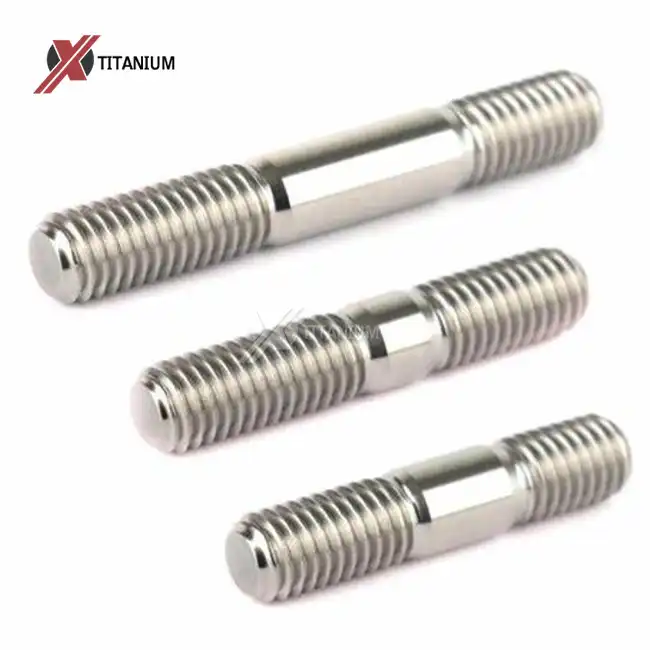
Titanium exhaust bolt is used for exhaust couplings such as headers, manifold flanges, and collector clamps and mounting brackets. The most frequent sizes on bikes are M8 and M10, and the bolt must fit the flange hole and the mating thread. Buyers find hex-head, flange-head and socket-head designs, plus studs, nuts and washers in kit form. Performance is not guarantyd by material alone. Thread engagement, vibration, torque, heat cycles, the gasket and the anti-seize compound all effect this. I always urge purchasers to look at the full joint, not just the bolt.
Titanium Exhaust Bolt Benefits: Strength, Weight, and Corrosion Resistance
The density of Ti-6Al-4V is given in standard materials handbooks as around 4.43 g/cm³, compared to steel at approximately 7.85 g/cm³. In our product sheet we indicate that titanium exhaust bolts are around 40% lighter than equivalent strength steel bolts with tensile strength of 1200 MPa, yield strength of 1100 MPa and hardness of 350 HV. Titanium also produces a passive oxide coating, so it resists saltwater, acids and chlorides, which important for road salt and wet riding. When you have a titanium bolt next to a titanium exhaust pipe, a typical aim in motorcycle tuning, the weight savings mount up. Heat performance is a function of location and exposure duration therefore check it using test data.
Titanium vs. Stainless Steel and Aluminum Bolts
Each material is for a separate piece. Stainless steel is also lower in cost and has extremely good high temperature properties hence stainless steel regularly wins cost driven initiatives . Aluminium is light but not very strong, and the threads are weaker, so it’s only good for low-load sections. Titanium is between them. It has a good strength to weight ratio and is corrosion resistant, but is more expensive and requires anti-seize to avoid galling. Thermal expansion is also different. So test the connection where a titanium bolt contacts a stainless flange. Titanium expands at approximately 8.6 microns/m·K, and austenitic stainless steel at around 16 to 17 microns/m·K. I look at the cost, not the unit price.
Specifying the Right Titanium Exhaust Bolt
Titanium Exhaust Bolt Size Guide for Procurement
We have diameters from M6 to M36 (custom sizes available) and most exhaust work will need M6, M8 or M10. Send thread pitch, length, threaded length, head type and tolerance in your request. State if the bolt threads into a nut, a tapped hole or an insert. Flange-head shape and washer selection impact clamp load. So, include them as well. A sketch or CAD file speeds up quotation, and an actual sample of your existing bolt takes the guess work out of it. We propose first-article approval before production so that you may ensure fit in the flange before committing to a pilot batch.
How to Choose the Best Titanium Exhaust Bolt for an Exhaust System?
Begin with the joint. List exhaust location, vibration intensity, temperature range, corrosion exposure and projected service life. Then choose the grade, head style, size and washer configuration. We provide Gr5 (Ti-6Al-4V), commercial pure Grade 2 is lower in strength. Our sheet shows temperature resistance up to 500 °C and strength drops with increasing heat. Test at your actual header temperatures with a safety buffer. Then install control with clean threads, anti-seize and calibrated torque tools. Before approval, request material certifications, dimensions records and traceability. OEM programs may also need PPAP or comparable paperwork.
Surface Finishes, Colors, and Heat
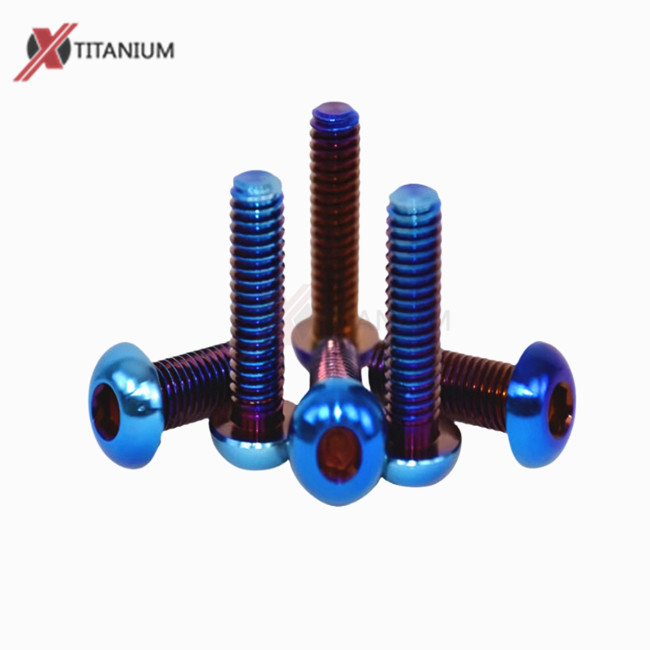
We offer polishing, anodizing, and nitriding, with colors including titanium natural, gold, blue, green, purple, black, and rainbow. Color choice needs care on exhaust parts. Anodized color comes from a thin oxide layer, and high heat can fade or shift it, so buyers who want a stable appearance near a hot header should test samples under real conditions. Nitriding hardens the surface, which helps with wear, while a natural or polished finish avoids color-change concerns. Raw titanium also tints with heat on its own, and some customers like that look. Tell us the bolt location, and we will suggest a finish to test.
Where European Buyers Source Titanium Exhaust Bolts in China?
Types of Chinese Suppliers and How to Tell Them Apart
Buyers find Chinese sources in several groups: dedicated titanium fastener manufacturers, CNC machining shops, export-oriented factories, OEM producers, and trading companies. To separate direct manufacturers from intermediaries, ask for factory photos or a video audit, a machine list, inspection equipment details, and material purchasing records. A direct factory can answer questions about tolerance control and machining from its own floor. Trade shows, Google searches, B2B platforms, and exhaust brand supplier networks all lead to these sources. Chuanglian operates a dozen CNC machine tools in Baoji and has more than ten years of titanium machining and research experience.
Custom, Wholesale, and OEM Procurement
Most exhaust brands buy in three ways. Custom orders cover diameter, length, thread pitch, head shape, finish, and color. Wholesale orders favor stable pricing, batch consistency, and clear product identification. OEM programs follow a path from drawing review and prototype to pilot batch, approval, and repeat orders. A typical exhaust program runs six to eight weeks from requirement to approval, including testing and a pilot run of 500 to 1,000 pieces. Ask about MOQ, sample lead time, and repeat-order capacity at the start. Our standard is customized, so we build to your drawing rather than to a fixed catalog.
Why Baoji Is a Sourcing Base for Titanium?
Baoji is known in China as the "City of Titanium," and Chuanglian operates there. We manufacture and export titanium exhaust bolts and rare metal products, including fasteners, rods, wire, plates, tubes, flanges, and machined components. Our products serve petrochemical, marine, racing, medical, and aerospace fields. We inspect every production step from raw material to finished product, and our titanium products have sold to well-known companies worldwide. Our compliance references include ISO 9001, ASTM B265, and AMS 4928. That record helps buyers who need a supplier able to document material and process.
Controlling Risk After You Find a Supplier
Installation and Maintenance of Titanium Exhaust Bolts
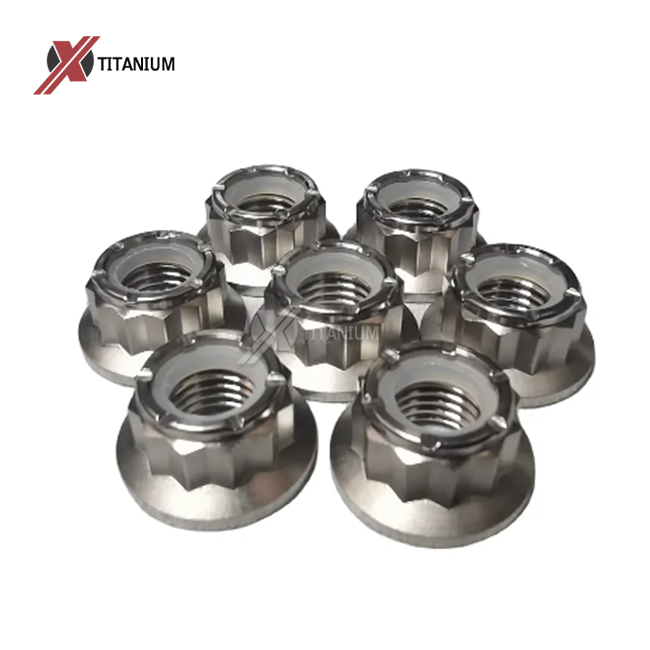
Titanium threads can gall when installed dry. Clean the threads, apply a high-temperature anti-seize approved for titanium, start the bolt by hand, and tighten in steps with a calibrated torque wrench. Anti-seize lowers friction, so use the torque value from your engineer, not a steel-bolt number copied blindly. Where the design calls for it, add safety wire, locking features, or prevailing-torque nuts. During service checks, look for thread damage, exhaust leaks, loss of preload, contamination, deformation, or corrosion. Replace any bolt that stretched, bent, or galled instead of reusing it.
Common Risks When Buying Titanium Exhaust Bolts from China
The usual risks are the wrong titanium grade, missing traceability, the wrong thread standard, off-size parts, overstated heat claims, and unclear shipping duties. You can control each one. Request batch-specific material certificates, approved drawings, and reference samples. Use positive material identification or independent testing for safety-critical parts, because a failed bolt can drop an exhaust pipe. Check thread class with go/no-go gauges on incoming lots. Arrange pre-shipment inspection for first orders and keep retained samples. Confirm Incoterms, customs papers, packaging, and country-of-origin details before you issue a purchase order.
A Practical Supplier Evaluation Scorecard
A scorecard turns opinions into numbers. I suggest weighting technical fit at 30%, quality and documentation at 25%, delivery at 20%, landed cost at 15%, and service at 10%. Technical fit covers Gr5 experience, CNC machining, thread production, tolerance control, and prototype support. Quality covers material certification, in-process and final inspection, calibrated gauges, and batch traceability. Delivery covers lead time and capacity. Landed cost includes freight, duties, and VAT, not only the ex-works price. Service covers engineering response time and communication. Score two or three suppliers on the same sheet, and the best choice usually becomes clear.
A Practical Buying Process
Recommended Purchasing Process for Exhaust Buyers
A controlled process keeps surprises small. First, confirm requirements for one to two weeks, including temperature, size, and anti-galling plan. Second, evaluate suppliers for about two weeks, with attention to their experience on high-temperature parts. Third, validate samples over three to four weeks with heat testing and a road test. Fourth, run a pilot batch of 500 to 1,000 titanium exhaust bolts over another three to four weeks. Then move to quarterly repeat orders. The full decision cycle usually takes six to eight weeks. A quality agreement covering inspection criteria, labeling, forecasts, and change control keeps later orders consistent.
Sample Validation: Strength, Heat, and Fit
Samples should answer three questions. Does the bolt hold its strength at your operating temperature? Does the thread stay free of galling after repeated heat cycles and removal? Does it fit the flange and mating thread without binding? Test tensile strength and creep for the application, check dimensions with go/no-go gauges, and run the bolt on a real exhaust during road trials. Check the finish color after heat exposure as well. Record every result and share the data with your supplier, so we can adjust the finish, length, or head design before the pilot batch.
Landed Cost and Documentation
Unit price tells only part of the story. Landed cost includes tooling, inspection, freight, duties, VAT, inventory, and the cost of any quality problem. Stainless steel bolts may look cheaper on paper, yet titanium offers weight savings and corrosion resistance that performance riders value. Ask for documents with every shipment: material certificates, inspection reports, traceability records, and conformity statements, plus RoHS or REACH declarations when your market requires them. Independent inspection helps most with new suppliers, large orders, custom fasteners, and first production batches. Good paperwork also shortens your own audit time.
Conclusion
European buyers source titanium exhaust bolts in China mainly from direct manufacturers, and Baoji, known as the City of Titanium, hosts many of them. Gr5 (Ti-6Al-4V) offers high strength, low weight, and corrosion resistance compared with steel, while stainless steel stays cheaper and aluminum suits only light loads. Correct sizing, grade selection, finish choice, and anti-seize use decide whether a joint performs, and heat limits and color fade need testing at real temperatures. Batch certificates, traceability, gauges, and independent inspection reduce risk on each order. A weighted scorecard makes supplier comparison objective, and a staged process of sampling, pilot batch, and repeat orders usually takes six to eight weeks while keeping landed cost visible.
FAQ
Which grade should I choose for a titanium exhaust bolt?
Choose Grade 5 (Ti-6Al-4V). It gives exhaust joints the strength they need, while commercially pure Grade 2 has lower strength.
Do titanium bolts need anti-seize?
Yes. Titanium threads can gall, so apply a high-temperature anti-seize and use calibrated torque tools during installation.
What sizes can Chuanglian supply?
Our range runs from M6 to M36, with custom sizes available. Exhaust joints commonly use M6, M8, or M10, so confirm thread pitch, length, and head style with us.
What temperature can the bolts handle?
Our product sheet lists resistance up to 500°C. Strength declines as heat rises, so test at your real operating temperature.
Which documents should I request?
Ask for material certificates, inspection reports, traceability records, and conformity statements, plus RoHS or REACH declarations when your market requires them.
Request a Titanium Exhaust Bolt Sourcing Review with Chuanglian
Send your drawings, target quantities, and operating temperatures to Chuanglian, a titanium exhaust bolt manufacturer in Baoji with more than ten years of titanium machining experience. Our Gr5 (Ti-6Al-4V) CNC machined bolts come in polished, anodized, or nitrided finishes and custom sizes from M6 to M36. Email info@cltifastener.com or djy6580@aliyun.com.
References
1. ASM Handbook, Volume 2: Properties and Selection: Nonferrous Alloys and Special-Purpose Materials, ASM International, 1990.
2. Titanium: A Technical Guide, 2nd Edition, ASM International, 2000.
3. Titanium and Titanium Alloys: Fundamentals and Applications, Wiley-VCH, 2003.
4. Materials Properties Handbook: Titanium Alloys, ASM International, 1994.
5. ISO 9001: Quality Management Systems – Requirements, International Organization for Standardization, 2015.
6. Incoterms 2020, International Chamber of Commerce, 2019.
Learn about our latest products and discounts through SMS or email