- English
- French
- German
- Portuguese
- Spanish
- Russian
- Japanese
- Korean
- Arabic
- Greek
- German
- Turkish
- Italian
- Danish
- Romanian
- Indonesian
- Czech
- Afrikaans
- Swedish
- Polish
- Basque
- Catalan
- Esperanto
- Hindi
- Lao
- Albanian
- Amharic
- Armenian
- Azerbaijani
- Belarusian
- Bengali
- Bosnian
- Bulgarian
- Cebuano
- Chichewa
- Corsican
- Croatian
- Dutch
- Estonian
- Filipino
- Finnish
- Frisian
- Galician
- Georgian
- Gujarati
- Haitian
- Hausa
- Hawaiian
- Hebrew
- Hmong
- Hungarian
- Icelandic
- Igbo
- Javanese
- Kannada
- Kazakh
- Khmer
- Kurdish
- Kyrgyz
- Latin
- Latvian
- Lithuanian
- Luxembou..
- Macedonian
- Malagasy
- Malay
- Malayalam
- Maltese
- Maori
- Marathi
- Mongolian
- Burmese
- Nepali
- Norwegian
- Pashto
- Persian
- Punjabi
- Serbian
- Sesotho
- Sinhala
- Slovak
- Slovenian
- Somali
- Samoan
- Scots Gaelic
- Shona
- Sindhi
- Sundanese
- Swahili
- Tajik
- Tamil
- Telugu
- Thai
- Ukrainian
- Urdu
- Uzbek
- Vietnamese
- Welsh
- Xhosa
- Yiddish
- Yoruba
- Zulu
Best practices for maintaining M8 titanium rotor bolts on bikes
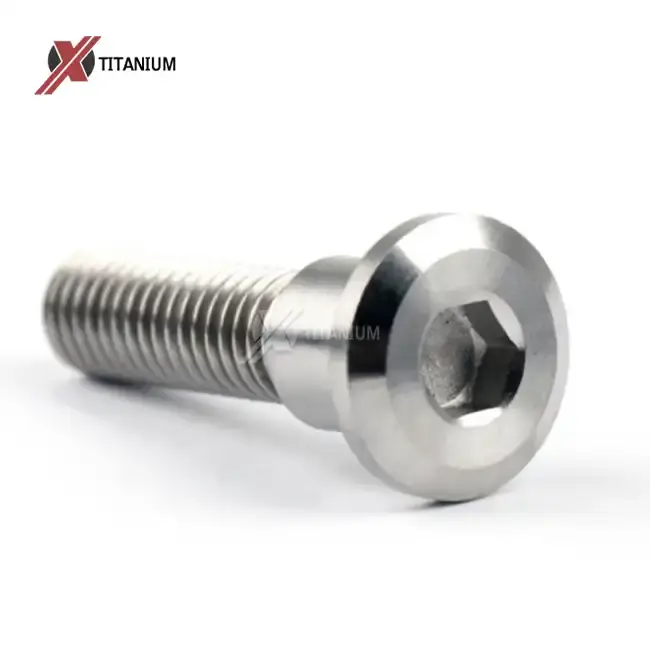
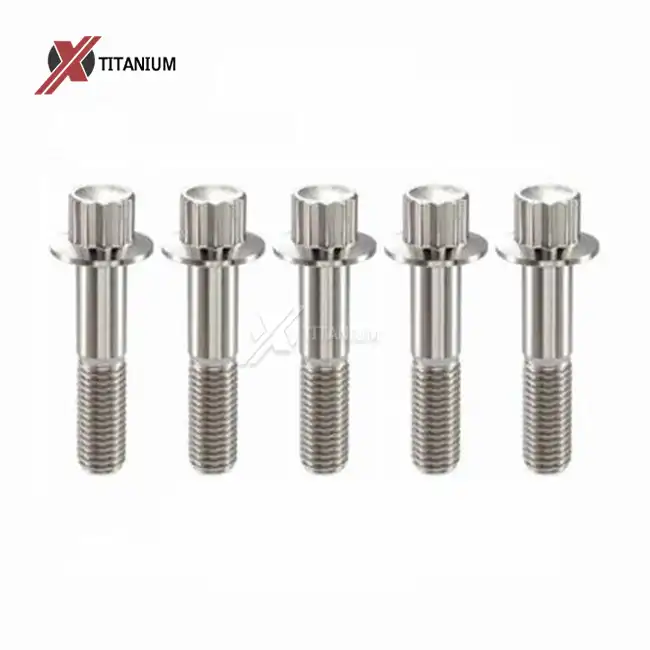
Maintaining m8 titanium rotor bolts demands precision and understanding of material-specific characteristics. These Grade 5 Ti-6Al-4V fasteners secure brake rotors to hubs with exceptional strength-to-weight performance, offering tensile strength exceeding 950 MPa while weighing 45% less than steel equivalents. Proper maintenance involves torque verification, anti-seize application, routine inspection for thread integrity, and cleaning protocols that preserve the bolt's corrosion-resistant properties.
Establishing systematic maintenance procedures extends component lifespan, prevents galling during disassembly, and ensures consistent braking performance across demanding applications—from competitive cycling to fleet operations where reliability directly impacts safety and operational costs.
Understanding M8 Titanium Rotor Bolts: Specifications and Benefits
Material Composition and Core Properties
Ti-6Al-4V, which is a grade 5 titanium alloy, is the engineering standard for high-performance brake rotor fasteners. This metal is made by mixing aluminium and vanadium in exact amounts that give it amazing mechanical qualities, like a density of 4.51 g/cm³ and a hardness of 35 HRC. The material can handle temperatures close to 1660°C, which makes it very stable during the thermal cycling that happens in brake systems.
When purchasing teams look at fastener specs, these physical traits directly lead to better performance. For example, less rotational mass makes the suspension more fluid, and chemical inertness gets rid of worries about galvanic corrosion when paired with carbon fibre or aluminium parts.
The measurements for m8 titanium rotor bolts are based on ISO 7380 and DIN 912 standards. This makes sure that they can be used with all kinds of foreign production platforms. The thread pitch stays at 1.25mm, and the lengths available range from 15mm to 40mm to fit a variety of rotor and hub configurations. There are different types of drives, such as T25 Torx and hex socket designs. Each has its own installation benefits.
When applying a lot of force, torx configurations keep the cam from coming loose, while hex configurations make it easier to do quick service in the field. Tolerance requirements require accuracy of ±0.05mm, which is very important for making sure that the clamp load is evenly distributed across the rotor fitting interface.
Performance Advantages in Real-World Applications
M8 titanium rotor bolts make bicycle speed better because they are stronger for their weight. When compared to steel gear, installing a full set of twelve bolts—six for each wheel—reduces spinning mass by about 15 to 20 grams. This weight loss happens at the wheel's outer radius, which is where spinning inertia has the most effect on how quickly and precisely it handles.
The benefits go beyond settings where people are racing. Titanium is resistant to salt-spray rust, which is good for fleet managers who run coastal delivery bikes or winter passenger programs. This is because steel screws often seize up in hub threads, requiring expensive drilling and re-tapping operations.
Another important efficiency factor is vibration resistance. When you keep stopping on tricky descents, the shear forces on the rotor bolts oscillate, which can loosen most fasteners. Titanium's high wear strength and elastic stiffness keep the clamp load intact over thousands of thermal cycles. The anti-galling properties are also very useful.
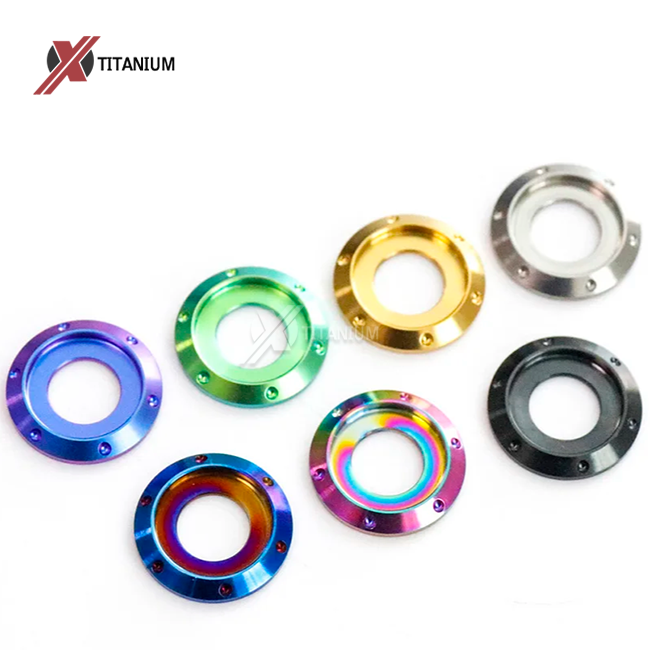
The oxide layer of the material stops cold welding between threads, so it can still be used after being installed for a long time. Surface treatment choices, such as anodising, offer extra benefits. For example, coloured finishes make it easier to see what's inside of assemblies with more than one part, and nitriding methods make the surface harder without weakening the toughness of the material underneath.
Common Issues in M8 Titanium Rotor Bolts and Their Root Causes
Installation-Related Problems
Thread stripping is still the most common way things fail, and it's usually caused by using too much torque. The stiffness of m8 titanium rotor bolts is very different from that of steel, so force values must be chosen that take this into account. When you over-torque, you create localised stress concentrations that start cracks to spread. When you under-torque, you let tiny movements happen between the rotor and hub contact.
This movement speeds up fretting wear and can cause fasteners to break suddenly during high-load stopping events. Cross-threading during the initial installation makes the problem worse by distributing the load unevenly, which damages the whole length of the thread contact.
M8 titanium rotor bolts have an extra problem that makes them hard to install: galling. Sticky wear happens at the microscopic level when titanium surfaces slide against each other without being properly oiled. This happens when material moves between threads that are meant to fit together. This increases the fitting pressure and could even cold-weld the parts together.
The problem gets worse in places where rotors are changed often, like racing teams and testing facilities, where galling happens more often than with regular cyclists. Environmental factors also play a role. For example, when dust gets into the system during installation, it brings with it rough particles that score the thread surfaces, making spots where corrosion or fatigue failures can start.
Environmental and Operational Degradation
Even though titanium is better at resisting corrosion than ferrous materials, some weather situations can make fasteners less reliable. Places with a lot of chloride, like coastal areas or roads that are treated with deicing salts in the winter, present unique problems. Titanium naturally forms a protective oxide layer, but impact or abrasion damage can break through this barrier, letting localised corrosion cells reach the material below. Chemicals from brake pad compounds or hydraulic fluids can also react with surface treatments, especially anodised finishes, and wear away the protective layer over time.
Fatigue buildup under repetitive loading situations is a way things break down over time. When the brakes are applied, the m8 titanium rotor bolts go through a complex stress state that includes tension, shear, and heat expansion. Over long periods of service, microscopic cracks start to form at stress concentration points, which are usually thread roots or the point where the head and shank meet.
These cracks spread slowly until they reach critical sizes, at which point they break suddenly. This process moves faster when wheels aren't balanced properly or when the ground is rough. So, requirements for purchases must take into account how hard the application is. For example, downhill race parts need to be replaced less often than commuter bike parts, even if they are made of the same materials.
Step-by-Step Best Practices for Maintaining M8 Titanium Rotor Bolts
Proper Installation Techniques
For fasteners to work at their best, you must first do a lot of preparation. Use isopropyl alcohol or a brake cleaner to clean all the surfaces that touch each other. This will get rid of any oils, dust, or anti-seize chemicals that are still on them from previous setups. Look closely at the hub threads with a magnifying glass to find any damage, rust, or buildup of dirt. Running a thread chaser through the hub bores makes sure that the bolts fit smoothly and shows any cross-threading damage that needs to be fixed before the new bolts are put in. This work before tightening stops galling caused by bacteria and makes sures accurate torque readings.
Cover the m8 titanium rotor bolts threads and underhead bearing surfaces with a thin, even layer of anti-seize compound that works with titanium. Copper-based compounds work well with Grade 5 titanium, but nickel-based options are better for extreme uses because they are more stable at high temperatures.
The thickness of the compound is important because too much application can cause hydraulic lock in the thread roots, which can falsely increase torque readings and even lead to under-clamping. A film thickness of 0.025 to 0.050 mm is best for lubrication without getting in the way of thread engagement. Before applying calibrated torque, tighten the bolts by hand to make sure they rotate smoothly along the length of the engagement.
Torque Specification and Verification
Standard torque values for m8 titanium rotor bolts are between 5 and 6 Newton-meters, but exact values depend on the type of head, the length of the thread engagement, and what the manufacturer recommends. It is important to use a torque wrench that is properly adjusted. For low-torque tasks, beam-type or digital models are more accurate than click-type models. When more than one bolt holds the rotor in place, apply torque in a star pattern, gradually tightening each bolt to 50% of its end value and then 75% before hitting the required torque. This step-by-step method spreads the clamp load evenly and keeps the rotor from bending.
Procedures for verifying after installation improve trustworthiness. After applying the initial torque, turn the wheel a few times while applying moderate brake pressure. The rotor can fully seat against the hub interface after this settling process. After this bedding process, re-torque all fasteners because the clamp load often relaxes a little.
Mark the heads of the bolts with a mark that goes all the way to the surface of the rotor. This will show you if the bolts are loosening during later inspections. For important tasks, you might want to use a torque-angle method that combines the original torque with an extra spin angle to get more stable clamp loads that aren't affected by changes in friction.
Routine Inspection and Cleaning Protocols
Unexpected breakdowns can be avoided by setting inspection times based on how often the item is used. For competitive riding, the bike should be inspected every 20 to 30 hours of use, but for leisure cycling, it can be checked every 100 hours. When you look at something, you should look for witness marks that have moved, surface discolouration that means it's been overheated, and thread damage that can be seen at the contact interface. In addition to direct inspection, you should also try to gently rotate each bolt head using the right tools while keeping an eye out for movement or odd resistance that could mean the threads are loosening or breaking.
How to clean m8 titanium rotor bolts is different from how to maintain steel hardware. You should stay away from harsh alkaline cleaners and chlorinated solvents because they can damage the oxide layer. Mild detergent solutions or titanium cleaners can get rid of brake dust and other outdoor pollution without damaging the material.
After cleaning, make sure all parts are completely dry so that water doesn't get stuck in the threads. Periodic removal and reinstallation, about every 500 hours of operation, lets you check the state of the threads in great detail and gives you a chance to apply new anti-seize chemicals. This method finds problems as they start to happen, before they become dangerous or need emergency fixes.
Replacement Indicators and Service Life
Safety at work is improved by knowing when m8 titanium rotor bolts need to be replaced instead of being serviced. If you can see thread damage like warping, galling marks, or rust pitting, you need to replace it right away. Even small thread damage changes how the load is distributed, which creates stress risers that speed up fatigue failure. Though it doesn't happen very often in properly torqued titanium fasteners, elongation or necking in the shank area is a sign of overloading that needs more than just a new bolt. The root causes, like wrong torque values or dirty threads during installation, need to be looked into as well.
The state of the anodised surface layer can be used to estimate how long something will last. If a fastener's finish starts to wear away or change colour over time, it means it has been exposed to a lot of temperature changes or rough surfaces. Damage to the cosmetic covering doesn't directly affect the structure, but it does show that the product has been used for a long time and may be getting close to its wear life limits. Manufacturers usually say that parts should be replaced every 1000 to 1500 hours of use in tough situations, but this can change a lot depending on the conditions of use. Keeping detailed service records lets you make replacement decisions based on data, instead of fixing things after they break down unexpectedly.
Comparing M8 Titanium Rotor Bolts with Other Materials for Procurement Decisions
Material Performance Analysis
As an option, stainless steel m8 titanium rotor bolts are usually used. They are less expensive to buy but much heavier. Type 316 stainless steel fasteners are about 60% heavier than titanium equivalents but are resistant to corrosion well enough for most uses. This extra weight adds up over the whole wheelset—twelve steel bolts make the whole thing about 25 to 30 grams heavier than titanium gear.
The tensile strength is about the same (900–1000 MPa), but titanium tends to perform better under cyclic loading because it is more resistant to cracks. When figuring out the total cost of ownership, you have to include how often the parts need to be replaced. This is because stainless steel can gall when it's being removed, which means that the process has to be damaging and raises the cost of labour and the risk of replacing the hub.
Aluminium alloy fasteners are in a unique place in the hierarchy of materials. Even though aluminium can be made lighter than titanium, it has a much lower tensile strength—usually 400 to 500 MPa for aerospace-grade metals. Because of this, aluminium m8 titanium rotor bolts can only be used in low-stress situations or need to be made bigger than they need to be, which takes away their weight benefits.
Corrosion resistance works well in controlled settings but quickly breaks down when exposed to road salts or air near the coast. The lower elastic stiffness of the material lets it bend more when it's loaded, which could let the rotor move in a way that makes the stopping less consistent. When it comes to key braking uses, procurement teams almost never choose aluminium. Instead, they choose titanium when performance is important and steel when cost is more important than technical concerns.
Application-Specific Selection Criteria
When used in mountain bikes, vibration resistance and corrosion resistance are more important than minimising weight as much as possible. The rough landscape creates constant high-frequency signals that make it hard for fasteners to stay in place, and mud, water, and trail debris make the conditions acidic. Ti-6Al-4V m8 titanium rotor bolts work great in these tough conditions because they can keep their clamp load for a long time in rough terrain without needing to be re-torqued often. The higher cost compared to steel hardware—usually 300 to 400% more per bolt—is justified by longer service intervals and no longer having to pay to have seized-fastener extraction costs, which are a problem with steel parts in similar situations.
When used for road riding or the track, weight reduction and aerodynamics become more important. When compared to off-road use, the controlled operating environment lets more aggressive weight optimisation happen while lowering the exposure to corrosion. M8 titanium rotor bolts improve performance in a way that can be measured.
For example, lowering the weight of the wheelset by 15-20 grams makes climbing easier and speeds up reaction faster in competitive situations where small gains add up to big benefits. Anodised colour choices add value by letting you identify your team or change the way it looks without using paint or stickers, which add weight and mess up the aerodynamics.
For motorcycles and other powersports, heat control issues come up that aren't present when riding a bike. When high-speed stopping is applied for a long time, the rotor gets hotter than 400°C, which is close to the point where the qualities of the material start to change. Titanium's high melting point and thermal stability make it better than aluminium at keeping its shape in these harsh conditions.
The ability to stop galling is especially useful in professional racing, where the rotors change quickly between sessions and fasteners need to be able to be removed without damaging the threads. Fleet managers who are in charge of coastal patrol or marine-environment vehicles choose titanium because it doesn't rust. They are willing to pay more up front to avoid having to replace steel hardware more often.
Procurement and Logistics Best Practices for M8 Titanium Rotor Bolts
Supplier Qualification and Verification
To choose qualified suppliers, you need to make sure they have a lot of different technical and operational skills. ISO 9001 certification shows basic quality management systems, and AS9100 certification for aircraft shows the ability to meet higher standards for tracking and process control. Compliance with ASTM B348 means that the material composition and mechanical properties standards for titanium alloys are being met. Ask for material certifications with every order, which should include the mechanical test results and a record of the heat lot that was used. This paperwork lets you figure out what went wrong if something goes wrong in the field, and it meets the liability requirements for safety-critical applications.
Verification of the manufacturing process goes beyond reviewing the license. Ask about CNC machining options. The difference between rolling and cutting threads has a big effect on fatigue life, with rolled threads performing 20–30% better because they harden more and have better grain flow orientation.
Anodising consistency should be checked in surface treatment facilities, as colour regularity is often a sign of good process control. Before placing a large order, you should ask for sample batches. These samples should be checked for dimensions, put through torque-tension tests, and be exposed to rapid rust. When you invest in qualifying suppliers, you avoid costly field failures and supply chain disruptions that happen when low-quality parts get into production.
Volume Ordering and Inventory Strategy
To figure out how much demand there will be for m8 titanium rotor bolts, you have to weigh the costs of keeping them in stock against the time it takes to get them and the lower prices that come with buying in bulk. Lead times for manufacturing are usually between 4 and 6 weeks for basic configurations and between 8 and 12 weeks for custom specs that include different lengths or anodising colours.
Setting minimum order amounts that match quarterly or semi-annual patterns of usage helps get the best unit prices and keeps extra inventory from going bad. For high-volume needs, talk to sellers about consignment arrangements. This way of doing things moves the costs of keeping inventory while making sure that the goods are available right away for production or service operations.
When negotiating prices, you should focus on the total cost of ownership instead of just the piece price. Titanium fasteners are more expensive than steel options, but the costs that are saved by not having to replace them as often, not having to do the work of extracting them, and not having as much hub damage supports the price. Volume price usually gives savings of 15–25% for orders over 500 pieces, and even bigger discounts are possible for orders over 1000 pieces. Multi-year supply deals with agreed-upon volume levels lock in good prices and give suppliers insight that helps them plan production more efficiently, which they can then pass on as lower costs.
Logistics and Help After the Sale
When shipping m8 titanium rotor bolts, it's important to use safe packing that keeps the surface from getting damaged during transport. When parts are packed in bulk without being individually protected, the anodised finishes could get scratched or the threads could get damaged from touching other parts. Ask for organised trays or individual sealed bags to be used for packaging, especially for coloured anodised items that need to look good.
You should look into faster shipping options in case you need to replace something quickly. Building relationships with suppliers who offer 48–72 hour delivery for normal configurations is a good way to protect yourself against sudden failures that could affect production plans or your ability to compete in an event.
Superior suppliers are different from commodity vendors because they can provide technical support. Having access to application engineering help during material selection, developing torque specifications, and failure analysis adds value well beyond the cost of the fastener component. If there is a warranty, it should cover both problems with the way the product was made and problems with how it was used or the materials used.
Comprehensive guarantee terms cover replacement products, faster shipping of replacement items, and expert advice on how to install or run the product in a way that might cause it to fail early. These support elements help create long-term partnerships instead of short-term relationships with vendors.
Conclusion
Maintaining m8 titanium rotor bolts means paying close attention to the right way to install them, how to check them regularly and when to replace them. There is a great strength-to-weight ratio and corrosion protection in this material, which makes it work better in cycling, motorcycles, and industrial settings when properly maintained. Strategies for buying things that focus on qualifying suppliers, optimising volume, and giving customers access to expert help raise the overall value instead of lowering the price per item.
Knowing the differences between titanium, steel, and aluminium lets you choose a material that will work best in your particular situation and meet your performance goals. When companies use these all-around maintenance and purchasing methods, they get better safety results, lower lifecycle costs, and more reliable operations, which is why titanium is the best material for critical fastener uses.
FAQ
How Often Should Titanium Rotor Bolts Be Inspected?
How often you inspect depends on how the machine is used and how hard the job is. Competitive cycling or motorbikes that are ridden aggressively should be inspected every 20 to 30 hours of use. Longer breaks of 100 hours or a year are allowed for recreational bicycle use, whichever comes first. It only takes minutes to visually check for witness mark movement and physical tightening, but it stops catastrophic failures before they happen. Titanium is naturally resistant to rust, but vehicles that work near the coast or in the winter need to be checked more often—every 40 to 60 hours—because of the higher risk of corrosion. Visual and physical checks are essential for maintaining the integrity of m8 titanium rotor bolts.
What Torque Specifications Apply to M8 Titanium Rotor Bolts?
For m8 titanium rotor bolts uses, the standard torque range is between 5 and 6 Newton-meters, but the exact numbers needed depend on the brand and head style. Always look at the docs for a component to find the official numbers. When you use calibrated torque wrenches, you avoid both under-tightening, which lets the part move, and over-torquing, which can damage the threads. For multi-bolt installations, apply torque in stages by using star patterns, and check again after the first bedding cycles.
Can Titanium Bolts Replace Steel or Aluminum Fasteners Directly?
Direct replacement is usually possible as long as the thread specs match the hardware that is already in place. Check the thread pitch (1.25mm is normal for M8), the required length, and the fit of the drive type. Different materials have different torque requirements. For example, steel needs higher values than titanium for the same clamp loads because the two materials have different friction coefficients and elastic qualities. Update the maintenance records to indicate changes in materials and new torque values. This will stop people from using the wrong service methods, which could damage the installation.
Partner with Chuanglian for Premium Titanium Rotor Bolt Solutions
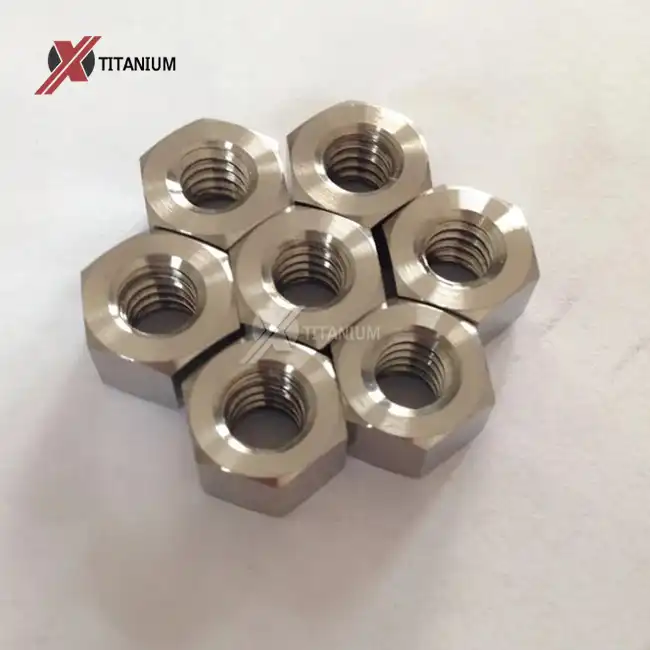
Baoji Chuanglian New Metal Material Co., Ltd. makes Ti-6Al-4V rotor nuts that are carefully designed to meet the high standards needed by race teams, OEM makers, and fleet owners. We are located in China's "City of Titanium," and our CNC cutting can provide dimensions within ±0.05mm. We also keep material certifications that can be traced back to ISO 9001, ASTM B348, and ROHS standards. Our wide range of surface treatments, such as natural finish, polishing, and multi-color anodising in blue, gold, rainbow, and custom colours, meet the needs of both function and style in a wide range of situations.
As a well-known company that has been making m8 titanium rotor bolts for over ten years, we offer technical advice at every step of the buying process, from choosing the right material to the best ways to install it. Our quality control method makes sure that every step of the production process is carefully checked. This makes sure that the mechanical features and dimensions are always the same, which prevents problems in the field. You can email our expert team at info@cltifastener.com or djy6580@aliyun.com to talk about your specific application needs, ask for material certifications, or get bulk prices for projects you have coming up. You can look through our full catalogue of fasteners at cl-titanium.com and learn how our engineering support turns buying parts into smart relationships.
References
1. Boyer, R., Welsch, G., & Collings, E.W. (2020). Materials Properties Handbook: Titanium Alloys (4th ed.). ASM International.
2. Campbell, F.C. (2019). Manufacturing Technology for Aerospace Structural Materials: Fastener Design and Applications. Elsevier Science.
3. Bickford, J.H. (2018). Introduction to the Design and Behavior of Bolted Joints: Non-Gasketed Joints (5th ed.). CRC Press.
4. Donachie, M.J. (2021). Titanium: A Technical Guide (3rd ed.). ASM International.
5. Society of Automotive Engineers. (2019). SAE J1701: Disc Wheel/Hub or Drum Interface Dimensions - Truck and Bus. SAE Technical Standards Board.
6. Budinski, K.G. & Budinski, M.K. (2020). Engineering Materials: Properties and Selection (10th ed.). Pearson Education.
Learn about our latest products and discounts through SMS or email