- English
- French
- German
- Portuguese
- Spanish
- Russian
- Japanese
- Korean
- Arabic
- Greek
- German
- Turkish
- Italian
- Danish
- Romanian
- Indonesian
- Czech
- Afrikaans
- Swedish
- Polish
- Basque
- Catalan
- Esperanto
- Hindi
- Lao
- Albanian
- Amharic
- Armenian
- Azerbaijani
- Belarusian
- Bengali
- Bosnian
- Bulgarian
- Cebuano
- Chichewa
- Corsican
- Croatian
- Dutch
- Estonian
- Filipino
- Finnish
- Frisian
- Galician
- Georgian
- Gujarati
- Haitian
- Hausa
- Hawaiian
- Hebrew
- Hmong
- Hungarian
- Icelandic
- Igbo
- Javanese
- Kannada
- Kazakh
- Khmer
- Kurdish
- Kyrgyz
- Latin
- Latvian
- Lithuanian
- Luxembou..
- Macedonian
- Malagasy
- Malay
- Malayalam
- Maltese
- Maori
- Marathi
- Mongolian
- Burmese
- Nepali
- Norwegian
- Pashto
- Persian
- Punjabi
- Serbian
- Sesotho
- Sinhala
- Slovak
- Slovenian
- Somali
- Samoan
- Scots Gaelic
- Shona
- Sindhi
- Sundanese
- Swahili
- Tajik
- Tamil
- Telugu
- Thai
- Ukrainian
- Urdu
- Uzbek
- Vietnamese
- Welsh
- Xhosa
- Yiddish
- Yoruba
- Zulu
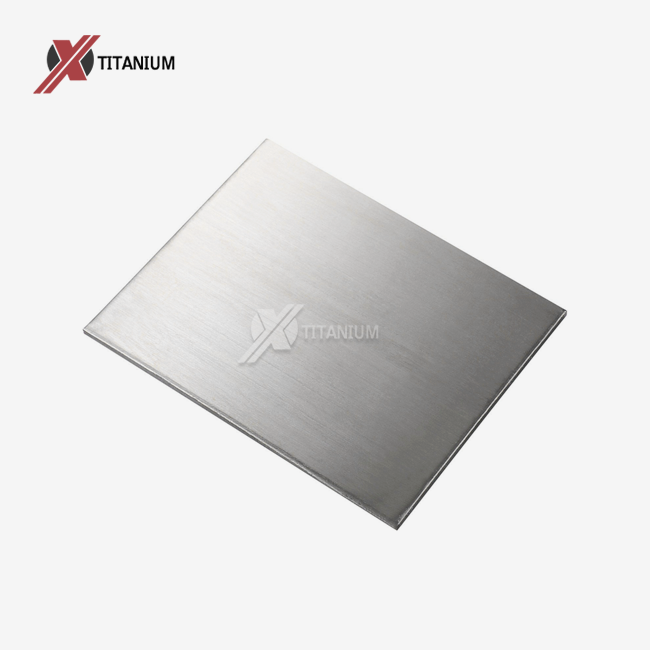
Titanium alloy plate for medical implants
A medical-grade titanium alloy plate is a big step forward in safe materials engineering. It has great mechanical strength and resistance to rust, which are both very important for internal devices. These special plates are made of titanium and carefully controlled alloying elements that work together to make the plates as strong as possible while still being biologically harmless in human bodies. Medical titanium materials are biocompatible, which means they can easily fuse with bone tissue. This lowers the risk of rejection and helps keep implants stable over time. These plates are made using advanced techniques like controlled hot rolling, solution heat treatment, and precise surface finishing. They meet strict regulatory requirements set out in ASTM F136 and ISO 5832-3 standards. This makes sure that they work the same way for all orthopedic reconstructions, spinal fusions, and craniofacial repairs.
Understanding Titanium Alloy Plates in Medical Implants
Materials for medical implants need to be able to survive years of bodily stress without breaking down. Because of their unique mechanical qualities, titanium alloy plates meet this need and are therefore essential in modern surgery.
Defining Medical-Grade Titanium Plates
Medical titanium plates are flat-rolled items made from titanium-based alloys that are specially made to work safely with human tissue. Unlike industrial-grade materials, these plates go through a lot of biocompatibility testing according to ISO 10993 guidelines to make sure they are safe for permanent placement. When scratched, the material's passive oxide layer naturally grows back, protecting against body fluids and stopping the release of metal ions that could cause inflammation reactions.
Key Material Properties and Performance Characteristics
Implant success rates are directly affected by the way medical titanium alloys are made. These materials are about 40% lighter than surgical stainless steel and have a density of 4.43 g/cm³. They also have the same tensile strength, which is over 900 MPa in Grade 5 versions. At 110 GPa, the modulus of elasticity is very close to that of cortical bone. This means that there aren't as many stress shielding effects, which can cause bone to break down around implants. Plates can withstand millions of pressure cycles during regular patient action without cracking because they are very resistant to wear.
Common Grades for Medical Applications
Formulations of Ti-6Al-4V (Grade 5 and Grade 23) and Ti-6Al-7Nb are mostly used in the medical equipment business. Grade 23, also called Ti-6Al-4V ELI (Extra Low Interstitial), has less iron and oxygen than normal Grade 5. This makes it harder to break and easier to shape. This mixture is necessary for making complicated shapes that need to be cold-formed or welded. Concerns about possible damage led to the development of Ti-6Al-7Nb as an alternative to vanadium. However, both metals have good clinical track records. The chemical composition of each grade is carefully checked against the acceptance standards set out in ASTM F1472 and ASTM F1295 requirements.
Regulatory Standards Governing Medical Titanium Plates
Following international material standards makes sure that each batch is the same, which is very important for validating medical devices. ASTM F136 sets standards for wrought Ti-6Al-4V ELI that is used in medical implants. It says what amounts of impurities are okay, as well as the ranges of mechanical properties and grain sizes that are allowed. European standards that are similar to ISO 5832-3 are available, and ASTM F1813 talks about the surface properties of metal medical parts. To support FDA 510(k) applications and CE marking processes, manufacturers must keep full material tracking by using mill test records that show the chemistry of each heat lot, the results of mechanical tests, and the history of processing.
Advantages of Titanium Alloy Plates for Medical Implants
The best thing about titanium materials for medical uses is that they have many benefits that other metals can't match at the same time. These benefits directly lead to better results for patients and a lower rate of repeat surgery.
Exceptional Corrosion Resistance in Biological Environments
High chloride levels, changing pH levels, and protein interactions make up the human body's particularly harsh and toxic environment. Titanium alloy plates have a self-healing titanium dioxide layer on the surface that stops all types of rust, such as pitting, crevice, and galvanic processes. In synthetic body fluid at 37°C, electrochemical tests show passivation currents that are many orders of magnitude smaller than those in 316L stainless steel. Because it is stable, there are no worries that the implant will break down and release metal fragments that could build up in organs or cause hypersensitivity responses like those seen with cobalt-chromium and nickel-containing alloys.
Optimal Strength-to-Weight Ratio for Implant Design
Titanium materials are very light, which lets smaller plate shapes be used. These profiles make surgery less invasive while still keeping structural integrity. When compared to stainless steel plates, orthopedic trauma plates made from Grade 23 titanium are 20–30% lighter, which means they are easier on the patient's soft tissues and make them more comfortable while they are recovering. The smaller mass is also good for cranial repairs, since too much implant weight could put stress on fracture sites that have already been fixed. Engineering studies show that 2.5mm titanium plates can hold the same amount of weight as 3.5mm steel plates when bent naturally. This means that less invasive surgery methods can be used.
Biocompatibility and Osseointegration Properties
Titanium's ability to be accepted by living things is likely its most important benefit for lasting insertion. The substance doesn't cause foreign body reactions or mess up regular cell processes, so it is called "biotolerant" instead of just "bioinert." A process called osseointegration was first found in tooth implant studies. It is when bone cells connect straight to titanium oxide surfaces without a fibrous casing forming first. Changing the surface roughness by acid etching or sandblasting helps the bone adhere even more. Within three months of surgery, histology studies showed that the implant had direct bone-contact of over 70%. When it comes to polymer materials, this close gluing is more stable mechanically than cement fixing or press-fit methods.
Long-Term Clinical Performance Data
Titanium has been used in implants for many years and has been shown to be reliable. Joint replacement records show that titanium-backed acetabular cups have survival rates of 95% or higher at 15-year follow-ups. Studies on spinal fusion show that arthrodesis works well in more than 90% of patients who use titanium interbody cages and posterior hardware. There have been no late-stage fails due to material breakdown, which is very different from what happened with early cobalt-chromium implants. Titanium devices that have been removed from service regularly show very little surface wear or rust, even after decades of use. This proves that the material is very durable.
How are Titanium Alloy Plates Manufactured for Medical Applications?
Making medical-grade titanium alloy plates needs a level of accuracy that is far above what is required for industrial production. At every stage of the handling, quality controls are used to make sure that the material is correct and that all regulations are followed.
Raw Material Selection and Purity Requirements
Titanium sponge from approved sources with well-documented quality processes is used as the first step in production. The sponge goes through vacuum arc remelting to make ingots with tightly controlled chemistry. To keep the ductility, the total amount of interstitial elements (oxygen, nitrogen, and carbon) is usually kept below 0.25%. During melting, high-purity material that has been checked by spectroscopic analysis is used to add aluminum and vanadium or niobium as alloying elements. Every ingot is given a unique number that lets everyone follow it through all the stages of production.
Hot Rolling and Cold Rolling Processes
When the temperature is between 850°C and 950°C, the material is sufficiently flexible to be shaped, and hot rolling turns ingots into slabs of average thickness. Multiple rolling passes gradually decrease the thickness while keeping the dimensions constant within 0.1mm. Controlled cooling rates stop microstructural changes that aren't wanted and could damage mechanical qualities. After the final thickness adjustment and surface finish polishing, the material is cold rolled to reach the desired strength levels. At our plant, we have precision rolling mills that can make plates from 1mm to 100mm thick, up to 2000mm wide, and in any length up to 6000mm long.
Heat Treatment Protocols
Medical plates are made with the best mix of strength and toughness through solution treatment and aging processes. The material is heated to about 900°C to dissolve the alloying elements into a solid solution. It is then cooled quickly to keep the metastable phase distribution. After that, aging at middle temperatures forms small alpha phase particles that make the metal stronger through processes called precipitation hardening. According to AMS 4911 standards, time and temperature are tightly controlled, and tracking of the furnace atmosphere stops surface oxidation that would need more work to remove.
Surface Finishing Techniques
Both biological reaction and mechanical efficiency are directly affected by the state of the surface. Pickling in mixtures of hydrofluoric acid and nitric acid gets rid of oxide scale and surface dirt, giving the item a clean, even look. Acid cleaning improves the surface chemistry even more by getting rid of any leftover production debris. Sandblasting or bead blasting creates controlled roughness patterns that help bone integrate without putting extra stress on the bone. Polishing to bright ends is useful for tasks that need little friction or care about how things look. Surface roughness measures (Ra values) and cleaning tests according to ASTM F86 standards are used to make sure that each finishing method works.
Quality Control and Testing Procedures
Before materials are sent to companies that make medical devices, they are checked for conformance through thorough testing programs. Tensile strength testing, finding the yield point, measuring elongation, and hardness profiling using the Rockwell or Vickers methods are all parts of mechanical testing. Bending tests check how flexible and shapeable something is. Ultrasonic screening can find cracks inside that are bigger than 0.8mm in width. Through optical emission spectrometry, chemical composition tolerances are confirmed through chemical analysis. Biocompatibility testing uses cell culture tests to follow ISO 10993-5 cytotoxicity methods. Certified mill test records, material safety data sheets, and certificates of conformance are all part of documentation packages that help customers with their regulatory applications.
Choosing the Right Titanium Alloy Plate for Medical Implants
To choose the right titanium alloy plate specs, you need to carefully look at the needs of the application, the rules that apply, and the supplier's abilities. Purchasing choices affect how long it takes to build a product, how much it costs to make, and how well it does in the market in the end.
Matching Grade Selection to Implant Type
Different types of implants gain from different metal properties. Grade 23 (Ti-6Al-4V ELI) is often used in orthopedic trauma plates to fix long bone breaks because it has better fatigue strength and can be welded, which allows for flexible plate designs. Spinal implants can use either Grade 23 or Grade 5 material, based on how they will be loaded. Anterior cervical plates tend to choose Grade 5 material because it is more flexible. When making complicated shapes is more important than final strength, Grade 2 commercially pure titanium is often used for craniofacial replacements. Grade 23 is being used more and more in dental implant parts for threaded joints that need to be precisely machined and can withstand repeated loads during mastication.
Mechanical Property Requirements
Based on expected service conditions, engineering research sets minimum accepted property limits. According to ASTM F136, tensile strength above 860 MPa and yield strength above 795 MPa are usually enough for load-bearing orthopedic uses. Elongation values above 10% make sure that the material is flexible enough for shaping during surgery. Fracture toughness readings (KIC values close to 75 MPa√m) show how resistant something is to catastrophic failure when it is hit or overloaded. Testing for fatigue at stress levels that are similar to physiological loading confirms endurance limits. Usually, 10 million cycles of life at peak loads equal to twice normal gait forces are needed for acceptance.
Dimensional Specifications and Tolerances
Plate measurements must be able to work with production methods and still meet the goals of the design. When choosing a thickness, you have to balance the need for strength with the desire for a low profile. For orthopedic plates, the typical thickness ranges are 1.5mm to 6mm. Specifications for width and length depend on the areas of the body that need to be covered. Customized sizes can be made for implants made just for one patient using additive manufacturing or precision cutting. When the limits for dimensions are less than ±0.13mm, screw holes and countersinks can be machined directly without needing to be adjusted later. When the flatness error is less than 1mm per 300mm length, surgery shaping and plate fitting go smoothly.
Comparing Titanium to Alternative Implant Materials
When choosing what to use, you have to weigh the pros and cons of different choices. Stainless steel is cheaper, but it has a higher stiffness difference, is more likely to rust, and some people are allergic to nickel. Cobalt-chromium metals are better at protecting moving surfaces from wear, but they are less biocompatible and stiffer. While PEEK plastics lessen stress shielding, they don't have any osseointegrative features and aren't very stable over time. Tantalum is very good at helping bones grow, but it is very expensive and hard to work with. Titanium alloy plates improve performance in a number of areas, which justifies their higher cost by lowering the risk of complications and making implants last longer.
Supplier Certification and Reliability Factors
The procurement plan needs to put more emphasis on qualifying suppliers than just comparing prices. ISO 13485 certification shows that a quality system for medical devices is being used, and AS9100 certification shows that important titanium processing can use aerospace-level process control. For U.S. market entry, FDA registration proves that the product meets all the rules. Metrics like supplier audit reports, how quickly corrected actions are taken, and on-time delivery show how mature the operations are. Minimum order numbers affect the cost of keeping goods on hand. Reliable makers usually accept smaller study quantities and offer big savings for production runs. Lead times for normal orders range from 8 to 12 weeks, while lead times for special orders range from 16 to 20 weeks. To avoid development delays, production must be carefully planned.
Procurement Insights: How to Source Medical-Grade Titanium Alloy Plates?
When buying medical titanium alloy plates, strategic shopping methods make the most of price, quality, and the reliability of the supply chain. Knowing how the market works and how suppliers work together helps you make smart buying choices.
Market Pricing Dynamics and Cost Structures
The cost of medical-grade titanium depends on the price of the raw material, how hard it is to process, and what certifications are needed. Prices for Grade 23 plate material on the market right now run from $35 to $65 per kilogram, based on the thickness, amount, and surface finish requirements. Tighter specs, faster delivery, or specialty testing that goes beyond standard mill test results will cost more.
Volume discounts usually start at order amounts of 500 kg, and you can save even more when you commit to 1000 kg or more. Customization fees of 15% to 25% cover engineering help, machine changes, and proof testing for sizes or surface treatments that aren't normal. Long-term supply deals lock in prices for 12 to 24 months. This protects against changes in the price of titanium sponge and ensures that supplies will be available when the market is short.
Geographic Sourcing Considerations
The supply lines for titanium around the world are based on different production hubs, each with its own benefits. U.S. makers offer medical device businesses in the U.S. location benefits, easier legal alignment, and expert help in English, but they usually charge more. European providers stress strict environmental compliance and long-term partnerships with global OEMs. They offer prices in the middle range and consistently high quality. Asian makers, mostly in China's Baoji region, offer reasonable prices thanks to vertical integration and decades of experience in titanium processing gained working with the chemical and aerospace industries. Concerns about quality that used to stop people from buying from Asia have mostly gone away now that the biggest Chinese makers have gotten international licenses and set up advanced testing facilities that meet Western standards.
Evaluating Supplier Reputation and Capabilities
Qualified makers can be told apart from shady dealers by doing more research than what is written on a website. Ask for customer reference lists and talk to current clients about how well they were delivered to, how consistent the quality was, and how quickly they were helped by technical support. Instead of depending on online certificates, look at certification papers directly from the groups that issue them. Check the manufacturing capacity by visiting the facility or filling out thorough capability questions that ask about equipment specs, production rates, and the number of projects that are being worked on at the same time.
To find out how technically skilled a seller is, talk to them about material selection problems that are unique to your application. Competent suppliers will give you useful advice instead of general answers. Our company, Baoji Chuanglian New Metal Material Co., Ltd., has been providing certified titanium products to medical device makers, chemical processors, and aerospace companies for over ten years. These products are backed by thorough test documentation and quick technical support.
Managing Lead Times and Order Quantities
Due to the way production schedules work, planning ahead is necessary, especially for unique specs. Standard plate sizes from stock usually ship within two to three weeks. Custom thicknesses or surface treatments take 10 to 16 weeks, which includes making the material, heat treatment processes, and testing procedures.
Minimum order numbers depend on the size of the seller. Larger mills may set minimums of 200 kg, while smaller, more specialized makers can handle development quantities as low as 25 kg. As a way to balance the costs of keeping inventory with the risk of supply disruptions, strategic buyers keep a backup stock that covers three to six months of expected usage. Blanket purchase orders with planned releases let buyers and sellers plan ahead while giving buyers and sellers freedom in meeting demand.
Ensuring Regulatory Compliance in Procurement
Traceability standards built into quality system rules must be met when buying materials. The purchase specs should make it clear which ASTM or ISO standards apply and what testing certifications are needed. Material certificates must have information about the heat lot, the chemical makeup, the mechanical properties, and the production history that lets a full genealogy be put together.
For devices that are meant to be implanted, proof of biocompatibility testing according to ISO 10993 guidelines may be needed. Any changes to the way the goods are processed should be notified to the supplier, and substitutions should not be allowed without first getting permission. Keeping vendor qualification files that show the original approval reason, regular review, and change control processes shows that procurement is following the rules during regulatory checks.
Conclusion
Medical-grade titanium alloy plates are the best material for permanent implantable devices because they are biocompatible, reliable mechanically, and don't rust, all of which are important for patient safety. To be a good buyer, you need to know a lot more about the types of materials, how they are made, government rules, and what suppliers can do than just compare prices. Grade 23 titanium has great fracture toughness and great osseointegration qualities, which makes it useful for many things, from fixing broken bones to reconstructing the spine.
Long-term relationships with suppliers, approvals of quality systems, and recorded tracking are all important parts of strategic sourcing. These things make sure that regulations are followed throughout the lifecycles of products. As the development of medical devices speeds up, titanium materials will continue to make it possible for new methods that improve patient results around the world.
FAQ
Why do titanium alloy plates outperform stainless steel in medical implants?
Titanium is better at integrating with the body because it doesn't contain nickel allergens like 316L stainless steel does. This means that it doesn't cause the allergic reactions that happen in 10-15% of patients who have steel implants. Titanium has a lower elastic modulus (110 GPa vs. 200 GPa for steel), which makes it more compatible with bone stiffness and lessens stress shielding that causes nearby bone to break down. Because it is very resistant to rust, it stops the buildup of metallic debris and coloring around implant sites that can happen with stainless materials in physiological conditions high in chloride.
What ASTM standards govern medical-grade titanium plates?
ASTM F136 sets standards for medical implants made of cast Ti-6Al-4V ELI alloy. It says what the alloy can't have in terms of makeup, its mechanical qualities, and the size of its grains. As a substitute to vanadium, ASTM F1472 covers the Ti-6Al-7Nb metal. ASTM F1813 describes the surface properties and cleaning standards for metallic medical parts. These guidelines make sure that materials are consistent and can be tracked, which helps FDA regulation applications.
What are typical lead times for custom medical titanium plate orders?
Standard-sized plates in stock usually ship within two to three weeks. Custom thickness requirements, special surface finishes, or unique dimensional needs usually take 10 to 16 weeks. This includes getting the raw materials, thermomechanical processing, heat treatment cycles, surface finishing operations, thorough testing protocols, and making the certification documents. Depending on how busy the factory is right now, rush orders may be possible with extra fees.
Partner with Chuanglian for Certified Medical Titanium Alloy Plate Supply
This company, Baoji Chuanglian New Metal Material Co., Ltd., has been making precise titanium alloy plates for medical devices for more than ten years. Our Grade 23 and Grade 5 products are fully traceable through approved mill test results that back up your regulatory applications. They meet the requirements of ASTM F136. We use ISO 13485 quality methods to make sure that performance is the same from batch to batch. We also offer a range of order sizes, from research tests to full production runs.
We can make things with thicknesses ranging from 1mm to 100mm, and we can finish the surface in any way you want, including pickling, polishing, and controlled roughness processes that are best for osseointegration. You can get technical advice to help you choose the best grades and specs for your implant designs. To talk about your needs for a medical-grade titanium plate, please email our engineering team at info@cltifastener.com or djy6580@aliyun.com.
References
1. Long, M., & Rack, H.J. (1998). Titanium alloys in total joint replacement—a materials science perspective. Biomaterials, 19(18), 1621-1639.
2. Niinomi, M. (2008). Mechanical biocompatibilities of titanium alloys for biomedical applications. Journal of the Mechanical Behavior of Biomedical Materials, 1(1), 30-42.
3. Geetha, M., Singh, A.K., Asokamani, R., & Gogia, A.K. (2009). Ti based biomaterials, the ultimate choice for orthopaedic implants—A review. Progress in Materials Science, 54(3), 397-425.
4. ASTM International. (2013). ASTM F136-13: Standard Specification for Wrought Titanium-6Aluminum-4Vanadium ELI Alloy for Surgical Implant Applications. West Conshohocken, PA: ASTM International.
5. Rack, H.J., & Qazi, J.I. (2006). Titanium alloys for biomedical applications. Materials Science and Engineering: C, 26(8), 1269-1277.
6. International Organization for Standardization. (2016). ISO 5832-3:2016: Implants for surgery—Metallic materials—Part 3: Wrought titanium 6-aluminum 4-vanadium alloy. Geneva: ISO.
Learn about our latest products and discounts through SMS or email